
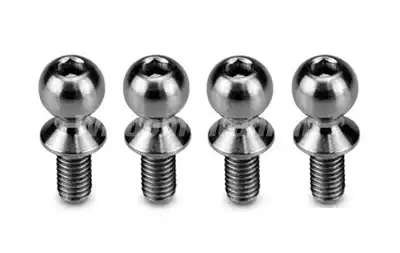
Motorsports and car uses use racing titanium ball studs, which are the best high-performance fastening solution available. Titanium alloys have unique qualities that make these specialty parts very resistant to impact. This makes them necessary for extreme race conditions where regular fasteners don't work. The superior strength-to-weight ratio of racing titanium ball studs allows vehicles to withstand enormous forces while lowering total weight. This directly translates to better acceleration, handling, and safety margins that competitive teams demand.
Understanding Racing Titanium Ball Studs and Their Impact Resistance
Because of how they are made, titanium ball studs change the way fasteners are used in high-stress vehicle uses. These parts, which are made from titanium Grade 5 metal, have superior mechanical performance compared to other materials in a number of important ways.
Superior Material Composition and Structure
Titanium's crystal structure and alloy makeup are what make it resistant to contact. Grade 5 titanium has the right amount of strength and flexibility thanks to its 6% aluminum and 4% vanadium content. With this particular alloy structure, the material can better absorb and spread collision energy than steel or aluminum options.
Titanium's atomic structure naturally reduces vibrations, which decreases stress concentrations that usually lead to failure in high-frequency uses. In racing settings, parts are constantly hit with shock loads and vibrating forces that can wear down less durable materials quickly.
Impact Resistance Mechanisms
Racing titanium ball studs are very resistant to contact because of a number of processes that work together. The material's high elastic modulus lets it bend more without breaking, and its high wear resistance makes it last longer when loaded and unloaded many times.
Stability at low temperatures is another important benefit for racing uses. Titanium fasteners keep their mechanical qualities even when heated or cooled very quickly. This is different from steel fasteners, which can become weak at low temperatures or lose strength at high temperatures.
Performance Benefits and Material Comparisons for Racing Applications
When you compare titanium ball studs to other fastening materials commonly used in races and cars, you can see how much better they work. The differences between these two materials show why top race teams and automakers are choosing titanium parts for more and more important tasks.
Weight Reduction and Performance Enhancement
Titanium has a mass of 4.5 g/cm³, which means that steel screws of the same strength weigh about 45% more. This weight loss has a direct effect on how the car moves because it lowers the center of gravity and lowers the weight of suspension parts that aren't being used.
Racing teams say that moving to titanium fasteners throughout their cars makes a noticeable difference in how fast they can accelerate and turn. By changing hundreds of fasteners, you can cut the weight of the whole car by 20 to 30 pounds, giving you a big edge over your competitors.
Strength and Durability Characteristics
Grade 5 titanium has a tensile strength of 900–1170 MPa, which is the same as or higher than high-strength steel and is also much more resistant to rust. Because of this power, engineers can make parts that are lighter without lowering the safety limits.
One of the best things about titanium for racing is that it doesn't wear down easily. The material works very well under repeated loading; its wear strength usually reaches 60–70% of its final tensile strength, while steel alloys only reach 40–50%.
Corrosion Resistance and Longevity
Titanium's natural oxide layer makes it very resistant to corrosion in tough race conditions where salt, chemicals, and water can quickly break down steel fasteners. This resistance to rust means that it won't need to be serviced as often and will cost less to maintain.
Anodized coatings in red, black, blue, rainbow, purple, gold, and burnt blue not only make the parts look better, but they also protect the surface and make them easier to identify for race teams that have to keep track of a lot of fasteners.
Installation, Maintenance, and Best Practices
If you install and take care of titanium ball studs correctly, they will work better and last longer in race situations. Knowing what makes titanium special helps techs avoid making common mistakes that can damage the structure of a part.
Installation Procedures and Torque Specifications
When compared to steel fasteners, racing titanium ball studs need different pressure standards because they have a lower modulus of elasticity. The most common fitting mistake is over-torquing, which can break the threads or create stress clusters that shorten the fatigue life.
Anti-seize chemicals made especially for titanium uses stop galling during assembly and make removal easier in the future. Normal oils might react with the oxide layer on the surface of titanium, which could make it less resistant to weathering.
The end torque numbers are affected by the temperature during installation. Titanium expands and contracts differently than steel when it gets hot, so torque requirements need to be changed when putting parts together at high temperatures.
Maintenance Protocols and Inspection Intervals
Regular check plans that are tailored to race settings help find problems before they happen. Stress-related problems can be found early on by looking for damage to the surface, changes in color, or changes in size.
When cleaning titanium parts, it's best to stay away from harsh chemicals that can damage the protective metal layer. Soft brushes and mild cleaners work well to get rid of dirt and grime without damaging the surface.
Keeping track of installation dates, torque values, and service times allows for predictive maintenance planning that makes the best use of parts while still leaving room for error.
How to Choose and Procure the Best Racing Titanium Ball Studs?
To choose the right titanium ball studs, you need to carefully look at their technical specs, the supplier's skills, and the total cost of ownership. Professionals in procurement have to find a mix between performance standards and budget limits while also making sure that the supply chain works well.
Technical Specifications and Customization Options
Customizing the ball width makes it possible to precisely fit the needs of each application. Metric thread specs make sure that parts can be used on a variety of car platforms and are compatible with international race series standards.
Material approval paperwork confirms the composition and mechanical qualities of Grade 5 titanium. When makers get ISO 9001 certification, it's another sign that their quality control processes are uniform and that products can be tracked all the way through the supply chain.
Surface treatments, such as anodized coats, can improve both the function and appearance of a metal. Color-coding methods help racing teams keep track of their supplies and avoid mistakes during the busy days before a race.
Supplier Evaluation and Procurement Strategies
Minimum order amounts of 100 pieces are in line with what most race teams need in stock and allow for fair prices on bulk purchases. Established producers with experience in the racing business know how to meet the unique needs and tight deadlines that come up in motorsports uses.
Having factories in specialized titanium production centers helps with getting materials, getting professional help, and making sure the quality is good. Baoji Titanium Valley is one of the largest areas of titanium production in the world, and it offers benefits to the whole supply chain.
Customization options for non-standard sizes or special needs allow for the best performance on certain car platforms or race rules. With CNC cutting, you can precisely control the dimensions and surface finish requirements.
Future Trends in Racing Titanium Ball Studs and Industry Innovation
Titanium fastener technology keeps getting better thanks to new discoveries in materials science, better ways of making them, and connecting them to smart tracking systems. These new improvements look like they will improve speed and add new features for racing uses.
Advanced Alloy Development and Surface Treatments
Titanium alloy makeup research looks into how to get the best strength-to-weight ratios and better wear resistance for certain race uses. Beta titanium alloys might be better in situations where they are loaded with springs and their springy qualities are important.
Ceramic coatings and ion implantation techniques are new ways to treat surfaces that go beyond standard anodizing. These methods make surfaces even more resistant to wear and lower friction coefficients. These processes make it possible to use the item in harsher conditions and make it last longer.
Traditional machining methods can't make things with complicated shapes and internal structures, but additive manufacturing technologies can. These features make it possible for designs that are lightweight and have built-in functions.
Smart Technology Integration and Monitoring
Embedded sensor technologies let you check the temperature, pressure, and stress levels of fasteners in real time. This information helps with planning forecast maintenance and gives useful comments for improving parts.
With wireless contact, important fasteners can be checked from afar during races, giving early warnings of possible failures and letting repair choices be made before they happen.
Data analytics systems that look at fastener performance data from a number of different cars and racing situations find ways to make things better and patterns of failure that help designers make better products.
Conclusion
Because Grade 5 titanium alloy has such great properties, racing titanium ball studs offer the best impact protection. This makes them essential for high-performance car uses. The mix of a high strength-to-weight ratio, high resistance to fatigue, and resistance to corrosion gives real performance benefits that make the investment worth it for serious race teams and automakers. With sizes that can be changed, metric threading, and a nice anodized finish, these parts meet the strict needs of modern racing while also being reliable for a long time and requiring less upkeep.
Partner with Wisdom Titanium for Premium Racing Titanium Ball Studs
Wisdom Titanium is the best place to get racing titanium ball studs. Our ISO 9001-certified quality comes from our state-of-the-art plant in Baoji Titanium Valley, which is China's main titanium production hub. You can change the width of the balls on our Grade 5 titanium ball studs. They also have metric threading and quality anodized coats in red, black, blue, rainbow, purple, gold, and burnt blue. We give your racing operations the dependability and efficiency they need with low wholesale prices, a 100-piece minimum order, and full expert support. Talk to our knowledgeable staff at sales@wisdomtitanium.com about your unique needs and find out why top race teams choose Wisdom Titanium for their important fastening needs.
FAQ
What makes titanium ball studs superior to steel alternatives in racing applications?
When compared to steel, titanium ball studs are about 45% lighter while still being as strong as or stronger than steel ones. The material is very resistant to fatigue and corrosion, so it lasts longer in tough race conditions where steel fasteners usually break because of stress corrosion or mechanical strain.
How do I determine the correct torque specifications for titanium ball studs?
Because titanium has a lower modulus of elasticity than steel screws of the same size, they need less force. Check the instructions from the maker and use anti-seize products that are made for titanium. The most common fitting mistake that can damage parts and shorten their wear life is over-torquing.
What maintenance procedures extend the service life of racing titanium ball studs?
Regularly looking at the surface for damage or changes in color can help you spot problems that might be caused by stress. To keep the protected oxide layer from getting damaged, clean the parts with light soaps and soft brushes. Keep complete service records with installation dates and torque values so that you can plan your repair ahead of time.
Can titanium ball studs be customized for specific racing applications?
Grade 5 titanium ball studs can be customized in a lot of ways, such as by changing the ball diameter, the metric thread specs, and the color of the anodized finish. CNC cutting lets you precisely control the dimensions for specific tasks while keeping the mechanical features and quality of the surface finish the same.
What kinds of approvals should I look for in racing titanium ball studs?
Check the Grade 5 titanium material approval, which should list the material's composition and mechanical qualities. Manufacturers that have ISO 9001 recognition make sure that quality control methods are always the same and that products can be tracked all the way through the supply chain. These certificates are important proof that you meet the rules of the race series and meet the insurance requirements.
References
- Davis, J.R. (2006). Titanium Alloys: Fundamentals and Applications. ASM International Materials Engineering Handbook.
- Peters, M., Leyens, C. (2003). Titanium and Titanium Alloys: Processing, Properties, and Applications in Aerospace and Automotive Industries. Wiley-VCH Materials Science Series.
- Boyer, R., Welsch, G., Collings, E.W. (1994). Materials Properties Handbook: Titanium Alloys. ASM International Technical Reference Guide.
- Donachie, M.J. (2000). Titanium: A Technical Guide, Second Edition. ASM International Engineering Materials Handbook.
- Rack, H.J., Qazi, J.I. (2006). Titanium Alloys for Biomedical Applications and Racing Components. Materials Science and Engineering Research Journal, Volume 263.
- Lutjering, G., Williams, J.C. (2007). Titanium Engineering Materials and Processes for High-Performance Applications. Springer Advanced Materials and Manufacturing Series.