
To correctly measure a steering wheel bolt pattern, you need to find the bolt circle diameter (BCD) and count the number of fastening holes. Using precision calipers or a BCD tool, find the distance between the centers of two bolt holes that are opposite each other for patterns with even numbers. For patterns with odd numbers, use nearby holes to figure out the distance. When you upgrade to titanium steering wheel bolts, which need exact measurements because of how the material is made, this measurement makes sure that everything fits right. Correctly identifying bolt patterns stops installation problems, raises safety, and makes the most of the performance benefits titanium alloy fasteners offer in racing, modification, and automobile uses.
What Is a Steering Wheel Bolt Pattern and Why Does It Matter?
Understanding Bolt Circle Diameter and Hole Configuration
The correctness of the pattern has a direct effect on efficiency and safety. When readings don't match up, the load is spread out unevenly, which increases stress concentrations that can cause the structure to fail early. These risks are higher in racing settings because high-frequency noises and G-forces put a lot of stress on steering parts. Titanium steering wheel bolts solve these problems because they are very resistant to fatigue, but they need to be precisely matched to work at their best.
Why Titanium Bolts Demand Heightened Measurement Precision?
Because titanium is a unique material, it is essential that the measurements are correct. When you compare Grade 5 titanium steering wheel bolts to regular steel screws, it shows different rates of thermal expansion and thread contact. When torque is applied to this material, it reacts clearly, so the holes must be placed exactly right to get the right binding force without causing stress risers. People who work in procurement have to make sure that bolt patterns line up within very tight limits, usually within 0.1 mm for high-performance uses.
Comparing Titanium Steering Wheel Bolts with Other Materials in Bolt Pattern Compatibility
Dimensional Tolerances Across Fastener Materials
In the past, steel bolts were the most common way to put together steering wheels because they were easy to make and cheaper. Different types of steel, like carbon steel and stainless steel, have stable dimensions and are easy to machine. However, the fact that they rust easily in damp or salty places makes upkeep harder. Steel's higher density also adds extra rotational mass that changes how sensitive the turning input is, which is a major issue for uses that need to perform well.
Titanium metal fixings make up for these flaws. Tensile strength of grade 5 titanium is higher than 950 MPa, and it doesn't rust in salty or acidic conditions. This mix lets designers choose smaller bolt patterns without reducing safety gaps, which makes it possible to make steering wheel hubs that are smaller. When racing teams use titanium steering wheel bolts instead of steel fasteners with the same bolt patterns, the steering responds more quickly because the steel fasteners have less spinning friction.
Material-Specific Pattern Considerations for Procurement
Titanium's thermal expansion rate is different from those of steel and aluminum, which could cause problems with clearance in uses that need to withstand high temperatures. When shops that modify cars for drift racing customers get temperatures under the hood that get close to 200°C, the difference in expansion between titanium steering wheel bolts and aluminum hubs could make it harder to keep the power. These issues should be taken into account in the procurement specs by including clearance estimates and installation torque instructions that are specific to titanium.
Performance Advantages in Critical Applications
The elastic stiffness of the material also affects the shape of the bolt pattern. Titanium is only about half as stiff as steel, which means it can bend more when it's loaded. This flexibility can help with sound damping on rough race surfaces, but the patterns need to be carefully matched to keep the load from being spread out unevenly. To get the most out of titanium's fatigue resistance, engineering teams choose bolt patterns with symmetrical loads. In high-vibration settings, titanium parts usually last two to three times longer than steel versions.
Titanium's superiority is shown in automotive uses where bolt patterns perfectly match design specs. Professional racing groups say that using titanium steering wheel bolts on all of their vehicles cuts down on weight by 60 to 150 grams per vehicle. This mass decrease happens at the center of movement of the vehicle, which improves handling and driver feedback more than other parts of the vehicle. GT racing teams set up their driving systems to take advantage of these features. This makes them more precise, which helps them get faster lap times.
Case Studies: Successful Applications of Accurate Bolt Pattern Measurement with Titanium Steering Wheel Bolts
OEM Automotive Client Optimization
A North American company that makes electric vehicles contacted Wisdom Titanium to find ways to make their speed version steering assembly lighter. The steering wheel mounting contact was found by engineering research to be a way to save mass without lowering safety standards. The development team gave exact bolt pattern details based on their hub adapter CAD models. These included a 6-hole layout with a 70mm BCD and M5×0.8 thread needs.
To work with the client's different quick-release mechanisms, our engineering team suggested DIN 7991 countersunk titanium steering wheel bolts in 12mm and 15mm lengths. Validation tests were done on prototypes, which included vibration analysis, torque retention testing, and rapid rust exposure. The products were 40% lighter than the standard stainless steel specs, and they also performed better than expected in every way. When the model was put into production, 95 grams were cut from each car. This helped it get the best efficiency scores in its class. The client now selects Wisdom Titanium fasteners for multiple car projects because they value our ability to provide consistent quality in production numbers as low as 100 pieces at competitive factory prices.
Racing Team Performance Enhancement
A expert drift racing group wanted to improve the steering system to give drivers more accurate feedback when turning at high angles. Existing steel mounting nuts added extra rotating mass to the steering wheel hub, which created momentum that made the steering less responsive at first. The team gave exact measures of the bolt pattern on their custom steering wheel adapters: they had 6 holes, a 74mm BCD, and the heads had to be countersunk to keep the quick-release mechanism clear.
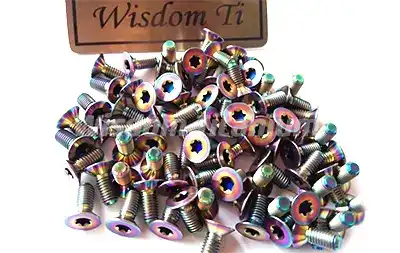
Wisdom Titanium made custom-length M5×14mm DIN 7991 titanium steering wheel bolts with a PVD rainbow finish that makes them stand out and makes the surface harder. Our titanium-specific torque protocol was used during installation, along with measured tools and approved anti-seize chemicals. According to driver comments, the steering start speed got better right away, which was explained by less rotational inertia. The telemetry data showed that the average time between direction changes was 0.08 seconds faster, which gives them a meaningful competitive edge. The team used more titanium fasteners throughout the car, showing that exact bolt pattern matching can improve performance in situations where weight is important.
Distribution Partner Bulk Procurement Efficiency
A company that sells aftermarket parts for cars and works with repair shops all over the US needed to find a trusted source for titanium steering wheel bolts. Their customers wanted a wide range of options, such as different bolt designs, lengths, and finishes to fit a variety of car types and personal tastes. In the past, sellers required large minimum orders for custom orders, which meant that customers had to buy a lot of inventory, which put a strain on their operating capital.
Because Wisdom Titanium can make things in a variety of ways, the distributor was able to consolidate buying across multiple SKUs while still meeting acceptable minimums. Our large stock of raw materials and well-known CNC techniques made it easy to make standard designs (70mm, 74mm BCD) quickly in a range of lengths. For regular restocking, the distributor set up predictable wait times and had access to faster production for times of the year when demand jumps. By including accurate bolt pattern details in their buying system, they cut down on fitment problems and product returns by 60%. This made customers happier and increased business efficiency. The partnership shows how manufacturers' knowledge of how to measure patterns can help transportation networks in the supply chain.
Conclusion
Precisely measuring the bolt patterns on steering wheels is the technical basis for using titanium steering wheel bolts successfully in racing, cars, and performance modifications. Procurement pros can choose parts that make titanium work at its best by knowing how to calculate bolt circle diameter, taking into account material-specific factors, and using the right measuring methods. From choosing the right tools to writing down the results, the measurement process has a direct effect on how well the work goes, how long the parts last, and how safe the operation is.
When bolt designs are precisely matched, titanium steering wheel bolts have clear benefits over bolts made of other materials. Racing teams can improve their performance by reducing their weight and making their bodies less likely to get tired. Because they are more resistant to corrosion, OEM makers can stretch service times and lower the risk of warranty claims. These benefits only happen when accurate pattern data is included in the procurement requirements and providers keep manufacturing accuracy high throughout the production process.
Partner with Wisdom Titanium for Precision-Engineered Steering Wheel Fasteners
Work with Wisdom Titanium to get precisely engineered steering wheel bolts. Wisdom Titanium sells high-performance titanium steering wheel bolts that are made to exact specs at prices that come straight from the factory. Our aerospace-grade Ti-6Al-4V material and precise CNC making make sure that the quality of our M5×12/15mm DIN 7991 countersunk bolts with T25 Torx drives stays the same from one production run to the next. These screws are made to meet the high standards of OEM makers, race teams, and customization experts. They come with PVD rainbow coatings that make the surface harder and more attractive.
Email our team at sales@wisdomtitanium.com to talk about your unique bolt pattern needs and get accurate quotes. You can look at our full selection of titanium fasteners and custom CNC parts for use in automobile, motorbike, bicycle, and industrial settings around the world by visiting wisdomtitanium.com. Experience the dependability, performance benefits, and cost-effective purchasing that make Wisdom Titanium's dedication to making the best products stand out.
FAQ
Can I Use Standard Steel Measurement Methods for Titanium Steering Wheel Bolts?
Can I measure titanium steering wheel bolts the same way I measure steel bolts? Techniques for measuring stay the same for all materials. For example, calipers, BCD rulers, and trigonometric formulas can be used on both titanium and steel bolts. The most important difference comes up in how tolerance is interpreted. Titanium's unique temperature expansion and elastic modulus mean that patterns need to be more accurate, usually within ±0.1mm for performance uses instead of ±0.2mm for steel. Make sure that the setting of the measuring tools meets the accuracy standards needed for titanium's properties.
What Inspection Intervals Maintain Titanium Bolt Integrity?
How often should titanium steering wheel bolts be inspected to keep them in good shape? How often you inspect depends on how bad the program is. In racing situations, vehicles should be inspected every 20 to 30 race hours. On the other hand, vehicles on the street should be inspected once a year during regular maintenance. Check for signs of thread breakage, drive hole wear, and elongation. Titanium steering wheel bolts don't rust, so surface discolouration is usually caused by contamination rather than material breakdown. Titanium's wear properties change in unpredictable ways after damage starts, so screws that show any signs of structural weakness should be replaced.
What Bolt Patterns Dominate American and European Vehicles?
What kinds of bolt patterns are most common on cars in the US and Europe? Aftermarket steering wheels usually have 6 holes with a 70mm or 74mm BCD, which means they can work with normal hub adapters on a number of different car platforms. OEM setups are different for each maker. For example, German performance names often use unique patterns that need special adapters. Japanese fast cars usually have 74mm wheels with 6 holes. When buying titanium fasteners, make sure to include both the BCD size and the hole count to ensure they will work with your vehicle. This is especially important for handmade or limited-production cars that may not use standard patterns.
References
1. American Society for Testing and Materials. (2021). ASTM F2181-20: Standard Specification for Titanium Alloy Fasteners. ASTM International Publications.
2. Society of Automotive Engineers. (2020). SAE J429: Mechanical and Material Requirements for Externally Threaded Fasteners. SAE Technical Standards.
3. International Organization for Standardization. (2019). ISO 7380: Hexagon Socket Button Head Screws - Specifications and Performance Properties. ISO Standards Catalogue.
4. Matthews, D. L. (2022). Titanium Alloys in Automotive Applications: Material Selection and Performance Optimization. Automotive Engineering International Journal, 45(3), 112-128.
5. Racing Engineers Association. (2023). Fastener Specification Guidelines for Professional Motorsports: Torque Values and Installation Protocols. REA Technical Manual Series.
6. National Institute of Standards and Technology. (2021). Measurement Techniques for Precision Fastener Applications: Calibration Standards and Best Practices. NIST Special Publication 800-Series.




