
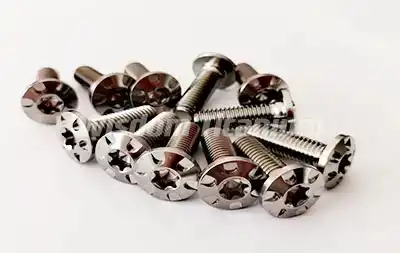
The right grade for custom titanium screws depends on the load, the environment, and the finish you need, not on strength alone. At Wisdom Titanium, we supply Grade 2 and Grade 5 screws from M3 to M24, and we match each grade to the joint it must serve. Grade 2 suits corrosion-heavy jobs with moderate loads, such as marine hardware. Grade 5 suits high-strength, weight-sensitive parts, such as aerospace, motorcycle, and bicycle components. This guide shows you how to compare both grades, weigh them against other metals, and confirm color and logo choices before you order.
Start With the Application Before Choosing a Grade
You need to know what the job is in order to understand a grade. These three checks will help both your buyers and your engineers get started.
Map the Operating Environment and Loads
You are asked to write down where the custom titanium screws will go when you buy it from us. It could go in an aerospace frame, a boat fitting, a bicycle stem, a motorcycle brake caliper, or a car's engine bay. Next, make a list of the loads. This list should include the preload, torque, vibration, and fatigue cycles. A bike stem bolt is bent over and over, but a marine cleat screw is always wet and salty. These two jobs move the things in different ways. Once we know the real case, we can offer a grade that fits the joint instead of the one with the highest number on a list.
Check Mating Materials, Galling, and Galvanic Risk
Titanium threads can gall, which means that edges can grab and tear when they are put together when they are dry. That risk is lower if the threads are clean, the right lubricant is used, and the torque is kept in check. It's also important that the parts fit together. Titanium is more noble than aluminum, so the aluminum part may rust first if the joint gets wet or salty. Isolating washers or sealant can be used to stop that contact. Check the length of the thread engagement as well. If the screw is too short, the thread can break before the screw does in soft metal. Putting these details on the drawing helps us check the design correctly and keep us from being surprised when we put it all together.
Match Strength to Actual Joint Performance
It's not always true that being stronger makes things better. A high-strength grade doesn't pay for itself in a joint that isn't under a lot of stress. In a joint that is under a lot of stress, a grade with less strength may stretch or tear. We compare the strength of the custom titanium screws to the load on the clamp and then add a safety cushion that your engineering team agrees on. It's okay to use Grade 2 titanium screws because they won't be under a lot of stress. A lot of the time, a frame or engine mount needs Grade 5. Getting the load first sets the goal and makes it easy for quality teams to keep track of.
Titanium Grades Explained: Grade 2 vs Grade 5
Here are the two grades we usually give. You can compare them now that you know what the application is for.
What Grade 2 Offers
Grade 2 titanium is clean enough to use for work. ASTM B348 says it needs to have a tensile strength of at least 345 MPa and a yield strength of at least 275 MPa. That's not a very high number, but Grade 2 makes an oxide film that is solid and doesn't react with saltwater or many chemicals. You can bend it, and it's easier to work with than metal. Because of these traits, it can be used for naval fittings, gear that will be exposed to chemicals, and bike and motorbike parts that don't carry a lot of weight. Grade 2 is usually the first thing we talk about with a buyer who wants to protect against corrosion and save money on material costs more than peak strength.
What Grade 5 Offers
Grade 5 is made of Ti-6Al-4V, which has about 6% aluminum and 4% vanadium. One of the lowest levels in ASTM B348 is 895 MPa for tensile strength and 828 MPa for yield strength. These are a lot more than what is required for Grade 2. Titanium is about 45% lighter than steel. This means that Grade 5 custom titanium screws are just as strong as medium-carbon steel but much lighter. A lot of the time, aircraft brackets, motorbike chassis points, speed car parts, and race bicycle parts need this grade. It costs more per unit than Grade 2 because it takes longer to machine and the tools wear out faster.
Other Grades and the Standards Behind Them
There are different levels. It's easier to shape and Grade 1 is smoother. Engineers often look at Grade 23 (Ti-6Al-4V ELI) for use in medical and implant work because it has better chemistry and a higher fracture hardness. Because these two grades meet the needs of aircraft, marine, bicycle, motorcycle, and car builders, custom titanium screws that we make are primarily of Grades 2 and 5. Choose the grade you want and write down the rules that apply to it on the list. This could be ASTM B348 for bar stock. You can also tell us what kind of material you want. With a set standard, you don't have to guess what to do, and when inspectors come to check, they have a clear idea of what to look at.
Color, Logo, and Finish Choices That Fit Each Grade
How your custom titanium screws look will also depend on the grade you pick. The brands that use titanium screws the most should pay attention to these points.
Available Colors and What Drives Consistency
We have blue, black, gold, red, purple, green, and blue colors. Its color comes from a thin layer of oxide on the outside. What color it is in the end depends on how the surface is managed and how well the process is managed. If you treat different grades the same, they might show slightly different tones. Check the color of the grade you want to buy to make sure you like it. If you want to make a lot of them, you should check a real sample against your color guide and write down that the shade is fine. Bicycle bolts and other hardware that can be seen need to be the most consistent because a mistake shows up right away.
Laser Etch or Carved Logos
We can cut or laser etch your image. People can tell which parts are real and remember the brand better when there is a mark on the screw head. This also stops people from making copies. Etching makes a small mark on the surface, while carving makes a bigger mark. Tell them where to put the image, how big it should be, and how it should look after being colored. On small heads like M3 or M4, keep the art simple so that you can read the lines. Vector art should be sent with your order. Colors and logos are often kept secret. Ask us about an NDA before you share designs that haven't been made public yet.
Planning MOQ for Small Runs and Launches
Just 200 pieces are enough to meet our MOQ. This is good for pilot runs, limited editions, and seasonal releases. Many brands order a sample set first to make sure they like the color and logo. Then they order a first run for the launch. Please let us know early about your launch or trade show date so that we can give you a quote for the lead time. Thanks for the list. If you need more than one color or size, let's talk about how to set up the order. You give us clear times, so we don't have to rush at the end. We can plan production around them.
Manufacturing, Quality, and Supplier Evaluation
Picking the right material is only a good idea if the company is in charge of the whole process. Just follow these steps to work with us.
How We Make and Inspect Custom Titanium Screws
When making something, the first thing that needs to be done is to look at the plans, figure out what materials are needed, and make sure that the custom titanium screws can be made. We use CNC machines to cut titanium rods into titanium screws and thread them. Then we clean up and polish the titanium screws. Measurements, thread gages, and a visual inspection are used to make sure the item is still in good shape before it is shipped. In everything we do, we follow ISO 9001. To keep our prices stable, we keep standard parts and raw materials in stock. Tell us right away what aviation and other controlled programs need in terms of certificates and being able to track them. We can be sure to give you what you need that way.
Cost, Lead Time, and Procurement Factors
The price is based on the grade, size, shape, and difficulty of the thread, as well as the tolerance, finish, brand, inspection, packing, and number of items. Check that the prices you get cover the same things. A cheap price might not cover things like testing, paperwork, or packaging. There are things that can change the lead time, such as the availability of materials, the approval of drawings, the steps in the process, and shipping. Because they take more work and cost more to make, Grade 5 pieces generally cost more per piece than Grade 2 pieces. Check with each seller to see what the quote includes. Don't just look at the price per unit; also look at the total cost, which should include refunds and work that needs to be done again.
Evaluating a Titanium Screw Manufacturer
Wisdom Titanium is a business that was founded in 2016 and is certified by ISO 9001. Our home base is in the Baoji Titanium Valley in Shaanxi Province. This is the largest titanium industry hub in China and one of the most important places in the world to make titanium. The neighborhood supply line includes bars, plates, tubes, sponge, ingots, and forgings. When you compare manufacturers, you should find out how much experience they have with your grade and size, how well they can inspect, where they get their materials, how well they explain their drawings, and how clear their quotes are. Let us know what you want to know, and we'll answer right away.
Conclusion
The best way to pick a titanium grade is by what it will be used for. Grade 2 custom titanium screws are not very strong, but they do not rust either. On top of that, it is flexible and easier to work with. Grade 5 is very light and much stronger than Grade 2. This makes it perfect for tough parts in cars, motorcycles, planes, and bikes. It is lighter and less likely to rust than aluminum and stainless steel. There is still more work to be done on galling, galvanic touch, and joint deflection, though. If you have a full drawing that shows the size, drive, head style, finish, and logo, you can avoid taking too long. The grade that was chosen should have good color, and the cost should be based on the whole job, not just the price per unit. When the maker has clear communication and writing quality control, the customer has made their choice.
FAQ
Grade 2 or Grade 5? Which is better?
They don't always win. Grade 2 is good for things that will rust and don't have a lot of weight on them, like boat gear. The Grade 5 custom titanium screws are good for parts that need to be strong and light, like those in airplanes and bikes. How much load you have will tell you.
How do I get rid of galling?
Clear the threads, use the right oil, keep the force in check, and make sure the parts fit together well. We'll look over the plan with you after you tell us how you plan to put it together.
What are your size, drive, and order minimums?
The custom titanium screws we make are mostly between M3 and M24 and have either Torx or hex socket heads. Our minimum order quantity is 200 items. The head style does what you want it to do.
What kinds of colors and logos are there?
It comes in black, gold, burnt blue, red, purple, green, and blue. Styles are made stand out by being cut or etched with a laser. Before you buy, you should check a sample because shades can be a little different from grade to grade.
Request a Custom Titanium Screws Grade Review From Wisdom Titanium
Wisdom Titanium can be reached at sales@wisdomtitanium.com with your drawing, grade, quantity, finish, and logo files. The files will be looked over by our team to make sure the grade fits and can be made. Our company is ISO 9001-certified and makes custom titanium screws to order. We do our own research and development, and for sales as small as 200 pieces, we always have raw materials on hand. To find out more, visit wisdomtitanium.com and let us know when you'd like to start so we can plan our production around that.
References
- ASTM B348/B348M, Standard Specification for Titanium and Titanium Alloy Bars and Billets, 2019
- Materials Properties Handbook: Titanium Alloys, ASM International, 1993
- Titanium: A Technical Guide, 2nd Edition, ASM International, 2000
- Titanium and Titanium Alloys: Fundamentals and Applications, Wiley-VCH, 2003
- Fastener Design Manual, NASA Reference Publication 1228, 1990
- ISO 9001, Quality Management Systems — Requirements, 2015