
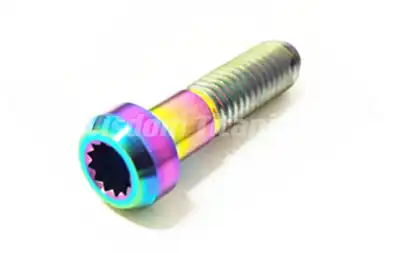
Installation errors cost more than the fasteners themselves. A technician cross-threading an expensive titanium bolt wastes the component and potentially damages the parent material requiring costly repair. Improper torque application leaves joints either loose enough to fail or stressed beyond yield, creating long-term reliability problems. These mistakes stem from treating titanium fasteners like common steel hardware without understanding the material's unique characteristics.
This manual establishes standardized procedures for m7 titanium bolt installation and maintenance based on industry best practices and manufacturing expertise from Baoji Wisdom Titanium. We'll examine essential preparation steps that prevent problems before assembly begins, detail the installation sequence that ensures proper preload without damage, and outline inspection protocols that verify joint integrity. Following these procedures maximizes fastener performance while minimizing the risk of premature failure or costly rework.
Pre-Installation Preparation
Surface cleanliness determines whether threaded engagement proceeds smoothly or creates galling damage that ruins both bolt and hole. Contamination from machining fluids, metal particles, or corrosion products introduces abrasive material that scores thread flanks during installation. Oil residues alter friction coefficients unpredictably, causing torque-based preload calculations to deliver widely varying clamping forces. Cleaning seems mundane compared to the actual installation, yet this step prevents more problems than any other single procedure.
Material Verification and Documentation Review
Confirming that you're installing the correct m7 titanium bolt grade prevents mismatches between design requirements and actual hardware. Material certificates document the titanium grade, heat lot, and mechanical properties for each production batch. Cross-reference these certificates against engineering specifications to verify the material meets strength, corrosion resistance, and temperature capability requirements. Grade 2 and Grade 5 titanium look identical but deliver vastly different performance, making verification essential rather than optional.
Dimensional verification catches manufacturing defects or shipping damage before installation. Measure thread pitch with a pitch gauge to confirm the 1.0mm spacing specified for M7 fasteners. Check overall length against drawings, especially for custom configurations where non-standard dimensions apply. Inspect head configuration to ensure socket depth, across-flats dimensions, and head height match specifications. The ±0.05mm manufacturing tolerance from quality suppliers like Baoji Wisdom Titanium ensures dimensional consistency, but verification provides additional confidence.
Installation specifications tell you how much torque to apply, what lubrication to use, and any special procedures required for the specific joint. Assembly drawings indicate torque values, tightening sequences for multiple-bolt patterns, and whether washers or other components belong in the stack-up. Review these specifications completely before starting rather than discovering mid-installation that you lack required materials or tools. Engineering changes sometimes modify installation procedures without updating all documentation, so verify you're working from current revision levels.
Tool Selection and Calibration
Torque wrench accuracy directly affects preload consistency and joint reliability. Digital or beam-type torque wrenches suitable for the 15-25 Newton-meter range typical of M7 installations should carry current calibration certificates proving accuracy within ±4% of indicated value. Calibration intervals typically span 12 months or 5,000 cycles, whichever comes first. Using uncalibrated tools introduces uncertainty that undermines careful calculation of required installation torque based on material properties and desired preload.
Hex key or bit selection matters more with titanium than steel fasteners due to galling concerns. The tool must fit the socket without excessive clearance that allows rocking or point contact concentrating stress. Precision hex keys manufactured to tight tolerances provide full six-point engagement that distributes driving force uniformly. Ball-end hex keys offer convenient angle access but should never be used for final torque application since they contact only two or three socket walls, tripling stress concentration and risking socket damage.
Adapters, extensions, and universal joints alter torque wrench calibration by changing the effective lever arm length. Each additional component between the wrench drive and the fastener introduces flexibility that absorbs some applied torque. If extensions prove necessary due to access limitations, recalibrate the assembly or apply correction factors based on the specific tool configuration. Direct connection between torque wrench and socket provides most accurate results whenever space permits.
Installation Procedure (Standardized Process)
Hand-threading the m7 titanium bolt establishes proper thread alignment before applying driving torque. Start the bolt by rotating it clockwise with fingers only, feeling for smooth, even resistance as threads engage. Binding or rough spots during hand-threading indicate cross-threading or contamination that requires backing out and reinspecting both components. The bolt should advance approximately one millimeter per revolution corresponding to the 1.0mm thread pitch. This manual starting phase prevents damage that power tools might cause before misalignment becomes apparent.
Initial tightening brings the bolt head into contact with the bearing surface using minimal torque. Continue hand-threading until the head touches the washer or parent material, then apply 2-3 Newton-meters with the torque wrench to seat components firmly without generating significant preload. This snugging operation takes up clearances and establishes the starting point for final torque application. Multiple fasteners in a pattern should all reach snug-tight condition before any receive final torque, preventing distortion from uneven clamping that might occur if you fully tighten one bolt while others remain loose.
Torque application follows calculated values based on desired preload, material grade, and lubrication condition. Grade 5 m7 titanium bolt installations targeting 70% of yield strength typically require 16-18 Newton-meters with proper lubrication. Increase torque to 22-24 Newton-meters for dry assembly, though lubrication provides more consistent results and reduces galling risk. Apply torque smoothly in a continuous motion rather than jerky impacts that cause friction to vary. The wrench should click or signal when reaching the target value, at which point stop immediately without over-rotating.
Sequential tightening patterns distribute clamping force uniformly across joints containing multiple fasteners. Patterns typically follow star or crossing sequences that tighten bolts opposite each other rather than adjacent positions. This approach prevents warping or distortion as preload builds incrementally across the entire joint. For a four-bolt pattern, tighten in 1-3-2-4 sequence. Six-bolt patterns use 1-4-2-5-3-6 order. Apply torque in stages, perhaps 50% of final value in the first pass, then 100% on the second pass, allowing the joint to settle between stages.
Post-Installation Inspection
Visual examination immediately after installation detects obvious problems before the assembly enters service. Inspect for proper seating where bolt heads contact bearing surfaces, verifying full contact without gaps or tilting that would indicate incomplete tightening or interfering contamination. Check that no thread damage appears at the hole entry where cross-threading might have occurred. Look for lubricant squeeze-out around threads and head perimeter, which confirms adequate lubrication was present during installation.
Torque verification confirms that fasteners maintain specified values after initial installation. Re-apply the torque wrench to each bolt and note the breakaway torque where rotation just begins. This value should approximate the original installation torque within 10-15% for properly installed joints. Significantly lower breakaway torque indicates preload relaxation from embedment, gasket compression, or possible yielding. Higher values suggest additional tightening occurred after initial installation or friction coefficient changes from lubricant redistribution.
Mark each verified fastener with witness marks or documentation indicating inspection completion. Paint markers across the bolt head and adjacent surface create visual indicators if rotation occurs during service. Inspection stamps or tags document that torque verification occurred and who performed it. These markings support quality management systems and provide evidence of proper installation procedures should questions arise during subsequent audits or failure investigations.
Industry-Specific Installation Requirements
Aerospace assembly procedures follow detailed work instructions that specify every aspect of m7 titanium bolt installation down to the number of threads exposed after proper tightening. FAA regulations and original equipment manufacturer specifications mandate exact torque values, lubrication types, and inspection criteria. Deviation from these requirements without engineering authorization can void certifications and create safety risks. Aerospace technicians undergo specialized training and certification before performing fastener installations on flight-critical structures.
Medical device manufacturing applies cleanroom protocols during titanium fastener installation to prevent contamination that might compromise biocompatibility. Lubricants must be biocompatible and leave no residue that could leach into bodily fluids. Installation tools receive special cleaning and sterilization between uses. Documentation requirements exceed most industries since regulatory approval depends on demonstrating consistent, validated assembly processes. Each installation step links to process validation studies proving that procedures reliably achieve specified outcomes.
Marine applications prioritize corrosion prevention through surface treatments and isolation methods that extend fastener life in saltwater environments. Applying sacrificial anodic coatings to aluminum structures reduces galvanic current flow between titanium bolts and surrounding material. Isolating washers provide electrical insulation that interrupts galvanic cells. Installation procedures specify torque levels that avoid crushing these protective elements while maintaining adequate preload. Post-installation coating of exposed threads with marine-grade sealants excludes saltwater from crevices where concentration effects might initiate corrosion.
Motorsport engineering balances installation speed against precision since race car preparation occurs under severe time pressure. Quick-release fasteners or captive washer designs speed assembly while maintaining reliability. Teams develop installation jigs that position multiple fasteners simultaneously, reducing setup time. Despite the time pressure, torque specifications remain non-negotiable since fastener failure during competition causes retirement or safety incidents. Inspection procedures condense to essential verifications that catch critical errors without consuming excessive preparation time.
Proper installation procedures maximize the return on investment in premium m7 titanium bolt components. The techniques outlined in this manual reflect decades of industry experience and engineering research into fastener performance. Yet every application presents unique challenges requiring expert consultation to optimize specifications and procedures. Baoji Wisdom Titanium provides not just quality fasteners but the technical support that ensures successful implementation.
For detailed installation guidance, application-specific recommendations, or quotations on M7 titanium bolts and related fastener products, contact Baoji Wisdom Titanium today. Our team stands ready to discuss your requirements and provide solutions backed by manufacturing expertise and quality commitment. Send your inquiry to sales@wisdomtitanium.com and experience professional support from titanium fastener specialists who understand that proper installation determines whether premium components deliver their full potential.
FAQs
Q1: How many times can I reuse an M7 titanium bolt before replacement becomes necessary?
A: Installation stress and removal method limit titanium fastener reuse. One or two reinstallations are permitted for non-critical applications if the bolt was stressed to 60-70% of yield and removed without harm. Threads work-harden somewhat with each torque cycle, risking galling during removal. Aerospace standards prevent reuse, necessitating new fasteners for each installation. New hardware should be installed in critical structural joints regardless of bolt quality. Before reuse, discard bolts with damage, rust, or distortion. Replacement hardware is cheaper than strained or damaged fasteners.
Q2: What should I do if a titanium bolt breaks during installation?
A: Stop immediately and determine the failure mode before extracting. If the head sheared off with the shank still threaded, gently drill a pilot hole down the middle and remove the remains with a left-hand drill or screw extractor. Put penetrating lubricant on and let it soak before extracting. Heat loosens galled threads but must stay below 480°C to preserve parent material qualities. Check the threaded hole for helicoil damage if cross-threading or material flaw caused the break. Use photos and failure analysis to identify if installation, material, or design flaws caused the break. Contact the manufacturer for remedial action advice.
Q3: Can I use a standard torque wrench designed for steel fasteners when installing M7 titanium bolts?
A: Yes, if the wrench has current calibration and the right torque range. Depending on grade and preload, M7 titanium bolts require 15-25 Newton-meters, which ordinary torque wrenches can handle. The torque wrench measures rotational force, not material. However, titanium torque values must be calculated separately from steel fastener specifications. Different friction and lower modulus mean torque-tension relationships distinguish titanium from steel. Titanium's higher cost makes installation errors more costly, making calibration crucial. If volume warrants it, invest in titanium assembly torque wrenches to avoid misspecification.
References
- Bickford, J.H. (2008). Introduction to the Design and Behavior of Bolted Joints (4th Edition). Boca Raton, FL: CRC Press.
- Junker, G.H. (1969). "New Criteria for Self-Loosening of Fasteners Under Vibration." SAE Technical Paper 690055. Warrendale, PA: SAE International.
- NASA. (1990). NASA Reference Publication 1228: Fastener Design Manual. Washington, DC: National Aeronautics and Space Administration.
- ASM International. (2015). ASM Handbook Volume 4A: Steel Heat Treating Fundamentals and Processes. Materials Park, OH: ASM International.
- Barrett, R.T. (1990). Fastener Design Manual. NASA Reference Publication 1228. Washington, DC: National Aeronautics and Space Administration.