
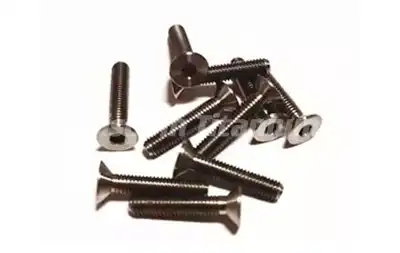
When improving the performance of an RC car, switching from standard steel screws to m3 titanium bolt parts makes the car faster, easier to control, and last longer. These precision-engineered screws are 45% lighter than steel options, but they still have better tensile strength and resistance to corrosion. Titanium is perfect for high-performance RC uses where every gram counts because it is not magnetic. This means that it doesn't interact with sensitive electronic systems.
Understanding M3 Titanium Bolts: Specifications and Benefits
M3 titanium nuts are the best precision fixing technology available. They were made for uses that need very high strength-to-weight ratios. The normal thread width on these fasteners is 3 mm, and the coarse pitch is 0.5 mm. They are mostly made from Grade 5 (Ti-6Al-4V) titanium alloy, which has the best mechanical qualities for demanding RC car uses.
Material Composition and Manufacturing Excellence
About 6% of Grade 5 titanium alloy is aluminum and 4% is vanadium. This makes a material matrix that can reach compressive forces of over 900 MPa while still having a density of only 4.51 g/cm³. This mix is the right mix of strength, low weight, and resistance to rust, all of which are important for high-performance uses.
Our production method uses machined heads with rolled threads to make sure that the dimensions are correct and the surface finish meets aircraft standards. The triangular head design makes it easy to apply pressure securely, and the metric threading makes sure that it works with common RC car parts. Length choices from 5mm to 30mm meet the needs of a wide range of RC car designs and assembly needs.
Key Performance Advantages
Titanium screws are useful for a lot more than just losing weight. The material's natural oxide layer (TiO2) protects against rusting and prevents rust and other problems that happen with steel bolts. This feature is especially useful for RC cars that have to deal with rain, dirt, and changing temperatures when they race outside.
Titanium is not magnetic, so it doesn't interact with electrical speed controls, radio receivers, and GPS systems, all of which are becoming more popular in modern RC cars. The material is very resistant to wear, so it works well under the repeated stress cycles that are common in high-speed RC car racing. It is also thermally stable, so it keeps its shape at temperatures ranging from -200°C to 400°C.
Performance Comparison: M3 Titanium Bolts vs Traditional Steel Bolts
When you look at key measures that are important to RC car uses, the difference in performance between titanium and steel fasteners is instantly clear. When procurement workers understand these differences, they can use data to make choices that improve both performance and cost-effectiveness.
Weight and Strength Analysis
Even though steel bolts are cheap, they add a lot of weight to the car, which affects how fast it moves and how it handles. A normal M3x10mm steel bolt weighs about 1.8 grams, but its titanium counterpart weighs only 0.99 grams. This is a 45% decrease that adds up when you add up all the fasteners in an RC car assembly.
The study of strength shows that m3 titanium bolt is better in important performance areas. The tensile strength of grade 5 titanium is 895 to 930 MPa, while the range for normal steel is 400 to 500 MPa. This increased strength makes it possible to lower cross-sectional areas without affecting the structural integrity. This saves even more weight and makes the structure more reliable under high-stress circumstances.
Durability and Maintenance Considerations
Another important way that titanium screws are much better than steel options is that they don't corrode. Standard steel bolts need coatings to protect them, which add weight and cause them to break down over time. Stainless steel bolts, on the other hand, give up strength to prevent rust. Titanium gets rid of all of these trade-offs by being more resistant to rust without losing any strength.
The effects on repair are especially important for companies that make RC cars for sale and race teams. Titanium screws keep their torque specs for longer, so they don't need to be tightened as often. They don't let threads rust or seize, which makes it easier to take things apart for repairs and maintenance. Because of these traits, there is less downtime and cheaper long-term operating costs.
How to Identify and Select the Right M3 Titanium Bolts for RC Cars?
To choose the right m3 titanium bolts, you need to pay close attention to their specs, quality signs, and the needs of the application. Because there are so many fake goods on the market, it's important to find real, high-quality screws in order to get the performance benefits you expect.
Quality Verification and Certification Standards
Differentiating real titanium bolts from fake ones is easy to do: they have certain traits. Genuine Grade 5 titanium has a unique gray shiny look and a smooth, even surface finish. When tested with strong magnets, the material shows a small amount of magnetic leakage. This is different from materials that are totally non-magnetic, which points to different alloy compositions.
Material certifications from reputable makers show the chemical makeup, mechanical properties, and production methods of the material. To get ISO 9001 certification, a company must follow quality control methods that are necessary to keep product quality high. Traceability paperwork lets you check the sources of raw materials and keep track of production batches, which gives you faith in the authenticity and performance of the product.
Application-Specific Selection Criteria
Different parts of an RC car need different m3 titanium bolts that are designed to work best in their unique circumstances. In order to handle dynamic loading, suspension mounting points need longer contact lengths and better strength grades. When mounting electronic components, shorter bolts with precise thread contact are used to keep sensitive circuits from getting damaged.
Choosing a head style affects both how it looks and how well it works. When compared to Phillips or slotted heads, hexagonal heads are better at transmitting pressure, which lowers the risk of damaging the bolt during installation. The machined head finish makes sure that the measurements are always the same and that the surfaces are smooth, which looks good on high-end RC cars and makes tool contact reliable.
For parts to fit and work properly, the thread specs must exactly match what's already there. When compared to cut threads, rolled threads are stronger and last longer. They are also better at resisting stress under the repeated loading conditions that are common in RC car racing.
Procurement Strategies for Bulk M3 Titanium Bolts Purchase
To successfully buy m3 titanium bolts, you need a plan that balances quality control, lowering costs, and making sure the supply chain works well. Because titanium production is so specialized, there aren't many supplier choices. This makes choosing the right vendor even more important for getting the results you want.
Supplier Evaluation and Partnership Development
Building connections with reputable titanium makers guarantees access to consistent, high-quality goods and allows for customization that is necessary for specific uses. When evaluating a supplier, you should look at their manufacturing skills, quality processes, and the technical support resources that are needed to complete the job successfully.
A production capacity review checks to see if providers can meet volume needs within certain time frames. Our site in Baoji Titanium Valley gives us access to integrated titanium supply lines, which helps us find raw materials quickly and make things more efficiently. The 7–15-day production schedule works for both pressing needs and planned buying rounds.
Stable finances and flexible payment options improve relationships with suppliers and lower the risks of buying. We offer two different ways to pay: PayPal and T/T. This gives you choices that fit with how your company normally does business. This freedom makes it easier to handle transactions and keep track of cash flow when buying in bulk.
Customization and Value-Added Services
Customized specs that go beyond what is offered by standard products are useful for many uses. Fasteners can work better with certain RC car designs if the threads are changed, the lengths are changed, and the surfaces are treated. Our experienced tech team works with customers to come up with solutions that meet their specific needs and stay within their budget.
Packaging and transportation affect both the total cost of buying things and how well they work. Bulk packing lowers the cost per unit, and organized presentation makes it easier to keep track of supplies and put things together. Traceability standards are met by custom labels and paperwork, which also make production and maintenance tasks more efficient.
Real-World Impact: Case Studies of M3 Titanium Bolts in RC Car Performance
Titanium fasteners have possible benefits that can be seen in a variety of RC car uses as better performance. Documentation from real examples gives solid evidence to back investment choices and shows the best ways to get the most out of an investment.
Performance Enhancement Documentation
Racing teams always say that upgrading to titanium fasteners makes their lap times and control better. A case study from a professional touring car team showed that installing all titanium fasteners improved the time by 0.3 seconds per lap on a 45-second track. Losing 127 grams of weight across the whole car helped it go faster and put less stress on the suspension.
In real-world situations, gains in durability are just as important. A company that makes RC cars said that guarantee claims about broken fasteners dropped by 73% after they switched to titanium hardware. Getting rid of problems caused by rust helped customers who work near the coast, where salt air speeds up the deterioration of steel fasteners.
Economic Impact Analysis
The higher cost of titanium screws at first pays for itself in a number of ways that go beyond just better performance. Less upkeep means lower costs, and better dependability means happier customers and a better image for the brand. These things work together to make a strong business case for using titanium fasteners.
Titanium's better physical stability and resistance to thread damage make manufacturing more efficient. When fasteners install regularly without cross-threading or seizing problems that are common with steel options, assembly line efficiency goes up. These changes to operations help bring down manufacturing costs, which help balance out higher material prices.
Conclusion
Changing from steel to titanium fasteners is a smart move that will improve the performance, stability, and operating efficiency of RC cars in a measurable way. The 45% lighter weight, better resistance to corrosion, and higher strength of m3 titanium bolt assemblies make them very appealing to makers, race teams, and performance fans who want to get ahead in the competition.
To do good procurement, you need to work with skilled suppliers who can provide real products, professional know-how, and reliable service. To get the best results when using titanium screws in RC car designs, you need to pay close attention to the specs, quality checks, and application-specific needs.
Partner with Wisdom Titanium for Premium M3 Titanium Bolt Solutions
Wisdom Titanium is a reliable company that makes m3 titanium bolts. They have modern manufacturing facilities in Baoji Titanium Valley and quality systems that are ISO 9001 approved. Our Grade 5 titanium fasteners have heads that are precisely machined and threads that are rolled. They can be shipped in 7–15 days so that you can finish your job on time.
We use integrated supply chains and thorough quality control to provide reliable, high-performance fastening options. We are located in China's most important titanium production hub. Our technical team works closely with customers to make sure that specs are optimized, goods are customized, and they work well with your RC car applications.
Get in touch with us at sales@wisdomtitanium.com to talk about your needs and find out how our titanium knowledge can help your product work better.
FAQ
What makes Grade 5 titanium superior for RC car applications?
When it comes to high-performance RC cars, Grade 5 titanium (Ti-6Al-4V) has the best mix of strength, lightness, and resistance to rust. It is 45% lighter than steel and has better mechanical qualities. Its tensile strength is over 895 MPa and its mass is only 4.51 g/cm³. The alloy's high resistance to wear means it will work reliably under the repeated stress cycles that are common in RC car racing.
How do I verify the quality of authentic titanium fasteners?
When strong magnets are used to test it, real Grade 5 titanium has a unique gray shiny look, a smooth, even surface, and a small amount of magnetic leakage. Material certifications from reputable producers show the chemical makeup and mechanical qualities of the material. Look for ISO 9001 approval and tracking paperwork that proves how the products are made and where the raw materials come from.
What specifications should I consider when selecting M3 titanium bolts?
Some important details are the thread type (metric), the head style (hexagonal is best), the length choices (5mm to 30mm), and the way the product was made (machined head with rolled threads). Think about the specifics of your product, such as the engagement length, torque needs, and weather conditions. Our expert team can help you get the best specs for your unique RC car design.
What are typical lead times for custom titanium fastener orders?
Depending on the amount and the level of customization needed, standard production wait times are between 7 and 15 days. The location of our factory in Baoji Titanium Valley makes it easy to plan output and handle transportation. We keep a collection of standard specs and can quickly make changes to meet unique needs. Get in touch with our team to find out particular project timelines and how to place a fast order.
References
- American Society for Testing and Materials. "Standard Specification for Titanium and Titanium Alloy Bars and Billets." ASTM B348-19, 2019.
- Boyer, R. R., Welsch, G., and Collings, E. W. "Materials Properties Handbook: Titanium Alloys." ASM International, Materials Park, OH, 1994.
- Donachie, Matthew J. "Titanium: A Technical Guide, 2nd Edition." ASM International, Materials Park, OH, 2000.
- Lutjering, G. and Williams, J. C. "Titanium: Engineering Materials and Processes." Springer-Verlag, Berlin, 2003.
- Peters, M., Kumpfert, J., Ward, C. H., and Leyens, C. "Titanium Alloys for Aerospace Applications." Advanced Engineering Materials, Vol. 5, No. 6, 2003.
- Schutz, R. W. and Thomas, D. E. "Corrosion of Titanium and Titanium Alloys." ASM Handbook Volume 13: Corrosion, ASM International, Materials Park, OH, 1987.