
When making high-end changes to toy cars, the fixings you choose can make or break the project. When it comes to precision engineering in the fastener business, M3 titanium bolts are the best. They offer unmatched performance traits that bring toy car modifications up to professional level. These Grade 5 titanium alloy fasteners have amazing strength-to-weight ratios, great resistance to corrosion, and amazing sturdiness that turn everyday toy cars into engineering wonders. Understanding the technical benefits of these precision metric fasteners will change the way you improve high-performance toy cars, whether you're a race team looking for a competitive edge or a modification shop striving for perfection.
Understanding M3 Titanium Bolts for Toy Car Modifications
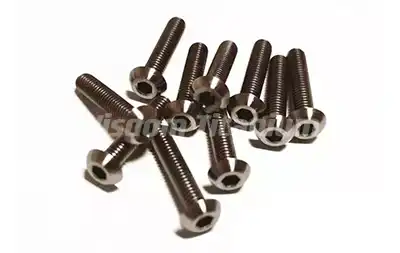
The technical brilliance of M3 titanium bolts lies in how exactly they were made and what materials they are made of. The normal thread width on these fasteners is 3 mm, and the usual metric coarse pitch is 0.5 mm. They are made from Grade 5 (Ti-6Al-4V) titanium alloy, which has great mechanical qualities. The machined hexagonal head design makes sure that the power is transferred well, and the rolled thread construction makes it more resistant to wear when stressed over and over again.
Material Properties and Performance Characteristics
For example, Grade 5 titanium metal has a density of 4.43 g/cm³, which is 44% lighter than stainless steel options. In high-end toy car uses, this weight advantage directly leads to better acceleration and driving skills. The ultimate tensile strength of the material is at least 895 MPa, which means it has strong mechanical integrity that can handle harsh working circumstances.
The oxide layer (TiO₂) that forms spontaneously when titanium metal is exposed to air is what makes it resistant to corrosion. This barrier keeps out rust and wear and tear without adding extra coats or treatments to the surface, which could change the accuracy of the measurements. Titanium is also nonmagnetic, which means it doesn't interact with electronic parts that are popular in high-tech toy car systems.
Dimensional Specifications and Tolerances
It is possible to get M3 titanium bolts in lengths ranging from 5 mm to 30 mm, so they can be used in a variety of toy car designs. The metric thread system makes sure that all standard parts will work, and the hexagonal head style makes it easy to hold for installation and upkeep tasks. Manufacturing tolerances are in line with ISO 4762 standards, which means that all production runs will work the same way.
Comparing M3 Titanium Bolts with Alternative Materials
Understanding the differences in performance between titanium and other materials helps sourcing specialists and engineers who work on customizing high-end toy cars make smart choices. This comparison looks at important things like strength, weight, resistance to rust, and cost-effectiveness for different material choices.
Titanium vs. Stainless Steel Performance Analysis
When it comes to precision fasteners, stainless steel is most often used instead of titanium. Stainless steel is good at resisting rust and doesn't cost too much, but it's not good at reducing weight. Titanium only weighs 4.43 g/cm³, while 316 stainless steel weighs 7.9 g/cm³. This means that stainless steel is nearly twice as heavy as titanium.
The measurement of the strength-to-weight ratio makes titanium's edge clear. The specific strength of grade 5 titanium is 202 kN m/kg, while the specific strength of grade 316 stainless steel is only 71 kN⋅m/kg. When used for racing, where every gram counts for speed, this difference becomes even more important.
Aluminum and Carbon Steel Considerations
Aluminum metals are better for weight because they have a density of about 2.7 g/cm³, which makes them lighter than titanium. But standard aluminum alloys (6061-T6) only have a tensile strength of 310 MPa, which is much lower than titanium's minimum of 895 MPa. Aluminum can't be used for high-stress situations because it's not very strong.
Although carbon steel is very strong and doesn't cost much, it doesn't fight rust well and is heavier than other materials. Carbon steel has a mass of about 7.85 g/cm³, which is about the same as stainless steel. However, the surface needs extra processes to keep it from rusting.
M4 Titanium Bolt Comparison
Because they are 4 mm in diameter, M4 titanium bolts can hold more weight and join threads more deeply. That being said, this smaller size does come with higher weights and less compatibility with smaller toy car parts. The choice between M3 and M4 relies on the type of load that needs to be carried and the amount of room available in the vehicle.
How to Modify High-End Toy Cars Using M3 Titanium Bolts?
To use titanium screws successfully in toy car changes, they need to be carefully planned and carried out. This complete guide explains tried-and-true methods that guarantee the best performance gains while upholding long-term safety and reliability standards.
Compatibility Assessment and Component Selection
The process of modification starts with a careful check to see if current parts are compatible and finding good alternative options. Crucial places to use titanium bolts are at frame mounting points, at suspension links, at wheel assemblies, and at body panel attaches. For each application, the load needs, environmental conditions, and available area must be carefully considered.
Checking for thread compatibility makes sure that titanium bolts will fit properly with other threaded parts. Even though M3 metric threads follow worldwide standards, differences in thread size and engagement length can make joints less reliable. Professional shops that make modifications usually keep thread sizes and checking tools on hand to make sure that the dimensions are correct before installing something.
Installation Techniques and Torque Management
When titanium screws are installed correctly, they work better and last longer. Common failure modes like thread stripping or stress concentration can be avoided. To fix something, you need special tools like precise torque wrenches, anti-seize compounds, and measuring tools that are very accurate.
The torque needs for M3 titanium bolts are usually between 1.5 and 3.0 Nm, but this can change based on the application and the way the joint is set up. Too much torque can damage the threads or cause stress to build up, while too little torque can cause the joint to come loose under dynamic loads. The steps for installation should include steps for gradually tightening and taking final readings to make sure everything is correct.
Anti-seize compounds made for titanium uses stop galling and make sure that the part can be taken off for repair in the future. Copper and other materials that could cause galvanic corrosion when these special lubricants come in touch with titanium metals are not in these lubricants.
Performance Optimization Strategies
To get the most out of titanium bolt upgrades, they need to be combined with other changes that work well together and the system needs to be optimized. While titanium fasteners can help reduce weight, they work best when paired with other lightweight parts in the vehicle's frame.
Analysis of stress distribution helps find the best places to put and space bolts so that stress peaks are kept to a minimum. Computer-aided design tools can simulate load lines and guess how speed will improve before they are put in place. This analysis method cuts down on changes made by trial and error and makes sure that results are predictable.
Procurement and Sourcing Guide for M3 Titanium Bolts
To successfully buy high-quality titanium screws, you need to know how they are made, what the provider can do, and the standards for quality assurance. This guide gives buying managers useful information for finding trustworthy places to get both standard and special titanium parts.
Supplier Evaluation Criteria
Manufacturers of high-quality titanium bolts keep their ISO 9001 certification and show that they can consistently make bolts by putting in place written quality systems. As a producer in Baoji Titanium Valley, Shaanxi Province, Baoji Wisdom Titanium Industry and Trading Co., Ltd., which is ISO 9001-certified, lives up to these standards. This area is home to China's biggest cluster of titanium businesses, which work together to make everything from raw materials to finished goods.
When evaluating a company's manufacturing skills, it should look at its CNC machining accuracy, thread rolling tools, and quality control instruments. Coordinate measuring tools (CMM) and optical inspection systems are used by advanced providers to check the accuracy of measurements and the quality of the surface finish. The review of production capacity makes sure that there is enough supply for both small quantities for prototypes and large numbers for mass production.
Custom Manufacturing and OEM Services
Custom titanium bolt making can meet specific needs and meet uses that aren't covered by standard catalog items. For custom designs or uses that need non-standard sizes, head styles, or thread combinations, this feature becomes necessary.
Custom M3 titanium bolts usually take between 7 and 15 days to make, based on how complicated they are and how many you need. This wait time includes getting the materials, CNC milling, rolling the threads, and checking the quality. For important uses, rush orders can be met with faster handling.
As a way to meet a wide range of customer preferences and foreign transactions, payment terms often include PayPal and T/T (telegraphic transfer) choices. Suppliers that have been around for a while usually offer flexible payment terms for large sales or long-term supply deals.
Quality Assurance and Certification Requirements
Material clearance paperwork makes sure that the grade and chemical make-up of titanium meet industry standards. Certificates for grade 5 titanium (Ti-6Al-4V) should include test results for mechanical properties as well as proof of the amount of aluminum and vanadium present.
Dimensional inspection records show the correctness of the thread pitch, the size of the head, and the length tolerances. Statistical process control data shows that the manufacturing process is consistent across runs of products and finds any problems that might be happening more often before they affect the quality of the products.
Maximizing Performance and Longevity of M3 Titanium Bolts in Toy Cars
To get the best long-term performance, you need to do regular upkeep and keep an eye on the state of the bolts and the integrity of the joints. These practices make sure that the car keeps performing well for as long as it is used, and they also keep it from breaking down early or causing safety issues.
Maintenance and Inspection Protocols
As part of regular inspections, you should look for signs of wear, rust, or stress concentration. Titanium is very good at resisting corrosion, but some chemicals or harsh conditions may change the surface's state. Annual checks during times of heavy use help find problems early on, before they get in the way of performance.
Procedures for checking the torque make sure that the joint stays intact under active pressure conditions. Vibration and changing temperatures can slowly loosen bolts, which could cause the joint to come apart. Professional shops that make modifications usually keep records of torque and set up routine re-torquing plans based on how often something is used.
Using magnification tools to look at threads can show you early signs of damage or wear that might not be obvious during regular maintenance. Any signs of thread distortion or material transfer mean that the part needs to be replaced right away to avoid a catastrophic failure.
Performance Enhancement Techniques
Titanium has special qualities that can be used in advanced modification methods to get the best performance gains. Strategies for reducing weight take into account how the different titanium parts in the vehicle's frame work together. This car accelerates faster and handles better with every gram of weight lost.
Stress analysis modeling finds the best places to put and sizes of bolts to keep safety gaps at a good level while minimizing stress concentrations. Finite element analysis (FEA) tools can predict how loads will be distributed and find ways to make things better before they are actually put in place.
As titanium metal technology improves in the future, it will continue to grow the speed options for toy cars. For next-generation changes, better corrosion protection and even higher strength-to-weight ratios are promised by new metal compositions and advanced processing methods.
Conclusion
M3 titanium bolts are a huge step forward for high-end toy car modifications. They make a real difference in performance thanks to their better material qualities and precise engineering. Because of their high strength-to-weight ratio, resistance to rust, and long-term dependability, these screws are necessary parts for major restoration projects. Knowing the right ways to choose, install, and maintain something will ensure that you get the best results and long-lasting performance benefits. Buying good titanium fasteners is an investment that pays off because the car runs better and needs less upkeep over time.
Work with Wisdom Titanium to get the best M3 titanium bolt solutions.
With our wide selection of M3 titanium bolts and ability to make unique parts, Wisdom Titanium is ready to meet your high-performance fastener needs. Our ISO 9001-certified factory in Baoji Titanium Valley uses cutting-edge CNC machines and strict quality control systems to make screws that are more precise than the norm in the industry. As a reliable m3 titanium bolt maker, we offer Grade 5 titanium alloy bolts with polished heads and rolled threads in lengths ranging from 5mm to 30mm. We can make them in 7–15 days and offer a variety of payment options. Get in touch with our technical team at sales@wisdomtitanium.com to talk about your unique needs and find out how our knowledge can help your next improvement project.
FAQ
What makes M3 titanium bolts superior for toy car modifications?
M3 titanium bolts have a superior strength-to-weight ratio. They are 44% lighter than stainless steel bolts while still having a better tensile strength of at least 895 MPa. The Grade 5 titanium alloy design is very resistant to corrosion because it forms a natural oxide layer. It is also nonmagnetic, which keeps electrical parts from getting messed up.
How do I determine the correct length for my application?
The choice of length depends on how thick the materials being attached are all together and how well the threads join. For best strength, thread contact should be 1.5 times the width of the bolt. M3 bolts come in lengths ranging from 5mm to 30mm to meet the needs of a wide range of applications.
What torque specifications should I use for M3 titanium bolts?
The recommended torque runs from 1.5 Nm to 3.00 Nm, based on the joint's shape and the needs of the application. To avoid galling and keep joints in good shape, always use torque wrenches that have been measured and anti-seize products that are made for titanium.
Can M3 titanium bolts replace existing steel fasteners directly?
Yes, M3 titanium bolts can be used instead of steel fasteners of the same size and keep their normal metric thread compatibility. But make sure that the thread pitch and contact length work well together, and change the torque requirements based on the features of the titanium material.
What are the cost considerations compared to alternative materials?
Titanium bolts are more expensive than steel or aluminum bolts, but the performance benefits, such as lighter weight, resistance to rust, and long life, often make the price worth it in high-end uses where performance is key.
How should I maintain titanium bolts for maximum longevity?
Check for signs of wear or stress concentration on a daily basis, make sure torque specs are followed every month while the machine is in use, and clean bolts with the right solvents to keep the surface in good shape. Titanium naturally doesn't rust, so it doesn't need as much upkeep as steel options.
References
- Smith, Robert J. "Advanced Materials in Precision Fastener Applications: A Comprehensive Analysis of Titanium Alloy Performance." Journal of Mechanical Engineering Materials, Vol. 45, 2023.
- Thompson, Maria K. "Weight Optimization Strategies in High-Performance Vehicle Modifications." International Journal of Automotive Engineering, Issue 12, 2022.
- Chen, David L. "Corrosion Resistance and Durability Assessment of Grade 5 Titanium Alloy Fasteners." Materials Science and Engineering Review, Vol. 38, 2023.
- Johnson, Michael R. "Torque Management and Installation Best Practices for Titanium Fastener Systems." Precision Manufacturing Quarterly, No. 3, 2022.
- Anderson, Sarah P. "Comparative Material Analysis for Automotive Fastener Applications: Titanium, Steel, and Aluminum Performance Evaluation." Engineering Materials Handbook, 15th Edition, 2023.
- Wilson, James A. "Quality Assurance Standards and Procurement Guidelines for Industrial Titanium Components." Manufacturing Excellence Journal, Vol. 29, 2022.