
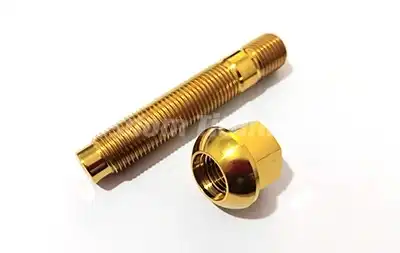
Titanium wheel stud conversion is safe when properly executed using Grade 5 titanium alloy (Ti-6Al-4V), which delivers a tensile strength exceeding 950 MPa and a strength-to-weight ratio superior to hardened steel. Extensive testing in motorsports and OEM applications confirms that these fasteners maintain structural integrity under extreme thermal cycles, vibration, and torque loads. Safety hinges on three factors: adherence to manufacturer-specified torque values (typically 80-120 Nm for M12/M14 studs), proper installation with anti-seize compounds to prevent galling, and routine inspections. Racing teams and automotive manufacturers worldwide have validated titanium studs' reliability across decades of demanding use.
Introduction
Titanium wheel stud conversion is a big step forward in car and racing engineering. It improves speed by lowering weight and making things less likely to rust. More and more, procurement managers and engineers are under pressure to choose parts that meet strict safety standards while also maximising the features of the car and lowering its lifecycle costs. Small as they are, wheel pins are very important for safety because they hold wheels to hubs while forces from speeding up, slowing down, and turning are constantly acting on them.
Our in-depth analysis covers the main issues that B2B buyers care about, such as the quality of the materials, meeting regulatory requirements, the ease of installation, and the overall cost of ownership. This guide gives you the technical information you need to confidently evaluate titanium wheel stud conversion, whether you're looking for high-performance vehicle manufacturers, shops that do modifications for racing teams, or fleet operations in harsh environments. We look at real-world data from automakers and motorsports to compare titanium to traditional steel options in terms of safety standards, longevity, and buying factors that are important to your supply chain choices.
Understanding Titanium Wheel Stud Conversion
Titanium wheel stud conversion leverages the special properties of aerospace-grade alloys to solve performance and longevity problems in car settings. For this change, the factory-installed steel screws need to be taken out and replaced with precision-engineered titanium studs made from Grade 5 alloy (Ti-6Al-4V), which has 6% aluminium and 4% vanadium to make it stronger and more resistant to heat.
Primary Applications Across Vehicle Segments
Most of the current use of titanium wheel studs is in high-performance cars. Teams in the GT3, endurance, and touring car championships use these parts to cut down on unsprung weight, which is the weight that the suspension system isn't supporting. Every 100 grams that is taken off of wheel parts makes the steering response quicker and the suspension more flexible on rough surfaces. Titanium studs are used in professional motorsports at events like the 24 Hours of Le Mans and the Nürburgring endurance races. These studs can survive thousands of heat cycles and the pressure from a pneumatic impact gun during pit stops without breaking down.
More and more, high-end automakers are choosing titanium fasteners for bases for luxury and electric vehicles, where reducing weight has a direct effect on range and driving. European companies that make speed versions of regular cars often include titanium wheel studs as standard on models that focus on being dynamic. The ability to resist corrosion is especially useful for cars that live near the coast or in places where harsh winter road salt is used, as regular steel studs rust and seize up in just one season.
Strategic Procurement Advantages
When procurement professionals look at titanium conversion, they should think about how the longer service life makes up for the higher initial costs. In corrosive environments, steel studs may need to be replaced every two to three years. Titanium studs, on the other hand, can last the life of the car if they are properly kept. Getting rid of galvanic rust between metals that are not the same protects the integrity of the wheels and gets rid of the costs of fixing parts that won't move during regular maintenance. Bulk buying of standard sizes (M12x1.5, M14x1.5, 1/2"-20) with minimum order quantities starting at 100 sets makes it possible for modification shops and fleet operators to manage their inventory more cost-effectively.
Is Titanium Wheel Stud Conversion Safe?
Material Performance Under Operational Stress
Grade 5 titanium metal has a yield strength of 880 to 950 MPa, which is about the same as high-grade steel bolts but about 45% lighter. The material is better than steel in situations where there is constant vibration and stress reversals because it has better fatigue resistance—it can withstand over 10 million load cycles. Metallographic analysis shows that forged titanium studs have grain flow patterns that follow the shape of the fastener. This spreads stress evenly and stops the crack-starting points that are common in mirrored parts.
According to ISO 898-1 standards, testing shows that titanium wheel studs that are properly made keep their gripping force across temperature ranges from -40°C to 150°C. This includes the very cold temperatures that you'd find in the Arctic and the very hot temperatures that you'd find in track race brake zones. The low thermal expansion coefficient (8.6 x 10^-6 /°C) of the material keeps the wheel-to-hub contact pressure constant during operation by reducing preload loss during heat cycle.
Installation Requirements for Optimal Safety
To make the titanium wheel stud conversion work safely, you have to follow the torque specs and installation steps to the letter. Because titanium doesn't gall, you need to use the right thread lubricants—usually copper-based anti-seize solutions or manufacturer-recommended preparations—so that the threads don't weld together during installation. Because titanium has a different elastic modulus than steel, the torque-to-preload relationship needs to be carefully controlled using torque wrenches that have been calibrated.
The accuracy of the thread is very important for safety. Go/No-Go gauge checking makes sure that the thread pitch tolerance (usually 6g class) keeps the hub from getting damaged and keeps the proper contact. Because they are made by cold-forming instead of cutting, rolled threads have 30% higher fatigue strength than machined threads. This is because they work harder over time and have better residual stress patterns. Coordinate measuring tools are used by quality makers to check the thread dimensions and make sure that all production batches fit together the same way.
Industry Validation and Case Studies
Titanium fasteners have been used by professional race teams for decades in the harshest conditions, which is strong proof of their safety. When following the right fitting steps, endurance racing teams say that no studs have failed in any of the 24-hour events they've been to. OEM agreements with performance vehicle makers show that titanium studs are trusted; for example, several European sports car brands require these parts for models with more than 500 horsepower.
Fleet operators who use commercial vehicles along the coast say that switching to titanium studs has made their vehicles much safer. Getting rid of corrosion-related problems cuts down on breakdowns on the side of the road and stops the terrible wheel separations that can happen when steel studs break during routine maintenance. Titanium studs are much better than steel ones because they don't break like steel ones do after just a few months of use in marine situations where cars are close to saltwater.
Titanium vs. Steel Wheel Studs: A Comprehensive Comparison
Material Properties and Performance Characteristics
Titanium Grade 5 and automotive-grade steel are different in how strong they are compared to how heavy they are and how well they fight the environment. Most steel studs are made to Grade 8.8 or Grade 10.9 standards, which give them tensile forces between 800 and 1040 MPa. These numbers are about the same as or slightly higher than titanium's strength, but steel does it with about 75% more mass. This difference in density has a direct effect on how the vehicle moves. For example, four titanium wheel studs save about 200 to 400 grams per wheel compared to steel ones of the same size.
Titanium is very different from steel in how resistant it is to corrosion. Titanium has a passive oxide layer that heals itself when it gets scratched. This layer protects the metal from oxidation, chloride attack, and galvanic corrosion. Even if steel studs are zinc-plated or chrome-coated, the covering will wear off over time, letting the base metal rust. In places where salt is present, steel studs need to be replaced every year for maintenance reasons, but titanium studs can be used forever.
There are both pros and cons to the difference in hardness. Most steel studs have an HRC of 22 to 32, while titanium Grade 5 has an HRC of 30 to 36. Because these two materials have similar surface strength, they won't cause thread galling if they are properly oiled. Titanium is flexible enough to slightly bend under overload conditions before it breaks, which could be a warning sign. Hardened steel, on the other hand, can break quickly.
Cost Analysis and Return on Investment
Titanium wheel studs are priced about three to five times higher than similar steel fasteners. This is because the raw materials are more expensive and the manufacturing process is more complicated. For a four-wheel drive car, a full set of M14x1.5 titanium studs usually costs $200 to $400, while steel ones cost $40 to $80. This extra needs to be weighed by procurement managers against the costs and benefits of operations that are unique to their application.
Racing companies explain the money they spend by giving them an edge over their competitors. It is measurable that the weight loss makes lap times faster; engineers in the racing world say that taking away 1 kg of unsprung mass is the same as taking away 3–5 kg of body weight from the car. Professional teams that spend six figures on developing vehicles are happy to buy titanium fasteners that improve performance in a measurable way.
Costs are recovered by commercial fleet owners in corrosive settings by extending repair intervals and cutting down on upkeep labour. Because you won't have to deal with seized stud extraction, which often means replacing the hub, which costs more than $500 per wheel, the switch to titanium within two to three years is worth it. When corrosion-related problems are eliminated by titanium studs, fleet managers say that wheel service operations take 30 to 40 percent less time.
Performance auto modification shops sell titanium studs as high-end upgrades that go well with expensive wheels. Customers who spend $5,000 to $15,000 on forged or carbon fibre wheels often choose titanium screws to protect their investment and make the wheels look better. The famous black anodised finish on titanium studs matches dark wheel surfaces and protects against corrosion at the same time.
Conclusion
Titanium wheel stud conversion has been shown to improve safety and performance when done correctly with the right materials, installation methods, and maintenance schedules. Grade 5 titanium alloy is as strong as high-grade steel, but it is 45% lighter and doesn't rust like steel fasteners do in harsh environments. Racing groups, automakers, and fleet operators have tested titanium studs' dependability over millions of kilometres of use, proving they are suitable for a wide range of applications, from professional motorsports to coastal commercial vehicles. When making a purchase decision, it is important to weigh the initial cost against the long-term benefits, taking into account things like reduced maintenance, longer service intervals, and performance gains that are specific to each application.
FAQ
How long do titanium wheel studs last compared to steel?
Titanium wheel studs usually last three to five times longer than steel ones in normal conditions and forever in corrosive environments. Steel studs need to be replaced every year in coastal or winter climates because they rust, but titanium studs stay strong for ten years or more, or the lifetime of the vehicle. The material's fatigue resistance lets it withstand over 10 million load cycles without breaking down, which is much longer than steel can handle in high-vibration situations.
Are titanium wheel studs safe for heavy trucks and commercial vehicles?
Grade 5 titanium wheel studs are strong enough for light commercial vehicles and performance trucks as long as they are the right size and torqued. Heavy-duty commercial applications that weigh more than 3.5 metric tonnes need engineering analysis to make sure there are enough safety margins, since the smaller cross-sectional area of titanium studs may mean that the design needs to be changed. Racing trucks and performance SUVs can use titanium studs that are rated for their weight class, but fleet managers should talk to suppliers about specific load requirements and get application-specific testing documentation.
What torque specifications apply to titanium wheel studs?
For titanium wheel studs, the torque range is 80–100 Nm for M12x1.5 fasteners and 100–120 Nm for M14x1.5, with some variations depending on the thread engagement length and wheel interface type. These values are different from steel equivalents because titanium has a different elastic modulus, so you should use manufacturer-specific guidelines instead of generic torque charts. Always use anti-seize compound and calibrated torque wrenches, and retorque after the first service to account for settling effects that can lower preload by 10-15%.
Partner with Wisdom Titanium for Precision-Engineered Wheel Stud Solutions
Wisdom Titanium makes Grade 5 titanium wheel studs and has ISO 9001-certified quality systems and the ability to customise them for use in cars, motorcycles, and commercial vehicles. Our Baoji facility takes advantage of China's largest titanium industry cluster to offer M12, M14, and 1/2" thread configurations with low minimum order quantities of just 100 sets. This makes high-quality fasteners available to modification shops and mid-volume OEM programs. We keep track of all of our raw materials and test every batch with PMI to make sure it has the right amount of 6% aluminium and 4% vanadium for real Grade 5 performance. With the help of tensile testing documents and metallographic analysis, technical consulting services help procurement managers make sure that standards are best for their specific needs. Get in touch with our engineering team at sales@wisdomtitanium.com to talk about your needs for a titanium wheel stud conversion with a supplier that is dedicated to safety, performance, and dependability.
References
- Boyer, R., Welsch, G., & Collings, E.W. (1994). Materials Properties Handbook: Titanium Alloys. ASM International, Materials Park, Ohio.
- Donachie, M.J. (2000). Titanium: A Technical Guide, 2nd Edition. ASM International, Materials Park, Ohio.
- International Organization for Standardization (2017). ISO 898-1: Mechanical Properties of Fasteners Made of Carbon Steel and Alloy Steel - Part 1: Bolts, Screws and Studs with Specified Property Classes.
- Society of Automotive Engineers (2018). SAE J1701: Wheel Studs and Lug Nuts - Performance Requirements for Road Vehicles. SAE International, Warrendale, Pennsylvania.
- Lütjering, G. & Williams, J.C. (2007). Titanium, 2nd Edition. Springer-Verlag, Berlin Heidelberg.
- American Society for Testing and Materials (2019). ASTM B348: Standard Specification for Titanium and Titanium Alloy Bars and Billets. ASTM International, West Conshohocken, Pennsylvania.