
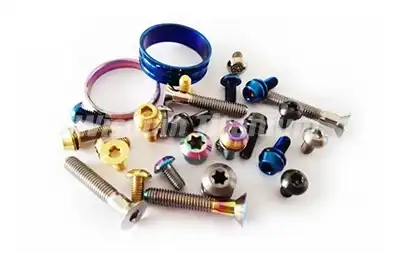
Titanium is extensively used in bicycles, particularly in the form of Titanium Bicycle Hardware such as bolts, nuts, and specialized components. High-performance bicycle manufacturers and custom workshops rely on titanium's exceptional strength-to-weight ratio, corrosion resistance, and fatigue durability to improve ride quality and longevity. From titanium frame bolts to brake caliper fasteners, these components deliver measurable performance gains in competitive and recreational cycling environments, making them a preferred choice for serious cyclists and industry professionals alike.
Understanding Titanium Use in Bicycles
What Are Titanium Fasteners and Why Are They Critical?
Titanium fasteners for bicycles are precision-engineered parts made from titanium alloys, usually Grade 5 (Ti-6Al-4V). They include bolts, nuts, and other hardware. Important bike parts like stems, brake callipers, seat posts, and chainrings are held in place by these screws. Titanium is much lighter than steel or aluminium, with a mass of only 4.43 g/cm³ and a peak strength of over 830 MPa. This means it can hold its shape very well without adding extra weight. When every gram affects speed, climbing efficiency, and handling accuracy, this one-of-a-kind mix is important.
Titanium fasteners for bicycles come in normal sizes like M3, M4, M5, M6, M8, and M10. They are made to meet international standards like DIN912 for socket head cap screws, DIN7991 for flat head screws, DIN6921 for flange bolts, and ISO7380 for button head screws. Custom designs can be made to fit different frame shapes and specific uses for road bikes, mountain bikes, and race bikes.
How Titanium Differs from Conventional Fastener Materials?
Titanium performs better than steel, stainless steel, and aluminium, as shown by the comparisons. While steel fasteners have a high tensile strength, they are also very heavy—about 75% heavier than titanium equivalents. Through chromium oxide layers, stainless steel has some resistance to rust, but it can still galle under torque stress, especially in threaded joints. Aluminium is very light (2.7 g/cm³), but it doesn't have the tensile strength needed for safety-critical uses like brake mounts and stem bolts. This means that parts could break under dynamic loads.
Titanium fills in these gaps well. Its inactive oxide layer heals itself when oxygen is present, giving it better rust protection even near the coast or when riding in wet conditions. The substance stays steady at very low temperatures (-320°F to 500°F) and is not magnetic, so it doesn't cause problems with electromagnetic interference in electrical shifting systems.
Classification and Application Diversity
Titanium fasteners for bicycles come in a number of different types, each designed for a specific bicycle use. Socket head cap screws (DIN912) are most often used to fix stems and bike clamps because they look good and keep their torque well. Flat head screws (DIN7991) let frame panels and bottle cage bolts be flush mounted. Flange bolts (DIN6921) are great for fixing brake callipers and rotors because they spread clamping forces over a bigger surface area. Button head screws (ISO7380) have rounded shapes that work well with seatpost clamps and gear bolts that don't have a lot of room.
Custom titanium parts are more than just normal screws. Ti alloy disc brake banjo bolts, through-axle systems, and quick-release skewers are used in high-end bike builds for specific tasks. This is especially true for racing, where weight savings are felt across many parts.
Benefits of Titanium Fasteners on Bikes
Weight Reduction Without Compromising Structural Integrity
The most obvious benefit that Titanium Bicycle Hardware bring to bicycle speed is less weight. When steel bolts are replaced with titanium ones across the frame of a road bike, the bike usually weighs 150 to 200 grams less. Even though this may not seem like much, professional riders know that even small weight losses lead to faster climbing speeds and better acceleration response.
The cold-working process of thread rolling keeps the purity of titanium's grain structure, which makes wear life up to 30% longer than with thread-cut fasteners. This way of making things squeezes the surface of the material, making the threads harder and better able to handle the repeated loads that happen while riding. This improved fatigue resistance is especially helpful for mounting places that are important for safety, like brake callipers and stem bolts. It gives measured reliability benefits over longer service intervals.
Superior Corrosion Resistance Extends Component Lifespan
Titanium is more resistant to rust than stainless steel in many situations. When the material is exposed to water, a passive titanium dioxide layer forms right away. This layer blocks oxidation, chloride attack, and galvanic corrosion completely. Cyclists who ride along the coast, in humid areas, or in the winter when road salt is present experience longer bolt service life without surface degradation or strength loss.
This resistance to rust gets rid of common upkeep problems. When threaded interfaces on steel fasteners rust, they seize up, which makes it harder to make adjustments in the future. In tight-fitting situations, crevice rust can happen to stainless steel. Titanium is chemically stable, which makes it easy to take apart even after years of use in hard circumstances.
Maintenance Strategies to Protect Your Investment
Titanium fasteners for bicycles work best and last longer when they are properly maintained. Before fitting, anti-seize compounds, ideally ones based on nickel, should be put on the threads to stop galling between titanium-on-titanium or titanium-on-aluminum surfaces. To make sure the tightening force is right without overstressing the threads, torque wrenches must be adjusted according to the manufacturer's instructions. Because titanium has a higher friction coefficient than steel, most titanium fasteners for bicycles need 20–30% less force than steel versions.
Inspections every 500 to 1,000 kilometres help find damage or signs of fatigue early on. When looking at something visually, you should look for discolouration that could mean it's overheating from bad installation, damaged threads, or surface cracks. After the initial break-in periods—usually 50 to 100 kilometres for new installations—torquing bolts again keeps the tightening force stable and accounts for material settlement.
Identifying Authentic Titanium Fasteners
Material proof keeps buyers safe from fake goods. Genuine titanium fasteners for bicycles have unique qualities, such as not being magnetic (which can be checked with easy magnet tests), having lower acoustic resonance when hit compared to steel, and having specific weight-to-size ratios. Electrochemical oxidation gives surfaces treatments like anodising bright colours like blue, gold, purple, or black. PVD (Physical Vapour Deposition) coats make surfaces harder and reduce friction without damaging the base.
Material certifications from reputable manufacturers show what the alloy is made of, how it works, and that it meets industry standards. Having ISO 9001 certification means that all of your manufacturing processes use systematic quality management processes.
Titanium Fasteners vs Other Materials
Strength and Durability Metrics
Decisions about which materials to use depend on performance factors that can be measured. Titanium Grade 5 fasteners for bicycles have a tensile strength of about 1,000 MPa and are 60% less dense than steel. This ratio of strength to weight is about four times that of 316 stainless steel. This makes it possible to make bicycles lighter without losing safety.
Resistance to fatigue is also very important. Titanium has better endurance limits when loaded and unloaded repeatedly, and its structure stays strong through millions of stress cycles. After a long time of use, steel fasteners for bicycles may get wear cracks where stress is high. Because aluminium has a lower fatigue strength, it can only be used for fixing places that are not very important. Titanium is the best material for safety-critical bicycle parts that are exposed to repeated dynamic loads because it has a high yield strength and great wear resistance.
Cost-Efficiency Analysis for Procurement Professionals
Titanium Bicycle Hardware are more expensive to buy at first—usually three to five times as much as steel alternatives and two to three times as much as stainless steel alternatives. Total cost of ownership calculations, on the other hand, show a different economic picture. Longer service life means less replacements, which lowers the cost of long-term upkeep. Getting rid of extra weight makes a product work better, which supports charging more for high-end bicycle models.
Concerns about unit costs are lessened by buying in bulk. Manufacturers can get low prices and keep enough supplies for production scheduling by ordering at least 200 pieces of each size. Having long-term partnerships with ISO-certified suppliers guarantees stable prices and a dependable supply chain, which are important for manufacturing operations that need to grow.
Material Suitability Across Bicycle Components
Different parts of a bicycle have different material needs. Grade 5 titanium is the best choice for brake mounting bolts because it is strong and doesn't get hot. Because they don't need to hold as much weight, bottle cage mounts can work with materials that aren't as strong, like aluminium. Titanium's strength and resistance to corrosion make it a good material for stem and handlebar clamp bolts, especially when riding in wet conditions.
When it comes to road bikes, reducing weight is important, so titanium fasteners for bicycles are used throughout the frame and for putting together parts. When it comes to mountain bikes, sturdiness and resistance to impact are very important. Titanium's toughness and resistance to rust give it a competitive edge. Titanium's high price is justified by measured speed gains in racing uses. On the other hand, titanium may only be used in high-stress mounting places on recreational bikes, while cheaper materials may be used elsewhere.
Conclusion
As a result of their high strength-to-weight ratios, corrosion resistance, and fatigue stability, titanium fasteners for bicycles offer measured performance benefits in bicycle uses. These unique parts are very important for high-performance road bikes, mountain bikes, and racing bikes where weight savings, dependability, and long life justify higher prices. To get the most out of their investments inTitanium Bicycle Hardware, procurement professionals should know about the properties of the materials, how to vet suppliers, and the best ways to install them. The wide range of products, which includes sizes from M3 to M10 in both standard DIN setups and unique designs, meets a wide range of assembly needs in the bicycle manufacturing and aftermarket upgrade markets. Strategically buying from ISO-certified companies that are fully integrated into the titanium supply chain guarantees consistent quality, low prices, and on-time deliveries that are important for meeting production schedules and protecting the brand's reputation.
FAQ
Are titanium bike bolts worth the investment for production bicycles?
Titanium fasteners for bicycles offer measurable benefits that make their higher cost justified in mid-range to high-end bicycle models. Less weight, resistance to rust, and a longer service life all lower guarantee claims and make customers happier. Selective application on safety-critical parts and high-visibility fixing spots improves performance while keeping costs low.
How can buyers verify titanium fastener authenticity?
Authentic titanium doesn't conduct electricity or magnetism and has unique weight-to-size ratios and sound qualities. Reliable sellers give out material certificates that list the alloy's composition and mechanical qualities. Setting up regular quality controls is what ISO 9001 approval means. When looking for new suppliers, sending samples to independent labs for testing adds another layer of security.
What minimum order quantities should buyers expect?
Standard titanium fasteners for bicycles usually need at least 200 pieces to be ordered, depending on the size and standard. Because of the cost of the tools, minimums for custom patterns go up to 500 to 1,000 pieces. Commitments to buy in bulk allow for competitive pricing and priority scheduling of production.
Do titanium fasteners require special maintenance procedures?
Steel fasteners for bicycles need routine upkeep, but extra care needs to be taken to avoid galling. Nickel-based anti-seize chemicals keep threads from seizing up. Titanium's frictional properties are taken into account by lower torque requirements. Regular checks make sure the pressing force is right and look for early signs of damage or wear.
Partner with Wisdom Titanium for Premium Titanium Fasteners for Bicycles
Wisdom Titanium is ready to help you with your projects to build or improve bicycles by providing high-quality Titanium Bicycle Hardware that are made to exacting standards. As a producer of ISO 9001-certified titanium fasteners based in Baoji Titanium Valley, China's biggest and best-connected titanium industry center, we use full vertical integration to make everything from raw materials to finished parts. This strategic positioning gives you competitive prices, consistent quality, and reliable delivery that you can't get from supply networks that are spread out in different places.
Our product range includes sizes M3 to M10 in common forms such as DIN912, DIN7991, DIN6921, and ISO7380 styles. We can also make custom designs to meet specific needs. Surface processes, such as anodising and PVD finishing, let you change the way something looks and make it work better. Minimum order amounts of only 200 pieces per standard allow for flexible inventory management while keeping costs low.
You can talk to our technical team about your titanium fasteners needs by emailing sales@wisdomtitanium.com. We offer full support, including help choosing materials, making unique designs, sample order plans, and pricing structures for large orders that are tailored to your production needs. Find out how working with an experienced titanium fasteners for bicycles maker can help you stay ahead of the competition by giving you better part quality and more reliable supply chain.
References
- Boyer, R., Welsch, G., & Collings, E.W. (2007). Materials Properties Handbook: Titanium Alloys. ASM International, Materials Park, Ohio.
- Donachie, M.J. (2000). Titanium: A Technical Guide, 2nd Edition. ASM International, Materials Park, Ohio.
- Schutz, R.W. & Watkins, H.B. (1998). Recent developments in titanium alloy application in the energy industry. Materials Science and Engineering A, Volume 243, Issues 1-2, Pages 305-315.
- Veiga, C., Navim, J.P., & Loureiro, A.J.R. (2012). Properties and applications of titanium alloys: A brief review. Reviews on Advanced Materials Science, Volume 32, Pages 133-148.
- Lutjering, G. & Williams, J.C. (2007). Titanium, 2nd Edition. Springer-Verlag, Berlin Heidelberg.
- Peters, M., Kumpfert, J., Ward, C.H., & Leyens, C. (2003). Titanium Alloys for Aerospace Applications. Advanced Engineering Materials, Volume 5, Issue 6, Pages 419-427.