
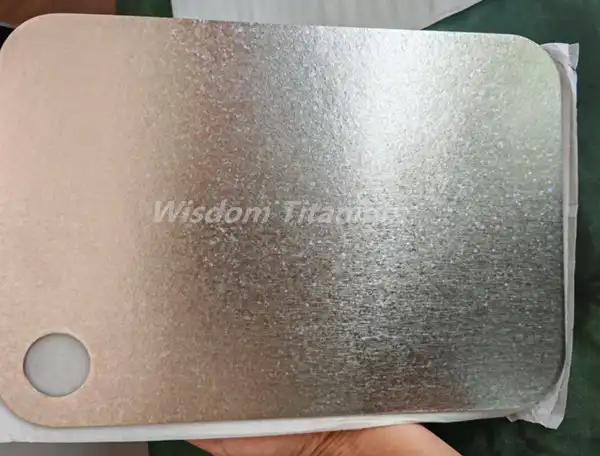
This search usually comes after a few disappointments. Plastic holds smells and stains. Wood needs constant drying and oiling. Glass feels harsh and loud. Then you see a metal option and pause. Titanium sounds premium, yet you want a clear answer.
Titanium can be a strong cutting-board material, but it fits specific needs. It performs best when you prioritize quick cleaning, odor resistance, and long service life. It also matters how the board is made. A true titanium cutting board uses solid titanium sheet, not a thin coating.
What makes titanium a practical cutting-board material?
A dense, non-porous surface that cleans fast
Most cutting-board problems involve moisture and residue. Juices from raw meat, seafood, and produce can carry odors. They can also stain porous materials. A titanium cutting board is a dense metal, so it does not behave like wood grain or soft plastics. When the surface is properly finished, it stays non-porous in normal kitchen use.
That non-porous behavior supports faster cleanup. You can wash and rinse the board without worrying about absorbed liquids. This is why many buyers look for terms like “odor resistant cutting board” and “non-porous cutting board” when they compare options online.
Corrosion resistance matters more than most people expect
Kitchens expose tools to acids, salt, and frequent washing. Think tomatoes, citrus, vinegar, and brines. Titanium resists corrosion in many environments because it forms a stable oxide film on its surface. Corrosion engineering references describe this passive layer as a key reason titanium performs well in wet, chemically active conditions.
For a cutting board, corrosion resistance supports both appearance and service life. The board is easier to clean because the surface remains stable. It also helps explain why titanium appears in demanding industries. Aerospace, chemical processing, and marine engineering often specify titanium for similar reasons.
Material credibility: titanium has a long record in medical use
Titanium is widely used for medical devices and implants. That history does not automatically certify a kitchen product, but it does show that titanium has strong biocompatibility and corrosion resistance when properly manufactured. Regulatory and standards frameworks around medical devices often reference titanium and titanium alloys as common materials for implantable or body-contact applications.
In a kitchen setting, buyers tend to translate that history into a simple expectation. They expect a stable, food-contact-safe metal surface that does not absorb odors. Titanium usually matches that expectation when the board uses genuine titanium plate.
The honest trade-offs: where titanium fits, and where it does not
Knife feel differs from wood, and that affects user satisfaction
Titanium is metal, so the cutting feel differs from end-grain wood. Many cooks love wood because it offers a softer, quieter surface. Titanium feels firmer. You will notice that during long prep sessions. Some users keep two boards for this reason. They use wood for delicate slicing and titanium for messy, high-odor tasks.
“Safer” still depends on cleaning habits and kitchen workflow
People often ask whether a titanium cutting board is safer than plastic or wood. Material choice matters, but hygiene habits matter more. Food safety guidance from the U.S. Department of Agriculture (USDA) stresses separation between raw meats and ready-to-eat foods, plus proper cleaning of food-contact surfaces. Those steps reduce cross-contamination risk across all board types.
Titanium may make cleaning easier because it does not absorb liquids. Yet you still need to wash, rinse, and dry the board. If you cut raw poultry, sanitation steps remain critical. Titanium supports good hygiene, but it does not replace it.
Titanium also answers a modern concern: plastic wear
Another reason titanium has gained attention is the conversation around plastic wear. Peer-reviewed research has shown that plastic cutting boards can release microplastic particles during cutting. Researchers have measured particle release under lab conditions, and the topic remains active in scientific debate. The health impact is still being studied, but many consumers prefer to reduce avoidable plastic wear exposure.
Titanium provides a non-plastic surface option. That is not a guarantee of “zero risk,” but it is a clear material shift. For some buyers, this single factor justifies the change.
How to choose a titanium cutting board that performs as promised?
Start with what the board is made from: solid titanium vs coatings
Online listings often blur material details. Some products use “titanium” to describe a finish, color, or coating. That approach creates hesitation for serious buyers. A coating can wear. A plated surface can expose the base metal if it gets damaged.
A reliable titanium cutting board uses titanium sheet or plate as the working surface. Baoji Wisdom Titanium supplies a titanium cutting board for kitchen use made from 99.9% pure titanium. Thickness options include 1.75 mm, 2 mm, 2.5 mm, and 3 mm. The company also accepts custom design, which helps when you need a specific size or market fit.
Manufacturing consistency: why ISO 9001 matters to buyers
Many buyers worry about batch variation. They may have received a good first sample from other suppliers, then experienced inconsistency later. This is where process discipline matters. Baoji Wisdom Titanium Industry and Trading Co., Ltd is ISO 9001-certified. ISO 9001 does not claim that a product is “the safest.” It does indicate that the company operates a quality management system designed to control production processes.
The company serves aerospace, energy, oil and gas, medical, electronics, chemical, marine, automotive, and other industries. These sectors demand repeatability. That background supports buyers who want stable specifications and reliable lead times.
Supply-chain strength: Baoji Titanium Valley as a sourcing advantage
Geography sounds like a marketing detail until you manage procurement. Lead time, material availability, and customization depend on the local industrial ecosystem. Baoji Titanium Valley, located in Shaanxi Province, is China’s largest and most comprehensive titanium industry cluster and one of the world’s most influential titanium production bases. The region covers a full titanium chain, from sponge and ingots to bars, plates, tubes, and forgings.
For board sourcing, access to titanium plate matters. A concentrated supply base supports stable raw material availability and faster specification changes. It also supports scale when you move from sample to repeat orders.
A Buyer’s Next Step
Many customers reach a quiet conclusion after reading comparisons. Titanium looks promising, but they still want proof. They want to feel the weight. They want to check the surface finish. They want to see how fast it rinses after seafood or raw meat. Samples answer those questions.
If you want to source a kitchen-ready titanium cutting board made from 99.9% pure titanium, with thickness options and custom design support, contact Baoji Wisdom Titanium. Send your inquiry to sales@wisdomtitanium.com.
FAQs
Q1: Is titanium good for cutting board?
A: Yes, titanium can work well for cutting boards when you want a non-porous surface, fast cleaning, odor resistance, and corrosion resistance. It fits especially well for meat, seafood, and strong-odor ingredients. The feel differs from wood, so some users keep wood for delicate slicing.
Q2: Does a titanium cutting board absorb odors or stains?
A: Titanium is a dense metal, so it does not absorb liquids like porous materials can. A properly finished titanium surface supports odor resistance and stain resistance in daily kitchen use. Cleaning and drying practices still matter.
Q3: What thickness options does Baoji Wisdom Titanium offer?
A: Baoji Wisdom Titanium offers thickness options of 1.75 mm, 2 mm, 2.5 mm, and 3 mm. Thicker boards often feel more rigid and stable on a counter. Thinner boards can reduce weight and shipping cost.
Q4: Can Baoji Wisdom Titanium provide custom sizes or designs?
A: Yes. Baoji Wisdom Titanium accepts custom design. You can request a target size, thickness, and other design requirements for your market.
Q5: What should I include in an inquiry to get an accurate quote?
A: Share the target dimensions, preferred thickness, estimated order quantity, and packaging expectations. If you plan retail sales, mention your channel and region. If you plan food-service use, describe the workflow and cleaning process.
References
- USDA Food Safety and Inspection Service (FSIS). Guidance on cross-contamination and safe cleaning practices.
- ASM International. Technical background on titanium corrosion resistance and passivation behavior.
- ASTM International. ASTM B265 standard for titanium and titanium alloy sheet and plate supply.
- American Chemical Society (ACS) Publications. Peer-reviewed research reporting microplastic particle release from plastic cutting boards.
- International Titanium Association (ITA). Industry resources on titanium applications and properties.