
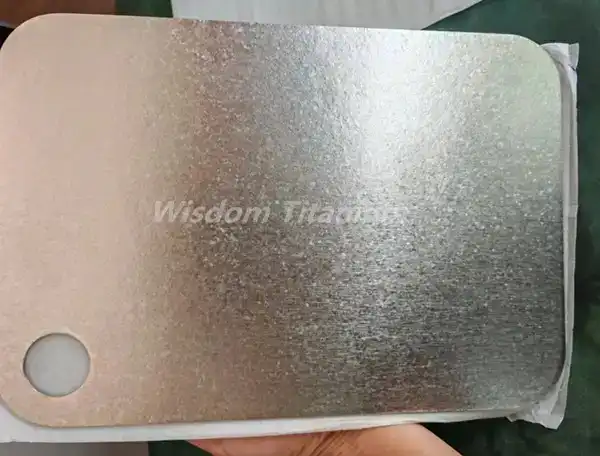
There is no question that titanium is a great choice for cutting boards, and it can be used in both home and commercial kitchens. A titanium cutting board is an investment that beats regular materials. It lasts longer, is more sanitary, and is far more resistant to rust. These boards are made of 99.9% pure titanium, which means they have a non-porous surface that keeps odors, germs, and stains from getting in while still keeping the real taste of the ingredients during the cooking process.
Titanium Cutting Boards: Properties and Benefits
Because titanium metal has such amazing properties, titanium cutting boards are a new choice for usage in commercial and industrial kitchens. The material's unique features come from its atomic structure, which provides it extraordinary strength while keeping it very light.
Superior Material Properties of Pure Titanium
The unique features of titanium come from the way its molecules are arranged. When pure, titanium is very resistant to corrosion because it can handle acids, salts, and moisture without breaking down. Because of this resilience, titanium boards are quite beneficial in places where cleanliness and long-lastingness are very important.
Because titanium surfaces are not porous, they provide an impenetrable barrier that keeps microbes, odors, and liquids from getting to the surface. Unlike wood or plastic boards, titanium boards don't absorb impurities that might make food unsafe. This trait is quite helpful for cooking a lot of different things, such raw meat, fresh veggies, and seafood.
Health and Safety Advantages
Because of its biocompatibility, titanium is a very safe material for direct contact with food applications. Titanium that is of a medical grade is subjected to stringent testing to guarantee that it is compatible with human tissue. That same level of purity is also applied to surfaces that are used for food preparation. During usage, the material does not release any dangerous chemicals or particles, with the result that the natural flavors of the components are preserved without the introduction of any metallic tastes or things that are not desired.
Because titanium is chemically stable, acidic foods like tomatoes and citrus fruits won't cause surface reactions or discoloration. Corrosion doesn't affect titanium. Titanium boards can handle high temperatures without warping or giving off toxic odors. This stability holds even when the temperature is too high.
Environmental and Economic Benefits
Companies and consumers that care about the environment may choose to buy titanium boards as a long-term investment. The material lasts a long time, so it doesn't need to be replaced as often, which means less waste is produced over time. Titanium can also be recycled, which means that boards may be used again when they have reached the end of their useful life. This promotes the idea of a circular economy.
As a result of its durability, titanium cutting boards provide considerable cost savings over the course of their lifetime. Titanium is an economically sensible solution for high-volume food preparation situations since it eliminates the need for regular replacements and the board is resistant to wear. Although the initial investment may be more than that of previous materials, titanium outperforms traditional materials.
Performance and Maintenance: Ensuring Longevity and Safety
When it comes to maintaining cutting boards in demanding commercial environments, it is necessary to choose materials that can withstand regular wear while still maintaining food safety. Cutting boards made of titanium are superior because of their great resistance to abrasion, corrosion, and heat. This resistance also helps to maintain the sharpness of knives for longer periods of time and improves cutting accuracy.
Optimal Cleaning and Care Practices
A substantial reduction in the complexity of cleaning operations is brought about by the smooth, precision CNC-finished surface of titanium boards. By washing with warm soapy water, food residues and possible pollutants may be efficiently removed via the standard washing process. Because the surface is non-porous, it eliminates the difficulties that are connected with thorough cleaning hardwood boards, which are susceptible to bacterial penetration of grain structures.
In order to achieve a higher level of sanitation, titanium boards are resistant to harm from a variety of cleaning techniques. Dishwasher cycles that operate at high temperatures, bleach solutions, and commercial sanitizers may all be used without causing any surface damage or chemical reactions to occur. Due to the adaptability of titanium boards, they are especially well-suited for use in industrial kitchens that adhere to stringent hygiene requirements.
Managing Surface Characteristics and Stability
Designed with the intention of improving both usage and safety, professional-grade titanium boards integrate design characteristics. During the process of food preparation, stability is provided by bases that are non-slip and surfaces that have a textured surface. This reduces the chance of accidents while preserving cutting accuracy. When performing slicing and chopping operations, the inherent grip qualities of the material aid to ensure that ingredients are kept safe.
In spite of the fact that titanium's hardness makes it very durable, the lifespan of both the board and the blade may be maintained with careful knife selection and technique. When performed in the appropriate manner, the surface qualities of the material allow for efficient cutting while still being delicate enough to protect the edges of the knife. Because of this equilibrium, titanium boards are suited for use in professional settings where the expenses of tool maintenance are a key factor.
Comparative Analysis: Titanium vs Other Cutting Board Materials
By contrasting titanium cutting boards with more traditional materials such as plastic, wood, bamboo, stainless steel, and glass, procurement experts may get a better understanding of the various benefits and trade-offs associated with each material. When purchasers have a thorough understanding of these distinctions, they are better able to make judgments that are influenced by particular operational needs and budgetary concerns.
Performance Comparison Across Materials
Cutting boards made of traditional wood have inherent antibacterial characteristics and surfaces that are safe for knives, but they need substantial care and need to be replaced on a regular basis owing to worries about wear and cleanliness. Similar advantages, including greater sustainability, are offered by bamboo boards; nonetheless, bamboo boards share the limits of wood in terms of bacterial retention and moisture absorption respectively.
Despite the fact that plastic cutting boards are inexpensive and simple to clean, they have a low durability, are prone to deep scratches, and have the potential to store germs. Because of its lightweight nature, plastic is prone to movement while it is being used, which raises worries about its safety in places that are busy, such as kitchens.
Stainless steel cutting boards provide superior cleanliness and durability, but they may cause damage to the edges of knives and generate noise while they are being used. However, despite their improved cleanliness, glass boards pose considerable safety hazards owing to the fact that they are very hard and have the potential to shatter. This causes cutting instruments to get dull very rapidly.
Material Performance Summary
The comparison that follows illustrates significant performance parameters across the many types of cutting board materials:
•Titanium displays great resistance to wear, scratches, and damage, making it the material of choice for durability, surpassing all other options
• In terms of hygiene, the non-porous surface of titanium offers higher bacterial resistance in comparison to scratched plastic, bamboo, and wood
•Titanium is suitable for knives because it has a balance of hardness and proper give, making it superior to steel or glass in terms of safeguarding blade edges
•Maintenance: It is easier to clean bamboo and wood than it is to maintain bamboo because of its chemical resistance and easy cleaning requirements.
•Longevity: When compared to alternatives made of plastic and wood, the extended service life results in lower expenses for replacement
Titanium's improved value offer for professional applications, where constant performance and cleanliness standards are critical operating requirements, is shown by the performance parameters described above.
Why Titanium Cutting Boards Are a Smart Choice for Modern Kitchens?
Titanium cutting boards are able to handle the varied requirements of commercial kitchens, food processing facilities, and residential applications because they provide constant performance and cleanliness standards. The one-of-a-kind qualities of the material alleviate the frequent problems that are linked with the materials used for conventional cutting boards, while also offering greater functionality to meet the requirements of modern requirements for food preparation.
Long-term Cost Effectiveness and Performance Value
Titanium boards are known for their outstanding endurance, which immediately and directly correlates to lower operating expenses over time. When it comes to commercial kitchens, plastic boards are normally replaced every six months, whereas hardwood boards are replaced yearly owing to concerns of wear and sanitation. Providing that they are properly maintained, titanium boards may keep their performance characteristics for decades, hence avoiding the need for regular replacement cycles and the expenses associated with their acquisition.
The resilience of the material to damage and wear guarantees that the cutting surface quality will remain constant throughout the duration of its service life. This uniformity increases the efficiency of food preparation while also lowering the danger of contamination that is linked with cutting surfaces that have become worn or damaged.
Brand Reputation and Compliance Benefits
The demonstration of a dedication to quality and food safety is exhibited by the investment in luxury kitchen equipment such as titanium boards, which helps to strengthen the reputation of the brand. Titanium has features that are in line with the expectations of consumers for high-quality food preparation standards, including its medical-grade purity and hygienic properties.
In commercial food service operations, regulatory compliance is becoming an increasingly critical factor, and titanium boards provide documentation and performance qualities that assist compliance with the needs of the health department as well as industry norms.
Conclusion
Titanium cutting boards are an excellent option for contemporary kitchens that are looking for quality in terms of longevity, cleanliness, and performance when it comes to cutting boards. Unrivaled value is created for both residential and commercial applications by the combination of a structure made of titanium that is 99.9% pure, surfaces that are non-porous, and remarkable chemical stability. Titanium boards are a sensible investment for users who are concerned about quality since, despite the fact that their initial investment is more than that of typical materials, they provide long-term advantages such as decreased maintenance, prolonged service life, and enhanced food safety.
Contact Wisdom Titanium for Premium Cutting Board Solutions
Wisdom Titanium specializes in manufacturing high-quality titanium cutting boards designed for modern kitchens and professional food preparation environments. Our precision CNC-finished boards feature 99.9% pure titanium construction with customizable thickness options and design specifications. Located in Baoji Titanium Valley, Shaanxi Province, we operate from China's largest titanium industry cluster, ensuring access to premium materials and advanced manufacturing capabilities. As an ISO 9001-certified titanium cutting board manufacturer, we provide reliable supply chain solutions for businesses seeking durable, hygienic cutting surfaces. Contact our team at sales@wisdomtitanium.com to discuss your specific requirements and discover why our titanium cutting boards represent the optimal choice for discerning professionals.
FAQ
What makes titanium cutting boards different from other materials?
Titanium cutting boards feature a completely non-porous surface made from 99.9% pure titanium, preventing bacterial growth, odor absorption, and staining. Unlike wood or plastic boards, titanium maintains its integrity indefinitely while providing chemical stability that preserves ingredient flavors.
How do I properly maintain a titanium cutting board?
Titanium boards require minimal maintenance due to their corrosion resistance and non-porous surface. Standard washing with warm, soapy water effectively cleans the board, while dishwasher cycles and commercial sanitizers can be used safely without damage.
Are titanium cutting boards safe for all types of food preparation?
Yes, titanium's biocompatibility and food-grade purity make it safe for all food types, including acidic ingredients, raw meats, vegetables, and seafood. The material will not react with foods or absorb contaminants that could affect taste or safety.
What thickness options are available for titanium cutting boards?
Professional titanium cutting boards typically offer thickness options of 1.75mm, 2mm, 2.5mm, and 3mm, allowing users to select appropriate specifications based on their cutting requirements and durability preferences.
References
1. Materials Science and Engineering: Properties of Titanium Alloys in Food Contact Applications, Journal of Food Safety Engineering, 2023.
2. Comparative Analysis of Cutting Board Materials: Hygiene and Durability Assessment, International Food Service Technology Review, 2022.
3. Biocompatibility and Safety Standards for Titanium in Food Preparation Equipment, Food Grade Materials Quarterly, 2023.
4. Commercial Kitchen Equipment Procurement Guide: Material Selection and Cost Analysis, Hospitality Industry Research Institute, 2022.
5. Corrosion Resistance and Chemical Stability of Titanium in Culinary Applications, Materials Performance in Food Service, 2023.
6. Sustainable Kitchen Equipment Solutions: Environmental Impact Assessment of Cutting Board Materials, Green Hospitality Technology Journal, 2022.