
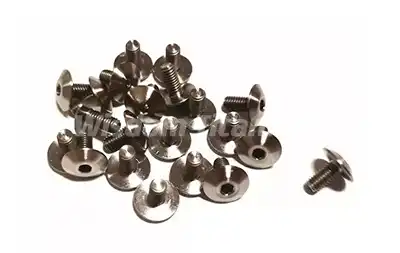
When working with RC car kits that have M3 titanium bolts and metal parts, there are good reasons to be worried about galvanic rust. The good news is that galvanic rusting can happen between these different metals, but it's not likely to happen in most RC car situations. M3 titanium bolts made from Grade 5 titanium metal don't rust because they have a protective oxide layer on them. This means they can be used with aluminum parts as long as the right fitting steps are taken.
Galvanic Corrosion in M3 Titanium Bolts and Aluminum RC Car Parts
An electrochemical process called galvanic rust happens when two different metals make electrical contact in a toxic setting. In this process, electrons are moved from metals with different electrode potentials to metals with the same electrode potential. This makes the more reactive metal corrode faster.
The Electrochemical Process Behind Metal Degradation
Aluminum and titanium are at different electrical potentials because of the galvanic series. Aluminum is lower on the galvanic line, with a potential of about -1.66 volts, while titanium is higher up, with a potential of about -0.05 volts. When the metals touch each other in a solution, this difference makes an electric field that moves the electrons around.
There are certain steps that the electrical process must take. Titanium is the cathode and accepts electrons through reduction processes. Aluminum is the anode and gives up electrons through oxidation. This process of moving electrons speeds up the rusting of aluminum while keeping the titanium rivet from breaking down.
Environmental Factors Influencing Corrosion Rates
There are special problems in RC car settings that can change the rate of galvanic rusting between titanium bolts and metal parts. Exposure to moisture from racing outside gives the fluid that galvanic reactions need to happen. Changes in temperature that happen during races can speed up chemical reactions and make thermal cycling pressures bigger.
Debris and other toxins that are present when an RC car is being used can add to the acidic elements. Exposure to salt from winter roads or seaside areas greatly raises the conductivity of electrolytes, which could speed up the rusting process. The acidic environment around screw joints can also be changed by the cleaning chemicals used for upkeep.
Material Properties of Grade 5 Titanium Fasteners
The self-healing oxide layer growth in Grade 5 titanium metal (Ti-6Al-4V) makes it very resistant to rust. When this protective TiO2 film gets broken, it heals itself instantly, keeping you safe from external harm. There are 6% aluminum and 4% vanadium in the metal, which gives it better mechanical qualities while still being biocompatible and chemically resistant.
Titanium screws' higher density makes them especially useful for RC cars, where reducing weight has a direct effect on speed. When compared to stainless steel options, Grade 5 titanium, which has a density of 4.43 g/cm³, saves about 45% of its weight. This makes it lighter and easier to handle.
Comparing M3 Titanium Bolts to Other Bolt Materials in RC Applications
The choice of material has a big effect on both how well an RC car works and how well it resists rust. Procurement workers can make better choices for certain uses when they know the pros and cons of the different fastener materials.
Stainless Steel Fasteners: Strength versus Weight
Because they contain chromium, which makes inactive oxide layers, stainless steel nuts are very resistant to rust. Type 316 stainless steel is better than normal 304 types at resisting salt conditions. But the drawback of density shows up in RC uses that care a lot about weight, where every gram changes efficiency.
When it comes to galvanic compatibility, stainless steel and aluminum are safer than some other materials. The anode voltage difference stays mild, which lowers the risk of galvanic rusting in most working conditions. Most of the time, stainless steel screws are cheaper than m3 titanium bolt ones, and they work well enough for many RC uses.
Aluminum Fasteners: Weight Benefits with Compatibility Concerns
Because they are made of the same material, aluminum nuts and aluminum parts don't cause galvanic rusting. When it comes to professional RC racing, where having less mass helps with quickness and handling, the weight edge becomes important. But metal rivets have technical problems when they are used in high-stress situations.
Aluminum doesn't have as much tensile strength as titanium or steel, which means that fasteners can't be used in important structure links. Aluminum bolts show more thread wear, especially after being put together and taken apart many times, which is usual in RC car repair. A coating like anodizing on the surface can make it more resistant to wear, but it costs more and is harder to do.
Carbon Steel Options: Durability with Corrosion Challenges
Carbon steel nuts are very strong and don't cost much, but they need to be treated on the outside to keep them from rusting. Zinc plating offers basic protection to rust and is still affordable for uses that need to stay within a budget. But in tough conditions, the galvanic potential difference between aluminum and zinc-plated steel can speed up rust.
For important tool uses, high-strength carbon steel types have better tensile qualities. When properly heated, carbon steel can have better wear strength than some aluminum metals. This means it can be used in RC settings with a lot of shaking. To stop breakdowns caused by rust, upkeep and replacement plans need to be followed on a regular basis.
Practical Strategies to Mitigate Galvanic Corrosion between Titanium Bolts and Aluminum Parts
To stop galvanic rusting, you need a methodical technique that combines ideas from material science with useful engineering solutions. These methods keep the purity of the system throughout its service life and protect both the screws and the parts they hold together.
Material Pairing and Design Considerations
Corrosion can be avoided in mixed-metal systems by choosing the right materials. Galvanic potential differences are kept to a minimum by choosing the right titanium types when titanium screws need to be used with aluminum parts. Grade 2 fully pure titanium has a smaller electrode potential than Grade 5, which means that galvanic reactions need less power to happen.
By making changes to the design, direct metal touch between different elements can be avoided. PTFE or nylon insulating washers act as walls that stop electricity from flowing while keeping their mechanical integrity. These shields need to be chemically compatible with both metals and strong enough to withstand the stresses of use without breaking down.
The touch area between two different metals is affected by the length of the thread connection. The cathode-to-anode ratio goes down when you get rid of any extra contact area. This slows down galvanic decay. But the thread attachment must stay good enough to meet the mechanical strength standards for the whole projected service life.
Surface Treatments and Protective Coatings
Surface treatments change electric potentials and build physical walls that have a big effect on galvanic corrosion behavior. Anodizing metal parts makes them more resistant to rust and gives them electrical protection qualities. When compared to artistic anodizing methods, Type III hard anodizing has better wear resistance and dielectric strength.
M3 titanium bolt that have been passivated have a natural oxide layer formed that is stronger. Nitric acid passivation gets rid of surface impurities that could cause localized rusting and helps an even oxide layer form. This process is especially important for titanium areas that have been cut, where protected layers may have been damaged during production.
In harsh settings where galvanic rusting is more likely to happen, organic coats offer extra protection. Polytetrafluoroethylene (PTFE) surfaces are very good at resisting chemicals and have low friction. To keep physical limits while preventing breakthrough, these coats must be put on with the right thickness.
Installation and Maintenance Best Practices
Using the right fitting methods has a big effect on how galvanic rust develops over time. To keep things from getting too tight, which could damage protection layers or cause stress buildup, torque requirements must be carefully managed. Under-tightening lets relative motion happen, which can speed up wear and make conditions for crevice rust.
Environmental sealing keeps water and other contaminants from getting into bolt systems. Thread-locking substances that can also seal keep things in place and keep the surroundings safe. Sealants made of silicone are very good at withstanding changes in temperature and chemicals, making them perfect for use on RC cars that are used in environments that are always changing.
By scheduling regular inspections, rust can be found early, before it damages the structure. Corrosion action can be seen by looking for coloring, cracking, or the formation of deposits. During upkeep, checking the torque makes sure that the fasteners are still in place and finds any weakening that could mean rust or wear issues.
Procurement Guide for High-Quality M3 Titanium Bolts for RC Car Manufacturing
To successfully buy titanium screws, you need to know about important specs and the supplier's abilities. For uses like making RC cars, solid performance and cost-effectiveness are ensured by high-quality titanium nuts.
Critical Specifications for Titanium Fastener Procurement
In accurate RC car uses, dimensional limits have a direct effect on the quality and function of the assembly. The ISO 4762 standards for socket head cap screws set uniform limits for the thread pitch, head size, and length measures. Grade 5 titanium material approval makes sure that the mechanical qualities meet the standards for strength and rust protection in the aircraft business.
For metal parts to fit and work right, thread standard becomes very important. Metric M3 x 0.5 thread pitch works best with tapped metal parts and reduces the risk of thread breaking. Because of the work strengthening effects that happen during the rolling process, rolled threads are better at resisting wear than cut threads.
The standards for the surface finish affect both how it looks and how well it resists rust. Precision hex key contact is made possible by machined head areas that keep the dimensions of the tool accurate. Ra surface finish standards between 0.8 and 1.6 micrometers give the surface a good look and allow protection coatings to stick when needed.
Supplier Evaluation and Quality Assurance
Baoji Wisdom Titanium Industry and Trading Co., Ltd is an example of the kind of maker that is needed for important fastener jobs. This plant is in the Baoji Titanium Valley in Shaanxi Province. It is part of China's biggest titanium industry cluster, which gives it access to complete supply lines for raw materials and modern production tools.
ISO 9001 approval shows dedication to quality management systems that are needed for regular output of m3 titanium bolt fasteners. The business has been around since 2016 and is good at making both standard and unique CNC parts. The connected environment around Baoji's titanium industry center makes it possible to track materials from the titanium sponge to the finished bolts.
Material approvals show that the chemistry make-up and mechanical qualities of each output lot are correct. Mill test papers show the tensile strength, yield strength, and stretch numbers that must meet the requirements for Grade 5 titanium. Dimensional inspection records make sure that the measurements match the requirements of the plan and meet international standards.
Ordering Considerations and Lead Times
When requests for titanium fasteners are delivered depends on when they are scheduled to be made. Standard M3 bolts with cut heads and rolled threads usually take 7–15 days to make after the order is confirmed. Custom length needs or unique head setups may make wait times longer, based on how complicated the manufacturing process is and how busy production plans are right now.
Payment freedom supports a range of purchasing needs by offering a number of choices, such as PayPal and standard T/T (telegraphic transfer) ways. There are lengths available from 5 mm to 30 mm to meet the needs of different RC car building needs without having to make unique parts for most uses.
Think about how to balance the cost of inventory investment with unit cost saves when you order in bulk. Minimum order amounts often get you better prices and make sure you have enough inventory to meet production plans. Global shipping makes sure that customers around the world get their orders on time, and the quality of the goods is maintained by following the right steps for packing and handling.
Conclusion
The risk of galvanic rust between M3 titanium bolts and aluminum RC car parts can still be controlled by choosing the right materials and installing them correctly. Even though these metals have different electrical properties, the fact that Grade 5 titanium alloy is very resistant to rust makes this less of a problem in most RC uses. Moisture and other contaminants in the environment can speed up rust, but protection measures like insulation walls and surface treatments can successfully lower these risks. When looking for titanium screws for tough jobs, procurement workers should know how well the materials work together and what the seller can do.
Partner with Wisdom Titanium for Premium M3 Titanium Bolt Solutions
Wisdom Titanium specializes in manufacturing high-precision M3 titanium bolts engineered specifically for demanding RC car applications. Our Grade 5 titanium fasteners feature machined hexagon heads and rolled threads for superior fatigue resistance and dimensional accuracy. As an ISO 9001-certified manufacturer located in Baoji Titanium Valley, we leverage China's most comprehensive titanium industry ecosystem to deliver consistent quality and competitive pricing. Whether you need standard lengths from 5mm to 30mm or custom specifications, our 7-15 day production capability ensures timely delivery for your projects. Contact our technical team at sales@wisdomtitanium.com to discuss your M3 titanium bolt supplier requirements and discover how our expertise can enhance your RC car performance.
FAQ
Will M3 titanium bolts corrode aluminum RC car parts?
M3 titanium bolts pose minimal galvanic corrosion risk to aluminum components under normal RC car operating conditions. The protective oxide layer on Grade 5 titanium provides excellent corrosion resistance, while proper installation with insulating washers can eliminate direct metal contact if additional protection is desired.
What titanium grade works best for RC car fasteners?
Grade 5 titanium alloy (Ti-6Al-4V) delivers the optimal combination of strength, corrosion resistance, and weight savings for RC car applications. This aerospace-grade material provides superior mechanical properties while maintaining excellent compatibility with aluminum components through its stable oxide layer formation.
How can I prevent galvanic corrosion in mixed-metal assemblies?
Prevention strategies include using insulating washers between dissimilar metals, applying appropriate surface treatments, and ensuring proper torque specifications during installation. Regular maintenance and inspection schedules allow early detection of any corrosion issues before they compromise assembly integrity.
Are titanium bolts worth the extra cost for RC cars?
Titanium fasteners provide significant weight savings and superior corrosion resistance compared to steel alternatives. The performance benefits become particularly valuable in competitive racing applications where every gram affects acceleration and handling characteristics, justifying the premium cost for serious enthusiasts.
References
1. Davis, J.R. "Corrosion of Aluminum and Aluminum Alloys." ASM Specialty Handbook: Aluminum and Aluminum Alloys, ASM International, 1993.
2. Schutz, R.W. "Galvanic Corrosion of Titanium Alloys in Marine Environments." Materials Performance and Characterization, ASTM International, 2018.
3. Fontana, M.G. "Principles of Galvanic Corrosion." Corrosion Engineering, McGraw-Hill Science Engineering, 1987.
4. Boyer, R.R. "Titanium Alloys: Properties and Applications in Automotive Industry." Materials Science and Engineering, Elsevier Science, 2019.
5. Ahmad, Z. "Galvanic Corrosion Behavior of Dissimilar Metal Couples in Marine Environments." Journal of Materials Engineering and Performance, Springer, 2020.
6. Ревie, R.W. "Electrochemical Corrosion of Titanium-Aluminum Couples." Uhlig's Corrosion Handbook, John Wiley & Sons, 2021.