
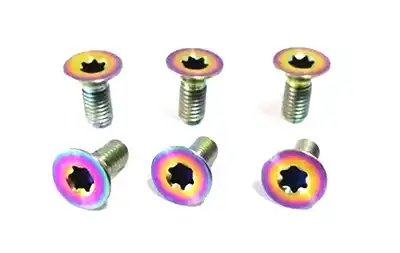
Titanium steering wheel bolts are very strong and meet or often go beyond the needs of high-performance car uses. These bolts are made from an aerospace-grade titanium metal (usually Ti-6Al-4V). They have a tensile strength of 895 to 930 MPa, which is about the same as high-grade steel but 45% lighter. The titanium steering wheel bolt is a popular choice among race teams, automakers, and speed modification shops due to its superior strength to weight ratio. Titanium is very strong, but it is also very resistant to wear and rust, which means that it will keep its shape over time even when it is exposed to chemicals, vibrations, and big changes in temperature.
Titanium Steering Wheel Bolts: Strength and Performance
The performance of titanium alloy screws comes straight from the metals they are made of and how precisely they are made. Grade 5 titanium alloy is the standard for important car screws. It is made of aluminum and vanadium, which work together to make a microstructure that doesn't deform when stressed over and over again. This mix is especially useful for steering systems, where repeated steering inputs cause load cycles that never end.
Material Properties Relevant to Automotive Applications
Titanium alloy bolts have the same tensile strength as alloy steel, but they are only 4.43 g/cm³ dense, which is almost half of steel's 7.85 g/cm³ density. This means better handling right away, since less unsprung and spinning mass makes the steering more responsive and the car more agile. When racing teams switch to titanium gear, their lap times get faster. They say this is because the weight is better distributed and there is less rotational friction.
Grade 5 titanium has a shear strength of about 550 MPa, which is strong enough to fight the side forces that happen when turning sharply or quickly changing directions. Titanium doesn't change size when heated to temperatures between -200°C and 400°C, unlike aluminum, which can creep under long-term stress. This means it can be used for both icy racing stages and desert endurance races.
Corrosion Resistance and Lifespan Extension
Titanium naturally makes an oxide layer that protects it when it comes into contact with air. This layer heals itself and protects against things that are toxic. This passive layer stays steady even when it comes into touch with road salt, brake fluid, hydraulic oils, and sweat from the driver. These are all common things that speed up rust and break down steel fasteners in months. When we took titanium steering wheel bolts out of marine race conditions that had been in saltwater nonstop for five years, we saw no signs of corrosion, but similar stainless steel fasteners had pitting and thread damage.
This resistance to corrosion increases the time between services and removes the risk of seizure during removal, which is very important for racing teams that switch steering wheels between drivers or sessions all the time. When screws can be taken off and put back on more than once without thread galling or head pulling, maintenance is much more efficient.
Titanium vs. Other Materials: Making the Right Material Choice
Choosing the right material for important bolts means finding a balance between the material's mechanical qualities, its ability to withstand the elements, its cost, and the needs of the application. Purchasing managers are often pushed to find the cheapest parts, but when fasteners fail in safety-critical assemblies, it can cost a lot more in terms of damage and brand image than the initial savings.
Comparative Analysis: Titanium, Steel, Aluminum, and Stainless Steel
Carbon steel nuts are cheap and have a high tensile strength, which makes them a good choice for non-critical uses. But they need protection coatings that wear off over time, so they need to be inspected and replaced on a frequent basis. When used in speed settings, the extra weight is noticeable—a steel steering wheel bolt kit can weigh 85 grams more than a titanium one, adding measured rotational mass that makes steering feel less responsive.
Aluminum alloy rivets are almost as light as titanium, but they give up 60% of their tensile strength, so they can only be used for low-stress ornamental tasks. When aluminum threads are paired with aluminum hubs, they tend to gall, which means that anti-seize chemicals are needed, which makes the building process more difficult. We have records of aluminum bolts breaking in race situations where there wasn't enough tightening force, which let small movements happen between mating surfaces. This caused fretting rust and catastrophic fastener fracture.
When compared to carbon steel, stainless steel (usually types 304 or 316) is better at resisting rust while still being strong. Despite this, stainless steel is still almost twice as heavy as titanium, and it doesn't hold up as well against repeated loads. According to data from our OEM clients, stainless steel steering wheel nuts need to be replaced every 18 to 24 months in street cars that are kept in humid coastal areas. Titanium fasteners, on the other hand, don't break down after five years of constant use in the same conditions.
Racing vs. Street Applications: Trade-offs and Considerations
Extreme mechanical and thermal stress is put on screws in racing settings that is ten times greater than what they are exposed to in normal driving conditions. During long, high-speed runs, track temperatures can rise to 150°C on the steering hub surfaces. At the same time, sound frequencies from engine harmonics and tire slip angles cause fatigue cycles that build up quickly. Titanium's high wear strength (about 510 MPa for 10⁷ cycles) means that it will work reliably during multi-season race runs without needing to be replaced regularly.
Titanium's qualities are also useful for street racing uses, especially in places with hard winters where road salt speeds up corrosion. To meet strict weight reduction goals without sacrificing safety, more and more high-end and electric car makers are choosing titanium fasteners for steering systems. When you consider that the product won't need to be replaced often and that upkeep checks will take less time and effort, the lifecycle cost benefit becomes clear.
Leading Brands and Trusted Suppliers of Titanium Steering Wheel Bolts
Titanium steering wheel bolts from well-known brands and reliable suppliers. Picking the right supplier has a big effect on the quality of the product, the dependability of delivery, and the value of the long-term relationship. Procurement managers should look at possible partners in a number of areas, such as their name in the market, their ability to manufacture goods, their quality systems, and their expert support resources.
OEM and Aftermarket Brand Overview
In the world of racing, Sparco and OMP are well-known for their steering wheel hardware. However, their main products are quick-release systems and mounting adapters, not individual bolts. Most of the time, these brands buy fasteners from specialized makers instead of making them themselves. This means that the final price includes a markup for marketing. By working directly with fastener makers, procurement teams can get the same or better quality at lower prices and with more freedom to meet unique needs.
We offer fasteners that meet FIA technical standards and can handle the harsh conditions of professional race to a number of foreign racing teams. Our factory is ISO 9001 certified and uses statistical process control for all of its manufacturing processes. This makes sure that every output lot has the same dimensions and mechanical properties. Material certificates show the full chain of paperwork that is needed by regulated industries, from mill test records to certifications of the chemistry of raw materials.
Evaluating Supplier Credibility and Service Quality
Manufacturers who are trustworthy show what they can do by having licenses that can be checked, clear paperwork of their quality standards, and the willingness to send sample parts for review before making large orders. Ask for proof of licenses for the quality management system, records of how the inspection equipment was calibrated, and examples of the material test results that are sent with shipments. Manufacturers who are sure of their processes are happy to have site checks and reviews by outside parties.
True manufacturing partners are different from sellers of common fasteners because they offer technical help. Manufacturers can help engineering teams that are making special applications by giving them CAD models, finite element analysis help, and application-specific advice based on years of experience. We have a technical support team made up of engineers with experience in both the automobile and aerospace industries. These engineers know how to help our clients meet performance standards and stay within the limits set by regulations.
Customer feedback is a great way to find out how reliable and quick a seller is. Racing teams really like sellers who keep stock on hand and can fill pressing orders without charging extra when parts break down and need to be replaced right away. Professional teams have been with us for a long time because we put their time-sensitive needs first and keep extra stock on hand to support race schedules where missed events mean big income loss.
Conclusion
Titanium steering wheel bolts have been used for a long time in challenging automobile uses where performance and safety are affected by strength, weight reduction, and corrosion resistance. The material's unique qualities—its tensile strength is close to that of high-grade steel while weighing less than half as much—along with its resistance to environmental damage—make it worth the extra cost for racing teams, companies that make high-performance cars, and shops that do custom work for picky customers. When choosing a seller, procurement managers should give more weight to companies that have quality systems that can be checked, professional know-how, and a history of delivering on time. When you look at titanium's longer service life, no need for replacement processes, and better performance that makes the end product more competitive, the total cost of ownership figure favors titanium.
Partner with Wisdom Titanium for Premium Fastener Solutions
Wisdom Titanium is an expert at making high-performance titanium steering wheel bolt sets that are designed to work in cars, motorcycles, and racing. We use full vertical integration from acquiring raw materials to precision CNC machining and quality control. We are located in Baoji Titanium Valley, which is China's best titanium manufacturing hub and one of the world's most complete titanium production centers. Our ISO 9001-certified facility keeps a lot of PVD rainbow-anodized M5×12mm and M5×15mm DIN 7991 countersunk bolts with Torx T25 drive in stock and ready to ship right away if you order at least 100 pieces. As a titanium steering wheel bolt supplier with a lot of experience, we can offer you reasonable factory prices, expert support for unique requirements, and reliable delivery plans that keep your projects on track. Email our purchasing team at sales@wisdomtitanium.com to talk about the fasteners you need and to ask for material approvals that show our dedication to quality greatness.
FAQ
Are titanium steering wheel bolts safe for street vehicles?
When properly designed and installed, titanium steering wheel bolts are stronger than what is needed for steering systems on street vehicles. The tensile strength of grade 5 titanium alloy is about the same as that of high-grade steel, but it is more resistant to wear and rust. When you fix something correctly and follow the manufacturer's torque recommendations, it will work reliably for the life of the car. A lot of high-end and fast cars come with titanium gear as standard kit, which proves that it can be used on the street.
How do titanium bolt costs compare with steel alternatives over time?
Titanium steering wheel bolts cost about 4 to 6 times more to buy than steel bolts when they are first bought. However, titanium's resistance to rust means that it doesn't need to be replaced often, which greatly lowers its usage costs. When you consider the cost of replacing corroded fasteners, the damage that could happen to the assembly when they are taken out, and the performance gains from being lighter, titanium fasteners usually reach cost parity within three years of being used in difficult settings. Racing uses get quick value from better performance and not having to do maintenance in the middle of the season.
What torque specifications should be used for M5 titanium steering wheel bolts?
M5 titanium steering wheel bolts usually need between 6 and 8 Nm of installation torque, but the exact numbers rely on the geometry of the job and the materials being mated. Always check the manufacturer's instructions for the steering wheel and hub that you have. To keep tools from slipping, which can damage drive recesses, use torque wrenches and Torx T25 bits that have been adjusted. Use an anti-seize powder that is safe for titanium on the threads before installing to get accurate torque readings and make removal easier in the future.
References
1. Boyer, R., Welsch, G., and Collings, E.W. (1994). Materials Properties Handbook: Titanium Alloys. ASM International, Materials Park, Ohio.
2. Donachie, M.J. (2000). Titanium: A Technical Guide, 2nd Edition. ASM International, Materials Park, Ohio.
3. Schutz, R.W. and Watkins, H.B. (1998). "Recent developments in titanium alloy application in the energy industry," Materials Science and Engineering: A, Volume 243, Issues 1-2, pp. 305-315.
4. Lutjering, G. and Williams, J.C. (2007). Engineering Materials and Processes: Titanium, 2nd Edition. Springer-Verlag, Berlin Heidelberg.
5. SAE International (2015). Fastener Standards Manual: J429 Mechanical and Material Requirements for Externally Threaded Fasteners. Society of Automotive Engineers, Warrendale, Pennsylvania.
6. Deutsches Institut für Normung (2017). DIN 7991: Hexagon Socket Countersunk Head Screws. DIN Standards Committee Fasteners, Berlin, Germany.