
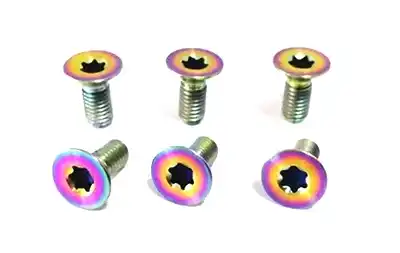
When engineers and buying teams work on upgrades for race cars or high-performance cars, they often wonder if the high cost of a titanium steering wheel bolt is worth it. The answer depends on your specific goals for success, the way you work, and the long-term costs. Because they are lighter, don't rust, and work well even when they're under a lot of stress, titanium steering wheel bolts are the best. In races where failure would be very bad, these bolts are more of a strategic investment than a cosmetic one. They are used to connect custom steering wheels to quick-release hubs. If procurement professionals know about the science behind the materials, performance data, and how they are used in the real world, they can make decisions that meet both scientific needs and price constraints.
Understanding Titanium Steering Wheel Bolts
A titanium steering wheel bolt is a specially designed connecting part made from Ti-6Al-4V alloy that is used in aircraft. They are meant to connect custom steering wheels to boss hub adapters or quick-release systems. While most OEM screws are made of carbon steel or stainless steel, these parts fix important problems with performance and safety in tough vehicle settings.
Material Composition and Core Properties
High-end titanium steering wheel bolts are made of Grade 5 titanium alloy (Ti-6Al-4V), which has a microstructure that makes it very strong. About 6% of it is aluminum and 4% is vanadium. At more than 900 MPa, this mix is very strong, but it's only 4.43 g/cm³ dense, which is about 43% less than steel forms. The material is very strong against wear and won't crack after millions of stress cycles. This is very important in racing applications where there is a lot of shaking.
Titanium doesn't rust because when it comes in touch with oxygen in the air, it can form a stable, self-healing oxide layer. In the car cabin, water, sweat salts, and cleaning agents are common. This passive film stops electrochemical degradation even when it comes in touch with these things. At temperatures between -200°C and 400°C, the material doesn't change. Its structure also stays strong even when temperatures change quickly, which would damage other alloys.
How Titanium Differs from Steel and Aluminum Alternatives
Although steel bolts are very strong and don't cost much to make, they are also very heavy and rust quickly. A titanium steering wheel bolt is only 1.6 grams, while a normal M5 steel bolt weighs about 2.8 grams. This is a 45% weight loss that is spread out over a number of attachment spots. Even though aluminum alloys are light, they aren't strong enough or stable enough for uses that need to be safe. When torqued over and over, aluminum tends to gall, which isn't good for fasteners that need frequent maintenance access.
Stainless steel can make some things work better, but it can cause galvanic rust when used with aluminum hubs, it can mess up the magnets in new cars with lots of sensors, and it's still 40% heavier than titanium. Because titanium is very strong for its weight, engineers can make bolt sizes smaller while still keeping safety factors high. This makes it easy to package things in places where space is limited.
Why Use Titanium Steering Wheel Bolts?
There are more important things to think about than just how much the materials cost when picking a titanium steering wheel bolt. To understand the business case, you need to look at the total cost of ownership, performance validation in the real world, and how it fits with industry evolution.
Performance Validation Through Racing Applications
Parts are quickly put to the test in motorsport environments, where they are subjected to high levels of stress. Titanium steering wheel bolts have been used a lot racing teams over the last decade. Millions of competition miles have been put on these bolts, showing that they work well in tough conditions. The steering input frequencies can exceed 15 Hz when the speed changes quickly, as shown by telemetry data. At this rate of vibration, steel fasteners would fatigue within a single race season.
All of the bolts in the steering, suspension, and brake systems were changed to titanium ones in a case study from a GT3 racing program. It lost 2.8 kilograms of weight altogether, and the parts were made more resistant to corrosion and galling, which improved serviceability. In three seasons and 72 races, zero fastener-related failures occurred, even though they were removed every two weeks for checks. The team calculated that a 15% reduction in labor costs for maintenance would offset the initial material premium for the titanium steering wheel bolt.
Titanium's use in OEM high-performance production cars shows that makers trust its reliability margins. Many European sports car makers now put titanium wheel bolts and steering parts on their flagship models, even though they cost more. To meet power-to-weight goals and differentiate their product positioning, they accept the cost premium. There are many tests that are done to validate these design choices, including accelerated corrosion exposure, vibration endurance, and crash safety ratings that show how well they work in worst-case situations.
Sustainability and Industry Evolution
Automotive companies are being pushed by regulations to reduce their lifecycle carbon emissions. This means that environmental considerations are growing in the materials they choose for a titanium steering wheel bolt. Titanium production from primary ore requires significant energy, but better recycling technology is improving the sustainability profile. About 25 to 30 percent of the titanium used in industry comes from recycled sources. This number is expected to go up as more places are built to collect and recycle titanium.
Titanium components don't need to be replaced as often because they last longer. In the long run, this means that vehicles use less total material. A titanium steering wheel bolt lasting 10+ years without degradation avoids multiple replacement cycles that steel alternatives would require. This keeps the energy and materials that would have been used to make more parts from being wasted. More people in the automotive supply chain are interested in circular economy principles, which fits with this idea of durability.
Future trends point toward increased titanium adoption as manufacturing costs decline through process innovation. With technologies like additive manufacturing and near-net-shape forging, you can make complex forms that were previously impractical. There is less of a price gap between titanium and premium steel as these methods get better and scale. Because of this, titanium steering wheel bolts might not be seen as just a high-end element in the future.
As the number of electric vehicles grows, so does the need for lightweight materials that can support the weight of the battery system without weakening the structure. Companies want to cut weight by every gram they can to improve efficiency and extend driving range. This makes the strength-to-weight advantage of a titanium steering wheel bolt even more attractive. Analysts believe that automotive titanium consumption will grow at a rate of more than 8% per year until 2030, driven by EV platforms and performance car segments.
Conclusion
A titanium steering wheel bolt is more expensive, but it delivers measurable performance advantages that are worth it in specific situations. It is 45% lighter than steel and resists rust and wear better, which makes it a great choice for racing, high-performance cars, and tough job environments. People who work in procurement should not only look at the price of the item but also at the total cost of ownership. Things like longer service life, less maintenance, and stable performance under stress are factors they should think about.
It's important to make sure that the technical needs of the product fit the material you choose. For instance, racing needs the high strength of titanium steering wheel bolts, but regular cars on the street might be fine with stainless steel. When you buy good items from trusted sellers, you know that the sizes are right and the materials are always the same. This has a direct impact on installation reliability and long-term performance. You can get the most out of your investment and keep it from breaking down too soon if you know the right torque specs and maintenance practices.
Titanium is becoming more popular as a building material because of the demand for electric cars and weight optimization. Costs keep going down as industrial technology keeps getting better and production rates keep going up, but the performance benefits stay constant.
Partner with Wisdom Titanium for Premium Steering Wheel Fastening Solutions
Wisdom Titanium specializes in manufacturing aerospace-grade titanium steering wheel bolts that are made to last in harsh automotive settings. We have DIN 7991 countersunk bolts in sizes M5x12mm and M5x15mm with T25 Torx drives that meet the exact needs of race teams and people who build fast cars. You can get these screws in two different styles: with a natural titanium finish or a decorative PVD rainbow coating. They look good and are useful, which is good for your business.
Our company, which is based in Baoji Titanium Valley, China's main titanium production hub, makes titanium steering wheel bolts. We keep the whole supply chain in-house, from getting the raw materials to using CNC tools to check the quality of the finished product. Our facility is located in the world's biggest titanium industrial center, which makes it easy for us to get high-quality Ti-6Al-4V bar stock and specialized processing knowledge. This has a direct effect on how stable our goods are and how much they cost.
When you buy at least 100 pieces from us, you get factory-direct prices. This means you don't have to pay the markups that middlemen do, and we have a lot of stock on hand so you can get your order quickly. We give you expert advice while the specs are being made, which helps you pick the best fasteners for the different hub forms and performance needs. With ready-to-ship excellence, your projects get parts that they can depend on right away, without any delays that throw off plans.
You can talk to our staff about the titanium steering wheel bolt you need by emailing sales@wisdomtitanium.com. Based on how much you need, we'll give you competitive prices along with full specs and material certifications. Order today and see for yourself why top racing teams and luxury carmakers depend on these products for fixing things that need to be safe.
FAQ
Are titanium bolts stronger than steel bolts?
Grade 5 titanium (Ti-6Al-4V) achieves tensile strength over 900 MPa, which is about the same as many alloy steels but 43% lighter. Although titanium is strong, it is also very light. This means that it can hold the same amount of weight as steel while being much lighter. In terms of tensile strength, titanium steering wheel bolts are stronger than high-grade steel in specific strength-to-weight ratio applications. However, high-grade steel can exceed titanium's absolute tensile strength, but the weight penalty makes it less useful where mass reduction directly improves performance.
Can titanium steering wheel bolts be reused?
Titanium steering wheel bolts don't get thread galling easily, so they can be installed and removed many times before they break. Most high-quality fasteners can withstand 50+ torque and removal cycles before the threads start to wear out. This is a lot longer than steel can last. Every once in a while, look at the threads to see if they are scoring or twisting. If you see any damage, replace the fasteners. Make sure you use the right amount of power for each job to avoid stress that speeds up wear. If you follow the right fitting steps, the material's elastic properties will keep the clamp load the same every time.
How long do titanium bolts last in racing conditions?
If you take good care of your titanium steering wheel bolts, they can last longer than three competition seasons. This is the same as going through thousands of stress cycles under extreme vibration and heat loads. When things are checked regularly, problems are found before they get worse. Material fatigue isn't what typically limits the lifespan; damage that happens during service procedures is. Most of the time, teams change fasteners on scheduled intervals before they wear out instead of waiting for signs of wear. This makes sure that the level of reliability during competition is at its best.
References
1. Boyer, R., Welsch, G., & Collings, E. W. (1994). Materials Properties Handbook: Titanium Alloys. ASM International, Materials Park, Ohio.
2. Donachie, M. J. (2000). Titanium: A Technical Guide, 2nd Edition. ASM International, Materials Park, Ohio.
3. Lutjering, G., & Williams, J. C. (2007). Titanium: Engineering Materials and Processes, 2nd Edition. Springer-Verlag, Berlin, Germany.
4. SAE International (2018). Aerospace Material Specification AMS 4928: Titanium Alloy Bars, Wire, Forgings, Rings, and Drawn Shapes, 6Al-4V, Annealed. SAE Technical Standards Board.
5. International Organization for Standardization (2013). ISO 898-1: Mechanical Properties of Fasteners Made of Carbon Steel and Alloy Steel — Part 1: Bolts, Screws and Studs with Specified Property Classes. ISO Standards Catalogue.
6. Peters, M., Kumpfert, J., Ward, C. H., & Leyens, C. (2003). Titanium Alloys for Aerospace Applications. Advanced Engineering Materials, Volume 5, Issue 6, Wiley-VCH Verlag.