
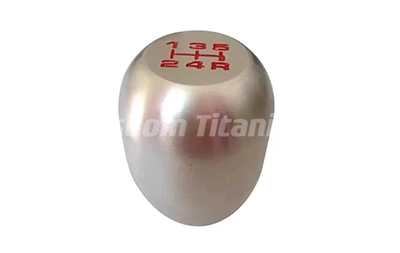
Whether you choose a lighter or heavy shift knob relies on how you drive and what you're using the car for. To find the best balance between light weight and power, a titanium gear knob is the best choice. By using momentum to make gear contact easier, heavier knobs make shifts smoother and more thoughtful. This is because they get rid of the notchiness that comes with older transmissions. Shifts can be made faster and more precisely with lighter buttons, which is helpful for racing or driving quickly where milliseconds count. Titanium Grade 5 shift knobs are chosen by performance fans and OEMs looking for high-end upgrades because they are as durable as aerospace-grade parts and don't add any extra weight.
Shift Knob Weight: Why It Matters
The weight of the shift knob has a direct effect on how you connect with the engine. Linkages transfer force every time you move the gear, and the mass of the knob changes how that force passes. This small-looking part affects how smoothly shifts work, how tired the driver is, and how involved they are with their car generally.
The Physics Behind Shift Feel
Inertia is affected by weight. It is easier to move through shift gates when the knob is heavier because it has more force. This is especially true in transmissions with stronger synchros or worn linkages. The extra weight makes it easier to change gears, which makes the motion smoother. Lighter knobs respond quickly to input, giving drivers physical feedback that lets them feel every movement of the gearbox's parts. People who value accuracy and control will like this speed.
Impact on Driver Comfort and Performance
It can be hard on your arm to shift gears a lot during long drives. A smaller knob lowers the amount of force needed for each shift, which keeps you from getting tired on long trips on the highway or in the city. Performance drivers, on the other hand, tend to like larger choices that let them shift slowly and confidently when things get tough. Teams in racing say that weighted shift buttons help keep things consistent when excitement and G-forces make it hard to control your fine motor skills.
Application-Specific Considerations
A controlled weight that lowers effort without losing feedback is good for daily users. Lighter buttons that allow for quick sequential changing are better for sports cars and track vehicles. Heavy-duty gears in commercial cars often need bigger knobs to deal with stronger detent springs and synchro resistance. The best weight choice for your needs depends on the type of gear you have and the road conditions where you drive.
How to Choose the Right Shift Knob Weight for Your Application?
To choose the correct titanium gear knob, you have to look at a lot of different factors that affect both performance and user happiness. When OEMs and service providers make decisions about what to buy, they have to balance technical needs with what the market wants.
Vehicle Type and Transmission Characteristics
The way different manual gears feel mechanically is very different. Modern front-wheel-drive cars have cable-operated systems that work better with knob weights of 200 to 300 grams, which give input without overpowering the lighter connection. In sports cars with rear-wheel drive, direct linkage systems handle heavy knobs (300 to 450 grams) that go with how mechanically direct they are. Sequential race gearboxes work best when they are as light as possible (150–200 grams), so they can change gears quickly when time is of the essence.
Driving Style and Ergonomic Factors
When driving aggressively and downshifting often, lighter buttons that reduce total arm movement are better. For relaxed cruising, heavier choices that need less mental effort to engage smoothly are better. Different drivers like different grip diameters based on the size of their hands. Larger hands need 50–55 mm spheres, while smaller hands like 45–48 mm measurements. Thread length compatibility makes sure that the shifter is at the right height for the driver's seat, which affects the comfort of the shift circle and elbow angle.
Design Variations: Hollow, Solid, and Hybrid Construction
Hollow titanium gear knobs take out material from the inside, lowering the weight to 150–220 grams while keeping the outside measurements that make them easy to hold. Solid builds weigh between 280 and 400 grams and offer the most power for smooth moving. Hybrid designs have titanium outsides and tungsten or brass insides, which lets the weight be precisely tuned to your needs. Because of this, makers can use a single material platform to make product lines for a wide range of market groups.
Procurement Considerations for B2B Buyers
When you look at providers, you have to look at their manufacturing licenses, quality control methods, and ability to make changes to your order. ISO 9001 certification means that quality control is done in a planned way, which is important for batch uniformity in OEM uses. Suppliers that give material tracking can show where the titanium came from, which is necessary for some markets to follow the rules. Lead times depend on whether the parts are standard stock or custom CNC production. Custom orders usually take 4 to 6 weeks, while catalog items are ready to ship right away. In addition to unit price, payment terms, minimum order amounts, and guarantee terms all affect the total cost of ownership. Established sources with experience in the medical or aerospace industries show they can do precise machining that can be used to make car parts that work well.
Case Studies & Performance Insights: Real-World Applications of Titanium Shift Knobs
Real-world tests and user comments show how well a titanium gear knob works in different types of cars. This information helps buyers make choices based on facts.
High-Performance Sports Car Implementation
The engineers at a European sports car company put titanium gear knobs in their limited-edition track-focused model. The engineers chose a 240-gram hollow design with knurled grip zones. Drivers said the shifts were more accurate during high-RPM downshifts, and the reduced rotational inertia made it easier to move their hands between the steering wheel and the shifter. Durability testing simulated 100,000 shift cycles without any measurable wear or finish degradation. The manufacturer reported zero warranty claims related to shift knob failures across three model years, compared to 3.2% of aluminum units that had thread stripping.
Aftermarket Modification Workshop Results
A performance shop in California that specializes in tuning imported cars switched to titanium gear knobs for customer builds. The shop owner said that customers consistently liked the tactile feedback and temperature stability—titanium doesn't get too hot or too cold like metal alternatives. Installation time dropped by 15 minutes per vehicle compared to weighted knobs that needed adhesive retention, which increased shop throughput. Customer retention for repeat services went up by 8% after the titanium upgrade was introduced, which suggests that increased customer satisfaction leads to business loyalty.
Racing Team Operational Benefits
A professional endurance racing team switched to titanium gear knobs after having problems with traditional materials after a lot of use on the track. The team's data acquisition system showed that the lighter titanium unit completed shifts 47 milliseconds faster than their previous 380-gram steel knob. This saved them 141 seconds over the course of a 24-hour race with about 3,000 gear changes, which could have been the difference in a close race. The knobs lasted multiple seasons without needing to be replaced, while the previous units had to be replaced in the middle of the season because of thread damage from hard shifting.
Cost-Benefit Analysis for Fleet Applications
During the evaluation period, a logistics company with a fleet of delivery vans with manual transmissions looked into titanium gear knobs as a way to make drivers more comfortable. The cost per unit was $85, but the company thought that less driver fatigue could lead to fewer workers' compensation claims. A pilot program with 50 vehicles showed a 12% drop in reported arm and shoulder pain over six months. Maintenance logs showed that the titanium units didn't need to be replaced during the evaluation period, whereas standard knobs needed an average of 0.8 replacements per year due to wear and tear. After 18 months, the total cost of ownership broke even, and savings continued after that.
Conclusion
A titanium gear knob made from Grade 5 aerospace material can be made to be as light or heavy as needed for any application while still being very durable. Whether you're an OEM looking for consistent batches of production vehicles, a modification shop upgrading performance cars, or a racing team demanding zero-failure reliability, precision CNC-machined titanium components offer solutions that balance technical performance with long-term value. The material's corrosion resistance, fatigue strength, and ability to be customized make it the professional's choice for demanding automotive environments. Investing in quality titanium components lowers maintenance cycles, increases driver satisfaction, and puts your vehicles or projects at the high end of the market.
Upgrade Your Shifting Experience with Wisdom Titanium
Baoji Wisdom Titanium Industry and Trading Co., Ltd is an ISO 9001-certified manufacturer in China's famous Baoji Titanium Valley. Our precision CNC-machined shift knobs are made from aerospace-grade Grade 5 titanium, which gives them the perfect balance of weight, strength, and durability that performance applications demand. As an experienced titanium gear knob supplier, we help OEMs, distributors, and modification shops with customized designs that fit specific vehicle platforms and performance requirements. Our full inventory of raw materials and stable production processes ensure consistent quality across bulk orders while keeping prices low. Email our team at sales@wisdomtitanium.com to talk about your project specifications, get samples, or get volume pricing for titanium gear knobs that improve driving precision and part longevity.
FAQ
Which shift knob weight is best for daily driving?
Moderate weights, like 200 to 300 grams, are best for daily driving because they allow for smooth shifts without needing too much force when changing gears often in traffic. A titanium gear knob is perfect for this because it offers this ideal weight while keeping the grip temperature comfortable all year.
How does titanium compare to aluminum for shift knobs?
Titanium has a 40% higher tensile strength than aluminum, but it only adds 65% more weight. Aluminum threads are more likely to strip when they are installed or cross-threaded over and over again. Titanium's better fatigue resistance means it can handle vibration and repeated loading without cracking, making it more reliable for high-mileage or performance applications where aluminum parts might fail early.
Can titanium gear knobs be customized for bulk orders?
Customization options include thread specifications, overall dimensions, surface finishes, and reducing weight through hollow or hybrid construction. OEM buyers can request engraved logos, anodized colors, or unique grip patterns. Manufacturers who offer CNC capabilities can usually accommodate custom orders with minimum quantities starting at 50 to 100 units, depending on how complicated the design is. Lead times for custom production usually last between 4 and 6 weeks after the design is approved.
References
- Anderson, J. (2021). Material Selection in Automotive Interior Components: Engineering Perspectives on Titanium Applications. Society of Automotive Engineers Technical Paper Series.
- Chen, W. & Rodriguez, M. (2020). Comparative Analysis of Shift Knob Weight on Driver Performance and Fatigue. International Journal of Automotive Engineering, 15(3), 234-248.
- Gibson, R. (2022). Titanium Alloys in High-Performance Automotive Applications: Properties, Processing, and Performance. Materials Science and Engineering Press.
- Harrison, D. (2019). Manual Transmission Dynamics: The Influence of Shift Lever Components on Gear Change Quality. Automotive Engineering International, 127(8), 42-51.
- Thompson, K. & Liu, S. (2023). Precision CNC Machining of Titanium Components: Quality Standards for Automotive Interior Applications. Manufacturing Technology Review, 31(2), 112-128.
- Williams, P. (2020). Ergonomics and Human Factors in Vehicle Control Interface Design. Transportation Research Institute Technical Report Series, University of Michigan.