
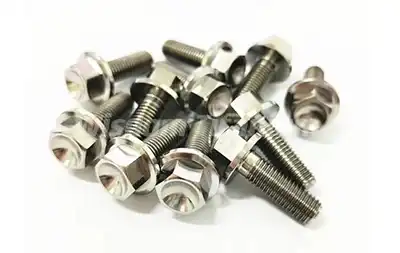
If you want to use screws for high-performance tasks, you should know the difference between hex bolts and flange nuts. A hex bolt and a flange bolt are not the same thing. Flange bolts have a washer-like flange built into the head that spreads the load more evenly across surfaces. Both types of bolts have hexagonal heads. This difference in design changes how well the joint works, how quickly it can be put together, and how well it goes together. When buying titanium hardware, these differences help purchasing managers pick the best screws for use in factories that can't risk dependability, cars, planes, and motorbikes.
Basics: What Are Flange Bolts and Hex Bolts?
The safety of the process, the quality of the assembly, and the amount of maintenance that needs to be done all depend on the type of fastener that is used. Hex nuts and flange bolts look alike, but they are not the same. People who know how things are made can make better choices about what to buy.
Design and Structural Differences
Right below the hexagonal head, flange bolts have a circle flange built in. This lip is a washer. Most of the time, this flange is bigger than the bolt head. By making the bearing surface wide, the force of the grip is spread out evenly across the joint contact. Many times, the flange design gets rid of the need for different covers. This cuts down on the number of parts and the time it takes to put them together.
On the other hand, hex bolts have a simple triangle head on top of a threaded base and don't have any built-in ways to spread the load. There are many times when you can use them because they are easy. They usually need extra cleaners, though, to protect the surface and make sure the load is spread out properly. With standard tools and sockets, you can apply pressure to the hexagonal head on both types of bolts. This speeds up the process of installing and removing them.
Functional Advantages and Application Scenarios
Flange bolts are easy to use in many ways because they have a flange built in. There is less stress in the touch area because it is bigger. Because of this, these screws work great with soft materials or thin metal sheets that could be bent by strong forces. Because the ring doesn't come off when the part is shaken, they are used a lot in brake kits, engine mounts, and car suspension systems.
When you need to be as open as possible, hex bolts are great. They can be used with different types of washers and setups because they are simple. This lets engineers change how the load is spread based on what each joint needs. In building, machinery assembly, and as structural links, hex bolts are often used because they can handle a range of materials and sizes.
Titanium Hardware in Bolts: Properties and Benefits for Flange and Hex Bolts
The material a fastener is made of has a big impact on how well it works, how much it costs, and what tasks it can complete. Titanium hardware alloys have qualities that other materials can't match, which has changed how screws are made in many areas.
Superior Corrosion Resistance and Environmental Durability
Titanium flange bolts are better for use in marine areas, chemical processing plants, and high-temperature areas because they don't rust as easily as stainless steel screws. The most common titanium metal used for screws is Titanium Grade 5 (Ti-6Al-4V). It forms a stable oxide layer that protects the material below from harsh chemicals like seawater, acids, and alkaline solutions. Because they don't rust naturally, they don't need any protective covers. This means less maintenance is needed and the working life is longer.
It's not easy for titanium engine bay nuts to break when they come in touch with engine oil, road salt, and changes in temperature. This longevity is very important for race teams because having to fix things all the time can throw off their plans. Titanium is steady at both very low temperatures and high temperatures that last for a long time. Screws that don't break as quickly are used in places like brake parts, engine units, and exhaust systems.
Exceptional Strength-to-Weight Ratio
This metal is about 60% denser than steel, but it is just as strong. Not only does this feature make the structure stronger, it also cuts down on weight. Between 900 and 1050 MPa, or 130,000 to 152,000 psi, titanium Grade 5 screws can pull apart. They are much lighter than many types of high-strength steel but just as strong as or stronger than them.
When shops want to make cars perform better, they can lower the vehicle's unsprung mass by moving from steel to titanium wheel hub bolts. This makes the car easier to handle and faster. This is also true for motorbike racing teams that use titanium brake disc bolts and sprocket nuts. They stay ahead of the game with every gram of weight loss. High-end bike makers use titanium's low weight to make frames and parts that make users faster without losing strength.
Long Service Life and Total Cost of Ownership
Titanium screws cost more than steel screws at first, but they usually end up being cheaper in the long run because they last longer and don't need as much maintenance. People can load and unload titanium parts millions of times before they crack because they don't wear down. Because of this, they are great for situations where stress needs to be turned around over and over.
Companies in the aerospace industry have found that titanium screws used in important building parts can last more than 20 years. High-torque parts often break because their threads rust. Titanium brake caliper bolts don't do this, so they last a lot longer before they need to be changed. Procurement teams know that titanium's high price is worth it in difficult uses because it keeps parts from breaking down too soon, cuts down on repair time, and extends the service life of parts.
Comparison with Traditional Materials
Titanium screws are more expensive and rust more quickly than stainless steel ones. However, stainless steel screws aren't as strong for their weight. Aluminum alloys aren't as strong as titanium metals, so they can't be used in settings with a lot of stress. While carbon steel is cheap and very strong, it needs to be protected with paint and changed often in places where it rusts.
Since titanium doesn't rust like stainless steel does, it fills in these performance gaps. It's also stronger than aluminum and lighter than carbon steel. These titanium engine bay bolts are made with CNC and come in M6, M8, and M10 sizes. With shiny finishes in black, gold, rainbow, blue, and purple, and rolled threads that last longer, these fasteners are built to last. Fans of cars who want high-quality performance and good looks will love these nuts.
Choosing Between Flange and Hex Bolts: Procurement Considerations for Titanium Hardware
You have to find a balance between technical needs, the security of the supply chain, and your budget when picking key fasteners. When buying professionals choose bolts for a project, they have to think about a lot of things to make sure they don't add any extra risks or costs to the titanium hardware procurement process.
Load Requirements and Environmental Conditions
Joint load factors play a big role in which fastener is chosen. It is better to use flange bolts when high shear loads are put on thin materials. This is because the built-in flange spreads the forces over a larger surface area, which stops bearing stress failures. In electrical boxes, car body panels, and sheet metal systems, flange bolts are often used to keep substrates from warping.
If you're working in a place where the ground is shaking, the temperature is changing, or the materials are acidic, you need fixings that will hold tight even when things get tough. It's best to use titanium flange bolts in these cases because they won't rust and are designed in a way that keeps them from coming loose. Fasteners used in racing are subject to changes in temperature and a lot of stress. Because of this, titanium flange bolts are perfect for use in engine systems and chassis parts.
When the load needs to be spread out in a certain way, hex bolts are a good choice. Engineers can ask for different cleaning arrangements to get the best stress distribution, work with areas that aren't level, or stop electricity from moving. Because they can handle a lot of different joint forms and loading patterns, hex bolts are often used to connect structures, hold tools up, and fix things.
Supplier Credentials and Quality Assurance
There is a direct link between the quality of the screws and how safe and effective the system is. If you look at the sellers' licenses, you can be sure that the fasteners follow government and business rules. When a company is recognized by ISO 9001, it means that they have had quality management systems in place for a while. This lets customers know that production is stable and that they can keep track of their goods. The fact that Baoji Wisdom Titanium Industry and Trading Co., Ltd. has ISO 9001 certification shows that they care about quality all the way through the production process.
When projects need fasteners that are made just for them, the skills of the original equipment maker (OEM) are very important. Having suppliers that offer CNC machining, thread rolling, and different finishing options lets you make sure that your product meets all of its needs. The Baoji Titanium Valley is where our plant is located. It is China's largest and most full titanium industry cluster. Making titanium sponges and finished parts is part of a connected environment that makes sure the quality of the materials and the safety of the supply chain.
Delivery times have a big impact on how projects are planned and how much it costs to store goods. When suppliers keep standard amounts of parts and raw materials on hand, they can quickly fill orders, which cuts down on the time people have to wait to buy something. We always deliver on time because we have a stable staff and the most up-to-date production technology. This keeps our customers from having to pay for expensive project delays.
Financial Considerations and Cost Efficiency
Titanium prices change on the market based on how much money is available, how much can be made, and how much people around the world want it. Teams that buy things can plan when to buy things to get the best deals if they keep an eye on these trends. Risks of price changes can be cut down by working with manufacturers who offer steady prices and enough raw materials on hand.
When you buy a lot, you usually save a lot of money, which means that the price per unit goes down. A agreed upon bulk price can help everyone: automakers buying parts for production runs, racing teams buying bolt sets for building whole cars, and dealers stocking up on stock to sell later. You can often get better deals when you tell companies what you expect to need each year.
Lead times change based on how different the parts are, how many you order, and how you want them to be made. Smaller sizes of screws can be sent out right away because they are in stock, but bigger sizes take longer to make. Procurement professionals can plan orders in a way that balances the cost of things with the chance that production will stop if they know these times. It only takes a few days to ship standard titanium screws, but it could take two to four weeks for special CNC parts, depending on how involved they are.
Conclusion
When people are buying screws, knowing the difference between hex bolts and flange bolts helps them pick the ones that work best, are reliable, and don't cost too much. Hex bolts are flexible and can be used in many different types of joints. Flange bolts, on the other hand, offer built-in load distribution that works well in places with a lot of shaking and thin materials. Titanium metals change both types of bolts because they have higher strength-to-weight ratios, are less likely to rust, and last longer, which explains why they cost more but require less maintenance and make operations run more smoothly. When strategic buying picks screws that meet technical needs and stay within budget, it considers things like the load, the environment, the source's skills, and the costs over the product's whole life. If you take good care of your titanium screws, they will last as long as possible. This means cleaning them correctly, being careful when touching them, keeping them from galling, and controlling their pressure.
Partner with Wisdom Titanium for Your High-Performance Fastener Needs
Wisdom Titanium makes precision-engineered titanium fasteners and special CNC parts that are carefully made to meet the strict requirements of uses in cars, planes, motorcycles, and factories. We make titanium hardware in Baoji Titanium Valley, which is the best place in the world to make titanium products. Our company is ISO 9001 approved. We use integrated supply lines to make sure that our products are on time and that the materials we use are of good quality. Our engine bay bolts are CNC cut and come in M6, M8, and M10 sizes. Tensile strengths of 900 to 1050 MPa are found in Grade 5 (Ti-6Al-4V). They also come in a range of colors and have rolled threads that make them more durable against wear. Our helpful staff can be reached at sales@wisdomtitanium.com to talk about your specific needs, get technical specs, or get bulk prices for your next project.
FAQs
What cost differences exist between titanium flange bolts and hex bolts?
Titanium flange and hex bolt prices are based on the size, number, and customized needs of the bolts, not on how they are made in general. It may cost a little more for flange bolts because the flange is made of more material and the process of making them is stranger. Both types cost a lot less per unit when you buy a lot of them. If you want non-standard sizes, finishes, or thread setups, the price is higher than the price for a normal store item. It's okay to compare costs when you ask for specific quotes based on your wants.
Can titanium flange and hex bolts be used interchangeably in aerospace applications?
The only things that determine interchangeability are technical norms and the need for approval. In flight, plans must be followed exactly, and changing the types of fasteners used must be looked at by an expert and given the go-ahead. The joint may be strong enough with either type of bolts, but how well it works depends on how they handle stress, load, and motion. When you buy aircraft parts, there are certain steps you need to take to replace them. Usually, these include checks for quality assurance and engineering before the change is made.
What lead times should buyers expect for custom bulk orders of titanium fasteners?
If the standard titanium bolts you want are in stock, they can generally be sent out within 3 to 7 business days. It usually takes two to four weeks for custom specs that need CNC machining, special finishes, or measurements that aren't standard. However, this varies on how complicated the order is and how many are being made. Large sales may cause delays, depending on how fast the factory can make the goods and how much raw material is available. People who sell things can give you accurate shipping figures and maybe even speed up important orders if you tell them about your needs early on and in detail.
References
- Boyer, R., Welsch, G., & Collings, E.W. (1994). Materials Properties Handbook: Titanium Alloys. ASM International.
- Bickford, J.H. (2007). Introduction to the Design and Behavior of Bolted Joints: Non-Gasketed Joints (4th ed.). CRC Press.
- Donachie, M.J. (2000). Titanium: A Technical Guide (2nd ed.). ASM International.
- Budinski, K.G. (1996). Engineering Materials: Properties and Selection (5th ed.). Prentice Hall.
- Mortensen, A. (Ed.). (2019). Concise Encyclopedia of Composite Materials (2nd ed.). Elsevier Science.
- Society of Automotive Engineers. (2018). Fastener Standards Manual: Reference Materials for Fastener Specifications. SAE International.




