
The aviation industry demands materials that can withstand extreme conditions while maintaining structural integrity and minimizing weight. Titanium Hardware has emerged as the gold standard for aerospace applications, offering an unmatched combination of strength, corrosion resistance, and lightweight properties. When implemented correctly, titanium components can reduce aircraft weight by up to 40% compared to steel alternatives while providing superior durability and heat resistance.
Titanium's Properties in Aerospace Applications
Titanium alloys, particularly Grade 5 (Ti-6Al-4V), possess exceptional characteristics that make them indispensable in aviation. The tensile strength of 900-1050 MPa combined with a density 45% lighter than steel creates an ideal strength-to-weight ratio. This metal alloy maintains its structural integrity at temperatures ranging from -269°C to 600°C, making it perfect for both engine components and external airframe parts.
The corrosion resistance of titanium hardware surpasses most traditional aerospace materials. Unlike aluminum, titanium forms a protective oxide layer that prevents degradation even in harsh atmospheric conditions. This longevity translates to reduced maintenance costs and extended component lifecycles, critical factors in commercial aviation where downtime directly impacts profitability.
Biocompatibility adds another dimension to titanium's appeal in aviation. Aircraft cabin environments require materials that don't emit harmful substances, making titanium an excellent choice for interior components and air circulation systems.
Critical Applications of Titanium Hardware in Aircraft Manufacturing
Engine Components and High-Temperature Systems
Jet engines operate under extreme conditions where conventional materials fail. Titanium hardware excels in these environments, particularly in compressor blades, turbine discs, and fastening systems. The heat resistance properties allow these components to maintain precision even when exposed to temperatures exceeding 500°C.
Engine bay bolts manufactured from titanium Grade 5 provide exceptional durability in high-vibration environments. These fasteners undergo CNC machining with rolled threads to ensure perfect dimensional accuracy and enhanced fatigue resistance. The polished finish not only improves aesthetics but also reduces stress concentration points that could lead to failure.
Structural Airframe Components
Modern aircraft rely heavily on titanium hardware for critical structural elements. Wing attachments, landing gear components, and fuselage joints benefit from titanium's superior strength characteristics. The lightweight nature of these components contributes significantly to fuel efficiency improvements.
Titanium fasteners in structural applications undergo rigorous testing to meet aviation safety standards. The precision manufacturing process ensures consistent quality across large production runs, essential for commercial aircraft assembly lines.
Hydraulic and Fuel System Hardware
Aviation hydraulic systems require components that resist both corrosion and pressure-induced stress. Titanium hardware provides excellent performance in these applications, particularly in high-pressure lines and valve assemblies. The chemical inertness of titanium prevents contamination of hydraulic fluids, maintaining system purity throughout the aircraft's operational life.
Fuel system applications benefit from titanium's non-reactive properties. Unlike steel or aluminum, titanium doesn't catalyze fuel degradation or create galvanic corrosion when in contact with other metals.
Advanced Manufacturing Techniques for Aviation-Grade Titanium Hardware
The aerospace industry demands exceptional precision in titanium component manufacturing. CNC machining represents the pinnacle of titanium processing technology, allowing for tolerances within micrometers. This cutting-edge approach ensures that every bolt, nut, and custom component meets stringent aviation specifications.
Hot forging techniques create titanium components with enhanced grain structure, improving fatigue resistance crucial for high-cycle applications. The forging process aligns the metal's crystalline structure, creating directional strength properties that benefit specific loading conditions in aircraft applications.
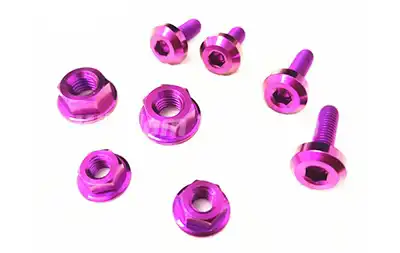
Surface treatments play a vital role in titanium hardware performance. Anodizing processes can create colored finishes – black, gold, rainbow, blue, or purple – while maintaining the underlying material properties. These treatments also provide additional corrosion protection and help with component identification during assembly and maintenance.
Quality Control and Certification Standards
Aviation titanium hardware must comply with rigorous international standards including AS9100, ASTM B348, and AMS specifications. Each component undergoes multiple inspection stages, from raw material verification to final dimensional checks. Non-destructive testing methods such as ultrasonic inspection and dye penetrant testing ensure internal integrity.
Traceability remains paramount in aerospace applications. Every titanium component requires complete documentation of its manufacturing history, including material source, processing parameters, and quality test results. This documentation enables rapid response to any quality issues and supports maintenance scheduling optimization.
ISO 9001 certification provides the framework for consistent quality management throughout the manufacturing process. Regular audits and continuous improvement initiatives ensure that production standards remain at the highest levels required for aviation applications.
Cost-Benefit Analysis and Efficiency Optimization
While titanium hardware commands premium pricing compared to traditional materials, the total cost of ownership favors titanium in most aviation applications. The extended service life, reduced maintenance requirements, and fuel savings from weight reduction create compelling economic benefits.
Efficiency optimization begins with proper material selection. Different titanium grades offer varying properties, and selecting the appropriate grade for specific applications maximizes both performance and cost-effectiveness. Grade 2 titanium provides excellent corrosion resistance for less demanding applications, while Grade 5 offers superior strength for critical structural components.
Inventory management strategies for titanium hardware require careful planning due to longer lead times compared to conventional materials. Maintaining strategic stock levels of standard fasteners while planning custom components well in advance ensures project timeline compliance.
Emerging Trends and Future Applications
The evolution of additive manufacturing opens new possibilities for titanium hardware in aviation. 3D printing technology enables the creation of complex geometries impossible with traditional manufacturing methods. This innovation allows for weight optimization through internal lattice structures and integrated cooling channels.
Advanced titanium alloys continue to push performance boundaries. New compositions incorporating elements like molybdenum and vanadium create materials with enhanced properties for next-generation aircraft designs. These developments support the aerospace industry's ongoing quest for improved efficiency and performance.
Sustainable manufacturing practices gain importance as environmental considerations influence aerospace design decisions. Titanium's recyclability and longevity align well with green aviation initiatives, making it an increasingly attractive material choice for environmentally conscious manufacturers.
Titanium hardware represents a cornerstone technology in modern aviation, enabling aircraft designers to achieve unprecedented levels of performance, efficiency, and reliability. The strategic implementation of titanium components across engine systems, structural elements, and critical fasteners delivers measurable benefits in weight reduction, durability, and operational cost savings. As aerospace technology continues advancing toward more sustainable and efficient solutions, titanium hardware will undoubtedly play an increasingly important role in shaping the future of flight. Success in aviation titanium applications requires partnering with experienced manufacturers who understand both the technical demands and quality requirements of this critical industry.
FAQ
Q1: What makes titanium hardware superior to aluminum in aviation applications?
A: Titanium offers superior strength-to-weight ratio, better heat resistance, and excellent corrosion resistance compared to aluminum. While aluminum corrodes over time, titanium maintains its properties throughout extended service periods, reducing maintenance costs and improving safety margins.
Q2: How does the cost of titanium hardware compare to traditional aerospace materials?
A: Initial costs for titanium hardware are higher than steel or aluminum alternatives. However, the total cost of ownership typically favors titanium due to reduced maintenance, longer service life, and fuel savings from weight reduction. The return on investment becomes apparent over the aircraft's operational lifetime.
Q3: What quality certifications should I look for when selecting titanium hardware suppliers?
A: Look for suppliers with AS9100 aerospace quality certification, ISO 9001 quality management systems, and compliance with relevant ASTM and AMS specifications. Traceability documentation and material test certificates are essential for aerospace applications.
Wisdom Titanium Titanium Hardware Supplier
Selecting the right titanium hardware supplier can make the difference between project success and costly delays. Wisdom Titanium stands as a trusted manufacturer specializing in aerospace-grade titanium components that meet the most demanding aviation requirements. Our ISO 9001-certified manufacturing facility produces precision-engineered fasteners and custom CNC parts designed specifically for the aerospace industry.
Since 2016, we have served aerospace manufacturers, maintenance facilities, and engineering firms worldwide with our comprehensive range of titanium solutions. Our in-house R&D capabilities enable us to develop custom components that address unique application challenges while maintaining the highest quality standards.
Our complete inventory of raw materials and standard parts ensures stable pricing and consistent availability. The mature production technology and experienced quality control team guarantee that every component meets stringent aerospace specifications. When you need a reliable titanium hardware supplier that understands the critical nature of aviation applications, contact us at sales@wisdomtitanium.com to discuss your specific requirements and discover how our expertise can enhance your next aerospace project.
References
- Boyer, R. R. (1996). "An overview on the use of titanium in the aerospace industry." Materials Science and Engineering: A, 213(1-2), 103-114.
- Peters, M., Kumpfert, J., Ward, C. H., & Leyens, C. (2003). "Titanium alloys for aerospace applications." Advanced Engineering Materials, 5(6), 419-427.
- Lutjering, G., & Williams, J. C. (2007). "Titanium: Engineering Materials and Processes." Springer Science & Business Media.
- Banerjee, D., & Williams, J. C. (2013). "Perspectives on titanium science and technology." Acta Materialia, 61(3), 844-879.
- Veiga, C., Davim, J. P., & Loureiro, A. J. (2012). "Properties and applications of titanium alloys: a brief review." Reviews on Advanced Materials Science, 32(2), 133-148.
- Singh, P., Pungotra, H., & Kalsi, N. S. (2017). "On the characteristics of titanium alloys for the aircraft applications." Materials Today: Proceedings, 4(8), 8971-8982.