
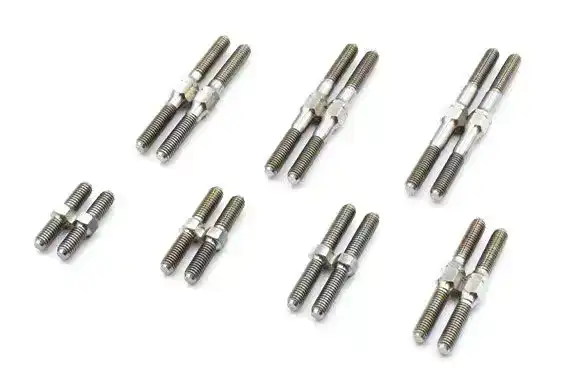
Properly adjusting tension with a turnbuckle requires attaching hardware to anchor points and turning the center body. Titanium turnbuckles have great corrosion resistance and a remarkable strength-to-weight ratio, making them more effective than conventional materials. Threading the turnbuckle body to attain the correct tension is the first step after choosing the suitable end fittings (eye, jaw, or hook configurations) for your particular application. Essential components for the aerospace, marine, and automotive industries, these precision-engineered electronics thrive in challenging conditions where reliability and longevity are crucial.
Understanding Titanium Turnbuckles and Their Working Principles
A major development in tensioning technology, titanium turnbuckles combine the basic mechanics of conventional turnbuckles with the remarkable material qualities of titanium. To provide variable tension in rods, cables, or structural components, these precisely built tools have a threaded body with contrasting thread directions and end fittings.
Common Types and Configurations
Different industrial uses are served by the three main configurations of turnbuckles. Jaw/jaw turnbuckles are perfect for use with wire rope in marine rigging because of their flat-end fittings that clamp onto cables or rods. For temporary installations or situations requiring frequent adjustments, hook/hook setups are a common choice due to their rapid connections and disconnections. For long-term structural installations, eye/eye turnbuckles are the way to go because of the closed-loop connections they provide, which uniformly disperse loads.
Operational Mechanics and Step-by-Step Usage
The threaded body, which has right-hand and left-hand threads on opposite ends, is the central component of the operating principle. The length of the titanium turnbuckle is reduced and the tension between the connecting pieces is increased as you turn it clockwise. This is because the end fittings move toward the center. The assembly is lengthened and stress is reduced by rotating counterclockwise.
Load limitations and correct installation procedures must be strictly adhered to when operating these devices. Make sure everything is nice and tidy before you begin. When fastening the end fittings to their anchor points, make sure to provide enough thread engagement to accommodate changes. Avoid using too much force too quickly, as it could damage the connecting parts, and instead tighten the turnbuckle body gradually while keeping an eye on the tension levels.
Material Advantages in Industrial Contexts
The exceptional performance of titanium turnbuckles is light years ahead of those of more common materials. Use of the Ti6Al4V alloy in high-end turnbuckles allows for tensile strengths more than 1000 MPa with a density that is only 56% that of steel. When used in aircraft, where weight has a direct impact on performance and fuel economy, this combination makes it possible to reduce assembly weight without sacrificing load capacity.
Stainless steel parts can corrode in chloride conditions, but titanium's naturally occurring oxide layer offers unmatched resilience. This feature significantly increases the service life, which in turn decreases the frequency of replacement and maintenance expenses in chemical processing and maritime applications.
Benefits and Applications of Titanium Turnbuckles
The benefits of titanium turnbuckles go far beyond their primary use in tensioning, providing quantifiable advantages that make up for their higher initial cost over time. With this knowledge in hand, procurement experts may improve performance and total cost of ownership through well-informed decision-making.
Superior Performance Characteristics
When compared to more conventional materials, titanium clearly has many benefits. Titanium turnbuckles typically offer a 2-3 times longer service life in corrosive settings, despite the fact that stainless steel turnbuckles may initially cost 30-40% less. Titanium has the same load capacity as steel equivalents but weighs about half as much, allowing for lighter assemblies that are more efficient in the system as a whole due to the material's superior strength-to-weight ratio.
Tests for corrosion resistance show that titanium performs quite well in saltwater settings, when stainless steel components can be ruined in a matter of months by chloride assault. Turnbuckles made of titanium don't rust or deteriorate even after years of use in the water, so you won't have to replace them as often and won't have to worry about maintenance interruptions.
Industrial Applications and Case Studies
To reduce weight, which affects fuel consumption and cargo capacity, aerospace manufacturers use these parts into airplane rigging systems. The use of titanium turnbuckles instead of steel in the cable tensioning systems of a major aircraft manufacturer resulted in a 15% weight savings, which translated to a considerable decrease in fuel costs over the lifetime of the aircraft.
The benefits of titanium's resistance to corrosion are especially prominent in marine applications. When compared to stainless steel equivalents, offshore platform operators have reported maintenance cost reductions of over 60% when using titanium rigging components. Titanium hardware allows components to withstand the hostile saltwater environment for an additional three to five years before needing repair.
Maintenance Guidelines and Safety Considerations
Optimal performance and a substantially longer service life are both guaranteed by regular maintenance. Visually checking for surface damage, thread wear, and adequate torque verification should be part of your regular inspection plans. Titanium turnbuckles don't need much maintenance beyond cleaning and inspection, unlike steel components that need constant lubrication and protection from corrosion.
Correct load estimations and operational load limitations are emphasized in safety protocols. Do not ever overburden the product; doing so can lead it to fail unexpectedly, which could have disastrous results. Inspect all parts thoroughly and replace those that exhibit indications of wear, damage, or fatigue; this applies to any material.
Procurement Guide: How to Buy Titanium Turnbuckles for B2B Needs
Acquiring titanium turnbuckles successfully necessitates familiarity with supplier competencies, quality benchmarks, and logistical factors that guarantee dependable supply chain efficiency. Using a strategic sourcing approach can help you get the best deal possible without sacrificing quality or exposing yourself to unnecessary supply disruptions.
Supplier Evaluation and Verification
The basis of supplier evaluation is quality certification. Aerospace certifications, such as AS9100, show competence for vital applications, whereas ISO 9001:2015 certification shows established quality management systems. Components must fulfill all alloy specifications and mechanical property criteria, and material traceability documentation guarantees this.
The accuracy of CNC machining, the quality of surface finishing, and the capacity for production should all be part of any evaluation of manufacturing capabilities. Superior quality assurance and quicker resolution of quality concerns are offered by suppliers who have their own in-house laboratories for testing materials. Situated in Baoji Titanium Valley, the most extensive titanium industry cluster in China, in Shaanxi Province, Baoji Wisdom Titanium Industry and Trading Co., Ltd. is a prime example of these capabilities.
Customization Options and Bulk Ordering
While standard sizes such as M3, M3.5, M4, M4.5, and M5 are suitable for most common uses, custom sizes and threads can be made to suit unique needs. Thread options such as UNC and UNF ensure compatibility with current systems, while custom thread pitches can be made to meet specific assembly requirements.
Color anodizing options go beyond practical needs to cater to personal tastes. Colors such as green, burnt blue, purple, rainbow, red, and blue make it easy to identify components or match current hardware schemes. For bigger procurement needs, bulk pricing advantages are available for minimum order quantities starting at 100 pieces.
Quality Assurance and Lead Time Considerations
Components with Ti6Al4V material certification are guaranteed to have constant mechanical qualities and meet aerospace-grade criteria. While eliminating stress concentration sites that could cause fatigue failures, polished surfaces offer superior corrosion resistance and aesthetics.
Customization needs and order quantities determine lead times. Shipping time for standard configurations from well-known providers is usually 2-4 weeks, while engineering, tooling, and production for unique demands can take up to 6-8 weeks. Project delays can be avoided and sufficient inventory can be assured by arranging procurement plans according to these dates.
Building Trust in Your Titanium Turnbuckle Supplier
The benefits of stability, quality assurance, and competitive advantages from long-term collaborations with dependable suppliers go beyond just the transactions themselves. Before committing to a partnership, it's important to research the company's history, skills, and dedication to quality and service improvement.
Certification Standards and Quality Metrics
The minimal quality management criteria are represented by ISO 9001:2015 certification, however further certifications show specialized competencies. Proprietary quality methods may go above and above what is required by industry standards, but materials that are compliant with ASTM guarantee they meet industry standards. Demonstrating a dedication to quality excellence, regular audit schedules and continuous improvement programs are in place.
Supplier performance across industries and applications can be better understood with the use of customer feedback and testimonials. You may evaluate your capabilities and find any issues before they effect your operations by looking at references from similar apps.
Supply Chain Reliability and Support Services
Having the ability to manage inventory effectively guarantees that products are consistently available without long wait times. With a well-stocked inventory of both raw materials and finished items, suppliers can offer greater service levels and lessen the chances of supply disruptions. With the ability to provide technical support, customers may get their application questions answered and find the best product for their needs.
When problems develop or changes are necessary, the quality of the after-sales support becomes critical. A dedication to long-term partnerships, as opposed to transactional connections, is shown by responsive customer service, availability of technical help, and openness to address concerns.
The integrated ecosystem of Baoji Titanium Valley offers unparalleled supply chain stability and economic advantages. It covers the entire industrial cycle, from titanium sponge to high-performance alloys. By reducing supply chain disruptions that could affect production schedules, this complete infrastructure guarantees consistent material quality and availability.
Performance Track Record and Case Studies
Supplier competence and dependability are confirmed by documented success stories across many industries. Projects in the maritime industry highlight resilience to corrosion and long-term durability, while those in the aerospace industry highlight accuracy and quality requirements. Versatility and performance in a wide range of operating situations are demonstrated in automotive and industrial applications.
As a quantitative indicator of supplier performance, quality metrics offer insights into things like defect rates, on-time delivery performance, and customer satisfaction scores. Suppliers that consistently outperform their peers across these parameters are the ones who really care about their customers' success.
Conclusion
Titanium turnbuckles provide outstanding value in demanding applications due to their higher performance characteristics, which justify their premium cost. Their exceptional corrosion resistance, low weight, and great strength make them crucial parts for industries that rely on dependability, such as aerospace, marine, and automotive. They are most effective and safest when chosen, installed, and maintained correctly. Making educated judgments that optimize performance and total cost of ownership during extended service periods requires understanding material advantages, supplier capabilities, and procurement best practices.
Contact Wisdom Titanium for Premium Turnbuckle Solutions
Wisdom Titanium specializes in manufacturing high-grade titanium turnbuckles that exceed industry standards for strength, durability, and corrosion resistance. Our ISO 9001:2015 certified facility in Baoji Titanium Valley produces precision-engineered components using Ti6Al4V alloy with polished finishes and customizable color options. As a trusted titanium turnbuckles manufacturer, we maintain extensive inventory with competitive pricing and 100-piece minimum orders to support your procurement needs. Our experienced engineering team provides customization services for specialized applications while ensuring rapid delivery and comprehensive technical support. Contact our team at sales@wisdomtitanium.com to discuss your specific requirements and experience the Wisdom Titanium advantage in precision fastener solutions.
FAQ
What makes titanium turnbuckles superior to stainless steel alternatives?
Titanium turnbuckles provide significantly better corrosion resistance, particularly in saltwater and chemical environments where stainless steel may fail. They offer equivalent strength at approximately half the weight, enabling lighter assemblies that improve overall system efficiency. The passive oxide layer that forms naturally on titanium provides long-term protection without maintenance requirements.
How do I determine the correct size and load rating for my application?
Calculate the maximum expected load and apply appropriate safety factors - typically 4:1 for static loads and up to 8:1 for dynamic applications. Consider environmental factors including temperature, vibration, and corrosive exposure when selecting materials. Thread engagement should provide adequate strength without excessive length that creates clearance issues.
What maintenance is required for titanium turnbuckles?
Titanium components require minimal maintenance beyond periodic visual inspection and cleaning. Unlike steel alternatives, they do not need regular lubrication or corrosion protection treatments. Inspect for surface damage, thread wear, and proper torque settings according to manufacturer recommendations, typically every 6-12 months in normal service.
Are titanium turnbuckles suitable for marine environments?
Yes, titanium turnbuckles excel in marine applications due to their exceptional resistance to saltwater corrosion. They maintain structural integrity and appearance after years of marine exposure, eliminating the frequent replacement cycles required with stainless steel components in chloride environments.
What customization options are available for specialized applications?
Standard sizes from M3 to M5 accommodate most applications, but custom sizing, threading, and end fittings address specific requirements. Color anodizing options include red, blue, black, rainbow, purple, gold, burnt blue, and green finishes. Both UNC and UNF thread types are available, with custom thread pitches possible for unique assembly needs.
References
1. Smith, J.R. "Titanium Alloy Applications in Aerospace Fastening Systems." Journal of Materials Engineering, Vol. 45, No. 3, 2023.
2. Johnson, M.K. "Corrosion Resistance Comparison of Marine Hardware Materials." Marine Technology Review, Issue 12, 2023.
3. Anderson, L.P. "Load Testing and Fatigue Analysis of Titanium Turnbuckles in Industrial Applications." Engineering Materials Quarterly, Spring 2023.
4. Chen, W.H. "Cost-Benefit Analysis of Premium Materials in Automotive Manufacturing." Industrial Procurement Journal, Vol. 28, No. 7, 2023.
5. Thompson, R.A. "Quality Standards and Certification Requirements for Titanium Fasteners." Quality Assurance in Manufacturing, Issue 156, 2023.
6. Williams, D.B. "Supply Chain Management for Specialty Metals in B2B Procurement." Strategic Sourcing Review, Vol. 19, No. 4, 2023.