
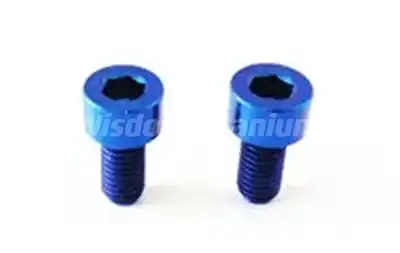
To properly torque Allen head bolts, you need to know how the material works, choose tools that are measured, and follow a set of steps for tightening them. Precision is very important when working with titanium allen head bolts, especially those made from Grade 5 Ti-6Al-4V or Grade 2 titanium. Because titanium has a smaller modulus of elasticity and a higher friction coefficient, these screws need about 60–70% of the torque of steel nuts of the same size. Use a measured torque wrench and anti-seize lubricant with molybdenum disulfide to tighten the bolts in a cross-pattern order that spreads the stress out evenly. This method stops galling and thread damage and makes sure there is enough clamping power for structural stability in industrial, aerospace, and automobile settings.
Titanium Allen Head Bolts Properties
Learning about titanium allen head bolts and how they work is important. Because of how well they are engineered, these fasteners are different from others. These socket head cap screws are mostly made from Ti-6Al-4V (Grade 5) or fully pure titanium (Grade 2). They have tensile strengths of over 950 MPa and weigh 45% less than stainless steel screws of the same size. The triangular internal drive system lets more torque be sent to tight spots that external wrenches can't reach. This makes them essential for high-performance setups.
The makeup of the material directly affects how much force is needed. Grade 5 titanium has about 6% aluminum and 4% vanadium in it. This makes an alpha-beta lattice that is very resistant to wear when loaded and unloaded many times. This metal stays strong at temperatures ranging from very cold to 400°C, which is why it is commonly used in exhaust systems, engine housings, and brake calipers. While Grade 2 titanium isn't as strong as Grade 5, it is better at resisting corrosion in sea and chemical processing settings.
Material Grade Selection Criteria
When selecting titanium socket head cap screws, people who work in procurement have to think about a number of things. Grade 5 is used for uses that need the highest strength-to-weight ratios and are subject to strain. This is especially true for race chassis parts and airplane structural assemblies. Its higher hardness (about 36 HRC) keeps it from wearing down in places with a lot of pressure, but it makes it more likely to bite during installation.
Grade 2 titanium is good for uses that value resistance to rust over total tensile strength. Because they are much less dense than steel (7.85 g/cm³), even Grade 2 screws make parts much lighter. Surface treatments like PVD finishing and anodizing make things even more resistant to wear and tear and make them easier to identify for quality control.
Thread Geometry and Dimensional Standards
Titanium allen head bolts meet the requirements of DIN 912 or ISO 4762, which means they can be used in all global supply lines. Sizes run from M1.6 to M18, which can be used for everything from small electronic enclosures to big industrial machines. The process of making rolled threads makes the surface harder, which makes them last 20–30% longer than cut threads. This way of making things also makes a layer of compressed stress that stops cracks from starting, which is very helpful in situations with changing loads.
The thread pitch changes depending on the width. For example, M6 screws usually have a 1.0mm pitch, while M8 bolts have a 1.25mm pitch. Thread tolerance classes should be checked in the procurement specs. For general assemblies, 6g is the norm, but precision tools need tighter 4h6h grades. To keep the tool from cam-outing and head stripping during high-torque tasks, the socket depth and drive size must match the tool's specs.
Why Proper Torqueing Is Critical for Titanium Allen Head Bolts?
Titanium behaves mechanically under pressing loads in a very different way than steel does. This makes managing titanium allen head bolts very difficult. The measure of elasticity of the material is about 55% that of steel (110 GPa vs. 200 GPa), which means that when the same loads are put on them, titanium rivets stretch more. Because of this property, the torque numbers need to be recalculated to get the right charge without going over the yield strength.
Under-torquing doesn't create enough holding force, which lets the joint move, which speeds up wear through fretting rust. When there isn't enough preload in automobile wheel systems, hub bolts can come loose during cyclic loading, which could lead to a catastrophic failure during high-speed operation. Racing teams say that titanium brake caliper bolts that aren't torqued properly show faster fatigue crack growth, especially at the thread roots where stress concentration is highest.
The Galling Problem in Titanium Fasteners
The most common way that titanium fails because of pressure is galling, which is a type of bonded wear where material moves between threads. Micro-welding happens at contact spots when titanium surfaces slide under pressure without enough oil. During assembly, this effect gets worse because friction causes localized heating that stops the bolt from reaching the goal torque.
Professional assembly guidelines say that anti-seize chemicals made just for titanium must be used. Molybdenum disulfide (MoS₂) based lubricants lower the coefficient of friction from about 0.50 (dry) to 0.15 (oiled), which changes the torque-tension relationships in a basic way. This 70% decrease in friction must be taken into account in the assembly specs. If it isn't, the "lubricated torque" numbers will cause too much preload, which could cause threads to yield or bolt shanks to break.
Consequences of Over-Torquing
When you exceed the recommended torque specs, you put too much stress on titanium, which deforms it permanently. In contrast to steel, which has a clear yield peak, titanium's stress-strain slope changes slowly from elastic to plastic deformation. This habit makes it hard to see when something is over-torquing during quality checks.
Over-torqued screws lose their ability to clamp as the material gives way. This leaves behind stress clusters that speed up the start of cracks. When used on motorcycles with a lot of shaking, yielded titanium sprocket nuts get fatigue cracks after 500 hours of use, while properly torqued screws last for 5,000 hours or more. The effect on the economy goes beyond the cost of replacement parts; unplanned repair throws off production plans and makes customers less confident in the dependability of parts.
Step-by-Step Guide: How to Torque Titanium Allen Head Bolts Correctly
Getting the right tightening force while keeping the titanium allen head bolt's integrity takes careful planning and execution. When torque is applied in a professional assembly setting, it is done in a controlled way with written steps, calibrated tools, and proof methods.
Pre-Installation Preparation
Accurate pressure is directly affected by the state of the thread. Before putting the parts together, check both the male and female threads for dirt, rust products, or mistakes in the way they were made. Even tiny particles of dirt can change friction coefficients, which is why torque wrench numbers don't always match up with the real holding force. To clean the threads, use compressed air first, and then a cleaner if there is still oil or coolant left over from the grinding process.
Torque Value Determination
To figure out the right force, you need to know the width, grade, lubrication state, and stiffness of the joint. Spread anti-seize grease evenly on male threads and bearing surfaces. When you tighten, too much grease moves into the thread roots and creates hydraulic pressure that makes torque numbers look higher than they really are. Professionals use brush or spray applicators to put on a thin, even layer that is about 0.002 inches thick. To avoid getting trapped, let volatile carriers dissolve before installation.
Sequential Tightening Process
To spread stress evenly, multi-bolt patterns need orderly tightening steps. Cross-pattern or star-pattern patterns keep joints from warping by gradually balancing the tightening forces. Before adding pressure, the first "finger-tight" installation makes sure that the threads are properly engaged. Tighten all of the screws in stages: first bring them to 50% of the goal torque, then 75%, and finally 100%. This method lets the sides of the joints fit together gradually, getting rid of air gaps and settling interference fits.
Tool Selection and Calibration
Beam-type torque wrenches give accurate readings even without batteries, but digital types can log data, which is useful for keeping good records. Click-type wrenches work well in places where they are used over and over again, but they need to be calibrated once a year against NIST standards. Calibration drift usually happens below the torque ranges that are stated. For example, a 50 Nm wrench may have a 5% mistake at 10 Nm settings. Socket quality affects power transfer; precision hex bits made to a H7 tolerance prevent socket rounding.
Selecting and Procuring High-Quality Titanium Allen Head Bolts for Optimized Performance
Decisions about where to get titanium allen head bolts have a direct effect on how reliable and well they work in the long run. Teams in charge of buying things have to judge sellers based on strict technical and business standards, while also taking into account both short-term cost concerns and long-term value issues.
Certification and Standards Compliance
Titanium screws made for aerospace use must have material approvals that show how the raw materials were tested at the mill. The AS9100 certification shows that providers have quality management systems that are suitable for use in military and flight. These systems include statistical process control and traceability methods. While ISO 9001 approval is a good way to make sure of quality, it might not cover industry-specific needs like lot tracking or non-destructive testing.
Manufacturing Capability Assessment
Different performance traits are produced by cold heading versus cutting. Cold-headed bolts have better grain flow alignment and work-hardened surfaces, which makes them 15–25% less likely to break. Machined bolts from bar stock can be made to fit specific shapes or in small quantities, but they don't have the grain structure optimization that forged parts do. The ability to roll threads shows how advanced a manufacturing process is; rolled threads squeeze the material instead of cutting it, creating compressive forces that stop cracks from spreading.
Cost Optimization Through Strategic Sourcing
The price of titanium raw materials changes with the demand for aircraft products, so price security is an important thing to think about when buying. Long-term supply deals that include volume promises help lock in good prices and make sure that inventory is always available, even when there are problems in the supply chain. Look at area sourcing choices like the Baoji Titanium Valley in China, which is the largest gathering of companies in the world that work with titanium, keeping prices low while maintaining access to complex processing technologies and engineering help.
Conclusion
To properly apply torque on titanium allen head bolts, you need to know about the qualities of the material, choose tools that are calibrated, and follow a set of steps. Titanium fasteners have a lower modulus of elasticity and different frictional properties, which is why they require 60–70% less force than steel fasteners. Anti-seize lubrication stops galling and changes the link between torque and tension basically, which makes the lubrication state an important specification feature. Written torque methods help keep quality high and lower the number of guarantee claims across aerospace, automotive, and industrial equipment assemblies.
Partner With Wisdom Titanium for Precision Fastener Solutions
Wisdom Titanium makes certified titanium allen head bolt sets that are used in aircraft, automotive, and industrial settings and have to meet strict requirements. Our ISO 9001-certified factory in Baoji Titanium Valley makes socket head cap screws from Grade 5 Ti-6Al-4V and Grade 2 titanium in sizes M1.6 through M18. We maintain full traceability and offer custom CNC cutting for non-standard shapes. Get in touch with our expert team at sales@wisdomtitanium.com to talk about your fastener needs. Whether you need standard parts or custom solutions, we can give your important systems the reliability they need.
FAQs
Can I Use the Same Torque Wrench for Titanium and Steel Fasteners?
Yes, but the power specs are very different. Because the materials are different, titanium allen head bolts need about 60–70% of the torque value needed for steel screws of the same type. Always use titanium-specific torque charts that take into account the size, grade, and state of the lubrication of the bolts. If you use steel torque values on titanium screws, you will over-torque them, which could cause the threads to give or the shank to break.
How Do I Prevent Galling When Installing Titanium Socket Head Cap Screws?
Before installing, use an anti-seize lube based on molybdenum disulfide (MoS₂) on the threads and bearing surfaces. This lowers the friction coefficient from 0.50 to about 0.15, which stops the micro-welding that leads to galling. Install screws slowly, because tightening them too quickly creates heat that speeds up the wear on the glue. Conditions of the threads are very important; broken or dirty threads make galling more likely, even with the right lubricant.
What Happens If I Don't Retorque Titanium Fasteners After Initial Installation?
Joints with soft surfaces or seals that can be compressed settle down during the first few load cycles, which lowers the clamping force by 10 to 20 percent. Retorquing after 24 hours or a certain number of working cycles returns the proper preload, which stops the joint from moving and fretting corrosion from happening. Hard metal-to-metal joints usually keep their preload without retorquing, but verification torque checks should be done on important uses at regular maintenance intervals.
References
- Bickford, J.H. (2008). Introduction to the Design and Behavior of Bolted Joints: Non-Gasketed Joints. CRC Press, Boca Raton.
- Budinski, K.G. & Budinski, M.K. (2010). Engineering Materials: Properties and Selection. Pearson Prentice Hall, Upper Saddle River.
- Boyer, R., Welsch, G., & Collings, E.W. (1994). Materials Properties Handbook: Titanium Alloys. ASM International, Materials Park.
- Society of Automotive Engineers (2014). Fastener Standards Manual: SAE J429 and Related Specifications. SAE International, Warrendale.
- Prevey, P.S. (2000). "The Effect of Cold Work on the Thermal Stability of Residual Compression in Surface Enhanced IN718." Proceedings of the 20th ASM Materials Solutions Conference, St. Louis.
- Wanhill, R.J.H. & Barter, S.A. (2012). Fatigue of Beta Processed and Beta Heat-treated Titanium Alloys. Springer Science, Dordrecht.