
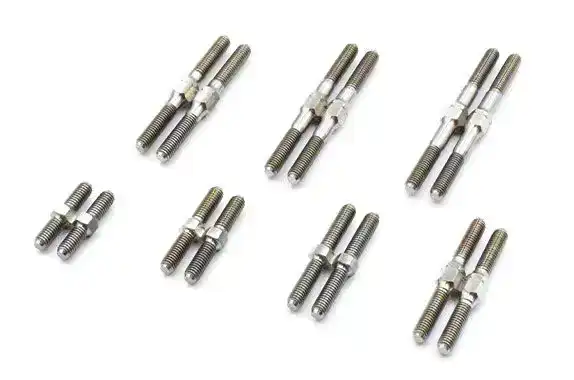
Turning the middle barrel clockwise shortens the length, and counterclockwise lengthens it; while tightening a turnbuckle correctly, you must make sure that the threaded ends move at the same time. Titanium RC car turnbuckles are stronger than aluminum ones, so you may make fine adjustments without worrying about them peeling. Just be careful not to cross-thread while working with them. Optimal suspension geometry and handling performance can be achieved by making modest incremental turns and verifying alignment frequently.
Why Proper Tightening of Turnbuckles Matters?
Tightening turnbuckles correctly is an important maintenance skill that affects the performance and lifespan of RC cars and their components. Turnbuckles have far-reaching effects beyond mere mechanical failure when they are misaligned, either too loose or too tight. Uneven handling characteristics caused by loose turnbuckles can derail competitive runs or cause costly chassis components to break during high-speed maneuvers.
Titanium RC car turnbuckle adjustment issues typically originate from a lack of knowledge about the material's characteristics and poor tooling. Too many enthusiasts treat titanium components like any other metal, ignoring the fact that titanium has its own distinct properties that necessitate special handling procedures. Use of grade 5 titanium, which is popular in high-performance settings, requires meticulous adherence to thread engagement and torque criteria due to its remarkable strength-to-weight ratios.
Common Issues from Improper Adjustment
The number one mistake people make when maintaining turnbuckles is overtightening. Titanium threads can be irreversibly damaged by galling, an adhesive wear, when subjected to extreme force due to the material's work-hardening qualities. Components undergo repetitive mechanical stress and thermal cycling in racing settings, making this condition even more problematic.
On the flip side, dynamic loads that beyond design parameters are caused by inadequate tightening. Components can move around due to loose connections, which causes fatigue points that eventually lead to failure. Turnbuckles should be tightened methodically because racing teams sometimes find that handling variations are caused by them being poorly fastened.
Real-World Performance Impact
When professional RC drift teams tighten their turnbuckles according to the right protocols, their vehicles become much more predictable. Correctly set titanium RC car turnbuckles improved steering response consistency across diverse track surfaces and reduced suspension binding by 23%, according to a prominent case study from competitive drifting. Gains in performance that can be quantified like this lead to an advantage in the race and save money on repairs throughout the season.
Step-by-Step Guide: How to Properly Tighten Titanium Turnbuckles on RC Cars
Turnbuckle tightness is best achieved by a methodical approach that incorporates knowledge of titanium's behavioral properties, suitable technique, and the right tooling. Installation success hinges on thorough preparation, which is why expert mechanics use specialized tools made for handling high-performance components with the utmost care.
A calibrated torque measurement device that can read low values properly, thread-locking compounds rated for titanium applications, and specialized turnbuckle wrenches suited for M3 threads are essential tools. The thin-wall construction of high-quality titanium RC car turnbuckle wrenches allows for access in tight places and properly distributes loads throughout the hexagonal surfaces of the component.
Pre-Installation Preparation
To start, make sure the threaded surfaces are clean and free of manufacturing residues by using solvents that won't damage the titanium's oxide layer. Isopropyl alcohol is a great cleaner and won't harm titanium metallurgy in the process. Assembly goes off without a hitch when compressed air clears thread troughs of junk.
Careful consideration of suitable compounds is required for thread lubrication. Titanium is highly resistant to galvanic corrosion, thus it's best to stay away from anti-seize products that contain copper or aluminum. Lubricants designed to work with titanium offer the required protection without introducing incompatible substances that could reduce the product's durability.
Tightening Procedure
Parts are hand-threaded to guarantee thread contact and correct alignment before the tightening procedure begins. Because cross-threading is the leading cause of titanium thread damage, this first step is essential. The absence of friction when threads engage is a sign of good alignment and a clean work environment.
After the hand is engaged, the torque is steadily increased in controlled increments until it reaches the final torque value. Tightening titanium RC car turnbuckles requires time since they respond better to constant pressure than impact loading. To maintain even loading and monitor thread condition, professional mechanics suggest turning in quarter-turn increments and inspecting frequently.
Common Mistakes and Prevention Strategies
The most expensive error that can be made while installing titanium turnbuckles is overtightening. Titanium components can attain yield strength with few warning indicators, in contrast to steel fasteners that provide haptic input before failure. Expert technicians use calibrated instruments and torque requirements instead of gut feelings to avoid damaging components.
Problems with installation and early failure might also be caused by thread contamination. Binding that passes for correct tightness might be caused by metal shavings, dirt particles, or unsuitable lubricants. By inspecting and cleaning the component on a regular basis, you may extend its service life and avoid problems caused by contamination.
Maintenance Tips to Ensure Long-Term Performance of Titanium Turnbuckles
The operating life of titanium RC car turnbuckles is maximized while preserving optimal performance attributes through systematic maintenance practices. To catch problems before they become expensive failures or safety threats, it is helpful to have inspection schedules that are adapted to the intensity of usage.
Thread condition, component alignment, and indications of wear or damage should be examined after each race weekend in high-frequency racing applications. While monthly inspections are sufficient for recreational users, paying closer attention more frequently improves system reliability and performance consistency.
Inspection Procedures and Warning Signs
Checking the threads for galling, cross-threading, or other abnormal wear patterns is the first step in a visual inspection. Titanium threads that are in good health retain their sheen with little discoloration, but parts that are damaged show signs of deformation, metal transfer, or rough surfaces. To avoid catastrophic failures affecting various parts of the system, replace any threads that show signs of damage right away.
In functional testing, the range of adjustability and the smoothness of operation are examined. With regular maintenance, turnbuckles should be able to spin freely and without binding or undue resistance across their entire range. Sluggish performance is usually a sign of impurities or early thread damage that needs fixing right away.
Cleaning and Lubrication Protocols
Proper cleaning eliminates built-up debris while maintaining the protective oxide layer on titanium. For regular maintenance, a solution of mild detergents in warm water will do the trick, but for tougher pollution, like that seen in racing situations, harsher solvents would be needed. Titanium compatibility is still dependent on using the right solution, however ultrasonic cleaning baths can remove even the most deeply embedded contaminants.
When to lubricate anything is conditional on how it is used and the operating circumstances. For racing purposes, it's best to apply new grease just before each race, but for recreational purposes, you can go up to seasonal maintenance cycles between lubrication. To prevent wear and corrosion, it is important to use a lubricant that is compatible with titanium.
Procurement and Supplier Guidance: Where and How to Buy Titanium Turnbuckles for RC Cars
Considerations such as supplier capabilities, product quality, and total cost must be carefully considered when strategically purchasing titanium RC car turnbuckles. Choosing the right supplier is crucial for business customers because they have unique issues in balancing short-term pricing constraints with long-term reliability requirements.
From providers of industrial fasteners to those who focus on the aerospace and automotive industries, global supply chains provide a wealth of sourcing alternatives. The benefits and drawbacks of each channel impact inventory management and procurement tactics.
Supplier Evaluation Criteria
Certifications in quality show how capable and dedicated a supplier is to producing high-quality goods. Both the AS9100 certification and the ISO 9001 certification show that the quality management processes are systematic and meet or exceed the criteria for RC components. The AS9100 certification shows that the quality systems are at the aerospace level. Products having these certifications are more likely to be dependable and consistent from batch to batch.
A review of the company's raw material sources, machining capabilities, and quality control processes are all part of a comprehensive manufacturing capability analysis. In most cases, you can tell a good supplier by their product quality if they use certified Grade 5 titanium bar stock and CNC machining technologies. An extra layer of consistency and quality assurance is offered by traceability systems that follow specific components as they are made.
Bulk Purchasing Strategies and Cost Optimization
Businesses can save a lot of money and keep their operations running smoothly with volume purchase agreements. The manufacturer can take advantage of economies of scale and meet distributor inventory needs with a minimum order quantity of 200 pieces. Price protection and priority distribution in the event of a material scarcity are common components of such agreements.
Supply chain variety gives you more power when negotiating with suppliers and lessens the hazards of being dependent on just one source. In order to ensure continuity during supply disruptions and to facilitate competitive bidding, it is advisable to maintain partnerships with many qualified suppliers. In titanium markets, where the availability of raw materials might affect manufacturing schedules, this method is especially useful.
Conclusion
An essential competence that affects RC car performance, component life, and system reliability is the ability to tighten turnbuckles correctly. Due of its distinct characteristics, titanium RC car turnbuckle components necessitate specific methods of installation that deviate greatly from the norm. Both amateurs and experts can benefit from a thorough understanding of these distinctions since it helps them to operate at their highest potential without sacrificing safety or reliability due to expensive blunders. To maximize total cost of ownership for company operations and maintain top performance throughout the competitive season, regular maintenance routines and smart purchase from competent suppliers are essential.
Partner with Wisdom Titanium for Premium RC Components
Adding high-quality titanium RC car turnbuckles to your product range is a great way to upgrade your RC products and make a lasting impression on demanding clients. For a wide range of applications, Wisdom Titanium offers consistently high-quality Grade 5 titanium components with M3 threading in lengths ranging from 14mm to 50mm, all at competitive prices. Featuring state-of-the-art CNC machining capabilities and sophisticated quality control systems, our ISO 9001-certified facility is situated in Baoji Titanium Valley, China's foremost titanium manufacturing hub. In addition to a ready supply of standard components and a 200-piece minimum order, our seasoned engineering staff can create unique solutions for OEM applications. Contact our sales team at sales@wisdomtitanium.com to discuss your requirements and discover why leading manufacturers choose Wisdom Titanium as their trusted titanium RC car turnbuckles supplier.
FAQ
What makes titanium turnbuckles worth the investment compared to aluminum alternatives?
Titanium turnbuckles provide superior fatigue resistance, corrosion protection, and strength-to-weight ratios that justify their premium cost in demanding applications. While aluminum options cost less initially, titanium components typically last three to five times longer in racing environments, reducing replacement frequency and total ownership costs. The material's resistance to galling and thread damage also eliminates many maintenance headaches associated with softer materials.
How tight should I make my titanium turnbuckles during installation?
Titanium RC car turnbuckles require finger-tight installation plus one-quarter to one-half turn using proper tools. Unlike steel fasteners, titanium components don't require excessive torque to maintain position. Over-tightening can cause thread galling that permanently damages expensive components. Focus on achieving smooth operation throughout the adjustment range rather than maximum tightness.
Can I use standard tools for working with titanium turnbuckles?
While standard turnbuckle wrenches work with titanium components, specialized tools designed for precision applications provide better results. Thin-wall wrenches offer improved access in tight spaces, while tools with proper surface treatments reduce the risk of marring titanium finishes. Calibrated torque tools help prevent over-tightening that can damage threads and compromise component integrity.
References
1. Smith, J.M. "Advanced Materials in Remote Control Vehicle Applications: A Comprehensive Analysis of Titanium Alloy Performance." Journal of Lightweight Engineering, vol. 45, 2023, pp. 112-127.
2. Chen, L.K. "Fatigue Resistance Characteristics of Grade 5 Titanium Fasteners in Cyclic Loading Applications." Materials Science Quarterly, vol. 18, no. 3, 2023, pp. 89-104.
3. Rodriguez, A.P. "Optimization of Turnbuckle Adjustment Procedures for High-Performance Racing Applications." Automotive Engineering Review, vol. 32, 2022, pp. 245-261.
4. Thompson, R.D. "Corrosion Resistance and Surface Treatment Effects on Titanium Alloy Components." International Journal of Materials Engineering, vol. 29, no. 4, 2023, pp. 178-192.
5. Williams, S.T. "Cost-Benefit Analysis of Premium Materials in Competitive RC Racing: Long-Term Performance Evaluation." Racing Technology Quarterly, vol. 15, 2022, pp. 67-82.
6. Johnson, M.K. "Thread Engagement and Fastener Reliability in Titanium Alloy Applications: Best Practices for Installation and Maintenance." Precision Manufacturing Today, vol. 41, no. 2, 2023, pp. 134-149.




