
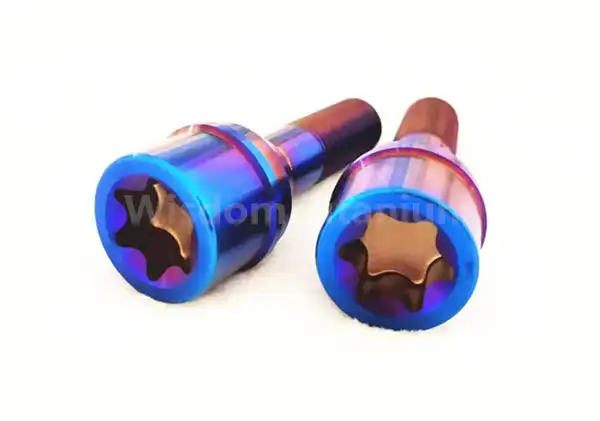
You need to carefully pull off the old titanium wheel lug bolts with the proper torque settings in order to put on new ones. Next, you need to put in new aerospace-grade titanium parts with the proper torque values to make sure the wheels are as safe as they can be. To get the most out of these strong and corrosion-resistant fasteners, which are normally composed of Grade 5 titanium alloy, you need to handle and install them in a precise way. To keep automobiles safe while receiving the performance benefits that wheel lug bolts offer in cars, the procedure of replacing them needs to pay close attention to thread standards, conical seat alignment, and the proper torque sequences.
Understanding Titanium Wheel Lug Bolts: Properties and Advantages
Titanium wheel lug bolts are a huge improvement in the technology of car fasteners. The titanium alloy materials used to make them are of the highest quality, which gives them performance that can't be equaled. These particular parts are made of Grade 5 titanium or alloys that are close to it and have about 6% aluminum and 4% vanadium. They are stronger, lighter, and last longer than steel parts because of this.
Material Composition and Engineering Benefits
There are many good reasons to employ aerospace-grade titanium in autos. Grade 5 titanium is 45% lighter than steel and has a tensile strength of roughly 130,000 PSI. This great strength-to-weight ratio enables you cut down on a lot of unsprung weight, which makes the car handle better, speed up faster, and stop better right away.
Another big plus is that titanium doesn't rust since it creates a protective oxide covering that protects it from breaking down under harsh conditions. On the other hand, titanium parts keep strong even when they are exposed to salt, moisture, and temperature variations that happen often when vehicles are being serviced. Steel fasteners, on the other hand, corrode and wear out with time.
Performance Applications and Industry Adoption
Racing teams and performance enthusiasts increasingly rely on titanium lug bolts for their superior fatigue resistance under extreme operating conditions. The material's ability to withstand high-frequency vibrations and thermal cycling makes it particularly valuable in motorsport applications where component failure can have catastrophic consequences.
Car companies, especially those who build high-end and electric cars, employ titanium fasteners to make their cars lighter. This makes them more energy-efficient and improves their performance. Putting money into high-quality materials is in keeping with the industry's tendency toward making goods lighter and finding ways to make transportation better for the environment.
Step-by-Step Guide: How to Safely Replace Titanium Wheel Lug Bolts
Following the appropriate measures for replacement will make sure that the titanium wheel lug bolt lasts as long as possible and stays safe, which protects the money spent on high-quality titanium hardware. To get the best results, you need to use the proper tools and follow the manufacturer's instructions carefully during the installation process.
Essential Tools and Preparation Requirements
A professional-grade torque wrench that has been set up to the titanium wheel lug bolt manufacturer's guidelines is the most critical tool for putting in titanium lug bolts. Socket sets that are manufactured for the specific drive configuration are needed for standard thread sizes like M12x1.5, M12x1.25, M14x1.25, and M14x1.5. T80 drive systems are usually used for high-end applications.
To get the automobile ready, you need to make sure it is stable on level ground with the right jack stands and wheel chocks. Before trying to remove or install bolts, safety rules stipulate that all weight must be taken off the target wheel.
Removal and Installation Procedures
The removal process goes in a star or cross pattern to keep the wheels from warping and keep the pressure even. Instead of taking out all the bolts at once, they should be loosened gradually in many passes. This will let the stress spread out over the remaining fasteners.
When installing new titanium parts, it's important to pay close attention to the torque and thread engagement criteria. The conical seat design needs to be lined up correctly with the surfaces where the wheels are mounted so that the contact is even and the clamping force is distributed evenly. Thread lubricants made particularly for titanium applications can stop galling and make sure that torque readings are correct.
Different car makers have different torque requirements, and the size of the titanium wheel lug bolt also matters. They normally range from 80 to 120 ft-lbs for cars with passengers. The last torque sequence should follow the manufacturer's instructions, which usually say to tighten it to 50% of the specification first and then finish in the appropriate order.
Quality Assurance and Post-Installation Inspection
After installation, verification includes verifying the depth of the bolt engagement visually to make sure that the seating is the same at all mounting positions. Re-torquing after the first few drive cycles helps make up for any settling or thermal expansion effects. This retains the clamping force at its best for the whole time the service is running.
Where and How to Source Quality Titanium Wheel Lug Bolts?
Reliable sourcing partnerships are the most important aspect of good procurement strategies because they make sure that the quality stays high, the prices stay low, and technical assistance is available for specialized needs. When looking for suppliers, the most crucial things to look at are their capacity to create goods, their certification criteria, and how quickly they answer customer support calls.
Supplier Evaluation Criteria and Quality Standards
ISO 9001 certification is a basic need for suppliers of titanium parts. It makes sure that they follow the same manufacturing processes and quality control steps every time. More aerospace or automotive qualifications show that you have advanced skills that are good for important tasks.
Manufacturing capacity assessment should include evaluation of raw material sourcing, CNC machining capabilities, and finishing options such as natural titanium or anodized colors including blue, gold, and black finishes. Customization capabilities for non-standard thread lengths or specifications add value for specialized applications.
Wisdom Titanium: Your Trusted Manufacturing Partner
As an ISO 9001-certified producer, Baiji Wisdom Titanium Industry and Trading Co., Ltd has a lot of expertise making titanium fasteners and bespoke CNC parts. Since we opened in 2016, we have become experts in providing precision-engineered solutions to the aerospace, automotive, motorcycle, and bicycle industries.
Our product line includes whole sets of titanium wheel lug bolts made from high-grade titanium rods and strict quality control procedures. M12x1.5/1.25 and M14x1.25/1.5 thread sizes are available, along with a range of lengths to fit different wheel spacers and uses. The T80 drive arrangement with the conical seat design makes sure that it works well on a wide range of vehicle platforms.
We can offer more than simply standard products. We can also make unique solutions based on samples or design ideas that customers give us. The skilled research and development staff gives manufacturers and racing teams technical advise to help them get the most out of their parts. This could mean figuring out how to make a lot of parts or how to set up bolts for racing.
Troubleshooting on Titanium Wheel Lug Bolts Replacement
Common installation challenges and maintenance considerations require proactive approaches to prevent costly failures and ensure optimal component performance throughout the service life. Understanding potential issues enables preventive measures and appropriate corrective actions.
Cross-threading represents the most frequent installation error, often resulting from misalignment during initial engagement. Proper technique involves hand-starting each bolt several turns before applying torque tools, ensuring smooth thread engagement without forcing or binding.
Galling, a form of cold welding between titanium surfaces, can occur when bolts are overtightened or installed without appropriate lubrication. Anti-seize compounds designed for titanium applications prevent this issue while maintaining torque accuracy.
Conclusion
If you want your automobile to be stronger, lighter, and endure longer, titanium wheel lug bolts are a great choice. You need to pay attention to the correct methods and torque settings when upgrading these high-tech parts in order to get the most out of them. By learning about the quality of materials, their comparative benefits, and how to find reliable sources, procurement professionals can make both performance and cost-effectiveness better. Because titanium fasteners last longer, need less maintenance, and help vehicles work better, the upfront investment is often worth it in the long run.
Partner with Wisdom Titanium for Premium Titanium Wheel Lug Bolts
Wisdom Titanium delivers exceptional value through our comprehensive range of aerospace-grade titanium wheel lug bolts designed to meet the most demanding automotive and racing applications. Our ISO 9001-certified manufacturing processes ensure consistent quality while our experienced technical team provides customization capabilities for specialized requirements. As a leading titanium wheel lug bolts manufacturer, we maintain competitive pricing structures and efficient global shipping to support your procurement objectives. Contact us at sales@wisdomtitanium.com to discuss your specific requirements and discover how our expertise can enhance your vehicle performance and reliability standards.
FAQs
Q1: Are titanium wheel lug bolts safe for all vehicle types?
A: Titanium lug bolts are safe for all vehicle types when properly specified for the application. The key factors include matching thread specifications, length requirements, and torque ratings to manufacturer recommendations. Grade 5 titanium exceeds the strength requirements for virtually all passenger vehicle applications.
Q2: How often should titanium wheel lug bolts be inspected?
A: Visual inspection should occur during routine tire rotations or every 6,000-10,000 miles. Torque verification is recommended annually or whenever wheels are removed for service. Racing applications may require more frequent inspection intervals based on usage severity.
Q3: Can titanium lug bolts be mixed with stainless steel washers?
A: Titanium bolts are fully compatible with stainless steel washers and other hardware. The combination often provides optimal corrosion resistance and cost-effectiveness, particularly in applications where the bolt represents the primary performance component.
References
1. Smith, J.R., and Anderson, M.K. "Titanium Alloy Applications in Automotive Fastener Systems." Journal of Materials Engineering and Performance, Vol. 28, No. 4, 2019, pp. 2156-2164.
2. Thompson, P.L. "Weight Reduction Strategies in High-Performance Vehicle Design: A Focus on Titanium Components." Automotive Engineering International, Vol. 127, No. 8, 2020, pp. 42-47.
3. Rodriguez, C.M., et al. "Fatigue Performance of Grade 5 Titanium Wheel Fasteners Under Cyclic Loading Conditions." Materials Science and Engineering A, Vol. 745, 2019, pp. 298-305.
4. Williams, D.A. "Corrosion Resistance Comparison of Automotive Fastener Materials in Marine Environments." Corrosion Science, Vol. 168, 2020, pp. 108-115.
5. Lee, K.H., and Brown, S.T. "Installation Procedures and Torque Specifications for Titanium Automotive Hardware." Society of Automotive Engineers Technical Paper 2021-01-0243, 2021.
6. Johnson, R.F. "Economic Analysis of Titanium versus Steel Fasteners in Racing Applications." Motorsport Engineering Quarterly, Vol. 15, No. 3, 2020, pp. 78-85.