
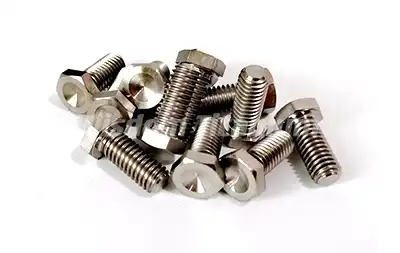
To remove a stripped hex bolt, start with the gentlest method and move up only when it fails. Clean the head, soak the threads with penetrating oil, and fit a six-point socket that seats fully. If the head is rounded, try a bolt-grip socket or locking pliers. When the bolt stays stuck, use an impact driver, controlled heat, or a left-hand drill bit and extractor. Protect the surrounding parts at every step. Then replace the damaged bolt with one that matches the original size, thread, standard, and grade. I walk through each step below and add tips for choosing a supplier for replacements.
Inspect the Bolt and Begin With Low-Risk Methods
Step 1: Inspect the Damaged Hex Bolt and Assess the Risk
I look at the hex bolt and everything around it before I push it. First, I choose the kind of bolt. All of those things could be used, along with standard, heavy, flange, stainless steel, zinc-plated, galvanized, titanium, and more. Next, I check to see if the thread is metric or imperial and if the head is round or if the only worn part is the drive surface. I also look for rust, paint, sealant, and thread locker since they can change the plan. The next thing I do is look around the hex bolt for wiring, seals, hydraulic lines, pressure systems, and parts that hold weight. For any fastener on a building or machine that I need to open, I put on safety glasses and gloves, keep the tools away from other people, and stand on big things.
Step 2: Start With Low-Risk Removal Methods
You can keep the hex bolt and the part it holds in place safely. I use a brush to get rid of the rust and other junk. After that, I put lubricant oil on it and let it work its way into the threads. It takes longer for heavy rust to set than for light rust. A few light taps on the head will break up the rust. Next, I picked a six-point socket over a twelve-point socket because it fits the head's flats better than its rough edges. I keep it straight and press it on all the way. Being steady when pulling with a breaker bar gives me more power to turn. Often, just a small turn of the wrench is enough to break through corrosion or compound that locks the threads together.
Step 3: Use Mechanical Grip Techniques for a Rounded Hex Head
When a standard socket slips on a rounded head, a mechanical grip tool can be used to set the turning force. It is possible to add an even smaller impact hole to the head if there is enough room. They work when I can get to the head. Heads that aren't round work better with spiral bolt-grip holes. In case those tools break, I build a new work area. I only use a hacksaw, a rotating tool, a file, or a cold chisel to make holes in things. I only do this when it won't hurt the piece to hit it. It is not safe for me to use flexible tools that round the head because they move around a lot.
Advanced Removal Methods and How to Choose Among Them
Step 4: Apply Heat, Vibration, or Impact to Seized Fasteners
They are contact, vibration, and heat. Any one of these can free a hex bolt that is stuck because of rust or thread locker. All of them are dangerous, though. The material around a hot spot can spread out and become thread locker. If the controls aren't right, I don't use it near fuel, wiring, seals, pressure systems, flammable materials, or finishes that are simple to damage. Instead of oxygen, I heat titanium hex bolts over an open flame. This is because titanium is a slow heat conductor, and oxygen can easily break the surface. You can use a hand impact driver instead if the hex socket inside is broken. It is best to use electric impact tools on strong parts that have a lot of room to move. A simple setting is the first thing I do. I stop if the bolt cuts, breaks, stretches, or threatens a certain part.
Step 5: Use Bolt Extractors, Drilling, or Welding as Advanced Solutions
Sometimes, grip methods have not been enough to get the job done. The drill bit sticks in the middle when I center-punch the hex bolt the right way. Then I use a bolt remover or a left-hand drill bit to carefully turn it counterclockwise. I never put too much weight on an extractor because the steel is so hard. It might not be as easy to remove as the first hex bolt if it breaks. I can drill off the head, take off the part that is fixed, and then pull out the threaded piece that is left if I need to. You can make a new driving surface and add heat by welding the right-sized nut onto the head. That way doesn't work for titanium because it needs a cover that stops the gas from moving. Only steel nuts can be used in that case. If the assembly is safety-critical, structural, or holds pressure, I think you should get help from a qualified professional.
Step 6: Choose the Best Removal Method for Different Hex Bolt Conditions
How well the method works will depend on how bad the damage is. Oil that goes deep into the head and a six-point plug work best when the head is only slightly rounded. If the damage isn't too bad, you may need locking pliers, a bolt-grip socket, or an impact driver. Most of the time, rusty hex bolts can be made to work again with a mix of lubricant, vibration, controlled heat, and slow force. For nuts that are really broken, you need to dig out, take off, or weld the nut. Having an application is also important. Auto parts need to be kept safe and precise machines need to be lined up. When working with structure or pressure equipment, you need to follow official safety rules. Before I pick a way, I think about the risk, the cost, the ease of getting it, and the chance that it will hurt more than help.
Replace the Bolt and Prevent Future Damage
Step 7: Replace the Removed Fastener With the Correct Hex Bolt
Not only does the replacement bolt need to be the right size, it also needs to work right. It has the right grade, length, thread system, thread pitch, head style, and thread pitch. On the other hand, ISO 898-1 gives hex bolts made of metric steel grades like 8.8, 10.9, or 12.9, while tools that work with inches may need SAE or ASTM grades. The DIN 933 and DIN 931 sizes of standard metric bolts are now the same as the ISO 4017 and ISO 4014 sizes. The finish and material should fit the room well. For moving big things, alloy steel is good. Stainless steel doesn't rust, and galvanized finish is good for use outside. To keep things tight, use nuts and washers that match the torque level. I also get rid of bolts that are too hot, broken, stretched, or rusted.
Step 8: Prevent Hex Bolt Damage During Future Installation
It takes less time to stop something than to keep taking it out. I always check the socket or hex bit size when the number in inches and millimeters looks the same. Most of the time, I use a calibrated torque wrench and make sure it is straight on the hex bolt. I don't use impact tools as the last step in tightening unless the instructions show me how to do so. I only use the dry or oiled number that the process gives me to find the torque to keep things easy. Things should be able to handle rust, heat, water, chemicals, and chemicals. Anti-seize chemicals are safe to use on many titanium and stainless steel parts to make them less likely to seize and burn. Use standard specs and keep good records of your stock so that maintenance teams don't make mistakes when they install things.
Common Mistakes When Removing a Stripped Hex Bolt
Most of the time, people fail because they pick the wrong tool or act too quickly or with too much force. Metric sockets and inch sockets look a lot alike, but they can both damage a head that is only partly round. The bit that goes around the hex bolt can shear, bend, or break if you use too much force. First, I figure out what went wrong: rust, thread locker, galling, cross-threading, or pulling too hard. There are various reasons why various actions should be taken. People often replace the hex bolt with one that looks the same but is made of or coated with the wrong grade, material, or coating. It's always more important that it works than how it looks or how little it costs.
Why Baoji Titanium Valley Supports Titanium Sourcing?
Baoji Wisdom Titanium Industry and Trading Co., Ltd has been in business since 2016 and is ISO 9001 certified. They make and sell both standard and special CNC parts. We work in the Baoji Titanium Valley in the province of Shaanxi. That's where China's biggest and best titanium industry hub is located. Steel is made there better than anywhere else in the world. Titanium flakes, bars, plates, tubes, forgings, and high-performance titanium alloys are all made in the area. There is a system in place that helps us get the things we need. We work with people in the bike, car, motorcycle, chemical, marine, and biomedical fields. Zinc, tantalum, and nickel are some of the other metals we use to make screws.
What to Send With Your Replacement Inquiry:
When you fill out a request completely, it speeds up the quote process and keeps the wrong parts from being sent. This is what I think you should add:
- Size and thread details: Write down the standard diameter, length, thread pitch, and whether the measures are in inches or metric. The length of the thread determines what the hex bolt can do and how deep it can go into a hole. Please tell me whether you need DIN 931 for a partial thread or DIN 933 for a full thread.
- Material and finish: Chemicals and salt water do not rust Grade 2 titanium, which is what it is made of. When the joint needs to be stronger, Grade 5 titanium is better. Give us a list of any surface needs, like anodizing to change the color, and let us know if it will be hot, wet, or touch carbon fiber or other metals so we can review the pairing.
- Quantity and schedule: We need at least 200 pieces to begin a sale. Make a list of the sizes you have, how many of each size you have, and when you'd like them sent to you. In your first message, please let us know if you want a rolling replenishment plan or a standard price sheet that shows prices by standard, grade, size, lead time, and price. That way, we can send you a well-put-together quote.
We only need to make one offer since we know what they want. You don't need to read a lot of books to make sure the information is correct.
Conclusion
A step-by-step process is the best way to get rid of a broken hex bolt. You should look at the type of fastener, the harm, and the nearby parts to figure out which way is safe. It is used with a six-point socket and light case penetrating oil. If the case is heavy, you can weld a nut, use grip tools, impact, controlled heat, extractors, or drills. The threaded hole and the joint are safe as long as the right way is used and not too much force is used. The new bolt must be the same length, width, thread pitch, standard, grade, and material as the old one. You shouldn't put a broken bolt back in. You can cut down on how often you have to strip something if you have the right tools, use the right torque, and use anti-seize powder. When the supplier has clear rules, records, and can be tracked, the same replacements are sent every time.
FAQ
What is the easiest way to remove a stripped hex bolt?
After cleaning and oiling the head, a six-point socket should be put on it. Before you drill, put a bolt-grip socket or locking pliers on the round head.
Can I use heat on a titanium hex bolt?
I tell you not to use heat from a flame. Titanium takes a long time to cool down. It takes in air when it gets hot, which can crack the top. Clear oil, a grip plug, or careful drilling can fix it.
Should I reuse a bolt after removing it?
If a hex bolt has broken threads, a round head, rust, is bent, or has been in heat, you should get a new one. The new hex bolt needs to be the same size, grade, standard, and thread pitch as the old one.
What is the minimum order for Wisdom Titanium hex bolts?
At least 200 pieces made to DIN 933 or DIN 931 standards must be Grade 2 or Grade 5. We can also make designs just for you.
Request Titanium Hex Bolt Quotes From Wisdom Titanium
When you buy bolts from Wisdom Titanium, you get the best ones because they come straight from our plant. Hex bolts in Grade 2 and Grade 5 are reasonably priced here. We follow DIN 931 and DIN 933. We can also make patterns just for you, and the least amount of work we'll do is 200 pieces. Once we get your drawings, sizes, and numbers to sales@wisdomtitanium.com, we'll send you a clear price. Wisdomtitanium.com is where you can learn more about this item.
References
- ASTM International, ASTM B348/B348M: Standard Specification for Titanium and Titanium Alloy Bars and Billets, 2019
- International Organization for Standardization, ISO 4014: Hexagon Head Bolts, Product Grades A and B, 2011
- International Organization for Standardization, ISO 4017: Fasteners, Hexagon Head Screws, Product Grades A and B, 2022
- International Organization for Standardization, ISO 898-1: Mechanical Properties of Fasteners Made of Carbon Steel and Alloy Steel, Part 1, 2013
- Industrial Press, Machinery's Handbook, 31st Edition, 2020
- CRC Press, Introduction to the Design and Behavior of Bolted Joints (John H. Bickford), 2008