
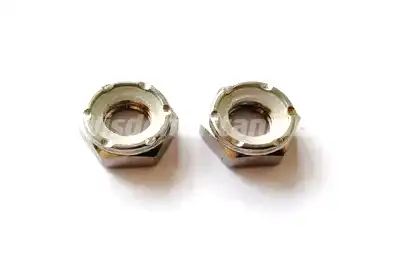
Picking the correct bolt for holding important parts in high-performance cars, airplanes, or precise machinery can mean the difference between a successful operation and a catastrophic failure. Titanium nylon lock nuts have become the best choice for engineers and procurement specialists who need a reliable fastener that won't break when used in tough conditions. Understanding how they lock is important for improving the dependability of assemblies, making sure they follow the rules, and lowering long-term upkeep costs in the automobile, aircraft, marine, and industrial sectors.
Titanium nylon lock nuts use a friction-based closing system that has a nylon core and titanium bodies that are precisely threaded. When two bolts go through, the nylon insert, which is usually at the top of the nut or built into the threads, causes controlled delay. This interference creates constant friction that doesn't let vibrations, temperature changes, or dynamic loads loosen it. This is a problem that is often found in race cars, motorcycle brake systems, and aerospace assemblies where safety and performance must be maintained.
Comparative Analysis: Titanium Nylon Lock Nuts vs Other Locking Solutions
When buying teams know how titanium nylon lock nuts stack up against other locking technologies, they can make choices based on facts that are in line with project needs and budget limits.
Weight and Performance Trade-offs
Stainless steel nylon lock nuts work just as well as titanium's but cost about 60% less. This makes them a good choice for projects on a budget where weight savings aren't important. But titanium's 40% lighter weight makes it worth the extra cost in motorsports where every gram matters for control. A racing car with a full set of titanium wheel hub nuts can lose 200 to 300 grams of unsprung weight, which directly improves the suspension's reaction and the time it takes to go around a track.
All-Metal Lock Nuts Versus Nylon Insert Design
All-metal prevailing torque nuts use the nut body or threads' ability to stretch to make binding contact. These designs can handle higher temperatures than nylon inserts, but they can only be used a few times before they need to be replaced, and taking them off can damage the bolt threads. Racing teams that have to make a lot of changes to the suspension during practice sessions benefit from nylon plug designs that keep the threads intact after multiple installation rounds.
Application-Specific Selection Criteria
All-metal solutions are often needed in aerospace uses that need to stop FOD (Foreign Object Debris). This is so that there are no risks of nylon particles falling off. On the other hand, shops that make changes to cars like nylon insert designs because they are easy to install and have consistent torque properties when making customer vehicles. When used in marine gear for yacht rigging, titanium's resistance to corrosion is more important than the type of locking mechanism. However, nylon inserts are still chosen because they are better at resisting vibrations caused by waves.
Procurement Insights for Titanium Nylon Lock Nuts
When choosing where to get titanium screws, you have to weigh the prices of the materials, the quality of the products, and the supplier's abilities to make sure that you always get parts that meet strict requirements.
Pricing Structure and Order Quantities
Titanium nylon lock nuts usually cost three to five times more than stainless steel ones. This is because the raw materials are more expensive and the production process is more complicated. Because of the costs of hot forging and CNC finishing, minimum order amounts are usually set at 100 pieces for normal sizes. When buyers in bulk negotiate annual supply deals with manufacturers, they can get 15–25% cheaper prices than when they buy things on the spot. This is especially true when they stick to popular sizes like M6, M8, and M10.
Supplier Evaluation Standards
ISO 9001 certification is a good starting point for quality management, but buyers who want to be sure should check for other certifications that are important to their business. Automotive sellers may need to meet IATF 16949 standards, while aircraft buyers need to see AS9100 approval. Location is very important when it comes to manufacturing. Places like Baoji, China, that are in titanium production areas have linked supply chains and specialized technical skills that make custom sizing projects easier and prototype development go faster.
Custom Sizing and OEM Services
Most common uses are covered by standard metric sizes from M3 to M24. However, for more specific tasks, thread rates, hex sizes, or insert configurations need to be made to order. Manufacturers that offer OEM services can make lock nuts that exactly match your needs. For example, they can change the hex dimensions for limited-clearance installs or make the nylon core harder for certain temperature ranges. Custom orders usually have lead times of 4 to 6 weeks, which means that buying needs to be planned ahead of time to fit project plans.
Supply Chain Risk Management
Diversifying your relationships with suppliers lowers the risks that come with production problems or inconsistent quality. Having connections with both direct makers and specialized dealers gives you options. makers can offer better prices and customization for large orders, while distributors can quickly fill smaller orders from stock. Buyers can avoid getting parts that don't meet specifications by making quality agreements that spell out checking procedures, material certifications, and ways to fix problems.
Practical Applications and Case Studies
When you look at how titanium nylon lock nuts are used in a variety of industries, where failure can lead to anything from poor performance to safety risks, you can see how versatile they are.
Automotive Performance Applications
Titanium fasteners are being used more and more by high-end sports car makers in non-structural uses where reducing weight improves performance. For example, titanium ring nuts lower the rotational inertia of wheel hub assemblies, and nylon sections keep them from coming loose when moving quickly. One European supercar maker said they stopped having problems with wheel fasteners coming loose after switching from steel to titanium nylon lock nuts. This was true even though the vehicles were subjected to extended horizontal loads exceeding 1.4g while being used on a track.
Motorcycle Racing and Modification
When motorcycle brakes are used hard, they cause a lot of shaking, which makes it hard to keep fasteners in place. Professional racing events with 500-mile or longer lengths have never had any problems with brake caliper mounting bolts being tightened with titanium nylon lock nuts. Titanium's resistance to wear and nylon's ability to reduce vibrations work together to handle the cycling loads and moving forces that are common in motorbike brake systems.
Marine and Corrosive Environment Uses
Yacht makers who use titanium rigging parts say that it needs to be maintained every 5–7 years instead of every 2–3 years for stainless steel versions. Titanium's rust protection stops the galvanic reactions that usually break down steel-nylon surfaces, so the nylon insert still works even after being exposed to saltwater. This makes it last longer, which lowers the cost of upkeep and makes it more reliable for overseas sailing, where a broken fastener could put the crew's safety at risk.
Emerging Applications in Electric Vehicles
Manufacturers of electric vehicles have to find a way to reduce weight while also meeting standards for managing heat. The bolts on the battery pack unit must be able to withstand vibrations and keep the electricity separate. These requirements are met by titanium nylon lock nuts. Their non-conductive properties stop galvanic corrosion when combining metals that are not the same, and their locking ability makes sure that battery module connections stay safe throughout the vehicle's working life, even if the road causes vibrations.
Conclusion
Titanium nylon lock nuts are an engineering answer that make systems that are sensitive to weight and prone to corrosion work better. Their friction-based locking system, which combines the mechanical properties of Grade 5 titanium with the vibration resistance of nylon, solves the problems that car engineers, motorbike modders, and marine equipment makers face. The starting costs are higher than those of traditional steel alternatives, but the total ownership benefits, such as longer service life, less upkeep, and higher reliability, make the investment worth it in situations where efficiency and safety are the most important factors. This analysis explains the technical features, installation needs, and sourcing strategies for these screws. This helps procurement professionals boldly define them and deal well with qualified suppliers.
Partner with Wisdom Titanium for Premium Titanium Nylon Lock Nut Solutions
Getting trustworthy titanium nylon lock nuts from a reputable company takes away the guesswork of buying them and makes sure that your products meet strict performance standards. The company Wisdom Titanium is ISO 9001-certified and is based in Baoji Titanium Valley, which is China's largest titanium production hub. They make hot-forged hex titanium nylon lock nuts from Grade 5 titanium. We keep a full stock of all metric and inch thread sizes from M3 to M24 at our sites. This lets us quickly fill orders with a minimum of 100 pieces at low factory-direct prices.
Our technical team offers full OEM services, creating custom size solutions and specialized configurations that fit the needs of your specific application. Our tech support helps you choose the best parts, whether you're looking for standard wheel hub nuts for auto assembly lines, special brake caliper fasteners for racing, or marine hardware that won't rust. You can talk to our sales team about your needs, ask for scientific information, and get quotes that are specific to your number needs by emailing sales@wisdomtitanium.com. We are a reliable titanium nylon lock nut source that works with the automobile, aircraft, marine, and industrial sectors. We give procurement professionals and engineers the quality, consistency, and technical know-how they need.
FAQ
How many times can titanium nylon lock nuts be reused?
According to industry standards, nylon insert lock nuts can be installed three to five times, as long as the installation pressure guidelines are followed and the nylon insert stays together without breaking or being too compressed. If you reuse it after this point, the locking might not work as well. Even though they can technically be used again, racing teams often have rules that say important safety parts like suspension bolts can only be used once.
What installation torque should be applied to titanium nylon lock nuts?
The installation torque is different for each thread size and grade, but it's usually between 60 and 80% of the bolt's proof load. M8 screws usually need 15 to 20 Nm, M10 sizes need 30 to 40 Nm, and M12 uses need 40 to 60 Nm. Always check the torque specs from the maker, since the best torque values can change depending on the shape of the nylon insert and the grade of the titanium. Using measured torque tools keeps the preload constant and stops you from over-torquing.
Are titanium nylon lock nuts suitable for high-temperature applications?
Standard nylon 6/6 inserts can lock up to 120°C, which makes them good for most industry and vehicle uses. For situations where temps stay above this level for a long time, like turbocharger mounting or exhaust system bolts, you need all-metal lock nuts or high-temperature nylon versions that can handle 150°C. Talking to fastener experts will help you choose the right materials for different temperature settings.
References
1. Davis, J.R. (2000). ASM Specialty Handbook: Nickel, Cobalt, and Their Alloys. ASM International Materials Park, OH.
2. Boyer, R., Welsch, G., and Collings, E.W. (1994). Materials Properties Handbook: Titanium Alloys. ASM International.
3. Bickford, J.H. (2008). Introduction to the Design and Behavior of Bolted Joints: Non-Gasketed Joints, Fourth Edition. CRC Press.
4. ASTM International (2019). ASTM F467: Standard Specification for Nonferrous Nuts for General Use. West Conshohocken, PA.
5. SAE International (2018). SAE J1237: Metric Thread Rolling Screws. Warrendale, PA.
6. Budinski, K.G. and Budinski, M.K. (2010). Engineering Materials: Properties and Selection, Ninth Edition. Prentice Hall.