
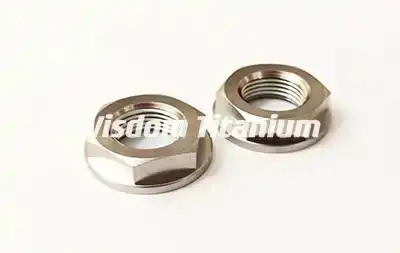
To avoid damaging the threads or deforming the part, you need to be careful and use the right tools when loosening a jam nut on a tie rod. Usually, penetrating oil is used first, left to soak for a few hours, and then the nut is turned counterclockwise using the right-sized wrench while another wrench holds the tie rod steady. When working with titanium jam nuts, especially those made from Grade 5 titanium metal, the job is easier because they don't rust as easily as steel replacements, which lowers the risk of seizure. These strong but lightweight fasteners are becoming more and more popular in race cars and other high-performance vehicles that need to make accurate changes all the time to stay in alignment.
Jam Nuts on Tie Rods
Jam nuts are very important locking parts in tie rod systems because they stop unwanted adjustments that could damage the steering geometry and make the car less safe. When tightened against a main nut, these low-profile hexagonal fasteners create opposite friction that "jams" the two parts together to stop vibration-induced loosening. They are used in suspension and steering systems.
The Function of Jam Nuts in Mechanical Assemblies
A jam nut's main job is to stop things from moving, not to stick things together with glue. When it's put in correctly, it causes pressure between the threads that locks the adjustment in place automatically. This design works especially well in places with a lot of shaking, where normal locking methods like nylon inserts would break down from heat stress or repeated loading cycles.
Advantages of Titanium Jam Nuts Over Conventional Materials
When compared to steel and stainless steel options, titanium alloy screws, especially those made from Grade 5 titanium (Ti-6Al-4V), perform much better. The material's strength-to-weight ratio is about 45% higher than steel's. This means that uses that need to save weight, like racing cars, can benefit from less unsprung mass without losing structural integrity. Another important benefit is that a titanium jam nut doesn't rust. It makes a stable oxide layer that guards against water, salt spray, and chemicals much better than even 316 stainless steel in marine or road salt environments.
Racing teams and shops that make modifications to cars like how titanium jam nuts keep working even after being adjusted many times. Titanium parts can still be used after being in hard conditions for a long time, while steel nuts can get thread galling or seize from rust. The naturally lubricating nature of the material reduces friction during installation and removal. This makes the thread last longer and keep its precision over many tightening rounds.
Selecting the Right Titanium Jam Nut for Your Tie Rod Needs
Choosing the right materials affects both how well they work and how long they last. Understanding how the specs relate to the needs of the program helps with making choices about what to buy that combine efficiency with cost.
Specification Considerations and Industry Standards
Titanium jam nuts made to DIN 439 or ISO 4035 standards are about half the height of normal hex nuts, which makes them easier to place in tight spaces like those found in modern car suspensions. While keeping the corrosion resistance that lets you go longer between service times, Grade 5 titanium metal gives you the mechanical strength you need for high-load uses.
When adjustments are important, thread pitch precision is very important. CNC machines make threads with very tight tolerances that allow them to enter and release smoothly across the whole range of adjustments. This level of accuracy is especially useful for racing cars, where changes to the suspension geometry must stay stable under heavy horizontal loads while still being easy to reach for setup changes.
Comparing Material Alternatives
Steel jam nuts are the least expensive at first and work well in controlled settings, but they are heavier and can't stand up to harsh conditions. Aluminum versions are much lighter, but they aren't strong enough for high-torque uses, and they wear out faster after many tightening rounds.
Although brass is better at resisting rust and galling than titanium, it is heavier and has lower tensile strength of titanium. Even though stainless steel is reasonably priced and offers some corrosion protection, it can still get pocket rust and galling when paired with stainless tie rod ends, which is a common problem in marine settings.
If you want the best mix of qualities, Titanium Grade 5 is the only choice. Tuning car experts recommend these screws for high-performance builds where the dependability of parts has a direct effect on how well the car does in competition. Because it can handle temperatures above 600°F without losing its strength, the material can be used in places where other materials would fail, like near brake pads and exhaust systems.
Surface Treatment Options and Their Benefits
Standard polished finishes do a good job of protecting against rust and keeping the silver look of the material. Anodizing methods make a thicker oxide layer that comes in different colors. This layer is often used to customize the look of show cars and also protects against rust. PVD treatment adds layers of very hard surface that lower friction and give things a unique gold or black look that is popular in racing.
Procurement Guide for Titanium Jam Nuts
When buying titanium fasteners, industrial buyers have to think about things that are different from when they buy regular steel gear. Knowing about these things makes sure that the supply chain is stable and that costs are kept low.
Minimum Order Quantities and Bulk Purchasing Advantages
Titanium fastener makers with a good reputation usually set minimum order sizes around 200 pieces. This is because getting the materials and setting up the machines for the first time are very expensive. This level makes it possible for shops that modify cars to keep enough in stock for customer projects while also letting race teams keep enough on hand for seasonal repair.
When you buy in bulk, you save a lot of money on each unit because you're using less material and your setup costs are lower. When OEM automakers buy standard titanium jam nuts for production vehicles, they arrange volume price that makes titanium competitive with high-end stainless steel options when lifecycle costs, such as fewer warranty claims, are taken into account.
Custom Manufacturing Capabilities
Titanium makers with a lot of experience can make products that are customized to fit particular needs, such as non-standard thread pitches, lengths, or surface treatments that are specific to the brand. This adaptability is helpful for making prototypes and for specialty uses that don't need a lot of units and don't have ready-made solutions.
As part of the design collaboration process, people usually send producers technical drawings or actual samples that they use to make production specs. CNC cutting makes it possible to make quick prototypes with lead times measured in weeks instead of months. This speeds up the product development process for companies that make fast aftermarket parts.
Quality Certifications and Supply Chain Reliability
Having ISO 9001 approval means that you have a method for managing quality that includes keeping track of materials, making sure they are the right size, and writing down inspection procedures. Manufacturers in well-known titanium production areas, like Baoji Titanium Valley in Shaanxi Province, China, have access to a full supply chain infrastructure that includes factories that make both raw materials and finished parts.
This focus in one area gives companies a competitive edge by lowering the cost of transporting materials, giving them access to specialized machining skills, and letting them use quality control systems that have been built up over decades of the titanium industry's growth. Baoji is one of the most important places in the world to make titanium because it has combined processes that go from making titanium sponge to high-performance alloys. Few other places in the world can match this.
Pricing clarity is still very important for making business purchases. The prices of raw materials change based on the markets for titanium sponges around the world. The complexity of production also changes based on the thread pitch accuracy and surface treatment needs. Reliable suppliers give thorough quotes that break down the prices of materials, processing, and finishing. This makes it possible to make accurate budget projections.
Conclusion
To successfully loosen jam nuts on tie rods, you need to know both the right way to do it and some basic material science concepts. The Grade 5 alloy used to make titanium jam nuts has many benefits over standard steel ones, including better corrosion resistance, less weight, and continued usability after many tightening rounds. These performance traits are especially useful in demanding situations, like racing cars, tuning vehicles, and naval sites where the environment would break down less durable materials. The right way to remove something, using penetrating oils, controlled heat, and the right tool, keeps the threads intact and makes upkeep easier. When deciding what materials to use, you should compare their original cost to their lifetime value, taking into account things like less work needed to remove seized fasteners and fewer replacement cycles. As performance standards for cars keep getting better, choosing high-quality fastener materials is an investment in their dependability and long-term usefulness.
Get Premium Titanium Jam Nuts from Trusted Manufacturer
Knowing how to make high-performance titanium fasteners for tough car, racing, and industrial uses is what Wisdom Titanium does best. As an ISO 9001-certified company based in Baoji Titanium Valley, which is the world's largest titanium production center, we have full control over the quality of our materials, from choosing the raw titanium rods to inspecting them before they are shipped. Our titanium jam nuts are made from Grade 5 metal, which has a great strength-to-weight ratio. You can choose from polished, anodized, or PVD coated surfaces to match your needs for performance and looks.
If you need non-standard thread pitches for test cars or large production runs with consistent dimensional tolerances, our experienced research and development team can make solutions just for you. We offer stable prices and solid lead times that corporate buyers can count on because we keep a full inventory of raw materials and use well-known production methods. With a minimum order quantity of just 200 pieces, quality titanium fasteners can be bought by both repair shops and race teams.
Get in touch with our expert sales team at sales@wisdomtitanium.com to talk about your needs. We'll give you thorough quotes that take into account the specifics of your application and the amount of parts you need. These quotes will come with material certifications and quality paperwork that meet OEM procurement standards. Wisdom Titanium has the knowledge and manufacturing skills to help you succeed, whether you're looking for titanium jam nuts for a championship race program or making the next wave of high-performance cars.
FAQ
Can I Use Penetrating Oil on Titanium Jam Nuts?
Penetrating oils work well with titanium jam nuts, but they're not needed as often as they are with steel ones. The main benefit is getting rid of any dirt or brake dust that has built up, not stopping rusting, because titanium's oxide layer stops rust from forming. Follow the manufacturer's instructions for using normal car penetrating oils on the material without worrying about whether it will work with it. Titanium's chemical stability means that it won't break down when exposed to solvents derived from petroleum.
How Does Titanium Compare to Stainless Steel for Corrosion Resistance?
Titanium works much better in chloride-rich settings than even marine-grade 316 stainless steel. Titanium's naturally occurring oxide layer stays stable in a wider range of weather conditions, while stainless steel's chromium oxide layers break down in saltwater that doesn't move or in cracks. This means that the adjustability stays the same in seaside areas or when there is a lot of salt on the roads in the winter, where stainless steel screws would seize.
What Tools Work Best for Loosening Jam Nuts Without Damaging Tie Rods?
Combination wrenches or flare nut wrenches that are exactly the right size for the hex dimensions make the best contact without rounding the corners. One wrench should be used to hold the tie rod body while the other is used to free the jam nut. Do not use pipe wrenches, locked pliers, or adjustable wrenches because they put extra stress on the sides of the bolt. Precision torque tools help with putting things back together by making sure that the locking force is right without being too tight, which could make future changes harder.
References
1. American Society for Testing and Materials. (2021). ASTM F467: Standard Specification for Nonferrous Nuts for General Use. West Conshohocken: ASTM International.
2. Boyer, R., Welsch, G., & Collings, E.W. (2019). Materials Properties Handbook: Titanium Alloys. Materials Park: ASM International.
3. Deutsches Institut für Normung. (2018). DIN 439: Hexagon Thin Nuts - Product Grades A and B. Berlin: Beuth Verlag GmbH.
4. Lutjering, G. & Williams, J.C. (2020). Titanium: Engineering Materials and Processes. Berlin: Springer-Verlag.
5. Society of Automotive Engineers. (2022). SAE J429: Mechanical and Material Requirements for Externally Threaded Fasteners. Warrendale: SAE International.
6. Veiga, C., Davim, J.P., & Loureiro, A.J. (2021). "Properties and Applications of Titanium Alloys: A Brief Review." Reviews on Advanced Materials Science, 32(2), 133-148.