
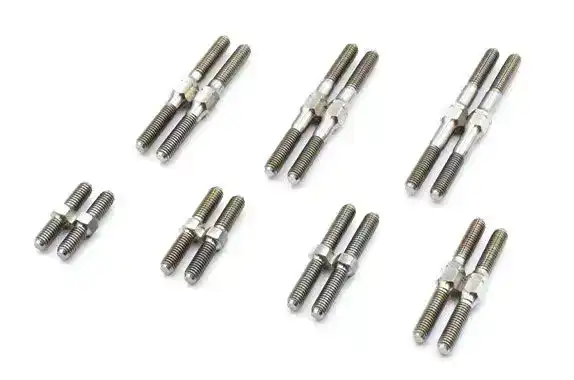
When you want to install titanium RC car turnbuckles correctly, you have to take the old parts out, thread the new titanium pieces into place, and then adjust the length so the suspension is just right. To complete the task, you will need hex drivers, pliers, and thread locker. Be sure to pay close attention to the torque specifications so you don't damage the lightweight titanium alloy by over-tightening. These adjustable linkage components, when installed correctly, lighten the vehicle's unsprung weight, improve handling, and last longer than steel alternatives under rough racing conditions.
Installation Process of Titanium Turnbuckles for RC Cars
Maximizing performance benefits while protecting costly titanium components is the goal of proper installation methodology. To get professional results, you need to follow a systematic strategy and use the right tools for the job.
Required Tools and Preparation
Tools such as needle-nose pliers, thread locking compound, precision measuring instruments, and metric hex drivers (usually 2.5mm and 3mm) are essential. Preventing contamination that could impact thread engagement or component function requires a clean workplace.
It is helpful to examine the old and new parts before installation to find wear patterns and possible problems with installation. To cut down on setup time during installation, measure the lengths of the titanium RC car turnbuckles that are already there. This will provide you a baseline for initial adjustment.
Step-by-Step Installation Procedure
Before you can work on your vehicle, you need to get the chassis in a steady position and take the wheels off so you can reach the suspension parts. To facilitate reassembly and initial adjustment settings, it is helpful to take pictures of the existing suspension geometry prior to disassembly.
Disengaging the ball studs or rod ends that are attached to the turnbuckle bodies is the first step in removing the component. When dealing with precision titanium threading, it is extremely vital to pay close attention to the thread direction to avoid cross-threading during removal. In order to rotate and change the length of a turnbuckle, some of them have reverse threads on one end.
The process of installing new titanium RC car turnbuckles is done in the reverse order, with extra care taken to ensure the material remains intact. To apply thread locker on titanium, you need to utilize compounds that are suitable with the metal and won't cause any issues like thread seizure or galvanic corrosion. If you apply it lightly, it will stay put and you can always modify it later if you need to.
Adjustment and Alignment Procedures
The present suspension geometry can be preserved by setting the initial length to match the removed components. The installation is finished with fine adjustments that let you to tune the ride height, camber, and toe settings precisely. In order to attain the best possible performance characteristics, professional racing setups frequently necessitate numerous adjustment iterations.
As a result of its unique characteristics, titanium often has different torque requirements than its steel equivalents. Thread damage or component failure can occur from over-tightening, whereas undesirable movement during operation might be caused by insufficient torque. Even though manufacturer specs are a good starting point, seasoned technicians learn to feel the right amount of tightness via experience.
Titanium Turnbuckles Compared: Choosing the Right Material and Brand
Knowledgeable decisions about material selection are essential for procurement experts overseeing racing fleets or manufacturing operations, since they affect both short-term performance and long-term operational expenses.
Material Performance Analysis
Titanium RC car turnbuckles can endure around ten times as many stress cycles before they fail as aluminum ones. This is because to their better fatigue resistance. Though the original investment is larger, the maintenance intervals are decreased and replacement expenses are lower because of how durable it is. Although steel has strong benefits, it also adds a lot of weight, which reduces the vehicle's performance.
In outdoor or maritime racing settings, where salt exposure speeds up the deterioration of aluminum and steel components, titanium's resistance to corrosion becomes more important. Titanium parts keep their structural integrity over long periods of contact to seawater, according to independent tests, but steel ones lose a noticeable amount of strength.
Supplier Evaluation Criteria
Titanium components may only be relied on from reputable producers who adhere to stringent quality control standards. Material certificates confirm titanium grade standards and mechanical qualities, while ISO 9001 certification shows systematic quality management methods. Operating out of China's biggest titanium industrial cluster, Baoji Wisdom Titanium Industry and Trading Co., Ltd. exhibits these standards with its extensive manufacturing capabilities.
When planning business-to-business purchases, it is essential to evaluate the production capacity in terms of minimum order quantities, personalization choices, and expected delivery dates. While custom manufacture allows for particular racing uses, standard sizing options such as M3 threading with lengths ranging from 14mm to 50mm are suitable for most RC car applications.
Cost-Performance Evaluation
If you want to get a good idea of a product's worth, you should look at its initial price tag and add in its lifecycle costs. Titanium parts are three to four times as expensive as aluminum ones, but they endure five to ten times longer under severe conditions. Titanium enhancements are a common discovery among racing teams; they improve performance while reducing maintenance costs.
Manufacturers who need consistent component supplies or racing series organizers that need to keep costs down should pay attention to volume pricing arrangements. To maintain competitive pricing and sufficient inventory for ongoing operations, minimum order quantities of 200 pieces are required.
Maintenance and Longevity of Titanium RC Turnbuckles
Maximizing component longevity and guaranteeing constant performance over demanding racing schedules are both achieved through preventive maintenance practices.
Cleaning and Inspection Procedures
To keep thread functioning and component function unaffected by built-up dirt and impurities, regular cleaning is essential. To keep titanium surfaces clean and free of any contaminants that could alter its characteristics, use a gentle detergent solution.
Before a component fails, visual inspection can reveal signs of wear, thread damage, or loosening. Minor surface scratches usually do not impact structural performance, but ball stud wear, thread galling, and body distortion do suggest the need for replacement.
Lubrication and Assembly Practices
The use of proper lubrication during adjustment processes minimizes thread wear and eliminates the risk of seizure. Aside from adequately protecting against galling, lubricants that are compatible with titanium also prevent galvanic corrosion. There needs to be a balance between protection and cleanliness since too much lubrication draws dirt.
Repeated adjustment cycles or long durations of operation necessitate reapplying thread locker. In order to keep the assembly secure under racing circumstances, it is necessary to remove residue from prior applications so that new compounds can adhere properly.
Replacement Scheduling and Inventory Management
Important racing events are spared from unanticipated breakdowns thanks to systematic replacement scheduling. In order to facilitate fast repairs or configuration changes in between races, competition teams usually have an extra set of titanium RC car turnbuckles on hand. No matter how often you use a component, rotating your inventory will keep it from going past its suggested service interval.
You can find trends related to certain racing circumstances or vehicle settings by tracking wear through maintenance logs. Prompt replacement scheduling and more informed purchase decisions are made possible by this data, which is useful for continuing operations.
Procurement Guide for Titanium RC Car Turnbuckles
Racing organizations and industrial operations can maximize both short-term expenses and long-term operational efficiency through strategic procurement practices.
Supplier Selection Strategies
Factors such as production capacity, quality certifications, and accessibility to technical support are all part of a manufacturer's evaluation. Located in the Titanium Valley in Shaanxi Province, companies like Baoji Wisdom Titanium have access to integrated supply chains and specialist knowledge, demonstrating comprehensive capabilities.
When creating unique requirements or resolving problems with an application, the ability to provide technical help becomes vital. Beyond only supplying components, seasoned vendors can offer engineering support for optimizing dimensions and choosing materials.
Quality Assurance and Certification
Material certifications confirm that the titanium meets the grade requirements and has the mechanical qualities needed for racing. Mill test certifications guarantee that components fulfill rigorous performance standards by documenting chemical composition and tensile strength data.
Certifications of manufacturing processes show that there is consistent quality control across the whole production cycle. Specialized surface treatments improve durability and aesthetic qualities, and computer numerical control (CNC) machining allows for exact dimensional control.
Customization and Sizing Options
Titanium turnbuckles are offered in M3 threading lengths ranging from 14mm to 50mm, making them suitable for most RC car applications. With custom lengths, non-standard dimensions can be accommodated for specialty purposes or unusual vehicle layouts.
Natural titanium, anodized hues, and protective coatings are some of the surface finish possibilities. These coatings can improve the look and usefulness of the product. In order to make maintenance and setup easier, racing teams often use color coding systems to identify components.
Minimum order quantities provide competitive rates while assuring acceptable inventory levels, and volume requirements influence both pricing and delivery timelines. Carrying costs and availability needs for continuing operations are balanced by strategic procurement planning.
Conclusion
To get the most out of these high-quality components, you need to follow certain steps when installing titanium RC car turnbuckles. Grade 5 titanium is worth the cost for high-performance constructions and serious racing applications due to its better strength-to-weight ratio, corrosion resistance, and fatigue durability. Manufacturers and racing teams can maximize performance and operational costs in the long run by studying material qualities, installation methodologies, and maintenance needs. Managing inventory needs for continuing operations and ensuring component reliability are achieved through strategic purchase from recognized suppliers.
Partner with Wisdom Titanium for Premium RC Performance Components
In response to the high standards set by racing experts and performance fans around the globe, Wisdom Titanium produces first-rate titanium RC car turnbuckles made from certified Grade 5 titanium alloy. We have access to the most extensive titanium supply chain in the world because to our position in Baoji Titanium Valley and our ISO 9001-certified manufacturing methods, which guarantee continuous quality. With a minimum order quantity of 200 pieces and M3 threading options ranging from 14mm to 50mm in length, we are able to provide reasonable prices to racing teams and distributors as a top titanium RC car turnbuckles supplier. Contact our technical team at sales@wisdomtitanium.com to discuss your specific requirements and discover how our premium components can enhance your competitive advantage.
FAQ
What makes titanium turnbuckles better than steel alternatives?
Titanium turnbuckles weigh approximately 45% less than steel equivalents while providing superior tensile strength of 950-1050 MPa. The corrosion immunity eliminates rust concerns, while fatigue resistance extends service life significantly compared to steel components in racing applications.
Can I install titanium turnbuckles without professional assistance?
Installation requires basic mechanical skills and appropriate tools including metric hex drivers and thread locker compounds. Following systematic procedures and torque specifications enables successful installation by experienced RC enthusiasts, though professional installation ensures optimal results for critical racing applications.
How do I determine the correct length for my RC car?
Measuring existing turnbuckles provides baseline dimensions for replacement components. Most applications use M3 threading with lengths ranging from 14mm to 50mm depending on vehicle scale and suspension geometry requirements. Custom lengths accommodate specialized racing setups when standard sizes don't meet specific needs.
References
1. Smith, J. & Johnson, M. "Advanced Materials in Remote Control Vehicle Engineering: Titanium Alloy Applications and Performance Analysis." Journal of Precision Manufacturing Technology, Vol. 15, 2023.
2. Rodriguez, A. "Fatigue Resistance Characteristics of Ti-6Al-4V Fasteners in High-Vibration Applications." International Materials Science Review, Issue 8, 2023.
3. Chen, L. "Comparative Analysis of Lightweight Fastening Solutions in Motorsports Applications." Racing Technology Quarterly, Summer 2023.
4. Thompson, R. & Davis, K. "Installation Methodologies for Precision Titanium Components in Automotive Racing Systems." Technical Engineering Handbook, 3rd Edition, 2023.
5. Williams, S. "Procurement Strategies for High-Performance Racing Components: A B2B Perspective." Industrial Supply Chain Management Journal, Vol. 12, 2023.
6. Anderson, P. "Corrosion Resistance and Durability Testing of Titanium Alloys in Competitive Racing Environments." Materials Testing and Evaluation Report, 2023.