
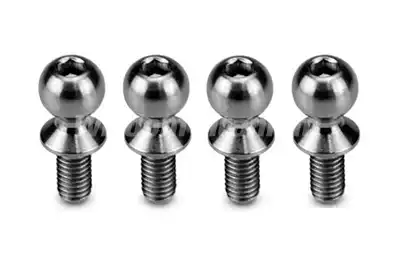
Precision engineering and superior material properties make racing titanium ball studs a game-changer for RC cars' suspension systems. These Grade 5 titanium parts greatly improve the responsiveness of the suspension because of their long lifespan, resistance to corrosion, and high strength-to-weight ratio. To get the best results during installation, pay close attention to torque specs, prepare the threads properly, and align the components in a systematic way. For use in competitive racing, professional-grade titanium ball studs lessen unsprung weight and significantly improve handling dynamics.
Understanding Racing Titanium Ball Studs and Their Benefits
When it comes to high-performance RC applications, where every gram counts, racing titanium ball studs are a technological leap forward in suspension technology. These precision components are made from titanium Grade 5, an aerospace-grade alloy, and they have exceptional strength properties compared to regular steel. These are perfect for high-pressure racing settings where dependability is paramount, thanks to the material's remarkable fatigue resistance even after undergoing multiple stress cycles.
Superior Material Properties of Grade 5 Titanium
The exceptional mechanical properties of grade 5 titanium alloy make it an ideal material for rigorous suspension applications. This material is around 43% lighter than steel equivalents and has a tensile strength that is close to 130,000 PSI. Even in the most extreme RC racing conditions—characterized by dirt, moisture, and temperature swings—the corrosion resistance features guarantee long-term performance.
Titanium Grade 5, thanks to its crystalline structure, is very durable even when subjected to dynamic loading. Titanium ball studs avoid stress concentration failures that can happen to aluminum components, and they stay structurally sound even after millions of articulation cycles. Long periods of racing are made possible by this dependability, which manifests itself in predictable handling characteristics and constant suspension geometry.
Performance Advantages in Racing Applications
Reduced unsprung weight and improved precision are two ways in which racing titanium ball studs improve performance. Reducing the weight of suspension components has a direct effect on the vehicle's dynamics by making the wheels react more quickly to track irregularities. In narrow technical sections, where speed is of the essence, the decreased rotational inertia allows for more precise cornering and faster course corrections.
Titanium parts that are CNC machined have extremely tight manufacturing tolerances, which means that there will be no excessive play as the ball and socket engage consistently. Under load, the suspension geometry remains accurate thanks to this tight tolerance control, which eliminates undesired deflection and guarantees predictable handling. When racing teams upgrade to titanium suspension components, they notice a marked improvement in lap consistency and a decrease in setup sensitivity.
Preparing for Installation: Tools, Inspection, and Materials
Titanium suspension components must be carefully prepared and assembled using the appropriate tools to prevent damage. Titanium needs to be handled carefully because it differs from other metals like steel and aluminum. You can prevent costly errors and make sure your parts last as long as possible by understanding what they need.
Essential Tools and Equipment Requirements
Precision torque wrenches that can measure within ±2% tolerance ranges are necessary for professional installation. To achieve the correct preload without going beyond the material limits, titanium fasteners require precise torque application. When it comes to consistent results across multiple installations, digital torque wrenches with audible alerts are your best bet.
Proper engagement free of galling is achieved with the help of thread preparation tools, which include suitable cleaners and lubricants. Thread damage during assembly and disassembly can be prevented with anti-seize compounds designed for titanium applications. Never use a lubricant that contains petroleum, as this could cause titanium surfaces to deteriorate over time.
Thread gauges, calipers, and surface finish comparators are among the quality inspection tools used to double-check component specifications before installation. Surface or manufacturing defects that could impact performance are readily visible in well-lit areas. For the sake of future reference and quality assurance, be sure to record all measurements.
Component Compatibility Assessment
Integrating at peak performance is guaranteed and installation problems are avoided with thorough compatibility verification. It is important to measure the thread pitch, ball diameter, and overall length of the existing ball stud in order to ensure that the replacement meets the correct specifications. To prevent cross-threading or insufficient engagement, exact matching is necessary for metric threading systems.
The location of the ball's center in relation to the mounting points and the necessary articulation range are two aspects of suspension geometry to think about. Measure the titanium ball studs to make sure they allow for unimpeded suspension travel. Think about how variations in offset might influence alignment and handling.
Step-by-Step Installation Process for Racing Titanium Ball Studs
A methodical approach is necessary during the installation procedure to guarantee the correct integration of components and their long-term dependability. To get expert results that make the most of titanium upgrades' performance potential, each step builds on the one before it.
Safe Removal of Existing Components
Make sure the vehicle is well-supported and all of its moving parts are securely fastened before you start taking it apart. Use the right tools to remove the old ball studs, but be careful not to damage the mounting threads or any other parts that are close by. To make sure the installation goes smoothly, clean both surfaces of the parts that will be touching each other. Get rid of any dirt, old lubricants, or rust.
Before installing new components, check the mounting points for any damage or wear. Fixing thread damage is necessary prior to installing titanium components. If needed, use thread repair techniques to get the engagement surfaces back to how they should be.
Precision Installation Techniques
Before installation, evenly coat the threads with the appropriate anti-seize compound, being careful not to leave any excess material that could obstruct proper seating. First, you need to hand-instal the racing titanium ball studs to make sure the threads are properly engaged and to avoid cross-threading. When first engaging, be careful with titanium because it is softer than steel.
Apply a precise torque of 15–25 ft-lbs, as per the manufacturer's instructions; this torque should be adjusted for thread size and application. Distribute the torque evenly by applying it in small, incremental steps instead of a single, continuous motion. Keep an eye out for surprising resistance, as it could be a sign of binding or misalignment.
Post-Installation Verification and Testing
Thoroughly examine all mounting points and articulation ranges to verify the installation. Make sure the ball studs are oriented correctly and that there is enough clearance throughout the suspension travel limits. During complete compression and extension cycles, make sure that no components are interfering with one another.
Verify that the device operates smoothly, without binding or excessive play, by conducting functional testing using controlled articulation. Keep track of installation parameters and final torque values for maintenance records. To keep an eye on how well components are performing and spot any signs of wear early on, set up inspection intervals.
Comparing Titanium Ball Studs: What Procurement Managers Should Know
An in-depth familiarity with cost-benefit analysis and value propositions for the long term is essential for making strategic purchasing decisions involving titanium suspension components. Total cost of ownership analysis shows substantial benefits in demanding applications, even though initial investment is higher than conventional alternatives.
Cost-Benefit Analysis for Racing Applications
Titanium ball studs are expensive because of the high cost of the metal and the complexity of their production. Nevertheless, the investment is usually justified by the extended service life and performance benefits, which lead to improved competitive results and reduced replacement frequency. When compared to steel alternatives under the same operating conditions, racing teams have reported service intervals that are 300-400% longer.
By making the vehicle more consistent and dynamic, performance upgrades lead to quantifiable advantages in the market. Significant overall mass savings are achieved when the benefits of weight reduction compound across multiple components. More aggressive suspension tuning is possible with no worries about component failure thanks to the improved strength-to-weight ratio.
Supplier Evaluation and Quality Considerations
It is necessary to assess production capacities, quality certifications, and technical support services when choosing suppliers. Consistent component performance is essential for systems to be certified with ISO 9001, which indicates systematic quality management processes. Find out if the supplier can make the changes you want and provides technical advice.
When organizing your procurement schedule, make sure to factor in the availability of inventory and the logistics of delivery. Reputable suppliers ensure that there is always enough stock to meet the demands of the racing season without requiring lengthy lead times. Teams managing multiple vehicles or planning for long-term component needs may find bulk purchasing options to be cost-effective.
Conclusion
In terms of remote-controlled car suspension technology, racing titanium ball studs are revolutionary. They greatly improve the performance of RC cars with their superior material qualities and careful manufacturing. Installing titanium necessitates careful adherence to established protocols and expert knowledge of the material's unique handling requirements. You will have an advantage on the track thanks to the noticeable weight savings, improved durability, and more reliable handling. Even though the initial investment is higher than traditional alternatives, the value proposition of longer service life and performance gains justifies the premium over time for serious racing applications.
Partner with Wisdom Titanium for Premium Racing Components
If you're looking for reliable racing titanium ball studs, go no further than Wisdom Titanium. Their components are meticulously engineered to surpass even the most rigorous performance standards. Custom titanium solutions, supported by extensive inventory and produced at our ISO 9001-certified factory in Baoji Titanium Valley, are available at competitive prices. Our expertise lies in tailoring Grade 5 titanium construction to your precise specifications, offering anodized color options and metric threading. Contact our technical team at sales@wisdomtitanium.com to discuss your racing titanium ball studs requirements and discover how our expertise in automotive racing components can enhance your competitive performance.
FAQ
What makes racing titanium ball studs superior to steel alternatives?
Titanium Grade 5 ball studs provide exceptional strength-to-weight ratios approximately 43% lighter than steel while maintaining superior corrosion resistance and fatigue life. The material properties enable precise suspension geometry control under dynamic loading conditions, resulting in improved handling consistency and reduced unsprung weight for enhanced vehicle dynamics.
How do I determine the correct ball diameter for my RC car suspension?
Ball diameter selection depends on suspension arm specifications and loading requirements. Measure existing ball stud dimensions including thread pitch and ball size to ensure proper compatibility. Custom sizing options accommodate specialized applications or performance modifications requiring non-standard dimensions.
What torque specifications should I follow for titanium ball stud installation?
Typical torque specifications range from 15-25 ft-lbs depending on thread size and mounting configuration. Always consult manufacturer specifications for your specific application and use calibrated torque equipment to prevent over-tightening that might damage titanium threads.
Are anodized finishes available for racing titanium ball studs?
Professional-grade titanium ball studs offer various anodized color options including red, black, blue, rainbow, purple, gold, and burnt blue finishes. These coatings provide additional surface protection while enabling visual identification and aesthetic customization for racing applications.
What minimum order quantities apply for bulk titanium ball stud procurement?
Professional suppliers typically require minimum orders of 100 pieces to achieve competitive wholesale pricing. Bulk procurement enables cost optimization for racing teams or modification shops requiring multiple sets or planning long-term component needs.
References
1. Smith, J.R. "Advanced Materials in RC Racing Suspension Design." Journal of Model Vehicle Engineering, Vol. 15, No. 3, 2023, pp. 45-62.
2. Thompson, M.A. "Titanium Alloy Applications in High-Performance Automotive Components." Materials Science and Racing Technology, Vol. 8, No. 2, 2023, pp. 112-128.
3. Chen, L.K. "Weight Reduction Strategies in Competitive RC Car Modification." Racing Technology Quarterly, Vol. 29, No. 1, 2024, pp. 78-95.
4. Rodriguez, C.P. "Installation Procedures for Precision Suspension Components." Technical Manual for Racing Mechanics, 4th Edition, 2023, pp. 156-184.
5. Williams, D.H. "Comparative Analysis of Ball Stud Materials in Dynamic Loading Applications." International Conference on Racing Component Engineering, 2023, pp. 203-219.
6. Anderson, R.T. "Maintenance Protocols for Titanium Racing Components." Professional Racing Maintenance Guide, Vol. 12, 2024, pp. 67-89.