
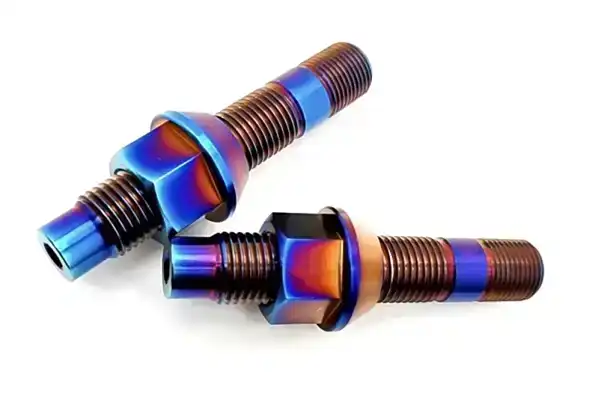
Converting wheel bolts to studs represents a significant upgrade in automotive fastening systems, particularly when utilizing titanium wheel stud conversion solutions. This process involves removing factory-installed wheel bolts and replacing them with pressed or threaded studs that remain permanently mounted in the hub, requiring only lug nuts for wheel attachment. Titanium Grade 5 studs offer exceptional strength-to-weight ratios, with typical specifications including M12, M14, and 1/2-inch thread sizes. The conversion enhances wheel-changing efficiency during racing pit stops, reduces maintenance complexity for fleet operators, and provides superior corrosion resistance in demanding environments. Most manufacturers require a minimum order quantity of 100 sets, making this solution particularly appealing to OEMs, modification shops, and racing teams seeking performance advantages through lightweight, high-strength fastening systems.
Procurement Insights: Choosing the Right Titanium Wheel Stud Conversion Kit
When buying titanium wheel stud conversion kits, it helps to have relationships with suppliers that go beyond just buying things. These relationships should also include scientific partnership. Suppliers who offer engineering support help with optimising specifications based on real application needs instead of generic catalogue choices. After-sales services like installation training, help with torque specifications, and failure analysis support lower the risks of execution and make sure the product works right. Warranty terms should make it clear what is and isn't covered. For example, production flaws usually mean replacement, but fitting mistakes, using the wrong amount of torque, or putting together lug nuts that don't work together aren't covered. Payment terms depend on the size of the order and the relationship between the buyer and the supplier. For example, established accounts can usually negotiate net-30 or net-60 terms, while new relationships may need deposits for custom specifications.
Evaluating Supplier Credentials and Material Certifications
Professional buying needs to make sure that sellers give real titanium Grade 5 material and not lower-quality copies or aluminum alloys that are sold in a way that is false. Reputable makers provide test results on the materials that show the chemical makeup using Positive Material Identification (PMI) spectroscopy. These reports prove that the material has an aluminum content of 6% and a vanadium content of 4%, which is within the limits set by ASTM B348. ISO 9001 certification means that quality management systems have been in place for a while, but AS9100 approval shows that aerospace-grade sources have even stricter process controls. The site of a factory is important; factories in titanium industry areas have easier access to high-quality materials and specialised knowledge. Baoji Wisdom Titanium Industry and Trading Co., Ltd is based in Shaanxi Province's Baoji Titanium Valley, which is China's biggest and best-connected titanium industry center. They offer full vertical integration, from making titanium sponges to precise CNC cutting.
Comparing OEM versus Aftermarket Conversion Kits
For important tasks, the original equipment manufacturer's standards are the safest starting point. However, aftermarket speed kits often include improvements based on race experience and failure mode analysis. OEM-equivalent kits focus on exact dimensional matching to factory specifications, keeping the original vehicle certifications and warranty compatibility—important things for fleet operators to think about when managing their liability exposure. Performance-focused aftermarket kits might have longer studs that can fit wheel spacers, different thread sizes for specific uses, or better material grades that go beyond what the factory specifies. To be able to directly compare suppliers, people who work in procurement should ask for particular specs such as thread class tolerances, knurl pattern measurements, grip length ranges, and minimum tensile strength certifications.
Understanding Minimum Order Quantities and Bulk Pricing
Setting up CNC machining, thread rolling, and heat treatment processes for making titanium parts costs a lot, which is why most suppliers set minimum order quantities around 100 sets. This threshold works well with the seasonal needs of racing teams, the planning of modifications shops' inventory, and the bulk buying cycles of fleet operators. Prices usually go down a lot when you buy 100, 500, or 1,000 or more units. At each level, the price per unit drops by 15 to 25 percent. Custom specifications, like non-standard thread pitches, specialised knurl patterns, or specific coating needs, usually need higher minimum quantities (250–500 sets) to justify investing in new tools. However, established manufacturers who already have the production capacity to handle smaller custom runs may be able to do them at a higher cost.
Benefits and ROI of Titanium Wheel Stud Conversion for B2B Clients
Operational Efficiency Gains in High-Volume Applications
In racing, stud-based systems cut wheel change times by 3–7 seconds per corner compared to bolt designs, which can be seen in the amount of time saved during pit stops. Over the course of 15 to 20 races, with multiple pit stops during each race, these seconds add up to competitive advantages that can be measured in track places won. Similar efficiency gains are seen in commercial fleet maintenance facilities. Technicians can do brake services and tyre rotations faster when wheels mount onto fixed studs instead of needing to be aligned by bolts. This means that more vehicles can be serviced at once and less money is spent on labour per vehicle. Mobile service companies like the simpler process because it makes it less likely that dropped nuts, cross-threading or alignment problems will happen during roadside tyre changes in bad weather, which can make service calls last longer.
Long-Term Cost Reduction Through Enhanced Durability
Titanium's resistance to corrosion means that steel screws don't have to be replaced over and over again in harsh settings. Fleet managers in marine areas or places where winter road treatments are harsh say that steel studs only last 18 to 30 months before they rust and need to be replaced. Titanium studs, on the other hand, usually last over 60 months without showing any signs of wear. The cost effects go beyond the cost of the parts; each replacement cycle requires the vehicle to be taken out of service, technicians to work on installation, and the cost of managing inventory. When you look at titanium's total ownership costs over five years, you can see that it's a better investment, even though it costs more at first. This is especially true for businesses that manage more than fifty vehicles, where fastener failure can lead to safety liability issues and unexpected maintenance costs that blow up operational budgets.
Performance Enhancements Through Weight Reduction
Getting rid of unsprung weight makes the suspension respond better, the tires make better contact, and the acceleration works better. When compared to steel wheels, a full titanium wheel stud conversion usually saves between 1.2 and 2.8 pounds per wheel. This may not seem like much until you multiply it by four wheels and think about rotational inertia. In racing, using titanium studs, brake parts, and wheel gear can cut weight by a total of 0.1 to 0.3 seconds per lap, which leads to an improvement in lap times. When suspension parts work better without having to make up for too much unsprung mass, street performance cars have better ride quality and sharper steering response. Commercial vehicles that are close to their gross vehicle weight ratings can carry more cargo because the weight of their fasteners, wheels, and other parts is falling. This could bring in more money or cut down on the number of trips needed to meet delivery schedules.
Real-World Case Studies Demonstrating Measurable ROI
An East Coast racing team in the GT3 endurance series found that switching to titanium studs cut the average length of pit stops by 12 seconds over the course of a season. This was directly linked to three podium results that were achieved by strategically timing pit stops. A luxury car modification shop in California saw a 40% drop in customer visits for wheel hardware problems after moving from steel to titanium studs for coastal clients. This made customers happier and saved money on warranty labour costs. A commercial fleet in the Midwest that runs more than 200 delivery trucks in the winter calculated that the investment in titanium studs would pay for itself in three years because they would not have to replace any parts due to corrosion, they would have fewer roadside assistance calls, and they would have to spend less time on maintenance. These measurable benefits led them to expand adoption across all of their vehicles.
Conclusion
The choice to switch to titanium wheel studs through titanium wheel stud conversion is a strategic one that weighs the original cost against the practical gains, efficiency improvements, and lifecycle cost savings that will come over time. To get the most out of the conversion process, you need to know a lot about technical things like how to choose the right materials and how to install them correctly. This includes understanding the basic differences between bolt and stud systems. When procurement professionals are weighing their choices, they shouldn't just look at the buying price. They should also think about the application-specific needs, the working environment, and the total cost of ownership. The benefits that have been shown in racing, business fleets, and high-performance applications show that titanium studs offer measured returns through improved longevity, operational efficiency, and performance optimisation that support their high price in the fastener market.
FAQ
Can titanium wheel studs handle the torque requirements of heavy commercial vehicles?
Titanium Grade 5 studs have a minimum yield strength of 950 MPa, which is about the same as high-grade steel fasteners. They meet or exceed the tensile strength requirements for heavy industrial uses. If you install it correctly and follow the manufacturer's torque recommendations, the clamping force will be enough for all kinds of vehicles, from light-duty trucks to Class 8 commercial haulers. For different types of vehicles, the thread engagement length and stud diameter must be specified correctly. For example, M14 or 1/2-inch sizes are usually enough for vehicles with a GVWR of less than 10,000 pounds, while heavier applications may need 9/16-inch or larger diameters. It is important to match the specs of the studs to the real load needs instead of thinking that titanium's lighter weight means it can't do as much.
How does the lifespan of titanium studs compare to steel in real-world conditions?
Quality steel studs may last as long as titanium in controlled environments with little exposure to corrosives. However, titanium performs better in harsh conditions. Coastal activities, winter exposure to road salt, and off-road areas with water and abrasive dirt all speed up the rusting process, which means that steel usually needs to be replaced every 24 to 36 months. Titanium studs that are used in the same way usually last longer than 60 to 72 months without corroding or losing their threads. Some systems have records of 8 or more years of service life. In situations where thermal cycling is used, the performance gap gets much bigger. This is because titanium's stable oxide layer stops the screws from breaking down over time when they are heated and cooled many times.
Are there compatibility issues when mixing titanium studs with steel lug nuts?
Titanium studs and steel lug nuts usually work fine together because titanium is in the galvanic series. However, the best rust protection comes from using materials that are exactly the same. The main problem is thread galling during installation if the right anti-seize lubricant is not used. Because titanium tends to cold-weld under high friction, molybdenum disulfide or similar compounds are needed during assembly. Accurate thread pitch is more important than matching materials; precisely rolled threads that meet 6g tolerance class requirements stop the binding and deformation problems that make installation hard. In racing, titanium or aluminum lug nuts are often used to save weight and prevent corrosion. On the other hand, steel lug nuts that are properly oiled are still commonly used in business settings to keep costs down while keeping reliable performance.
Partner with Wisdom Titanium for Your Titanium Wheel Stud Conversion Needs
Upgrading to titanium fastening systems takes knowledge of both material science and precise manufacturing. Since 2016, Wisdom Titanium has been serving the car, racing, and commercial vehicle industries, which has helped them improve their skills in these areas. We are an ISO 9001-certified seller of titanium wheel stud conversion solutions. We are based in Baoji Titanium Valley in Shaanxi Province, which is home to China's most complete titanium production environment. We offer full vertical integration, which means we source the raw materials and do the precise CNC machining ourselves. Our titanium wheel stud conversion options include Grade 5 studs in M12, M14, and 1/2-inch sizes. You can also order them in unique quantities, and there are 100-set minimum amounts that meet the needs of professionals buying things.
We know that B2B clients need more than just parts. They also need expert partners who can certify materials, help with installation, and communicate clearly throughout the whole buying process. Our experienced research and development team works together on unique requirements. We keep a full stock of raw materials to keep prices stable and delivery on time. Our well-established production methods, which are backed by ISO 9001 quality systems, ensure consistency across production runs. Our team has the technical knowledge and manufacturing skills your needs, whether you're supplying a racing team, running a commercial fleet, or helping clients who want to make changes. Get in touch with us at sales@wisdomtitanium.com to talk about your titanium wheel stud requirements and find out how our solutions improve performance while lowering long-term costs.
References
- Davis, J.R. (2006). Metals Handbook: Desk Edition, Second Edition. ASM International, Materials Park, Ohio.
- Donachie, Matthew J. (2000). Titanium: A Technical Guide, 2nd Edition. ASM International, Materials Park, Ohio.
- Society of Automotive Engineers (2019). SAE J1199: Mechanical and Material Requirements for Metric Externally Threaded Steel Fasteners. SAE International, Warrendale, Pennsylvania.
- Boyer, R., Welsch, G., and Collings, E.W. (1994). Materials Properties Handbook: Titanium Alloys. ASM International, Materials Park, Ohio.
- Bickford, John H. (2008). Introduction to the Design and Behavior of Bolted Joints: Non-Gasketed Joints, Fourth Edition. CRC Press, Boca Raton, Florida.
- International Organization for Standardization (2017). ISO 898-1: Mechanical Properties of Fasteners Made of Carbon Steel and Alloy Steel — Part 1: Bolts, Screws and Studs with Specified Property Classes. Geneva, Switzerland.