
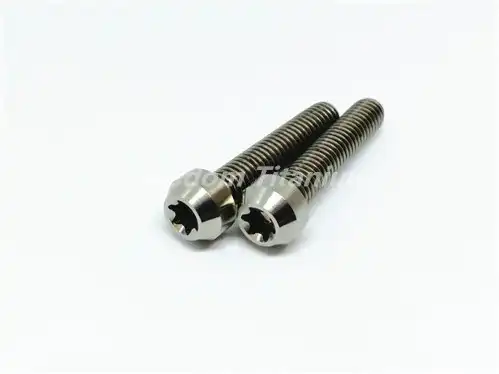
Fastener selection goes beyond diameter and length. Load requirements, environmental exposures, material compatibility, dimensional limitations, and installation limits affect metric titanium fastener reliability or catastrophic failure. Ti's unique properties—exceptional strength-to-weight ratios, corrosion immunity, temperature extremes capability—introduce specification considerations not found in steel fastener selection, increasing complexity.
Define Your Project's Requirements
The strength grades and minimum cross-sectional areas of metric titanium fasteners are determined via load analysis. Calculate the fastener's true forces, including tensile loads tearing it apart, shear loads perpendicular to its axis, and combination loading situations causing complicated stress states. M8 fasteners in aerospace applications may face 10,000 Newton tensile stresses during flight maneuvers, while medical implants experience cyclic loads from patient movements, causing fatigue stress that requires thorough consideration beyond static load predictions.
Static load capacity calculations compare applied stresses against material yield strength, applying appropriate safety factors. Grade 5 titanium (Ti-6Al-4V) delivers 880 MPa yield strength, meaning an M8 fastener with approximately 36.6 mm² stress area theoretically supports 32,200 Newtons before permanent deformation. However, aerospace specifications typically limit design stress to 60-70% of yield strength, reducing working load to 19,300-22,500 Newtons accounting for load uncertainties, material property variations, and safety requirements. These conservative design factors prevent yielding during unexpected overloads or when actual loads exceed nominal calculations due to misalignment, binding, or dynamic effects amplifying static load estimates.
Dynamic and fatigue loading introduce time-dependent failure modes requiring specialized analysis beyond static strength calculations. Components experiencing vibration, thermal cycling, or repeated operational loads develop fatigue cracks at stress levels well below yield strength when cyclic stresses accumulate damage over millions of loading cycles. Titanium demonstrates excellent fatigue resistance with endurance limits around 50-60% of ultimate tensile strength at 10 million cycles, though this varies with surface finish, stress concentrations, and environmental factors. Aircraft fasteners, automotive suspension components, and rotating machinery employ fatigue analysis to determine safe stress amplitudes for expected service lives measured in decades and billions of stress cycles.
Environmental exposure assessment identifies corrosion mechanisms, temperature extremes, and chemical compatibility requirements influencing material grade selection and surface treatment specifications. Marine environments subject metric titanium fasteners to saltwater containing chlorides that rapidly corrode steel but prove benign to titanium's passive oxide protection. However, reducing acids like sulfuric or hydrochloric acid at elevated temperatures can attack commercially pure titanium, requiring Grade 7 palladium-enhanced alloys for chemical processing applications. Temperature analysis determines whether operating conditions from -250°C cryogenic exposure to 400°C sustained elevated temperatures remain within selected grade capabilities or demand specialized alloy selection.
Master Metric Titanium Fastener Key Specs
Dimensional specifications begin with nominal diameter designations following ISO metric standards. The "M" prefix indicates metric threading with the following number specifying major diameter in millimeters—M6 designates 6mm major diameter measured at thread crests. Baoji Wisdom Titanium manufactures sizes from M1.6 through M24, covering miniature electronics fasteners through substantial structural bolts. The diameter selection balances strength requirements against weight optimization and spatial constraints, with larger diameters providing greater load capacity but adding mass and requiring larger clearance holes in assembled components.
The thread pitch specifications following the diameter indicate the spacing between adjacent thread crests measured parallel to the fastener axis. Coarse pitch serves as the default for each diameter—M6 employs 1.0mm coarse pitch unless otherwise specified. Fine pitch alternatives provide greater thread engagement in limited depths, distribute loads across more thread flanks, or allow finer preload adjustment during installation. An M6×0.75 designation explicitly calls out fine pitch rather than standard 1.0mm spacing. Thread pitch critically affects compatibility with tapped holes and nuts—mismatched pitch causes cross-threading damage even when diameters match, making pitch verification essential during procurement and receiving inspection.
Length measurements for metric titanium fasteners typically indicate the distance from the bearing surface under the head to the fastener tip, though countersunk head lengths sometimes measure overall length, including the head. Verify length measurement conventions in specifications, preventing errors where installers assume one convention but drawings specify another. Adequate length ensures proper thread engagement in tapped holes—minimum engagement typically equals 1.5 times the nominal diameter, meaning M6 fasteners require at least 9mm engagement, to develop full strength without thread stripping. Excessive length creates bottoming in blind holes before achieving proper torque, or requires trimming operations, adding manufacturing costs, and potentially affecting thread quality near cut ends.
Material grade specifications determine mechanical properties, corrosion resistance, and temperature capabilities. Grade 5 titanium (Ti-6Al-4V) provides 950 MPa tensile strength and 880 MPa yield strength in lightweight 4.51 g/cm³ density construction suitable for demanding applications from -250°C to 400°C operating temperatures. The 36 HRC hardness balances wear resistance against toughness, avoiding brittleness that harder materials might introduce. Commercially pure Grade 2 titanium offers lower strength around 345-480 MPa but costs 30-40% less, suiting applications where corrosion resistance rather than ultimate strength drives material selection. Specifications must explicitly identify grade since "titanium fastener" descriptions without grade callouts create ambiguity, potentially resulting in inappropriate material substitutions.
Align with Industry-Specific Needs
Material traceability, dimensional precision, and environmental resilience during high temperature cycling and continuous vibration are required in aerospace applications. Most commercial aviation regulations need Grade 5 titanium structural fasteners, which have exceptional strength-to-weight ratios and consistent performance over decades. Material certificates must show chemical composition within restricted specification windows, mechanical qualities matching minimum strength requirements, and heat lot traceability for failure investigations or fleet-wide inspections. Titanium fasteners and aluminum or composite constructions have distinct thermal expansion rates, therefore thread tolerances follow precision classes for reliable engagement.
Marine applications require corrosion resistance because saltwater, high humidity, and temperature cycling rapidly damage steel fasteners. Grade 2 commercially pure titanium is cheaper than Grade 5 alloy and has excellent seawater resistance, making it ideal for naval hardware with moderate strength. Underwater vehicles, racing sailboats, and performance powerboats may specify Grade 5, accepting cost premiums for weight reduction, speed, or payload. Marine-grade metric titanium fasteners must withstand crevice corrosion in dissimilar metal joints, chloride pitting, and stress corrosion cracking from sustained loads in corrosive environments. Material selection and surface treatment address these failure modes.
Titanium is unique among structural materials in biocompatibility, sterilizing resistance, and non-magnetic characteristics for medical devices. Surgical instruments, orthopedic implants, and dental equipment require ASTM F136 Grade 5 or Grade 23 (extra-low interstitial Ti-6Al-4V) biocompatibility. In implantable applications, the material must enable bone formation through osseointegration, resist repeated autoclave sterilization cycles, and be MRI-compatible without artifacts or safety risks. Since medical fasteners interface with complicated anatomical geometry, fit tolerances in fractions of millimeters are essential.
Chemical processing equipment operates in aggressive environments, exposing metric titanium fasteners to acids, alkalis, organic solvents, and elevated temperatures, challenging material compatibility. Grade 2 titanium resists many chemical environments, though reducing acids at high concentrations might require Grade 7 palladium-enhanced alloys to prevent corrosion attack. Fastener specifications must account for thermal cycling from process startups and shutdowns, differential thermal expansion between titanium fasteners and steel or exotic alloy vessels, and potential for stress corrosion cracking when sustained tensile loads combine with specific chemical exposures. Equipment longevity and safety depend on matching fastener grades to actual process chemistries rather than assuming titanium's general corrosion resistance universally applies across all chemical environments.
Partner With Baoji Wisdom Titanium for Optimal Fastener Selection
Selecting appropriate metric titanium fasteners requires a systematic analysis spanning load calculations, dimensional specifications, environmental compatibility verification, and industry-specific standards compliance. The complexity extends beyond matching diameter and length into grade selection, thread pitch compatibility, surface treatment specification, and quality documentation, ensuring components perform reliably throughout demanding service lives. Mistakes during this selection process create consequences ranging from over-specification waste to catastrophic under-specification failures, making informed decision-making essential rather than optional.
For comprehensive fastener selection guidance, detailed technical specifications, or quotations on metric titanium fasteners optimized for your project requirements, contact Baoji Wisdom Titanium today. Our team stands ready to discuss your application, provide engineering analysis supporting informed specification decisions, and deliver precision fasteners meeting your performance, quality, and delivery objectives. Send your inquiry to sales@wisdomtitanium.com, including project details, operating environment specifications, load requirements, and quantity projections. Experience professional partnership with titanium specialists who understand that fastener selection requires comprehensive analysis, balancing mechanical properties, environmental compatibility, industry standards compliance, and lifecycle economics, delivering optimal solutions for demanding applications. Let us demonstrate how properly selected and manufactured metric titanium fasteners from Baoji Wisdom Titanium provide the strength, reliability, and value your critical projects demand.
FAQs
Q1: How do I choose the correct metric titanium fastener size for my load?
A: Calculate your maximum load, divide by the allowable design stress (≈60–70% of yield strength), then select a metric size whose tensile stress area meets or exceeds that requirement.
Example: A 15,000 N load typically requires M8 rather than M6.
For precise sizing, provide your load conditions to our engineering team.
Q2: Should I choose coarse or fine thread pitch?
A:
Coarse threads: Faster installation, better for general use, debris tolerance, and lower cost.
Fine threads: More engagement in short depths, better for soft materials (aluminum/composites), and improved preload precision.
Always match pitch with the mating component to avoid cross-threading.
Q3: Can Grade 2 titanium replace Grade 5 to reduce cost?
A: Yes—if loads are moderate.
Grade 2 is ideal for corrosion-resistant, low- to medium-load applications (marine, chemical equipment).
Choose Grade 5 for high loads, elevated temperatures, or weight-critical designs.
Confirm load requirements before substituting grades.
References
- Bickford, J.H. (2008). Introduction to the Design and Behavior of Bolted Joints (4th Edition). Boca Raton, FL: CRC Press.
- Donachie, M.J. (2000). Titanium: A Technical Guide (2nd Edition). Materials Park, OH: ASM International.
- ISO. (2018). ISO 898-1:2013 Mechanical Properties of Fasteners Made of Carbon Steel and Alloy Steel. Geneva: International Organization for Standardization.
- ASTM International. (2021). ASTM B348 - Standard Specification for Titanium and Titanium Alloy Bars and Billets. West Conshohocken, PA: ASTM International.
- Boyer, R., Welsch, G., & Collings, E.W. (1994). Materials Properties Handbook: Titanium Alloys. Materials Park, OH: ASM International.