
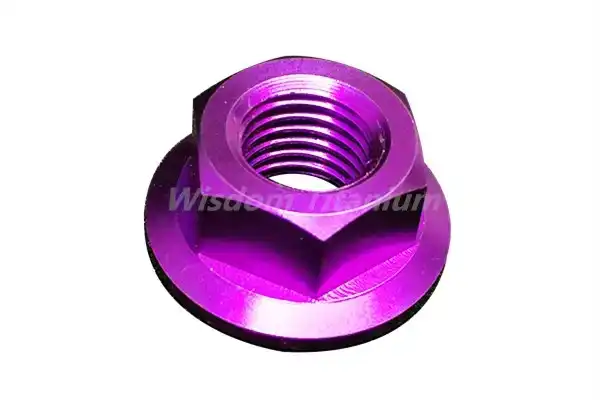
To get an exact reading on the size of a hex nut, you need to measure three important things: the across-flats width (the distance between two straight sides), the thread diameter, and the thickness of the nut. When working with titanium hardware, where tolerances are tighter because the material is so hard, it's important to use precise tools like digital calipers or thread pitch gauges to get exact readings. When it comes to automobile, aerospace, and motorbike uses where performance can't be compromised, proper sizing keeps assemblies from failing and makes sure they work together.
Hex Nut Size – Basics and Importance
When working with bolts, knowing the basic sizes of hex nuts is what makes the difference between a system that will hold up under pressure and one that will fail horribly. Every hex nut has three main measurements: the across-flats width (the wrench size), the thread diameter (the size that fits the bolt), and the total thickness (which affects how well it grips and how much it stacks).
Why Accurate Sizing Matters in High-Performance Applications
Correctly fitting hex nuts keeps them from breaking down in harsh settings, which can be very expensive. Accurate measures are needed to make sure that bolts keep their clamping power when they are subjected to vibration, heat cycling, and heavy loads by racing teams, automakers, and shops that modify motorcycles. A nut that doesn't fit right can damage threads, come loose during use, or cause stress clusters that cause a part to break. When buying titanium Gr5 (Ti-6Al-4V) hex nuts for brake systems or engine bay bolts, even small differences in size can affect how well they work and how safe they are.
Manufacturing Tolerances and Material Considerations
When compared to regular steel screws, titanium hardware is harder to measure. Because the material is stronger for its weight, it is also harder, which makes surface finish and stability in dimensions more important during inspection. When using rolled threads in CNC cutting, like the ones we use in our M6, M8, and M10 engine bay bolts, tolerances are tighter than when using cut threads, and the threads last longer too. Manufacturing standards like ISO 9001 approval make sure that the quality of each production batch is the same. This lowers the chance that you will receive parts that aren't up to standards, which could damage your assembly.
Impact on Supply Chain Efficiency
When hex nut size mistakes happen, they cost procurement workers a lot of money. Costs go beyond the initial buy price because of returns, assembly line stops, and repairs. These risks are greatly reduced when clear measurement methods are agreed upon with providers. When you buy custom titanium hardware parts from well-known production hubs like Baoji Titanium Valley in Shaanxi Province, you need to make sure that the quality of the parts you receive meets exact specifications. This is important for keeping the supply chain reliable across foreign logistics.
Step-by-Step Methods to Check Hex Nut Size
To correctly measure hex nuts, you need the right tools and methods. There are different ways to measure things for different buying situations, from quick checks during the getting review to precise measurements for quality certification.
Using Digital Calipers for Across-Flats Measurement
Digital calipers are the easiest and most accurate way to measure across-flats measurements. Position the caliper jaws so that they are perpendicular to the hex nut's two straight sides. This will make sure that the jaws touch the whole surface. Quality tools can read the reading to within 0.01 mm of accuracy. This size, which is written in specs as "across flats" or "A/F" measures, tells you what size wrench or socket fits the nut. For accurate readings, surfaces of polished titanium nuts must be clean. This is because machining grease or other debris left on the surface can cause measurement mistakes.
Determining Thread Size with Thread Pitch Gauges
Thread pitch tools have many blades, each with a different thread shape. Choose the blade that fits exactly into the threads inside the nut, with no holes or binding. It shows both the thread width (M6, M8, M10, etc.) and the pitch (coarse or fine thread). ISO guidelines say that metric threads should be used in cars and motorcycles, while imperial threads are used in some special situations. When matching nuts and bolts, checking the thread specs avoids costly mismatches. This is especially important when switching from steel to titanium fasteners and straight replacement must keep exact threading.
Measuring Nut Thickness with Precision Tools
The thickness of the nut affects how well it clamps and how long the thread engages. To get the most accurate reading, put the nut on a flat surface and use digital calipers in depth gauge mode to find out how tall it is. Most standard hex nuts are between 0.8 and 1 times the width of the thread when it comes to thickness. Jam nuts and lock nuts, on the other hand, are different. When choosing titanium hardware for uses that need to be light, like racing bikes or speed bicycles, measurements of thickness have a direct effect on how much weight is saved total and how stress is distributed across the joint.
Advanced Measurement Using Optical Comparators
Optical comparators that display enlarged nut profiles onto calibrated screens are useful for large-scale buying processes. These systems check many dimensions at once and can find small changes in hexagonal shape that affect how well the wrench fits together. Even though comparators cost more, they make quality control easier for large orders and keep accurate records of measurements for compliance purposes. When buying accurate titanium hardware, aerospace and medical device companies often ask for optical measurement proof.
How to Choose the Right Hex Nut Size for Your Titanium Hardware Needs?
To choose the right hex nut sizes for your titanium hardware, you need to look at your specific application needs, the area where they will be used, and how well they will fit with other parts that are already in place. A good procurement process strikes a mix between technical requirements and real issues.
Analyzing Load Requirements and Safety Factors
Figure out the tensile and shear loads that your bolts need to be able to handle. This should include static loads, vibration-induced wear, and shock loads that happen while they're in use. Use the right safety factors based on how important the application is. For example, factors of 2-3 are common for racing applications, while bigger gaps may be needed for street cars. Titanium Gr5 is stronger than steel bolts of the same size, so they can be made smaller. However, the thread engagement length needs to be long enough to pass enough load. If you work with experienced sources or talk to engineering references, you can be sure that your standards meet mechanical needs without being too complicated.
Environmental Compatibility Assessment
Operating temperature ranges affect the choice of material and the size of the part. Titanium keeps its strength better than aluminum at high temperatures and is better at handling heat cycling than steel. Titanium's protective oxide layer works best in corrosive conditions like salt spray, chemical contact, or galvanic rusting. If you are changing steel hardware in current systems with titanium hardware, make sure that galvanic coupling between metals that are not the same won't cause corrosion problems. When installed correctly with anti-seize materials made for titanium, galling can be avoided while electrical separation is maintained as needed.
Supplier Certification and Quality Verification
Working with ISO 9001-certified makers guarantees consistent quality across all runs and holds them responsible for measuring correctly. Ask for material certificates that show the grade of titanium, tensile strength tests, and the place where the material came from. The Baoji Titanium Valley in Shaanxi Province is one of the most full places in the world to make titanium products. It has the whole supply chain covered, from the raw titanium dust to the finished parts. This kind of vertical merger gives you better control over quality and more stable supplies than broken-up supply lines can offer.
Evaluating supplier skills goes beyond checking the quality of the first output. When procurement problems happen, quick technology help, the ability to make things to order, and clear communication lines become very important. Manufacturers who are skilled at making custom solutions from models or design ideas can speed up the development of new products and cut down on the number of iterations that are usually needed for specialized uses.
Conclusion
Correctly sizing hex nuts is an important part of making sure that a system works well, especially when working with titanium hardware in tough automobile, motorcycle, and industrial settings. Learning how to use digital calipers, thread gauges, and other precise instruments for measuring makes sure that the specs for purchases match the needs of the application. Titanium Gr5 is very strong for its weight, doesn't rust, and lasts a long time without wearing out. This makes it the best material for performance-critical bolts, even though it costs more. To make buying work well, technical requirements, seller dependability, and quality control rules must all be balanced so that parts are delivered that improve product performance while keeping total ownership costs low. When you work with certified makers in well-known production centers, you can get access to custom capabilities, technical knowledge, and a stable supply chain, all of which are important for staying ahead of the competition in industries that need precision.
Partner with Wisdom Titanium for Precision Fastener Solutions
Wisdom Titanium makes high-precision CNC-machined titanium hardware that meets the strict requirements of industry, motorbike, and car uses. Our production site in Baoji Titanium Valley, which is ISO 9001-certified and is home to China's largest titanium industry cluster, blends decades of experience with vertical supply chain integration. We make engine bay bolts in M6, M8, and M10 sizes from titanium Gr5 (Ti-6Al-4V), which has tensile strengths between 900 and 1050 MPa. The threads are rolled for better wear resistance, and the bolts come in a variety of finished colors. Whether you need standard bolts or CNC parts made to your exact specs, our experienced engineering team is here to help you with all of your technical questions during the whole process. As long as there are enough raw materials on hand and the production technology is well-developed, prices will stay fixed and deliveries will happen on time for both small orders and large orders. Contact our titanium hardware supply team at sales@wisdomtitanium.com to talk about your needs and find out how precision fastener solutions can help your product work better. You can look at our wide range of products and learn about how we can customize them by going to wisdomtitanium.com.
FAQ
How accurate do hex nut measurements need to be for titanium fasteners?
How accurate your measurements need to be depends on how important your application is and how much range you have. For most car uses, across-flats measurements can be within ±0.1mm of accuracy. However, aircraft and race uses may need tolerances of ±0.05mm or tighter. The sizes of threads are set by ISO or DIN norms, and there are clear tolerance classes for each. Digital calipers are accurate enough for most purchase checks, but coordinate measure machines or optical comparators may be needed for statistical process control in production quality control.
Can titanium hex nuts replace steel nuts directly in existing assemblies?
Titanium Gr5 nuts can be used instead of steel ones in most situations because they are lighter and less likely to rust. Check that the thread sizes, across-flats measurements, and width are the same as the original parts. Think about the torque specs. Because titanium has a different friction coefficient, the fitting torque numbers may need to be changed to get the right clamping force. Check the galvanic corrosion potential when titanium touches metals that are not the same, and use isolation washers or anti-seize chemicals as required. When changing fasteners in safety-critical situations, talk to technical sources or suppliers with a lot of experience.
What makes titanium hardware worth the higher initial cost compared to steel?
Why is the higher cost of titanium hardware worth it compared to steel hardware? Titanium hardware has value because it performs better in more ways than one, which goes beyond the original purchase price. Getting rid of extra weight makes a car more dynamic, more fuel-efficient, and easier to handle, all of which support higher prices in speed settings. Better resistance to rust means that the product doesn't need to be replaced as often and keeps its good looks throughout its useful life, which lowers the total cost of ownership. Better wear resistance keeps things from breaking in places where vibrations are common and steel bolts would crack. When speed and efficiency are what set one company apart from the competition, racing teams, luxury carmakers, and motorcycle makers know that these long-term benefits are worth the extra money.
References
- American Society of Mechanical Engineers. "ASME B18.2.2 - Nuts for General Applications: Machine Screw Nuts, Hex, Square, Hex Flange, and Coupling Nuts (Inch Series)." ASME Standards Collection, 2020.
- Boyer, R., Welsch, G., & Collings, E.W. "Materials Properties Handbook: Titanium Alloys." ASM International, Materials Park, Ohio, 1994.
- International Organization for Standardization. "ISO 4032: Hexagon Regular Nuts (Style 1) - Product Grades A and B." ISO Standards Catalogue, 2012.
- Lutjering, G. & Williams, J.C. "Titanium, Second Edition: Engineering Materials and Processes." Springer-Verlag Berlin Heidelberg, 2007.
- Society of Automotive Engineers. "SAE J1199 - Technical Report on Fastener Part Properties." SAE International Standards, 2018.
- Bickford, John H. "Introduction to the Design and Behavior of Bolted Joints: Non-Gasketed Joints, Fourth Edition." CRC Press, Taylor & Francis Group, 2007.




