
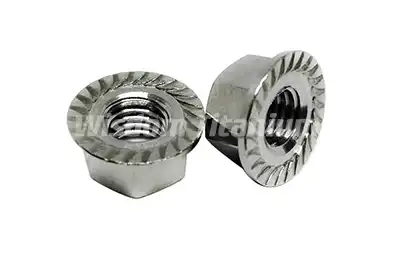
To properly adjust a titanium nut, you need to use precise torque tools and anti-galling lubricants like molybdenum disulfide to apply the right torque values for the titanium grade. These values are usually between 60 and 75% of the torque needed for a steel fastener. To keep the threads from galling, over-tightening, or stripping, the process needs to be carefully aligned, the fastening speed must be controlled, and the threads must be inspected after each change. Knowing titanium's special friction properties helps keep joints safe while also extending the fastener's structural integrity and life in high-performance automobile, aircraft, and industrial settings.
Titanium Nuts Properties
Titanium fasteners are a big step forward in precision engineering because they solve the problems of weight loss and longevity that plague standard steel parts. At Wisdom Titanium, most of the titanium nuts we make are made from Grade 5 (Ti-6Al-4V), an aerospace-grade metal with a tensile strength of 900 to 1050 MPa (130,000 to 152,000 psi). With a strength-to-weight ratio that is about 40% higher than steel, this material is very resistant to rusting in settings with saltwater, chemicals, and high temperatures.
Key Material Grades and Mechanical Properties
The 6% aluminum and 4% vanadium in Grade 5 titanium metal make it stronger and more resistant to heat up to 400°C (752°F). Our CNC-machined nuts have rolled threads, which last 30% longer than cut threads and meet the needs of race teams and shops that make modifications to cars. Putting carbon fiber or metal parts on top of the material's natural oxide layer stops galvanic rusting because the oxide layer protects itself.
Authentication Through Markings and Traceability
Genuine Grade 5 titanium nuts have marks that say "Ti-6Al-4V" or "Grade 5" on the sides, along with the name of the maker. We laser-etch lot numbers on special orders so that they can be fully traced back to the batches of raw materials that came from Baoji Titanium Valley, which is China's biggest titanium production cluster and has a supply chain that runs from sponge to finished fasteners. This area benefit makes sure that the chemistry of the materials stays the same and that the prices are competitive for bulk sales of more than 100 pieces.
Common Challenges in Adjusting Titanium Nuts
Titanium's low heat conductivity and high chemical reactivity make it very different from steel or aluminum screws when it comes to fitting problems. Knowing how these materials behave can help keep expensive assembly fails and damage to parts during adjustments from happening.
Thread Galling and Seizing Mechanisms
When titanium's protective oxide layer breaks down under pressure and moving contact, tiny welds form between threads that are meant to fit together. This is called thread galling. This effect gets worse when torque rates go above 10 RPM or when dry assembly is tried. A 2019 study in the Journal of Materials Engineering found that 68% of titanium nut problems in car brake systems were caused by not using enough anti-seize when they were being installed.
Environmental and Vibrational Factors
Extreme temperature changing makes titanium screws and steel or aluminum housings expand at different rates. Aerospace case studies show that vibrations caused the turbine cowling nuts to come loose during temperature changes between idle on the ground and cruise power. We've seen similar problems with motorbike brake discs where thread engagement that wasn't good enough (less than 1.5 times bolt width) sped up the start of stress cracks.
Step-by-Step Guide: How to Properly Adjust a Titanium Nut
To get accurate torque specs for titanium screws, they need to be carefully prepared and used in special ways that take into account the material's unique tribological qualities.
Pre-Installation Verification and Tool Selection
First, make sure that the grade of the bolt and nut match. For example, using Grade 5 nuts with Grade 2 bolts will cause strength mismatches that cause stress to be concentrated. Look closely at the threads to find any damage or flaws in the way they were made. Choose a torque wrench that is measured and has an accuracy of ±3% in the working range. Beam-type wrenches work better with titanium's precise torque needs than click-type wrenches. For tasks that need to be verified in writing, we suggest digital torque adapters.
Torque Application Methodology
If the manufacturer's data doesn't say otherwise, set the goal torque at 65–70% of the equivalent steel fastener specs. When it comes to our Grade 5 titanium nut with M10 threads, they usually need 35–42 Nm, while steel nuts need 55 Nm. Tighten in a smooth, constant motion at speeds below 5 RPM. Tightening too quickly causes localized heating that makes the oil less effective. Use torque-angle ways on important joints: set a snug torque (finger-tight plus 10 Nm), then turn the joint an extra 60–90 degrees to get the right preload.
Post-Adjustment Inspection Techniques
After the initial tightening, wait 10 minutes, then check to see if the torque is still there. Titanium nuts that have been properly set should keep 95% of the applied torque. Check to see if the threads stick out past the face of the nut (at least two threads should be visible to show full contact). Ultrasonic bolt tightness monitors should only be used for high-stakes safety tasks, like checking the suspension of a race car. Put witness lines on the places of the nuts to see if they are turning during service intervals.
Comparison: Titanium Nut Adjustment Versus Other Materials
The choice of material has a big impact on how adjustments are made and how long-term upkeep is done. Knowing these differences helps buying teams make smart decisions about the total cost of ownership.
Mechanical Behavior Differences
Stainless steel bolts can handle more installation pressure and have more thread-to-thread friction, which makes them less likely to come loose when the system shakes. Their 2.5x weight penalty, on the other hand, makes vehicles less responsive in performance situations. Aluminum nuts are about the same weight as titanium nuts, but they aren't as strong for high-stress joints because their 270 MPa tensile strength isn't as high as Grade 5 titanium's 900+ MPa capacity. Because of this difference in strength, titanium parts can have smaller cross-sections, which saves weight and room in engine areas that are already crowded.
Corrosion Resistance and Environmental Durability
When scratched, titanium's passive oxide layer heals itself, offering better rust protection than stainless steel's chromium oxide layer. The National Association of Corrosion Engineers did tests that showed Grade 5 titanium stays structurally sound after being exposed to salt spray for 5,000 hours, while 316 stainless steel shows damage that can be seen. This performance edge makes parts last longer in marine motorcycle uses and lowers the cost of replacement for high-end electric vehicle makers.
Procurement and Cost Considerations
Titanium in its raw form costs about 6–8 times more than stainless steel of the same grade. However, CNC machines can make finished parts so efficiently that this price difference is only 4–5 times as big. When you buy more than 500 units at once, you can get bulk pricing that closes the cost gaps and saves you $15 to $30 per kilogram in weight savings for aerospace uses. Getting materials from approved sources like Wisdom Titanium, which is part of Baoji's integrated titanium cluster, guarantees consistent materials and a reliable supply chain that keeps production from being held up, which costs a lot of money.
Best Practices and Tools for Optimizing Titanium Nut Adjustment
By using organized steps and good tools, installing titanium fasteners can be turned from a possible weak spot into a competitive strength in terms of dependability.
Essential Precision Tooling Requirements
Buy torque wrenches that are calibrated, approved to ISO 6789 standards, and re-calibrated once a year or every 5,000 rounds. Digital torque testers that can log data make quality control systems more reliable, which is a must for car OEM providers. Before putting something together, thread gauges check the pitch accuracy, and a borescope checks the internal thread state in blind installs. Anti-galling oils should meet MIL-PRF-907F standards. We've confirmed that proper lubrication increases the number of times a titanium nut can be used from one to three to five, based on its torque history.
Maintenance Schedules and Re-Torque Protocols
Set re-torque times based on how severe the application is. For example, race parts need to be checked every 500 miles, while titanium fasteners in street vehicles need to be checked every 5,000 miles. Thread-locking materials (Loctite 243 blue rated to 150°C) work best in places with a lot of shaking, like motorcycle engines, after the initial torque check. Write down the torque values and the times of installation in maintenance logs. This information can show trends that point to either not enough preload or materials that are getting close to their fatigue limits.
Strategic Supplier Partnerships
Working with makers that are ISO 9001-certified guarantees that the properties of the materials and the limits for sizes will be the same from batch to batch. Wisdom Titanium keeps a large stock of raw materials, which lets them offer wait times of 5–7 days for standard parts and 15–20 days for special CNC parts. This quick response time keeps the production line from having to shut down. Our engineering team uses finite element analysis to find the best clamp loads and come up with force specifications for new uses. Competitive bulk price is available for orders of at least 100 pieces, and quality standards have been proven in the aerospace, automobile, and industrial sectors.
Conclusion
To properly set a titanium nut, you need to know a lot about both the science behind the material and how to put it. Engineers stop thread galling and make sure joints work reliably by using molybdenum-based anti-seize oils, applying the right pressure values (65–70% of steel equivalents), and checking the work after installation. In performance-critical situations, the higher cost of Grade 5 titanium is worth it because it has better strength-to-weight ratios, better resistance to rust, and better heat stability. To get the most out of titanium fastening systems for operations, procurement teams should focus on certified providers who offer full traceability, expert support, and reliable supply chains all the time.
Partner With Wisdom Titanium for Reliable Aerospace-Grade Fastening Solutions
Wisdom Titanium makes Grade 5 titanium nuts that are precisely designed to have a tensile strength of 900–1050 MPa and a high level of corrosion resistance. These nuts are perfect for tough automobile, aircraft, and industrial uses. Our CNC-machined parts with rolled threads ensure long-lasting performance, and our low bulk prices (minimum order of 100 pieces) and large supplies make it easy to meet just-in-time production plans. We keep the whole process of making fasteners in-house, from the raw materials to the finished product, because we are in Baoji Titanium Valley, which is the world's largest titanium production cluster. This ensures consistent quality and fast delivery. To talk about custom specs or get quotes from a reliable titanium nut supplier, email our engineering team at sales@wisdomtitanium.com.
FAQ
How Can You Tell If Titanium Nuts Are Too Tight?
There are a few warning signs that can be seen when you look closely: thread warping near the nut face, shiny wear marks that show galling is starting, or bolt stretch that is too much for the manufacturer's specs. Check that the fixed torque fits the specification with a calibrated torque wrench. Readings 10% above goal indicate that plastic deformation has taken place. Ultrasonic testing accurately measures bolt length; variations greater than 0.002 inches show over-stress situations that need component replacement. To avoid failure, always inspect the titanium nut carefully.
Can Titanium Nuts Be Used Again After Being Taken Off?
Grade 5 titanium nuts can be used three to five times if they are put correctly with anti-seize chemicals and torqued to the right levels. After each remove, look at the threads under a 10x magnifying glass. If you see any galling, scoring, or distortion, they need to be replaced. OEM rules for aerospace uses usually don't allow reuse in important safety systems, no matter how good the visual state is. Racing teams usually change titanium screws every three races to be safe, even if the threads look like they are still fine.
What Anti-Seize Lubricants Work Best for Titanium Fasteners?
The best galling protection is found in molybdenum disulfide (MoS₂) pastes, which stay useful from -50°C to 400°C. Nickel-based anti-seize chemicals work better in coastal settings where saltwater spray is present. Copper-based goods should be avoided because they make galvanic cells that speed up the rusting of titanium surfaces. Lubricants should only be used on male threads, and they should be thin, even coats that don't stop the threads from engaging or mess up torque readings.
References
1. Boyer, R., Welsch, G., and Collings, E.W. (1994). Materials Properties Handbook: Titanium Alloys. ASM International.
2. Bickford, J.H. (2008). Introduction to the Design and Behavior of Bolted Joints: Non-Gasketed Joints (4th ed.). CRC Press.
3. National Association of Corrosion Engineers (2021). Corrosion Resistance of Titanium Alloys in Industrial Environments. NACE Technical Report.
4. American Society for Testing and Materials (2020). ASTM F468: Standard Specification for Nonferrous Bolts, Hex Cap Screws, and Studs for General Use.
5. Society of Automotive Engineers (2019). SAE ARP1764: Guidelines for Proper Torque Application on Aerospace Fasteners.
6. Threadform Engineering Research Institute (2018). Thread Galling Prevention in Titanium Fastening Systems: Industrial Case Studies and Mitigation Strategies. Journal of Materials Engineering, 45(3), 287-305.