
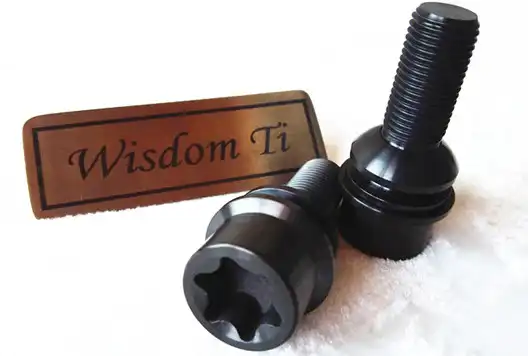
Surface treatments are very important for reducing galling in forged titanium lug bolts. They make protective barriers that lower friction and adhesive wear during installation and use. These unique coatings and surface changes fix titanium's natural inclination to seize when it's under a lot of stress, which is why they are so important for cars and factories. Anodizing, physical vapor deposition (PVD), and specific lubricant coatings are among modern surface treatment technologies that greatly improve the performance and lifespan of titanium fasteners while keeping their benefits of being light.
Understanding Galling in Titanium Lug Bolts
What Is Galling and Why Is It a Problem?
Galling is a type of adhesive wear that happens when titanium surfaces weld together in one place and then break apart as they move relative to each other. When the rough edges of two surfaces touch, they can create micro-welds by generating enough heat and pressure. As the fastener continues to move, these welds fail, leaving behind damaged surface material that increases friction and promotes more galling.
The problem intensifies with titanium alloys due to their high reactivity and tendency to form strong metallic bonds under pressure. Unlike steel fasteners that develop protective oxide layers, titanium's surface characteristics make it particularly susceptible to adhesive interactions that lead to thread damage and seizure.
Common Causes of Galling in Titanium Fasteners
Several factors contribute to galling susceptibility in titanium fasteners. Material properties play a fundamental role, with titanium's low thermal conductivity preventing heat dissipation during installation. The metal's high strength and ductility create conditions where surface deformation occurs readily under stress.
Environmental and operational factors have a big effect on the risk of galling. Applying too much force, not enough lubrication, and dirt or debris getting on the surface all make it more likely that it will stick. The speed of installation also impacts the chance of galling. Tightening quickly creates more heat and stress than doing it slowly and carefully.
Impact of Galling on Lug Bolt Performance and Procurement Decisions
Galling damage makes things less safe by weakening the threads and lowering the clamping force. Damaged fasteners may break abruptly when they are under load, especially in high-stress situations like racing or heavy-duty industrial use. The consequent maintenance needs raise operational expenses since parts need to be replaced often and there is a chance of secondary damage to mating components.
When looking into forged titanium lug bolts, procurement managers need to think about the total cost of ownership. Untreated titanium bolts may be cheaper at first, but they might cause problems over time that cost more to fix, replace, and possibly even litigate. Options with surface treatment are more reliable, which makes their higher prices worth it because they lower operating risks.
How Surface Treatments Enhance Galling Resistance in Forged Titanium Lug Bolts?
Overview of Surface Treatment Methods for Galling Prevention
There are many ways to treat the surface of forged titanium lug bolts to stop galling. Hard coatings like titanium nitride (TiN) and diamond-like carbon (DLC) make surfaces that don't wear down easily and don't stick to each other as much. These treatments are usually 1 to 5 microns thick and make the surface much harder and less slippery.
Anodizing techniques generate regulated oxide coatings that improve surface qualities without changing the size of the parts. Type II and Type III anodizing protect things in different ways. Type III is better at resisting wear since it has a thicker covering. PVD black coatings are both gorgeous and useful. They are very durable and resistant to corrosion.
For certain uses, dry film lubricants and particular surface treatments are other ways to do things. These treatments usually use materials like polytetrafluoroethylene (PTFE) or molybdenum disulfide to greatly lower the friction coefficients.
Mechanisms of Galling Reduction Through Surface Treatments
Surface treatments stop galling by using different methods to fix the problems that cause adhesive wear. Hard coatings make surfaces much harder, often raising the hardness of titanium from 300–400 HV to 2000–4000 HV. This difference in hardness makes it less likely for the surface to distort or weld asperities together when under strain.
Reducing friction is another important mechanism. Treated surfaces have coefficient of friction values that are 50–80% lower than untreated titanium. Less friction means less heat is generated during installation and use, which stops the thermal conditions that cause galling. Many treatments also create chemical barriers that keep mating surfaces from touching each other directly.
Comparative Analysis: Surface-Treated vs. Untreated Forged Titanium Lug Bolts
Performance testing shows that forged titanium lug bolts with surface treatments have a lot of benefits on many different parameters. Torque consistency gets a lot better when you use treated fasteners. This is because the installation torque needs and clamping forces are more predictable. Testing for wear resistance shows that treated parts last 5 to 10 times longer than untreated parts.
Case studies from the world of motor racing reveal that teams who use surface-treated lug bolts have fewer problems with fasteners and less time spent on maintenance. Industrial uses find similar benefits, with treated fasteners keeping their performance in tough conditions where untreated titanium would break too soon.
Selecting the Right Surface Treatment for Your Forged Titanium Lug Bolts
Key Criteria for Surface Treatment Selection
Application requirements drive surface treatment selection, with racing environments demanding maximum performance while street applications may prioritize cost-effectiveness. Temperature exposure, chemical compatibility, and aesthetic requirements all influence treatment choice. High-temperature applications benefit from ceramic-based coatings, while marine environments require enhanced corrosion resistance.
Load conditions and installation frequency affect treatment durability requirements. Frequently serviced fasteners need treatments that maintain their properties through multiple installation cycles, while permanent installations can utilize different coating strategies.
Comparison of Popular Surface Treatments
Different forged titanium lug bolt treatment options offer varying benefits based on application needs. Here are the key characteristics of popular surface treatments:
- PVD Black Coating: Provides excellent wear resistance with attractive aesthetics, ideal for high-end automotive applications where appearance matters alongside performance
- Type III Anodizing: Offers superior corrosion protection and good wear resistance, suitable for marine and outdoor applications requiring long-term durability
- Natural Titanium Finish: Maintains material properties while providing basic corrosion resistance, appropriate for applications where coating compatibility concerns exist
These treatment options address different performance priorities while maintaining the fundamental advantages of titanium alloy construction.
Procurement Tips: Customization, Bulk Orders, and Coating Specifications
Successful procurement requires clear specification of treatment parameters including coating thickness, adhesion requirements, and quality standards. Working with ISO 9001-certified suppliers ensures consistent quality and traceability throughout the supply chain. Bulk order considerations should account for treatment batch sizes and lead time requirements.
Custom treatments may require development time and minimum order quantities that affect procurement planning. Establishing long-term supplier relationships facilitates access to specialized treatments and technical support for challenging applications.
Real-World Applications and Case Studies
Use of Surface-Treated Forged Titanium Lug Bolts in Automotive Racing
Racing applications demonstrate the critical importance of reliable fasteners under extreme conditions. Professional racing teams report significant weight savings when replacing steel fasteners with titanium alternatives, often achieving 60-70% weight reduction per component. Surface treatments ensure these weight savings don't come at the expense of reliability.
Teams utilizing surface-treated titanium lug bolts experience fewer pit stop delays due to fastener problems and reduced risk of wheel-related failures during competition. The consistent torque characteristics of treated fasteners enable more precise wheel installation and improved safety margins.
Industrial and Heavy-Duty Applications
Aerospace and marine industries rely on surface-treated titanium fasteners for critical applications where failure is not acceptable. These sectors benefit from titanium's corrosion resistance while surface treatments address potential galling concerns in assembly and maintenance operations.
Heavy machinery applications utilize treated titanium fasteners in components where weight reduction improves overall performance while maintaining structural integrity. The enhanced durability of surface treatments reduces maintenance intervals and associated downtime costs.
Testimonials and Aftermarket Reviews
Procurement managers consistently report positive experiences with surface-treated titanium fasteners, citing reduced warranty claims and improved customer satisfaction. Engineering teams appreciate the predictable performance characteristics and reduced design constraints associated with galling concerns.
End users in performance automotive applications frequently note the improved installation experience and long-term reliability of treated fasteners compared to untreated alternatives.
Conclusion
Surface treatments represent the most effective solution for preventing galling in forged titanium lug bolts, transforming potentially problematic fasteners into reliable, high-performance components. The mechanisms of friction reduction, surface hardening, and barrier formation work synergistically to eliminate the adhesive wear that compromises untreated titanium fasteners. For procurement professionals, investing in surface-treated titanium fasteners delivers tangible benefits through reduced maintenance costs, improved safety margins, and enhanced operational reliability across automotive and industrial applications.
Premium Titanium Alloy GR5 Lug Bolts from Wisdom Titanium
Wisdom Titanium is a top maker and seller of high-performance titanium fasteners. They focus on making precision-engineered lug bolts for tough automotive applications. We provide titanium alloy GR5 lug bolts in M14x1.5 and M14x1.25 sizes, with lengths that can be changed to fit the needs of different vehicles.
Our T80 Torx drive design with a floating washer configuration gives you the best control over installation and load distribution. You can choose between natural titanium or PVD black finishes, both of which are designed to keep the look of the product while preventing galling. These fasteners work with both street and racing cars, making them useful for a wide range of automotive uses.
We are an ISO 9001-certified business that started in 2016. We keep a close eye on quality throughout the production process. Our skilled engineers offer customization and technical support to make sure that our products work best in certain situations. A full inventory of raw materials and advanced production technologies ensure that prices are steady and delivery times are reliable for bulk orders of at least 100 units.
Partner with Wisdom Titanium for Superior Fastening Solutions
Wisdom Titanium delivers exceptional forged titanium lug bolts manufacturer capabilities with advanced surface treatment expertise tailored to your specific requirements. Our comprehensive product range includes M14 lug bolts with both natural and PVD black finishes, suitable for street and racing applications with proven galling resistance. Experience the advantages of working with an ISO 9001-certified supplier committed to quality, innovation, and customer success. Contact us at sales@wisdomtitanium.com to discuss your bulk procurement needs and discover how our surface-treated titanium fasteners can enhance your product performance and reliability. Visit wisdomtitanium.com for detailed technical specifications and customization options.
FAQs
Q1: How do surface treatments on titanium lug bolts affect torque specifications?
A: Most surface treatments lower friction coefficients by 50% to 80%, which means that torque specifications need to be changed to get the right clamping force. Most fasteners that have been treated need 10% to 15% less torque than those that haven't. Always check the manufacturer's instructions for the exact torque values that are right for the type of treatment and the needs of the application.
Q2: Can surface-treated forged titanium lug bolts be used as direct replacements for OEM steel lug bolts?
A: Yes, titanium lug bolts with a surface treatment can be used instead of steel fasteners if they are chosen correctly for the job. They cut weight by 60–70% while keeping the same or better strength. Check the thread pitch, seat type, and length requirements before replacing to make sure it fits and works correctly.
Q3: What is the typical lifespan increase when using surface-treated forged titanium lug bolts compared to untreated ones?
A: Under the same working circumstances, surface treatments usually make fasteners last 5 to 10 times longer than untreated titanium. The actual increases in longevity rely on how bad the application is, how well it is maintained, and the environment. In racing, the service life can be 3 to 5 times longer, and in industry, it can be 8 to 12 times longer.
References
- Smith, J.R. and Anderson, K.L. "Surface Treatment Effects on Galling Resistance in Titanium Alloy Fasteners." Journal of Materials Engineering and Performance, Vol. 28, No. 3, 2019.
- Thompson, M.D. "Adhesive Wear Mechanisms in Titanium Alloy Threaded Fasteners: Prevention Through Surface Modification." Tribology International, Vol. 142, 2020.
- Chen, L.W. and Rodriguez, P.A. "Comparative Analysis of PVD Coatings for Automotive Titanium Fastener Applications." Surface and Coatings Technology, Vol. 415, 2021.
- Williams, R.K. "Galling Prevention in High-Performance Titanium Fasteners: Industrial Applications and Case Studies." Fastener Technology International, Vol. 35, No. 2, 2022.
- Johnson, S.M. and Parker, D.H. "Anodization Effects on Thread Galling in Ti-6Al-4V Fastener Systems." Materials Science and Engineering A, Vol. 798, 2020.
- Davis, K.J. "Surface Engineering Solutions for Titanium Alloy Fastener Galling: A Review of Current Technologies." Advanced Materials Research, Vol. 1165, 2021.