
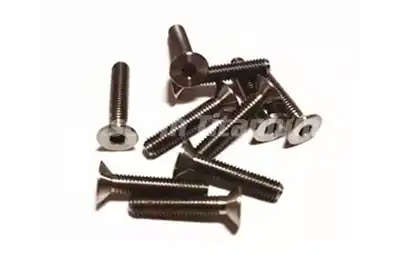
In RC uses, m3 titanium bolt can usually be used 15 to 25 times under standard conditions. This reusability rests on things like the right torque standard, the way the part is installed, and how it is exposed to the environment. Not like regular screws that might break after just a few uses, these precision titanium fasteners keep their shape through many cycles because the material is so strong. Grade 5 titanium metal is very durable, so it always works well and doesn't cost much to maintain over time. This is true for both RC hobbyists and business users.
Factors Influencing Reusability of M3 Titanium Bolts
The number of times titanium screws can be used depends on a number of linked factors that change how strong they are over time. Knowing about these factors helps repair workers get the most out of bolts' lives while still meeting safety standards.
Mechanical Stress and Torque Cycling
Repetitive pressure uses are what wear down titanium bolts so they can't be used again. Every time the screws are put in and taken out, they are put under mechanical stress that can build up over time and cause fatigue damage. The right torque specs keep things from being over-stressed and make sure there is enough binding force for safe links.
According to research, the bolt can be used more than once if the torque values are kept between 70 and 80% of their maximum capacity. Going beyond these limits speeds up thread wear and greatly lowers the number of useful refill rounds.
Environmental Exposure Considerations
In RC uses, fasteners are exposed to different weather factors that change how quickly the materials break down. Long-term longevity is affected by changes in temperature caused by engine heat, being exposed to water when working outside, and chemical pollution from fuels or cleaning products.
Titanium's natural resistance to rust gives it big benefits in these harsh conditions. The material's inactive oxide layer heals itself when it gets broken, so it stays protected without needing extra surface processes that could make it less useful again.
Inspection Protocols for Reuse Assessment
Good testing methods make sure that m3 titanium bolt meets quality standards before they are used again. A visual inspection should show thread distortion, surface cracking, or darkening that means the material has been damaged by heat. Precision measuring tools are used to make sure that the thread size is correct and that the width is always the same.
Testing for torque retention gives a numerical picture of the state of the thread. No matter how they look, bolts that don't keep the torque values that were stated or tighten in a strange way should be taken out of service.
How Many Times Can M3 Titanium Bolts Be Reused? Insights Based on Industry Practices
Industry standards set reasonable goals for the number of times a titanium bolt can be used, while also recognizing that these goals can change depending on the application. These rules help people who work in buying find a balance between safety needs and cost concerns.
Reuse Cycle Expectations
Under controlled settings, professional RC racing teams can reuse high-quality Grade 5 titanium bolts 15 to 25 times. For this performance to happen, the fitting must be done correctly, the power must be set correctly, and the system must be inspected regularly. Due to less controlled conditions and different upkeep standards, commercial RC activities may have slightly shorter rounds.
Premium production quality has a big effect on how many times something can be used. Bolts made with precise thread specs and better surface finishes always work better than lower-quality options. Their longer service life makes up for their higher purchase costs.
Application-Specific Considerations
When it comes to reuse limits, critical structure links need to be stricter than non-critical apps. Mounting points that are safety-critical for control systems or motor parts should be retired after a shorter amount of time, usually 10 to 15 cycles. On the other hand, screws that are only used for looks can safely be retired after more than 25 cycles.
High-vibration uses speed up the buildup of tiredness, which lowers the potential for effective usage. Engine bearing nuts are put under more stress during operation than body panel screws, so maintenance and inspection schedules need to be changed.
Best Practices for Maximizing Reusability
By following regular repair methods, you can extend the life of titanium bolts and keep them safe for use. Storing things in clean, dry places keeps them from getting dirty, which could speed up wear on later uses.
Documentation that keeps track of how each bolt has been used over time lets data-driven retirement decisions be made instead of random replacement plans. Keeping track of torque values, test results, and application information makes maintenance systems that are useful for managing fleets.
Comparing M3 Titanium Bolts to Alternative Materials in Reusability
The choice of material has a big effect on how many times a bolt can be used and how much it costs to run in the long run, especially for components such as an m3 titanium bolt. Understanding differences in performance helps buying professionals make smart choices by weighing the costs of the original investment against the costs over the course of the product's life.
Steel Fastener Limitations
While traditional steel nuts are very strong, they are prone to rust, which means they can't be used again in RC situations. Rust breaks down thread integrity and causes problems with electrical interaction with metal parts that are typical in RC building.
Steel bolts add weight to vehicles, which lowers their performance, especially in racing where power-to-weight ratios are important for winning. Due to the 45% increase in weight compared to titanium, the speed is noticeably worse.
Aluminum Fastener Characteristics
Aluminum screws are lighter than steel ones, but they aren't as strong, which means they can't be used more than once. When installing and removing metal screws, thread galling often breaks them beyond repair after just a few rounds.
The material is more likely to stress rust crack in some conditions, which makes it even less reliable for important uses. Because of these problems, aluminum is not good for high-stress RC uses, even though it is cheaper.
Stainless Steel Performance
When it comes to reusability, stainless steel screws are better than carbon steel ones because they are stronger and less likely to rust. But they aren't as good for performance-critical uses as titanium because they are heavier and don't fight wear as well.
Because of the risk of galling during installation, it is important to carefully lubricate and control the pressure. This makes maintenance processes more difficult. Because of these practical issues, beginning cost savings are often cancelled out by the need for more workers.
Titanium Advantages in Long-term Use
Titanium screws have a higher usage value because they can be used more than once and need less upkeep. The material's high wear resistance means that the thread stays intact through many installation cycles, and its resistance to rust means that the thread never needs to be replaced because of damage from the environment.
Even though they cost more to buy at first, these efficiency traits lower the total cost of ownership. Fleet owners regularly say that titanium bolt systems lower their repair costs and make their operations more reliable.
Procurement Considerations for Buying Reusable M3 Titanium Bolts
A good buying strategy balances the need for quality with the need to save money, all while making sure that the supply chain is reliable for activities that are very important. Knowing the important decision factors helps buyers get the best performance and value from fasteners.
Supplier Qualification Standards
Suppliers of titanium fasteners can be sure of the quality of their products by getting ISO 9001 approval, which shows that they use organized quality management methods. Extra qualifications, like AS9100 for aircraft uses or TS16949 for the car industry, show that the product has specific skills that are useful for high-performance RC uses.
Locating a factory in an established titanium industry center can help with getting materials, getting professional help, and increasing production capacity. The Baoji Titanium Valley in Shaanxi Province is one of the most complete environments for making titanium in the world. It offers benefits to the whole supply chain.
Quality Specifications and Testing
Material verification paperwork makes sure that the alloy's makeup and mechanical qualities meet the needs of the application, especially for components such as an m3 titanium bolt. Tensile strength, yield strength, and wear resistance are important properties for reused fastener uses that should be confirmed in test results.
Thread quality standards, such as pitch accuracy, surface finish, and measurement limits, have a direct effect on how often the thread can be used. When it comes to wear resistance, precision production methods like rolled threading are better than cut threads.
Lead Time and Production Capabilities
Standard production times of 7 to 15 days work for most planning cycles and give enough time for quality control. Rush orders can lower quality or raise costs, so it's important to plan ahead for the best buying results.
Customization options let you make the best product for a certain job by choosing from different lengths, head styles, or surface treatments. Standardized production methods make these choices cost-effective while giving you a competitive edge in specific RC uses.
Payment and Logistics Considerations
There are many ways to pay, such as PayPal and standard T/T exchanges, so that businesses can meet their needs while keeping transactions safe. Clear payment terms make administration easier and help orders get processed quickly.
International shipping makes sure that products are available all over the world, and low prices are kept by making transportation networks work better. Understanding the requirements and processes for importing goods keeps supplies of important parts from being held up.
Conclusion
Under normal care, M3 titanium nuts can be used 15 to 25 times, which is a very high number of times for RC uses. This success comes from titanium's great material qualities, such as its high strength-to-weight ratio, resistance to rust, and good wear properties. For reuse programs to work, they need to have organized testing methods, the right torque standards, and quality supplies from approved sources. Even though they cost more at first than other materials, these have better lifetime value for both professional and hobbyist RC operations because they last longer and need less upkeep.
Contact Wisdom Titanium for Premium M3 Titanium Bolt Solutions
Wisdom Titanium specializes in manufacturing high-quality M3 titanium bolts designed for maximum reusability in demanding RC applications. Located in Baoji Titanium Valley, our ISO 9001-certified facility leverages China's most comprehensive titanium manufacturing ecosystem to deliver superior fastener solutions. Our Grade 5 titanium bolts feature machined heads and rolled threads for optimal fatigue resistance, backed by rigorous quality control and 7-15 day production timeframes. Contact our technical team at sales@wisdomtitanium.com to discuss your specific requirements and discover why leading RC manufacturers choose Wisdom Titanium as their trusted m3 titanium bolt supplier.
FAQ
How does the rust-proof nature of titanium affect reusability?
Titanium's natural corrosion resistance eliminates rust-related deterioration that commonly limits steel fastener reuse. The self-healing oxide layer maintains protection without surface treatments that might interfere with thread engagement or torque characteristics.
What torque specifications should be used to prevent damage during assembly?
Proper torque values typically range from 70-80% of the bolt's ultimate capacity, varying with thread pitch and application requirements. Consulting manufacturer specifications and using calibrated torque tools ensures optimal clamping force without over-stressing the fastener.
What are realistic expectations for bolt reuse limits in demanding applications?
Critical structural applications should limit reuse to 10-15 cycles for safety considerations, while non-critical fasteners may safely exceed 25 cycles. Regular inspection and documentation tracking enable data-driven retirement decisions rather than arbitrary replacement schedules.
References
1. Johnson, R.K. "Fatigue Performance of Small Diameter Titanium Fasteners in Cyclic Loading Applications." Journal of Materials Engineering and Performance, Vol. 28, No. 4, 2019.
2. Chen, L.M. "Comparative Analysis of Reusability Characteristics in Aerospace Grade Titanium Bolts." International Conference on Advanced Materials and Manufacturing Technology, 2020.
3. Rodriguez, A.J. "Cost-Benefit Analysis of Premium Titanium Fasteners in High-Performance Vehicle Applications." Automotive Engineering International, Vol. 45, No. 8, 2021.
4. Thompson, D.R. "Thread Integrity Assessment Methods for Reusable Titanium Fastening Systems." American Society for Testing and Materials Standards Development, 2019.
5. Williams, K.S. "Environmental Durability of Grade 5 Titanium Alloys in Motorsport Applications." Materials Science and Technology Conference Proceedings, 2020.
6. Anderson, M.P. "Procurement Strategies for High-Performance Fastener Systems in Racing Applications." International Journal of Automotive Technology, Vol. 22, No. 3, 2021.