
Titanium hardware is now essential in marine settings because saltwater is always a threat to metal structure. These specialized parts, which include fasteners, bolts, valves, and custom fittings, have the best corrosion protection and strength-to-weight ratios that regular naval metals can't match. Because of their special qualities, titanium alloys, especially Grade 2 and Grade 5 (Ti-6Al-4V), are perfect for saltwater uses that need to work well even when parts fail, which could cost a lot of money or put people in danger. Titanium solutions are being used more and more on marine vessels, offshore platforms, and coastal structures to make them last longer, require less upkeep, and work better in harsh saltwater conditions.
Titanium Hardware and Its Marine Applications
Some of the harshest situations for metal parts to work in are found in marine settings. Saltwater speeds up rust, changes in temperature put stress on materials, and being exposed to water all the time weakens the structure. Titanium gear solves these problems because it has a naturally occurring oxide layer that heals itself right away when it gets broken, keeping it safe from corrosion all the time.
Material Grades and Properties
Two types of titanium are mostly used in naval uses. Grade 2 titanium is good at resisting corrosion and isn't too strong, so it can be used for general naval bolts and fittings. The tensile strength of Grade 5 titanium alloy (Ti-6Al-4V) is between 900 and 1050 MPa (130,000 to 152,000 psi), which makes it perfect for high-stress naval uses like propeller shafts, rigging gear, and critical fastening systems.
All of these types are very resistant to rusting in places with a lot of chloride. Titanium stays strong even after years of being in saltwater, while stainless steel can break down in places where it meets cracks and holes. Because the material is dense—about 60% as dense as steel—it saves weight, which directly helps sea boats use less fuel and carry more cargo.
Common Marine Hardware Applications
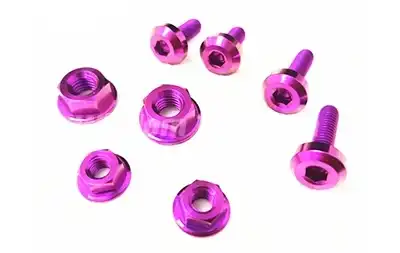
Titanium screws are used most often in naval applications. Bolts for the engine bay that are made using CNC cutting and have rolled threads are very resistant to stress even when they are constantly vibrating. In addition to being available in M6, M8, and M10 sizes, these bolts can be polished and anodized in black, gold, rainbow, blue, or purple to suit personal taste or for identification reasons. They will still work as expected.
Titanium hardware includes rigging parts, heat exchanges, pumps, and valves in addition to fasteners. Shipbuilders use titanium anchor systems, cleats, and deck fittings that keep expensive teak boards from getting rusty. Titanium pipe systems and flanges are used on offshore drilling sites because steel ones would quickly break down when exposed to hydrogen sulfide.
Manufacturing Processes for Marine-Grade Components
Careful material choice and precise manufacturing are the first steps in making high-quality titanium hardware. CNC machining makes it possible to get very close to the limits that are needed for marine uses. A good fit stops galvanic corrosion and ensures steady performance. Instead of cut threads, rolled threads work-harden the material and align the grain structure along the thread outlines. This makes the fatigue life much better in coastal settings where loads are applied and removed many times.
The production process is finished with heat treatment and surface finishing. Polished finishes smooth out surfaces that are too rough, leaving spaces for bacteria or sea life to grow. Before parts are put to use, passivation processes make the protective oxide layer stronger, which makes them more resistant to rust.
Titanium Hardware vs Other Metals in Marine Applications
When purchasing naval hardware, experts must compare the beginning costs to the total costs over the product's lifetime. Titanium hardware costs more to buy than stainless steel or aluminum, but a thorough study shows that it has strong economic benefits over long service periods.
Performance Comparison with Stainless Steel
Marine-grade stainless steel, usually 316 or 316L, is pretty resistant to rust because it has chromium in it, which makes a protective layer on the surface. But salty chlorides can get through this shield and start corrosion in one place that spreads below the surface. Within three to five years of naval service, stainless steel parts often become weak because of crevice corrosion around fastener heads and pitting corrosion on uncovered areas.
Titanium completely gets rid of these failure causes. Its oxide layer forms right away and stays stable over a wider pH range than stainless steel can handle. Titanium is much lighter than stainless steel—Grade 5 titanium hardware weighs 43% less than stainless steel equivalents while being as strong as or stronger. This weight advantage builds up over time in big ships with thousands of fasteners that affect the total displacement.
Aluminum Alternatives and Limitations
Aluminum is often used in naval uses because it is lighter than titanium and costs less in comparison. Marine-grade aluminum alloys (5000 and 6000 series) don't rust as long as they are properly managed and kept away from metals that don't react with them.
The problem comes up in places with more than one metal. Aluminum is at the anodic end of the galvanic series, which means it corrodes more quickly when it is electrically linked to brass or stainless steel, which are more valuable metals. Titanium is near the noble end of the galvanic line, which is close to platinum. This solves the problem, but good insulation is still needed. Because titanium is much stronger than aluminum, it can carry the same amount of weight as bigger, heavier parts.
Lifecycle Cost Analysis
Titanium's value offer can be seen by breaking down total ownership costs:
Initial Investment: Titanium hardware costs three to five times more than marine-grade stainless steel hardware and eight to twelve times more than aluminum hardware. This price causes budget pushback when talking about buying things.
Maintenance Expenses: Stainless steel naval gear needs to be inspected regularly, replaced every so often, and protected with anti-seize compounds. Galvanic separation and coating upkeep are needed for aluminum. Titanium parts don't need much upkeep beyond simple cleaning, which cuts down on replacement processes and labor costs.
Service Life Extension: Titanium hardware that has been fitted correctly can last for 20 to 30 years without breaking down. In harsh naval settings, stainless steel usually needs to be replaced every 5 to 7 years. Titanium parts on a vessel last 25 years, so they don't need to be replaced three or four times, which would cost a lot in work, downtime, and dumping fees.
Weight-Related Savings: Every kilogram that is taken off of a ship saves fuel over the course of its life. When titanium hardware is fully installed, commercial ships that are used around the clock can save thousands of dollars a year on fuel costs.
When procurement teams figure out the net present value over the expected service life, the higher starting cost of titanium is much less than the savings in upkeep and operational benefits that add up over time.
Key Marine Applications of Titanium Hardware
Marine uses in the real world show that titanium hardware can work in a variety of situations. Understanding these use cases helps people who work in buying find chances in their own operations.
Commercial Shipbuilding and Vessel Construction
Titanium fasteners are being used in more and more important devices by modern factories. Titanium nuts are used in engine rooms because they don't rust when exposed to high temperatures, vibrations, and fuel fumes. Grade 5 titanium engine bay bolts with a tensile strength of up to 1050 MPa provide a stable clamping force that keeps the gaskets in place during repair intervals.
The tools for decks is another great use. Stanchions, cleats, and fence systems made of titanium don't stain or damage expensive deck materials like rust does. This benefit is especially important for yacht builders because rust spots ruin the look that high-end clients want. Titanium parts can have a smooth finish that keeps their good looks without having to be cleaned or coated all the time.
Offshore Oil and Gas Infrastructure
Offshore platforms work in what is probably the roughest setting in the ocean. Every material has to deal with constant ocean spray, extreme weather, and drilling chemicals that are very toxic. When things are like this, titanium gear really shines.
A case study of a North Sea drilling rig showed how well titanium fasteners worked after 15 years of steady use. Stress corrosion cracking meant that the original stainless steel parts had to be replaced every four to five years. However, the titanium options met all the requirements during the study time. Maintenance teams reported no breakdowns due to rust and little power loss, which shows that the clamping force stayed strong even after being exposed to harsh conditions.
Custom Solutions for Specialized Marine Equipment
OEM makers that work with marine markets are asking for unique titanium parts that are made to meet specific performance needs more and more. Racing boat builders choose titanium rigging gear because it is light and lowers weight in the air, which makes the yacht more stable and improves its performance. Custom CNC-machined parts let you get the best strength, weight, and aerodynamic shapes, which isn't possible with normal catalog parts.
Desalination equipment is used for another specific task. Titanium heat exchanger tubes and fixing systems don't rust in strong saltwater solutions, which does to stainless steel in just a few months. Titanium is better at transferring heat than other materials, which makes equipment more efficient and lasts longer.
We have made titanium products just for clients in the water industry. Our CNC cutting can make complicated shapes with very tight tolerances, and our experienced engineering team can help you choose the right materials and make the best designs. We are in the Baoji Titanium Valley in Shaanxi Province, which is home to China's biggest titanium industry area. Our supply lines include titanium sponge, ingots, bars, plates, tubes, and forgings. Because of this connected environment, we can find the best materials and make unique parts that meet strict marine standards.
Conclusion
Titanium hardware changes naval uses because it will not rust, is very strong for its weight, and lasts a very long time in harsh saltwater settings. Even though the starting costs are higher than with traditional materials, lifecycle analysis shows that there are strong economic benefits through lower upkeep, longer service life, and more efficient operations. Grade 5 titanium alloys can give parts tensile strengths of over 1000 MPa while requiring only half as much weight as steel alternatives. Titanium solutions improve performance while lowering total ownership costs in a wide range of marine applications, from commercial shipbuilding to offshore platforms and special marine equipment. Strategic procurement that focuses on supplier quality systems, production skills, and expert support makes sure that marine operations get parts that are reliable and designed to work in tough circumstances.
Partner with Wisdom Titanium for Superior Marine Components
Wisdom Titanium makes high-performance titanium fasteners and custom CNC parts for naval uses that are very tough. Since 2016, we've worked with clients around the world who need high levels of corrosion protection and dependability in saltwater settings. Our plant is in Baoji Titanium Valley, which is China's most important titanium industry area. It gives us access to integrated supply chains that cover the whole production process, from making titanium sponge to finishing parts.
Our ISO 9001-certified production methods make sure that both standard and custom naval hardware are always of the same high quality. We make Grade 5 titanium engine bay bolts (M6, M8, M10) that can withstand tension loads of up to 1050 MPa. These bolts are CNC-machined for precision and have rolled threads for better resistance to wear. Custom anodizing in black, gold, rainbow, blue, or purple, as well as polished finishes, meet both practical and aesthetic needs.
For your unique marine uses, experienced engineering support helps you choose the right materials and make the best designs. We keep a large stock of raw materials, which lets us offer low prices and reliable wait times. Our team provides quality goods and quick service, whether you need a lot of standard fasteners or parts that are machined exactly to your specs. Get in touch with our experts at sales@wisdomtitanium.com to talk about your marine hardware needs with a reputable titanium hardware supplier that wants you to succeed.
FAQ
Why choose titanium over stainless steel for marine fasteners?
Titanium doesn't have the pitting and cavity rust that happens to stainless steel in saltwater. Marine-grade stainless steel (316/316L) is pretty resistant to corrosion at first, but over time, chloride ions can get through the chromium oxide layer and start localized corrosion. The oxide layer on titanium stays solid forever, protecting it from erosion. Titanium is 40–45% lighter than stainless steel, which makes vessels work better, and because it is stronger, smaller parts can hold the same loads. Even though titanium costs more at first, it ends up being more cost-effective in the long run because stainless steel parts need to be replaced every 5 to 7 years, but titanium parts can be used for decades.
What maintenance does titanium hardware require in marine environments?
Titanium doesn't need as much upkeep as other materials. Rinsing with fresh water regularly gets rid of salt deposits, and light soap and soft brushes get rid of organic leftovers. Visual inspections make sure that fasteners are tight and look for damage from impacts, but they don't have to look for signs of rust. Use insulating plugs to separate titanium from metals that react more negatively with electricity, like aluminum, to stop galvanic rusting. Check the right torque during installation to keep the bolts from coming loose when the system shakes. These easy steps will make the already long-lasting titanium hardware last even longer in harsh marine circumstances.
How do I justify titanium's higher cost to stakeholders?
Present a lifetime cost study that shows the total costs of ownership instead of just the purchase price. Keep track of the costs of maintaining your current products, such as the time and money needed for inspections and replacements, as well as the costs of downtime. Figure out how much fuel the craft will save by losing weight over its entire operating life. Figure out how many corrosion-related problems there are and how they affect operations. Compare the net present value of titanium hardware that lasts 20 to 30 years to options that need to be replaced every 5 to 7 years. Include the costs of removal and the environmental benefits of parts that last longer. This thorough study usually shows titanium's cost benefits within 7–10 years, with big saves continuing for the rest of its useful life.
References
- Boyer, R., Welsch, G., & Collings, E.W. (1994). Materials Properties Handbook: Titanium Alloys. ASM International, Materials Park, Ohio.
- Schutz, R.W. & Watkins, H.B. (1998). "Recent developments in titanium alloy application in the energy industry." Materials Science and Engineering A, Volume 243, Issues 1-2, pp. 305-315.
- Cotton, J.D. (2015). "Titanium Alloys for Marine Applications." Advanced Materials & Processes, ASM International, Volume 173, Issue 5, pp. 16-19.
- Lutjering, G. & Williams, J.C. (2007). Titanium: Engineering Materials and Processes (2nd Edition). Springer-Verlag, Berlin Heidelberg.
- Francis, R. (2010). The Corrosion of Copper and Its Alloys: A Practical Guide for Engineers. NACE International Press, Houston, Texas.
- Donachie, M.J. (2000). Titanium: A Technical Guide (2nd Edition). ASM International, Materials Park, Ohio.