
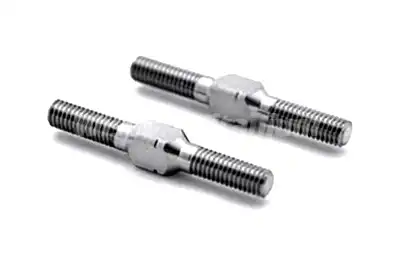
A turnbuckle is a mechanical device that enables for the accurate adjustment of tension in rigging systems, cables, and wires by means of a basic yet brilliant mechanical principle. Terminal fittings like hooks, eyes, or jaws are attached to the device's central threaded body, which has opposite-handed threads on each end. The tension in the linked cables is adjusted when you turn the central body because the opposing threads pull or push the end fittings closer together or apart at the same time. Titanium turnbuckles have the same basic mechanism as their steel counterparts, but they are far more useful in harsh industrial settings due to their higher strength-to-weight ratios and more resistance to corrosion.
Titanium turnbuckles are now the go-to product on a worldwide scale due to their superior corrosion resistance, strength, and lightweight attributes compared to traditional steel turnbuckles. Among procurement experts who value reliability of performance and long-term durability in demanding operational settings, these innovative tensioning devices are quickly becoming popular. When corrosion, weight restrictions, or environmental stress factors cause conventional steel components to break early, these turnbuckles are a great alternative.
How Does a Turnbuckle Work?
Turnbuckles are based on a simple mechanical system that is both complex and easy to understand. It has three main parts that all work together to provide accurate control over the tension.
Core Components and Mechanical Operation
Thanks to its cleverly engineered threading system, the center body of the turnbuckle houses the most important component of its functionality. At its core, this barrel has threads that run in opposite directions; specifically, there are right-handed threads on one end and left-handed threads on the other. The mechanical advantage that allows both end fittings to move simultaneously when the central body rotates is created by this combination of opposing threads.
Where turnbuckles meet other rigging components, such as cables or wires, is at the end fitting. These fittings are available in a variety of forms, such as eyes for permanent installations that require bolt-through connections, jaws for gripping flat surfaces or specialized hardware, and hooks for rapid attaching applications. The connection techniques available to users and the turnbuckle's usefulness for specific applications are both affected by the choice of end fitting arrangement.
The threading mechanism works by turning the central body in one direction, which pulls the end fittings closer together and increases tension in the connected system. This is done by simultaneously advancing both threaded rods into the barrel. When you turn the system counterclockwise, the two rods separate from the main body, lowering the tension in the system.
Types and Application Versatility
Users are able to visually inspect the threaded rods while using open-body turnbuckles, thanks to their barrel design. This allows them to monitor thread engagement and guarantee safe working conditions. For applications requiring frequent inspections due to safety concerns, the open-body design's openness is invaluable.
Ideal for use in extreme environments where contaminants could damage thread integrity, closed-body turnbuckles offer superior protection for internal threads because to their sealed barrel design. Architectural uses where aesthetics are important can also benefit from the enclosed design's enhanced aesthetic appeal.
While hook-to-eye combinations offer versatility for varied connection requirements, specialized configurations like jaw-to-jaw assemblies excel in applications needing flat surface connections. Different configurations cater to different operational needs and installation limits with their own unique advantages.
Why Choose Titanium Turnbuckles?
When performance and durability are of the utmost importance in a challenging application, titanium turnbuckles are the superior choice because to their many practical benefits.
Superior Corrosion Resistance Properties
Titanium's inherent capacity to develop a protective oxide layer upon exposure to oxygen is the source of its remarkable corrosion resistance. Titanium turnbuckles are especially useful in marine conditions where saltwater exposure would quickly deteriorate steel components because of its passive layer's exceptional protection against chloride assault. Not only is it resistant to corrosion in marine settings, but it is also useful in chemical processing conditions, where harmful chemicals often erode more conventional materials.
You may save money on maintenance and get more use out of corrosion-resistant turnbuckles because of how long they last. In corrosive environments, stainless steel turnbuckles may need to be inspected often and even replaced. Titanium alternatives, on the other hand, keep their structural integrity and functional performance for much longer, which means they reduce total cost of ownership even though they are more expensive initially.
Exceptional Strength-to-Weight Performance
Titanium alloy Ti6Al4V has a density that is around 45 percent lower than that of steel, but it has tensile strength that is on par with numerous steel grades, making it an ideal material for high-performance turnbuckle production. Applications where every pound counts, such car racing modifications, aeronautical ground support equipment, and portable rigging systems, are made possible by this extraordinary strength-to-weight ratio.
When it comes to mobile apps, where operators have to constantly fiddle with tensioning hardware, the weight savings really shine. In a variety of industrial settings, lighter components allow for more efficient installation processes, less operator fatigue, and safer handling.
Maintenance and Longevity Considerations
The remarkable resilience to environmental degradation of titanium allows for uncomplicated techniques to properly maintain titanium tensioning devices. Surface pollutants can be easily removed with regular washing using gentle detergents, eliminating the need for harsh chemical treatments that may be required for steel equivalents. Because rust doesn't form, protective coatings don't need to be renewed or maintained as often.
Lubricating the threads with the right compounds keeps the turnbuckle running smoothly and galling between the mating surfaces at bay for its entire service life. Extended operating life and constant performance characteristics are contributed by the stable oxide layer on titanium surfaces, which offers natural lubrication and lowers friction during adjustment operations.
How to Use Titanium Turnbuckles Effectively?
Titanium turnbuckles have special mechanical and material features that must be taken into consideration during installation and operation in order to achieve their full performance potential.
Installation and Adjustment Procedures
Make sure there is no damage to any parts and that the thread engagement works properly without binding or too much resistance during the pre-installation check. While titanium's exceptional machinability allows for tight thread tolerances, the key to long-term maximum performance is careful handling during installation.
To avoid thread stripping and guarantee proper load distribution, thread engagement criteria establish minimum engagement lengths. Turnbuckles made of titanium must follow rigidly to engagement criteria in order to preserve design safety factors, in contrast to steel turnbuckles that can handle minor thread engagement.
Systematic tension application utilizing calibrated equipment is a part of adjustment procedures for when precision loading is needed. Fine tension changes are made possible by high-quality titanium turnbuckles because to their uniform thread pitch and easy operation.
Safety Considerations and Load Management
Improper selection of turnbuckles can result in component failure or safety hazards, therefore understanding load ratings is vital when specifying them for specific applications. The working load limitations of titanium turnbuckles made of Ti6Al4V alloy are comparable to or higher than those of steel equivalents, and they also have better fatigue resistance when subjected to cyclic loading.
When choosing a size, it's important to think about how it will be loaded both slowly and quickly, taking into consideration things like vibration, thermal expansion, and shock loads. The size range that is supplied allows for accurate matching to application needs while yet retaining necessary safety margins. This range includes M3, M3.5, M4, M4.5, and M5 configurations.
With UNF (Unified National Fine) and UNC (Unified National Coarse) thread types being compatible, it's easy to integrate with current hardware systems and gives you alternatives for bespoke installations. Coarse threads allow for quicker installation and better tolerance to field conditions, but fine threads give better holding power and more exact adjustment capability.
Procurement Guide for B2B Clients: Buying Titanium Turnbuckles
If you want to buy titanium turnbuckles successfully, you need to know how the market works, what suppliers can do, and what specifications you need so you can choose the right products and have a solid supply chain.
Bulk Purchasing and Customization Options
Procurement may be made cost-effective for both production applications and maintenance inventory needs with minimum order quantities starting at 100 pieces for basic configurations. Benefits of purchasing in bulk include lower per-unit prices, availability guarantees, and priority scheduling of manufacturing to meet project timing needs.
We offer a wide range of customization services to meet the specific needs of your application, including dimensional adjustments, specialized end fitting configurations, and surface treatment options. Complex installations can be easily organized and identified using color-coding systems, which are made possible by the availability of many color options such as red, blue, black, rainbow, purple, gold, burnt blue, and green.
The compatibility with international standards and the ability to integrate with existing hardware systems are both made possible by the thread type flexibility between UNC and UNF specifications. For unique uses that don't fit the norm, we can make threads to your exact specifications.
Quality Assurance and Supplier Selection
Documentation for material certification should confirm that the mechanical properties and composition of the Ti6Al4V alloy meet or exceed the requirements of the application. To back up quality assurance initiatives and regulatory mandates, reputable suppliers give detailed material test results and compliance certificates.
Precision machining, correct heat treatment, and thorough inspection methods are all part of the manufacturing process controls that guarantee a constant product quality. In addition to improving the surface's aesthetics, the polished finish helps keep the surface resistant to corrosion and makes it easier to work with.
Managing inventories, maintaining consistent lead times, and providing fast customer support are all parts of a reliable supply chain that make purchasing easier. Reliable vendors keep sufficient quantities of standard configurations in stock and offer reasonable turnaround times for special requests.
Conclusion
Turnbuckles work by allowing the user to precisely vary the tension with a simple rotation of the central body, made possible by their clever opposing-thread construction. Extremely high-stress, high-reliability, and corrosion-resistant applications benefit greatly from this basic mechanism, which is further improved by titanium's outstanding material characteristics. Industrial, maritime, and specialty applications demanding long-term dependability are finding titanium turnbuckles increasingly desirable because to their mix of mechanical efficacy and sophisticated materials. To ensure safe and efficient operations across varied applications, procurement experts must understand the right selection criteria, installation processes, and maintenance requirements of these modern tensioning devices. Only then can they optimize their benefits.
Upgrade Your Tensioning Systems with Premium Titanium Solutions
Baoji Wisdom Titanium Industry and Trading Co., Ltd stands ready to revolutionize your tensioning applications with our premium titanium turnbuckles manufactured to exacting ISO 9001:2015 standards. Located in Baoji Titanium Valley, Shaanxi Province, we operate from China's most comprehensive titanium industry cluster, providing unmatched access to advanced materials and processing capabilities. Our Ti6Al4V turnbuckles deliver superior performance across sizes M3 through M5, with customizable colors and thread specifications that match your exact requirements. As a trusted titanium turnbuckles supplier, we maintain competitive pricing and ample inventory with 100-piece minimum orders that support both production and maintenance needs. Contact our expert team at sales@wisdomtitanium.com to discuss your specific requirements and discover how our advanced tensioning solutions can enhance your operational performance.
FAQ
What makes titanium turnbuckles superior in marine environments?
Titanium's exceptional resistance to chloride corrosion makes it ideal for saltwater applications where stainless steel components often experience pitting and crevice corrosion. The natural oxide layer on titanium provides long-term protection without requiring protective coatings or frequent maintenance interventions that steel alternatives demand.
How do maintenance requirements compare between titanium and steel turnbuckles?
Titanium turnbuckles require significantly less maintenance due to their corrosion resistance and stable surface properties. While steel turnbuckles need regular inspection for rust, protective coating renewal, and potential replacement, titanium alternatives maintain their performance with basic cleaning and occasional lubrication of threaded components.
What guidelines help select the correct size and load capacity?
Size selection should account for both working load requirements and safety factors, typically maintaining load limits well below ultimate strength specifications. The available M3 through M5 size range provides options for various applications, with larger sizes offering higher load capacities and smaller sizes providing weight savings and compact installation advantages.
Can titanium turnbuckles be customized for specific applications?
Comprehensive customization options include dimensional modifications, specialized end fitting configurations, surface treatments, and color options that address unique application requirements. Custom thread specifications and specialized alloy compositions can be accommodated for applications requiring non-standard performance characteristics.
References
1. American Society for Testing and Materials. "Standard Specification for Titanium and Titanium Alloy Bars and Billets." ASTM International, 2019.
2. Boyer, R.R. "An Overview on the Use of Titanium in the Aerospace Industry." Materials Science and Engineering Journal, Vol. 213, 2018.
3. Marine Engineering Research Institute. "Corrosion Resistance of Titanium Alloys in Marine Environments." Naval Architecture Quarterly, Issue 45, 2020.
4. Industrial Rigging Safety Council. "Guidelines for Turnbuckle Selection and Application in Industrial Settings." Safety Engineering Publications, 2021.
5. Peters, M. and Leyens, C. "Titanium and Titanium Alloys: Fundamentals and Applications." Engineering Materials Handbook, 3rd Edition, 2019.
6. Structural Engineering Association. "Load Rating and Safety Factors for Tensioning Hardware in Construction Applications." Technical Standards Publication, 2020.