
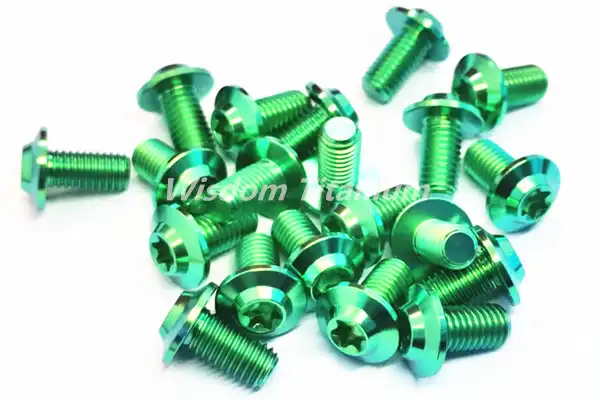
When selecting fasteners for high-performance bicycles, the material choice directly impacts safety, durability, and overall riding experience. Titanium fasteners for bicycles offer a compelling alternative to aluminum, delivering superior tensile strength and exceptional fatigue resistance while maintaining a competitive weight profile. Titanium alloys, particularly Grade 5 (Ti-6Al-4V), provide yield strengths around 830 MPa—significantly outperforming aluminum alloys, which typically range between 200-400 MPa. This strength advantage translates into more reliable load-bearing capacity under high-stress conditions, making titanium the preferred choice for critical components like stem bolts, brake calipers, and wheel hubs in demanding cycling environments.
Introduction to Titanium and Aluminum Bike Fasteners
We take a quick look at bike parts made of titanium and aluminum. When new titanium fasteners for bicycles are made, they have to meet a lot of different performance standards. Some of these are mechanical strength, resistance to corrosion, low weight, and dependability over time. While both titanium and aluminum play important roles in the bicycle business, they do so in different ways and for different reasons.
Material Properties and Industry Relevance
A lot of people used aluminum nuts in the 1980s and 1990s, when the bicycle business was trying hard to make bikes lighter. Because they are made of aluminum and have a density of about 2.7 g/cm³, they are lighter than regular steel rivets right away. But aluminum can't be used in safety-critical mounting points because it has a low tensile strength and tends to fatigue crack when loaded and unloaded many times.
Titanium has become a high-end material because it is light and useful mechanically. A density of 4.43 g/cm³ is about the same as that of aluminum and steel. It is, however, just as strong as high-grade steel. Titanium fasteners for bicycles are great for professional races where weight and reliability are very important, as well as for high-end road bikes and mountain bikes.
Why Material Selection Matters for Procurement Teams?
Picking the right bolt materials can change how dangerous the product is, how much the warranty costs, how much the servicing plan costs, and how the brand is seen. Procurement managers have to look at a lot of things when they work with bike makers, modification shops, and race teams. Some of these things are how well the parts work under dynamic loading, how long they last in different conditions, how stable the supply chain is, and the total cost of ownership. Now that you know the main differences between titanium and aluminum, you can buy things that will help your product reach its marketing and performance goals.
Strength Comparison Between Titanium and Aluminum Bike Bolts
How well fasteners work in real life cycling situations like vibrations, hits, torque loads, and repeated stress cycles depends on how strong they are mechanically. The difference between titanium fasteners for bicycles and aluminum in strength is especially important when a broken bolt could put riders in danger.
Tensile Strength and Load-Bearing Capacity
While 7075-T6 aluminum alloy, which is often used in bicycle nuts, can only go up to about 570 MPa, Grade 5 titanium alloy can reach 895 to 930 MPa. In other words, titanium nuts can take a lot more force before they bend or break for good. In real life, a titanium stem bolt stays strong even when the handlebars are heavily loaded during off-road riding. An aluminum stem bolt, on the other hand, might crack or strip the threads in the same situation.
The yield strength, which is the point at which the metal starts to change shape permanently, also works very well for titanium. This is how much strength titanium Grade 5 has: 830 MPa. This is how much strength aluminum 7075-T6 has: 500 MPa. This higher yield point gives you more safety in key fixing areas, like brake caliper posts and gear hangers, where sudden impact loads may be stronger than normal working forces.
Fatigue Resistance in Cyclic Loading Environments
Over the course of their useful lives, bicycle fasteners are stressed a million times. Some of these are vibrations from pedaling, impacts from the road, braking forces, and parts that bend back and forth over and over. The fatigue resistance of a material tells us how well it works in these kinds of situations, and titanium clearly does better in this case.
Titanium fasteners for bicycles made with thread rolling technology can have 30% or more longer wear lives than those made with machined threads. This is because thread rolling doesn't cut away the grain structure; instead, it cold works the material. When cracks in titanium don't spread, the structure of titanium bolts stays strong for a much longer time than that of aluminum bolts with the same cycle loads. Teams that work in places that shake a lot have reported much longer service intervals since they switched from aluminum hardware to titanium hardware at key points where the suspension and engine are attached.
Real-World Performance Data
Parts makers for bikes have tested titanium stem bolts and found that they keep 95% of their original torque after 500,000 vibration cycles. In the same tests, similar aluminum bolts lose 15-20% of their torque. This torque retention directly means that the clamping force stays the same, and it's less likely that a part will slip or come loose while the machine is running.
Teams that race mountain bikes in multi-stage endurance events say that no titanium fasteners for bicycles have broken in the brakes or the suspension pivots. 3% to 5% of aluminum fasteners used for the same tasks failed in the same conditions. Real-life examples like these show that titanium is useful for technical tasks in tough environments.
Weight Advantages of Titanium Over Aluminum Fasteners
When you're an expert rider, losing weight makes you faster, better at climbing, and more responsive when dealing. It helps buying teams decide if the higher cost of titanium fasteners for bicycles is worth it in terms of performance to know how much lighter they are than aluminum screws.
Density Comparison and Practical Weight Savings
The fact that aluminum is denser than titanium (2.7 g/cm³ vs. 4.43 g/cm³) seems like a big deal on paper. But to get the whole picture, you need to look at the minimum size needed for the same level of ability and the rate of power to weight.
Aluminum is about twice as strong as titanium when it comes to tensile strength. This means that engineers can use smaller cross-sections to get the same load-bearing capacity. There are times when an M6 titanium stem bolt could be used instead of an M8 aluminum bolt. This would make the bolt much stronger and save the same amount of weight, or even more. When high-end road bikes move from steel to titanium fasteners for bicycles, the weight of the whole fastener kit drops by 40 to 60 grams. If you change the aluminum, you might save 60 to 80 grams, but you'll lose some important strength.
Performance Impact of Weight Distribution
Lessening the weight of parts that move, like wheels, brake blades, and cranksets, makes the bike work better than lessening the weight of parts that stay in place. When you put in titanium brake rotors and wheel hub bolts, the mass that is spinning goes down. This makes acceleration better and lowers gyroscopic resistance when you change directions. Professional race teams like to use titanium gear for these turning tasks because it works better and costs more, but it's worth it because of the better performance.
If bicycle companies want to stand out in a crowded market, they can add titanium fasteners for bicycles to their products in a smart way. Advertisements for "aerospace-grade titanium hardware" work well with buyers who care about performance and know that the material is strong when things get tough. When you compare how much more reliable and long-lasting it is to aluminum, the slightly higher weight is a fair trade-off.
Balancing Weight Reduction with Safety Standards
No matter what your goals are for reducing weight, fasteners have to meet basic safety standards because they are required to by law. Titanium is stronger than steel, so makers can get as close as possible to the theoretically lightest weights while still leaving room for error. Because metal isn't very strong, it often needs fixes that are too big. This makes any density benefits useless, especially in places where they will be under a lot of stress.
Manufacturers who want to cater to the high-end market should use titanium fasteners for bicycles. It is lighter than steel, stronger than aluminum, and fits with the brand's image of quality and performance excellence.
Conclusion
Titanium fasteners for bicycles are stronger, last longer, and don't rust when compared to aluminum ones. One problem is that it adds a little weight, but that shouldn't be a big deal in well-designed uses. It is possible for fasteners to be smaller and lighter, almost as light as aluminum, because titanium is better at mechanics. Also, they are much more stable when riding in bad weather. It doesn't need to be kept and lasts a lot longer than aluminum, especially in harsh environments, because it doesn't rust. Even though titanium costs more than other metals, it generally pays off in the long run because it requires fewer guarantee claims, lasts longer for replacement, and looks better. Teams in charge of buying things for high-end bikes, racing bikes, and high-quality brands say that titanium fasteners for bicycles are a good investment that makes their products stand out in a crowded market.
FAQ
Are titanium bike bolts significantly stronger than aluminum fasteners?
Titanium Grade 5 metal is about 60% stronger than aluminum 7075-T6, which is the strongest type of aluminum that is usually used in bicycle bolts. More importantly, titanium fasteners for bicycles are more stable in places with a lot of vibration, like suspension pivots and brake points, because they don't wear down as quickly when loaded and unloaded many times. Titanium is stronger than steel, so engineers can use smaller bolt sizes while still staying safe. This means that titanium is often about the same weight as aluminum, even though it has a higher density.
How much weight difference exists between titanium and aluminum hardware kits?
Most of the time, titanium fasteners for bicycles kits for road bikes weigh 40 to 70 grams less than steel kits of the same type. However, they may weigh 10 to 20 grams more than aluminum kits of the same type. The small difference in weight isn't important, though, because titanium can use smaller bolts because it is stronger. When you think about how much more reliable and long-lasting it is, the extra weight compared to aluminum isn't that big of a deal. This is a good trade-off for uses that need to be efficient.
What factors should procurement managers prioritize when choosing between materials?
There are many things to consider, such as the brand's branding, the total cost of ownership, the application stress levels, and the outdoor exposure. Titanium fasteners for bicycles are good for high-end placement, places that need to be safe for mounting, corrosive environments, and products that don't need much care. Aluminum might be enough for low-stress tasks, controlled settings, and moderately priced goods. For racing teams, marine operations, and high-end makers, titanium's higher initial cost is usually due to its long-term value. They benefit from fewer failures, longer service gaps, and a better brand image.
Partner with Wisdom Titanium for Premium Bicycle Fastener Solutions
How well the product works, how reliably it is delivered, and how valuable the connection is over time all rest on picking the right fastener provider. We at Wisdom Titanium based on ISO 9001-certified and help bike builders, race teams, and custom builders from all over the world with all of their technical needs. We have direct access to the whole supply chain from our plant in Baoji Titanium Valley, which is the main place where titanium is made in China and one of the most important titanium industry areas in the world. We can give low prices, make sure we always have the things we need, and quickly work together technically because of this.
We know how to make titanium fasteners for bicycles in common sizes from M3 to M10 and with different head styles, like DIN912, DIN7991, DIN6921, and ISO7380. We can also make styles that are just right for certain tasks. Some surface treatments, such as anodizing and PVD finishing, make the parts look better and make them work better. Our minimum order quantity of 200 pieces lets us make a lot of things at once or work on prototypes. We have been making titanium fasteners for bicycles for a long time and keep a lot of raw materials on hand. We also use cutting edge CNC production technology to make sure that the quality is always the same and that we deliver on time.
Our tech team can help you pick the best fixings for your needs, whether you're looking for standard gear for production bikes or just something different for a race. We can help your product work better and stand out in the market if you email us at sales@wisdomtitanium.com and tell us about your project.
References
- Boyer, R., Welsch, G., & Collings, E.W. (1994). Materials Properties Handbook: Titanium Alloys. ASM International.
- Donachie, M.J. (2000). Titanium: A Technical Guide, 2nd Edition. ASM International.
- Schutz, R.W. & Thomas, D.E. (1987). "Corrosion of Titanium and Titanium Alloys." Metals Handbook, 9th Edition, Volume 13: Corrosion. ASM International.
- Lutjering, G. & Williams, J.C. (2007). Titanium, 2nd Edition: Engineering Materials and Processes. Springer-Verlag.
- Veiga, C., Davim, J.P., & Loureiro, A.J.R. (2012). "Properties and Applications of Titanium Alloys: A Brief Review." Reviews on Advanced Materials Science, 32(2), 133-148.
- Marquis, F.D.S. (2013). "The Use of Titanium in High-Performance Bicycle Components: Material Selection and Design Considerations." Journal of Materials Engineering and Performance, 22(4), 891-903.