
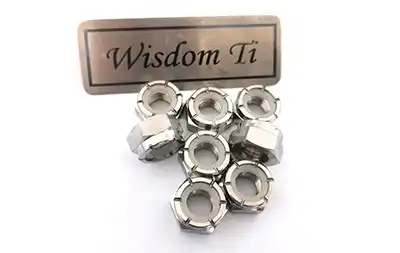
Nylon lock nuts are made to stay in place because they have a static charge built into them. A cloth collar or plug that is built into the top of the nut is what makes them work. It's tight against the bolt's threads when it goes through because the nylon is there. When the bolt tries to turn because of shaking, heat expansion, or mechanical stress, this steady friction stops it. This tried-and-true design has been made better with titanium nylon lock nuts. They have the closing strength of nylon and the high strength-to-weight ratio and corrosion protection of titanium. Because of this, they are very important in aircraft assemblies, racing suspension systems, and naval rigging where they need to be reliable in harsh situations.
Titanium Nylon Lock Nuts: What They Are and How They Work
The Basic Structure and Locking Principle
A titanium nylon lock nut is made up of two main parts: a hexagonal titanium body and a nylon ring near the top. The structure is held together by the metal body and the fabric plug. When you put a bolt into the nut, the nylon ring bends a little and grabs the threads of the bolt tightly. The nut has to overcome friction before it can turn because of this interference fit. This keeps the fastener in place even if it is moving or being loaded and emptied all the time.
Why Titanium Changes the Game
Because titanium is a unique metal, regular nylon insert lock nuts work better with them. Because titanium screws are only about 60% as thick as steel, they make parts much lighter. When every gram counts, this is especially helpful in fast cars and planes. This is the grade of titanium we use most often in our hot-forged hex titanium nylon lock nuts. It has a tensile strength of over 130,000 psi and is very hard to wear down. This metal doesn't break when it's stretched over and over again. This is a very important trait for brake caliper bolts and wheel hub parts that are being loaded and unloaded all the time.
Performance Under Variable Conditions
Lock nuts made of all metal only work when the threads bend or pinch. Nylon insert lock nuts, on the other hand, keep their binding force constant across a wide temperature range. Nylon works well from -40°F to 250°F, which is a temperature range that is used a lot in industrial and vehicle settings. The low heat growth rate of titanium makes it safer because it keeps its shape even when the temperature changes. When steel rivets are used in saltwater, they break down quickly. Titanium's natural oxide layer, on the other hand, protects against rusting better than any other material. This means that rust-welding is not needed, and upkeep plans are easier to follow.
Comparing Titanium Nylon Lock Nuts with Other Lock Nut Types
Titanium vs. Steel and Stainless Steel Options
When you compare different materials for screws, it's easy to see that titanium is stronger than most of them. If so, a steel nylon lock nut might have the same thread contact strength as a titanium one. However, it is almost twice as heavy. When parts need dozens or even hundreds of screws, this extra weight adds up quickly. This changes how much fuel cars use and how much weight drones can take. That being said, titanium is still better at keeping out rust than stainless steel in places where there is a lot of salt. If stainless bolts are in salt water for more than 500 hours, they can get stress corrosion cracks and crevice corrosion. titanium nylon lock nuts, on the other hand, won't break after years of being used underwater.
All-Metal Lock Nuts vs. Nylon Insert Design
Torque nuts and cone-shaped nuts are two types of all-metal lock nuts. To make a binding force, they permanently bend metal threads or chains. These clips can handle higher temperatures than nylon insert ones, but they stop working after the first use most of the time. When the metal threads are first tightened, they bend. This makes it easier to take them off and put them back on. On the other hand, nylon insert lock nuts keep their locking force over time as long as the nylon ring doesn't get broken. They save money because they can be used more than once. This makes them better for things that need to be fixed or changed often, like motorcycle gear nuts or bicycle handlebar clamps.
Temperature and Strength Thresholds
You can choose the right screws if you know the working limits. Normal nylon plugs break down above 250°F, so they can't be used to directly connect the turbocharger or the exhaust system. But nylon works well for parts that don't need to withstand high temperatures, like brake caliper bolts, wheel lug nuts, and frame pins. Titanium Grade 5 lock nuts can handle tension loads of up to 170,000 psi when their force is set correctly. This is more than what is needed for most uses on cars and motorcycles. They should look at the test results and material approvals to make sure the screws can handle the project's load and temperature.
Key Applications and Industry Use Cases for Titanium Nylon Lock Nuts
Aerospace and UAV Assembly
The airplane business needs nuts that are strong and never break, while also keeping the weight of the frame low. titanium nylon lock nuts hold important parts in place on the upper controls of an airplane, the landing gear systems, and the clamps that hold electronics. They don't interact with navigation devices or electrical tools because they aren't magnetic. This is an important point that is often missed when picking commercial fasteners. Unmanned aerial vehicles (UAVs) that lose weight do a lot better. If you use titanium fasteners instead of steel ones, you can add several minutes to your flight time, which is great for jobs like carrying and tracking.
High-Performance Automotive and Motorsports
Weight that isn't sprung has an immediate impact on how the car moves and how smoothly the tires touch the road. Titanium brake disc bolts and wheel lug nuts make the moving parts lighter, which helps the car go faster and stop better. Teams change every steel part they can find in Formula 1 and MotoGP races, where the rules allow titanium screws, to get small benefits that add up to lap times that can be measured. Custom auto shops that work on supercars like titanium gear because it makes the cars go faster and looks good because natural titanium gives visible parts a unique finish.
Marine and Offshore Equipment
Saltwater rust makes normal screws break after a few months, which costs a lot of money and puts people in danger. Because chlorine doesn't harm titanium nylon lock nuts, they are great for use on outboard motor mounts, boat gear hardware, and sensor arrays that are out at sea. Waves can make links shake, but their locking system keeps them from coming loose. During long ocean activities, this keeps important links safe. Shipbuilders and naval repair experts see titanium screws as an investment that pays off in the long run because they last longer and need less maintenance.
Industrial Machinery and Robotics
When industrial equipment is used all the time, it makes movements that can eventually loosen standard screws. Titanium nylon lock nuts keep the binding force in parts of CNC machines, joints for robotic arms, and transport system links. Custom size options let you work with bolt patterns that aren't standard, and ISO 9001 certification makes sure that the quality will stay the same throughout all production runs. Authorized companies like Wisdom Titanium help OEM makers choose the right screws and give them advice on torque requirements. These companies also give them the compliance paperwork that officials need to check their work.
Conclusion
Nylon lock nuts are made by combining titanium's unmatched strength, resistance to rust, and light weight with tried-and-true sealing technology. Even in the worst situations, these screws work very well. There are a lot of uses for titanium nylon lock nuts that make them worth the money, from aerospace systems that need to be reliable all the way through to racing where every gram counts. If people who work in procurement know about material grades, best installation practices, and source standards, they can make better decisions that improve the quality of the product and the efficiency of the business. When companies keep pushing the edges of what's possible, working with approved manufacturers is the only way to make sure you get the high-quality screws that modern engineering needs.
Partner with a Trusted Titanium Nylon Lock Nuts Manufacturer
For more than eight years, Wisdom Titanium has been making titanium fasteners for companies all over the world that work in airplanes, cars, motorcycles, and boats. We make hot-forged hex titanium nylon lock nuts from high-end Grade 5 titanium at our plant in Baoji Titanium Valley, which is ISO 9001-certified. This makes sure that each batch has the same level of quality. We keep stock in sizes M3 through M24 that is ready to ship at low factory prices. Because the order must be at least 100 pieces, we can finish tasks quickly without lowering the quality.
When you buy something from us, our engineering team helps with every step. They choose the right materials and power specs, make sure the right size is used, and handle all the paperwork that needs to be approved. We're reliable and have the knowledge your projects need, whether you're putting together a race team, making marine equipment better, or looking for OEM parts. You can email sales@wisdomtitanium.com or go to wisdomtitanium.com to talk about your needs and find out how our titanium fastener options can help your product work better.
FAQ
Can titanium nylon lock nuts be reused after removal?
Titanium nylon lock nuts can be reused more than once, but the nylon part wears out each time they are put in. Makes them less useful. Before reinstallation, it's important to take a look and see if any of the nylon rings are bent or torn. In non-critical situations, many engineers say that screws should only be used three times. In safety-critical systems, like brake units or structural links, they should be changed right away though. Testing the escape force with a torque wrench is solid proof of the ability to stay locked.
What temperature range can nylon insert lock nuts withstand?
Standard nylon plugs work well in temperatures between -40°F and 250°F, which is hot enough for most uses in cars, motorcycles, and factories. Once heated above 250°F, nylon starts to get loose and lose its grip. This means that these screws aren't great for exhaust systems or engine parts that get very hot. Titanium's properties stay stable well past this range, but the nylon plug's properties start to change. If you need to be able to handle higher temperatures, you might want to think about all-metal lock nuts or other ways to close things.
What certifications should buyers request when sourcing titanium fasteners?
Purchasing teams should ask for material test records (MTRs) that show titanium metals meet the standards set by ASTM B348 or AMS 4928. Having ISO 9001 approval shows that the business stays up to date on how to handle quality. Dimensional inspection reports are used to make sure that the threads and nylon pieces are all the same. Paperwork that links each batch to a specific lot of materials makes it easy to move quickly if there are problems with the quality. Customers can be sure that the screws they buy will work as planned because of these certificates. They help businesses follow the rules.
References
- American Society for Testing and Materials. (2021). ASTM B348: Standard Specification for Titanium and Titanium Alloy Bars and Billets. West Conshohocken, PA: ASTM International.
- Donachie, M. J. (2000). Titanium: A Technical Guide, 2nd Edition. Materials Park, OH: ASM International.
- Bickford, J. H. (2008). Introduction to the Design and Behavior of Bolted Joints, 4th Edition. Boca Raton, FL: CRC Press.
- Society of Automotive Engineers. (2019). AMS 4928: Titanium Alloy, Bars, Wire, Forgings, Rings, and Drawn Shapes 6Al-4V Annealed. Warrendale, PA: SAE International.
- Boyer, R., Welsch, G., & Collings, E. W. (1994). Materials Properties Handbook: Titanium Alloys. Materials Park, OH: ASM International.
- Barrett, R. T. (1990). Fastener Design Manual. NASA Reference Publication 1228. Washington, DC: National Aeronautics and Space Administration.