
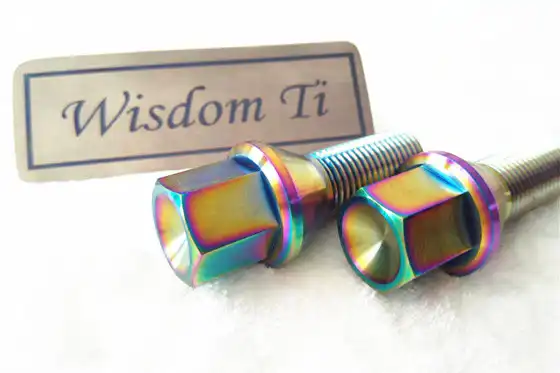
The 60-degree tapered interface on the conical seat design makes it easy to center the seat when installing it. This geometric arrangement makes sure that the load is spread evenly throughout the wheel mounting surface. When the tapered interface is appropriately torqued, it creates an even clamping force that keeps wheels in place even in tough situations. When you drive fast, the wheels of your car are put under a lot of stress, therefore it's important to have the right seat geometry to keep control of the car and give the driver confidence.
Understanding the Engineering Behind Conical Seat Geometry
The 60-degree conical taper represents industry standardization developed through decades of automotive evolution. This specific angle balances multiple engineering requirements simultaneously. The taper creates progressive contact that guides the bolt into perfect alignment as torque increases. Unlike flat or spherical seat designs, conical geometry provides visual and tactile feedback during installation, reducing the likelihood of cross-threading or improper engagement.
Self-Centering Mechanism and Load Distribution
Engineers designed the conical seat to exploit friction coefficients between titanium and aluminum wheel surfaces. As torque increases, the tapered surface slides along the wheel's matching conical recess. This interaction automatically centers the bolt on the hub axis, eliminating potential misalignment that could cause vibration or uneven wear. The continuous contact surface distributes clamping force evenly around the bolt circumference, preventing stress concentration that might crack either the wheel or the fastener.
Professional mechanics understand that proper load distribution directly affects wheel retention under acceleration, braking, and cornering forces. The conical interface creates a mechanical advantage that amplifies applied torque into substantial clamping pressure. This relationship allows titanium bolts to achieve equivalent holding force compared to heavier steel alternatives while using lower installation torque specifications. Reduced torque requirements minimize the risk of thread damage during repeated wheel installations.
Material Properties of Aerospace-Grade Titanium GR5
Titanium Grade 5 exhibits exceptional fatigue resistance, allowing titanium conical seat lug bolts to withstand millions of load cycles without developing cracks or permanent deformation. Racing environments subject wheel hardware to shock loads, thermal cycling, and vibration that would quickly degrade inferior materials. Titanium's crystalline structure maintains mechanical properties across temperature ranges from arctic conditions to the extreme heat generated during hard braking. Corrosion resistance remains excellent in salt spray, road chemicals, and moisture exposure that oxidizes steel components.
Performance Advantages Through Weight Reduction
Automotive engineers classify vehicle weight into sprung and unsprung categories. Sprung weight includes components supported by the suspension system, while unsprung weight comprises wheels, tires, brakes, and associated hardware. Reducing unsprung weight delivers disproportionate performance improvements because lighter wheel assemblies respond more quickly to suspension inputs and require less energy to accelerate or decelerate.
Impact on Vehicle Dynamics and Handling
Each titanium lug bolt is around 40–50% lighter than its steel equivalent. Compared to regular hardware, a full set of twenty bolts might save 500 to 800 grams. This weight loss happens at the wheel's outer diameter, where rotational inertia has the most influence. Wheels may spin up faster as you accelerate and have less gyroscopic resistance when you steer because they have less rotational mass. This makes the car handle better.
When controlling lighter wheel assemblies, suspension systems operate better. Less weight on the unsprung parts helps springs and dampers keep tires in contact with the road over rough surfaces. This change directly leads to better traction for acceleration, more consistent braking, and better grip when turning. Track tests show that cars with titanium wheel hardware respond faster when turning and have shorter lap times than cars with steel fasteners.
Acceleration, Braking, and Fuel Efficiency Benefits
Lighter wheels require less torque to accelerate from rest or during upshifts. This reduction in rotational inertia effectively increases available power at the contact patch. Drag racers and time attack competitors recognize that every gram saved from rotating assemblies produces measurable performance gains. Quarter-mile times and lap records fall when engineers systematically remove unnecessary weight from wheel systems.
Braking performance improves because lighter wheels possess less kinetic energy that must be dissipated as heat. Brake systems work more efficiently, reducing fade during repeated stops from high speeds. Extended highway driving may show modest fuel economy improvements as the engine consumes less energy maintaining wheel rotation against aerodynamic and rolling resistance. While individual savings appear small, cumulative effects across thousands of miles become significant for efficiency-focused applications.
Manufacturing Excellence from Baoji Titanium Valley
Located in Shaanxi Province, Baoji Titanium Valley has earned recognition as China's most comprehensive titanium production center. This specialized industrial cluster maintains complete manufacturing chains from raw material processing through precision component fabrication. The region hosts hundreds of titanium enterprises supported by national laboratories and research institutions that advance alloy development and processing techniques.
Integrated Production Capabilities
Baoji's vertical integration spans titanium sponge production, ingot casting, bar rolling, and precision machining operations. This complete ecosystem enables manufacturers to control quality at every production stage. Raw materials undergo rigorous testing to verify chemical composition and mechanical properties before entering fabrication processes. Aerospace certifications require traceability from mine to finished component, ensuring that every titanium conical seat lug bolt meets exacting specifications.
Advanced CNC machining centers produce bolts with tolerances measured in microns. Thread rolling operations, rather than cutting, cold-work the material to enhance fatigue resistance. Rolled threads exhibit superior strength characteristics because metal flow follows thread contours without severing grain structure. Heat treatment processes optimize the alloy's microstructure, balancing hardness with ductility for demanding service conditions.
Quality Standards and International Recognition
Companies in Baiji that make parts for the aerospace, medical, and automotive industries around the world keep their ISO 9001 accreditation. Export markets in Europe, North America, and Asia all want the same high quality and reliable delivery times. International titanium conferences in Baoji show off new technologies and let industry professionals share their experience. Because of this concentration of knowledge and infrastructure, Baoji is a critical resource for high-performance titanium products.
Quality control laboratories undertake destructive and non-destructive testing on production samples. Tensile testing verifies yield and ultimate strength specifications, while hardness measures confirm adequate heat treatment. Thread gauges make sure that the dimensions are correct, and surface finish inspections look for any machining flaws that could cause fatigue cracks. Only components passing thorough inspection methods gain certification for sale to high performance applications.
Discover Premium Titanium Solutions
Baoji Wisdom Titanium Industry and Trading Co., Ltd specializes in aerospace-grade titanium fasteners and custom CNC components. Our titanium conical seat lug bolts feature GR5 material, multiple finish options including natural, PVD black, gold, rainbow, and burnt blue, with sizes available in M12x1.5/1.25 and M14x1.25/1.5 specifications.
Contact us today for quotations and technical specifications: sales@wisdomtitanium.com
FAQs
Q1: How much weight do titanium conical seat lug bolts save compared to steel?
A: Titanium lug bolts are about 40 to 50 percent lighter than steel fasteners of the same type. A full set of twenty bolts usually cuts down on unsprung weight by 500 to 800 grams. This reduction happens at the wheel's outer radius, offering greatest benefit for rotational inertia reduction and improved suspension response.
Q2: Are titanium lug bolts as strong as steel alternatives?
A: Grade 5 titanium alloy has the same tensile strength as high-grade steel fasteners, but it weighs a lot less. Titanium conical seat lug bolts that are made correctly meet or exceed the strength criteria set by the original equipment manufacturer (OEM). The material's outstanding fatigue resistance enables reliable functioning through millions of load cycles under racing and performance driving situations.
Q3: Can I use titanium lug bolts with any type of wheel?
A: Titanium conical seat lug bolts require wheels designed with matching 60-degree tapered mounting holes. Most aftermarket performance wheels and many European OEM wheels feature conical seat geometry. Always verify seat type compatibility before purchasing hardware, as using incorrect seat styles may cause improper load distribution and potential safety hazards.
Q4: What special considerations apply to installing titanium lug bolts?
A: Always apply titanium-compatible anti-seize compound to threads and seating surfaces before installation. Use calibrated torque wrenches rather than impact tools to prevent material damage. Follow manufacturer-specified torque values, which typically differ from steel bolt requirements. Inspect threads regularly and replace hardware showing any signs of damage or deformation.
Q5: How do different finish options affect performance?
A: Finish selection primarily influences appearance and surface protection characteristics. Natural titanium provides excellent corrosion resistance without added coatings. PVD finishes enhance scratch resistance and offer color options while maintaining material performance. All finishes suitable for automotive applications withstand environmental exposure and temperature cycling without degrading mechanical properties.
References
- ACER Racing. "14x1.5 Titanium Lug Nuts Cone Seat." Product specifications and technical data for aerospace-grade titanium wheel hardware.
- Curva Concepts. "Wheel Hardware & Lug Seat Types Guide." Comprehensive analysis of conical seat geometry and load distribution principles in wheel mounting systems. August 2025.
- Competition Motorsport. "Titanium Wheel Lug Bolts | Lightweight Strength for Racing Performance." Technical specifications for Ti-6Al-4V titanium alloy fasteners and performance testing data.
- Titansmith. "Why Do Lightweight Titanium Wheel Bolts Boost Performance?" Engineering analysis of rotational mass reduction and suspension dynamics improvements. October 2025.
- MFG Shop. "Understanding Wheel Nuts and Bolts: Types, Seating Styles, and Fastener Grades." Detailed examination of conical seat design principles and material grade specifications. May 2025.