
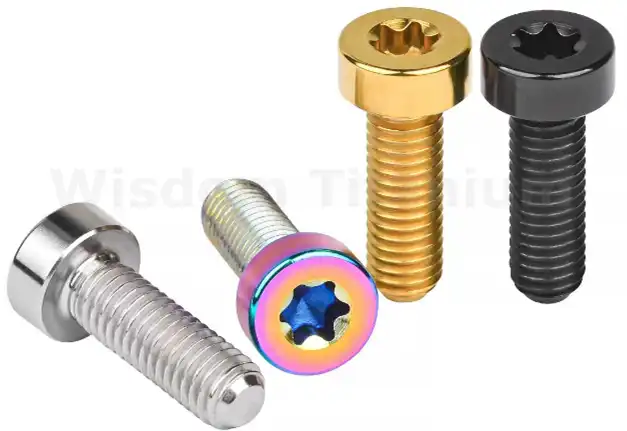
Titanium low-profile head bolt technology is at the forefront of the revolution in fastening solutions brought about by the aerospace sector. From the first production steps to the last distribution networks, these specialty fasteners play vital roles in the aerospace supply chain. Their distinctive design minimizes aerodynamic disturbance by combining streamlined profiles with titanium alloys' remarkable strength-to-weight ratio. This thorough investigation shows how these precisely designed parts have become essential in a variety of aerospace applications, spurring innovation while upholding the strict safety regulations that characterize our sector.
The Foundation of Aerospace Fastening Excellence
Aerospace fastening technology has advanced remarkably since I started working in the titanium business more than 10 years ago. One of the biggest success stories in manufacturing is the path of titanium from its discovery in 1791 to its current status as the foundation of modern aircraft. Titanium's supremacy in aircraft began during the Cold War, when military applications required materials that could endure harsh environments without losing structural integrity.
The titanium low-profile head bolt is one of the many titanium components used in contemporary commercial aircraft, such as the Airbus A380 and Boeing 787, compared to its predecessors. Titanium fasteners are essential to the operational effectiveness of military aircraft like the F-22, F/A-18, and C-17. Titanium low-profile bolts improve performance and safety in harsh conditions, as shown by the UH-60 Black Hawk helicopter.
These industries have a direct economic tie since the aerospace sector is the biggest user of titanium. The supply of titanium is seen as a national security issue by nations with large military expenditures, especially the United States. Continuous progress in titanium processing and application technologies has been fueled by its strategic significance.
Core Applications Transforming Aerospace Manufacturing
Airframe Assembly and Structural Integration
In airplane construction, low-profile titanium fasteners are essential since fuel economy is directly correlated with weight reduction. These specialty fasteners preserve the flat surface profiles necessary for ideal aerodynamics while securing important structural elements. Protruding hardware that can cause drag or turbulence during flight operations is eliminated by the flush mount design.
These fasteners are used by aircraft makers to attach composite materials to titanium structures. When various materials come into contact, titanium's corrosion resistance stops galvanic corrosion, which is a frequent problem in conventional aluminum-based systems. This compatibility extends aircraft service life while reducing maintenance requirements.
Engine Component Manufacturing
Extreme pressure and temperature conditions required for aerospace engine operation need outstanding fastener performance. The strength required to secure engine parts is provided by titanium socket head bolts, which can tolerate heat cycles that would weaken other materials. Engineers may tune engine cowling forms for better airflow characteristics thanks to the low-profile design.
The ability of these fasteners to retain their mechanical qualities across a broad temperature range is valued by engine builders. Titanium alloy screws provide reliable performance that guarantees engine dependability and passenger safety in a variety of extremes, from below-freezing temperatures at cruise altitude to the extreme heat produced during takeoff.
Landing Gear Systems
During takeoff and landing cycles, landing gear assemblies are subjected to enormous stresses. In these systems, precision titanium bolts must withstand repeated stress loads without losing their dimensional stability. Given exposure to different weather conditions and runway chemicals, corrosion resistance becomes very crucial.
Because titanium hardware is lightweight, it helps reduce the total weight of airplanes without sacrificing safety margins. Because of the weight reductions, aircraft designers are able to increase range or maximize cargo capacity, which immediately improves airline profitability and passenger convenience.
Avionics and Electronic System Integration
Sophisticated electronic equipment used in modern airplanes need for safe mounting options. The titanium low-profile head bolt is one example of a low-profile fastening solution that guarantees these delicate parts stay in their correct positions while preventing electromagnetic interference. Certain titanium alloys are perfect for use close to communication and navigational equipment because of their non-magnetic qualities.
Avionics makers may design small, light systems that optimize airplane space by using custom titanium bolts. Titanium's precise production tolerances guarantee dependable connections that preserve signal integrity for the duration of the aircraft's operating life.
Interior and Cabin Applications
Passenger safety regulations require cabin components to meet strict fire resistance and toxicity standards. Titanium threaded fasteners contribute to these safety requirements while providing the strength needed to secure seats, overhead compartments, and emergency equipment. The material's biocompatibility also makes it suitable for applications where passenger contact might occur.
Airlines increasingly focus on weight reduction to improve fuel efficiency and reduce operating costs. High-strength fasteners enable the use of lighter interior materials without compromising safety or durability standards required by aviation authorities worldwide.
Maintenance and Retrofit Applications
The durability and dependability of titanium gear greatly benefits aircraft maintenance operations. Upgraded titanium substitutes may be used by maintenance teams to replace worn parts, increasing service intervals and lowering lifetime costs. Many premature replacement problems that are typical of conventional fasteners are eliminated by the corrosion resistance.
Retrofit applications allow older aircraft to benefit from modern titanium fastener technology. This updating capability increases operating efficiency and prolongs aircraft service life, making it a desirable choice for airlines overseeing mixed fleets of different aircraft ages.
Supply Chain and Distribution Excellence
Throughout the distribution process, the aerospace supply chain requires outstanding traceability and quality control. For every batch of fasteners manufactured, titanium hardware producers are required to keep thorough records of the material composition, heat treatment procedures, and testing outcomes. This paperwork guarantees adherence to aviation rules and facilitates prompt resolution of any quality issues.
To preserve product integrity, distribution networks for aerospace fasteners need to follow certain handling and storage protocols. These precise components are safeguarded along their trip from producer to end user by temperature-controlled surroundings, contamination avoidance, and appropriate packing.
Material Excellence: Grade 5 Titanium Advantages
Ti-6Al-4V, or grade 5 titanium, is the gold standard for aerospace purposes. This alloy achieves exceptional mechanical qualities by combining pure titanium with aluminum and vanadium. While retaining the lightweight qualities that make titanium so useful, the tensile strength of 950 MPa offers remarkable load-bearing capabilities.
Under cyclic stress circumstances, which are typical in aircraft applications, the titanium low-profile head bolt's exceptional fatigue resistance guarantees dependable performance. Engine vibration, turbulence, and landing impacts produce difficult operating conditions that Grade 5 titanium reliably manages.
These fasteners are appropriate for aircraft operating in coastal areas or carrier-based operations due to their resistance to corrosion in marine conditions. Temperature changes, humidity, and salt spray that would quickly deteriorate other materials have no effect on titanium components that are made correctly.
FAQs
1. What makes low-profile head bolts essential for aerospace applications?
Low-profile head bolts provide safe fastening options while reducing aerodynamic disturbance. Their flush-mount construction improves flying performance and fuel economy by lowering drag and turbulence. Additionally, the simplified profile reduces maintenance complexity and eliminates ice buildup.
2. How do titanium fasteners compare to traditional aerospace materials in terms of lifecycle costs?
Although titanium fasteners are more expensive initially, their remarkable fatigue life and resistance to corrosion greatly lower the need for frequent replacements. Throughout the aircraft's operating life, the weight reductions also help with fuel economy, which often leads to significant cost savings over time.
3. What quality certifications are required for aerospace titanium fasteners?
Aerospace titanium fasteners have to meet a number of standards, including as AS9100, NADCAP, and particular OEM specifications. Regular testing, traceability documentation, and material certification guarantee adherence to aviation safety standards. Comprehensive documentation is necessary for regulatory approval of every batch.
Conclusion
Industry leaders use Wisdom Titanium as their reliable manufacturer when the best quality titanium low-profile head bolt solutions are required for aeronautical excellence. Since 2016, our ISO 9001-certified plant has provided precision-engineered fasteners that satisfy the most demanding requirements to the aerospace sector. We are aware that aerospace projects need dependable collaborations supported by technical know-how and an uncompromising dedication to quality, in addition to components.
Our extensive stock of Grade 5 titanium raw materials guarantees steady supply for both typical and unique needs. We provide the versatility required for a variety of aircraft applications with thread sizes ranging from M4 to M14 and lengths from 10mm to 100mm. Our skilled R&D team works directly with customers to provide bespoke solutions that tackle certain technical problems.
Throughout the manufacturing process, our titanium hardware is subjected to stringent testing and inspection. Our well-established manufacturing technology, consistent workforce, and thorough process documentation provide dependable delivery dates and high-quality products. We provide the technical assistance and product dependability that your operations need, whether you are an aerospace supplier, repair center, or aircraft manufacturer.
Are you prepared to use high-quality titanium fastening solutions to improve your aerospace projects? Our team of applications engineers is prepared to talk about your unique needs and suggest the best fastener setups for your applications. To learn how Wisdom Titanium can meet your aerospace fastener demands with unparalleled quality and service excellence, get in touch with us at sales@wisdomtitanium.com.