
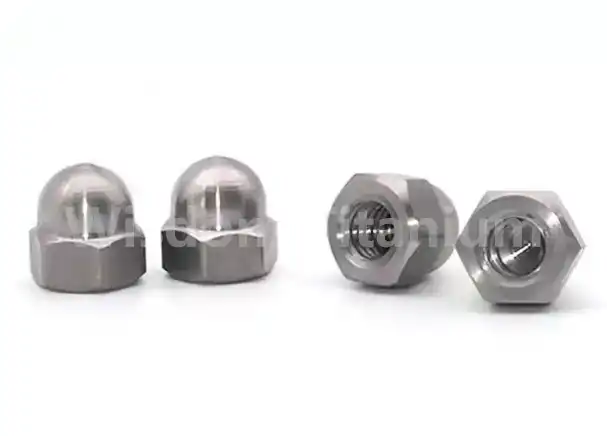
Titanium acorn nuts are the best attaching options because they are very strong for their weight and don't rust. Their distinctive domed end design protects delicate threads from the elements in a way that no other product can. This makes them perfect for tough situations in automotive modifications, aerospace assembly, maritime engineering, and precision machinery. These specialist parts are different from regular fasteners since they are both strong and stylish. This makes them essential hardware for high-performance applications. The ergonomic design not only makes the product more useful, but it also makes it seem better, bringing together form and function.
Key Parameters and Technical Specifications
Knowing the technical details of titanium acorn nuts will help you get the best results in your applications. Titanium Grade 5 acorn cap nuts have a density of 4.51g/cm³, which is much lighter than steel counterparts but still very strong. It can hold a lot of weight because its tensile strength is between 895 and 1000 MPa.
There are both metric and imperial thread types available, so you can use a titanium acorn nut for a variety of assembling needs. In metric threading, standard sizes go from M6 to M20, whereas in imperial threading, they go from 1/4" to 3/4" diameter. The polished surface not only makes the product look better, but it also makes it more resistant to corrosion under tough conditions.
These titanium threaded nuts can handle temperatures from -196°C to 600°C, thus they can be used in very harsh environments. The hexagonal shape makes it easy to apply torque accurately, and the acorn shape protects the threads completely and gets rid of sharp edges that could hurt you when installing or maintaining the product.
Core Benefits of Titanium Acorn Fasteners
Weight reduction stands as the primary advantage driving adoption across performance-oriented industries. Titanium acorn nuts are about 45% lighter than steel nuts, which makes cars get better gas mileage and speed up faster. In racing, where every gram affects performance, this weight savings is particularly important.
Corrosion resistance is better than that of most metal fasteners, especially in marine and industrial settings. When exposed to oxygen, the natural oxide layer forms right away, making it impossible for rust, salt spray, and chemicals to get through. Compared to typical materials, this feature makes the service life much longer.
Fatigue resistance makes sure that something works well even when it is loaded and unloaded repeatedly. Titanium aerospace parts can handle millions of stress cycles without breaking, which makes them perfect for spinning machinery, suspension systems, and assemblies that are prone to vibration. The material has a great strength-to-weight ratio, which keeps the structure strong while keeping the bulk low.
Non-magnetic properties prove essential in sensitive electronic equipment and medical devices. Unlike ferromagnetic materials, titanium acorn nuts won't interfere with precision instruments or create unwanted electromagnetic effects in critical applications.
Wisdom Titanium's Superior Acorn Nut Solutions
Our ISO 9001-certified production method makes sure that every titanium acorn nut we make is of the same high quality. Since 2016, we've improved our methods of making fasteners so that they are more precise and reliable than the industry norm. Before they are shipped, each part is carefully checked to make sure it is the right size and made of the right material.
Having a full stock of raw materials lets us quickly fill both standard and special requests. Our dependable material procurement keeps prices and delivery times steady, even when our competitors have problems with their supply chains. This dependability is very important when project deadlines need components to be available on time.
Our titanium hardware is different from mass-produced options since it can be customized. Our skilled R&D team works with clients to provide custom solutions that match the specific needs of their applications. We turn ideas into parts that are ready for manufacturing by changing the thread pitch, changing the size, or making whole new designs.
Quality control happens at every step of the manufacturing process, from checking the raw materials to the final inspection. Our advanced production technology includes real-time monitoring tools that find changes before they impair the quality of the product. This all-encompassing method makes sure that every titanium dome nut satisfies strict standards.
Optimal Usage Strategies and Purchase Guidelines
Selecting appropriate thread engagement length prevents overtightening while ensuring secure connections. Generally, thread engagement should equal 1.5 times the bolt diameter for optimal strength distribution. When installing titanium bike nuts, apply anti-seize compound to prevent galling between dissimilar metals.
Torque specifications require careful consideration due to titanium's unique properties. Reduce standard torque values by approximately 20% compared to steel fasteners to prevent thread damage. Use calibrated torque wrenches and apply loads gradually to avoid sudden failures.
Storage conditions significantly impact longevity and performance. Maintain dry environments and avoid contact with dissimilar metals that could initiate galvanic corrosion. When storing large quantities, separate individual components to prevent surface scratching during handling.
Installation sequence matters particularly in multi-fastener assemblies. Tighten high strength nuts in a cross-pattern to distribute loads evenly across mating surfaces. This approach minimizes warping and ensures optimal joint integrity.
Regular inspection schedules help identify potential issues before they compromise safety or performance. Visual examinations should focus on thread condition, surface integrity, and signs of corrosion or wear. Replace components showing any degradation to maintain system reliability.
Industry Applications and Performance Advantages
Titanium acorn nuts that don't rust are important for wheel assemblies, brake systems, and suspension parts in automotive modification shops. The weight loss makes handling better, and the corrosion resistance makes sure it will last for a long time. Racing teams really like how well they work even when there is a lot of vibration and heat.
Titanium aerospace parts have an amazing strength-to-weight ratio that is needed for aerospace applications. These fasteners can handle the tough conditions of flight and keep the total system weight down, from aircraft engine mounts to satellite assembly. The fact that they are not magnetic is very important for avionics systems.
Marine situations reveal how much better titanium is at resisting corrosion than other materials. Salt spray, humidity, and changes in temperature that break down regular fasteners don't have much of an effect on titanium marine fasteners that are put correctly. This resilience makes it less expensive to maintain and more reliable to use.
More and more bicycle makers are using titanium wheel nuts and frame parts to make high-quality bikes. The extra initial cost is worth it because the product will last longer and work better because it is lighter, more durable, and looks better.
Conclusion
Titanium acorn nuts work better than any other type of fastener in tough situations where other types fail. Because they are very strong, resistant to corrosion, and lightweight, they are vital parts for the automotive, aerospace, and marine sectors. To get the most performance and longest life out of something, you need to know how to choose, install, and take care of it properly. These high-tech fasteners offer the dependability and performance that modern applications need, whether you're replacing old components or making new ones. Buying high-quality titanium hardware means better system performance, lower maintenance costs, and higher safety margins that make the original investment worth it.
Partner with Wisdom Titanium for Premium Fastener Solutions
Wisdom Titanium is the company you can trust to make titanium acorn nuts. They make parts that are more precise than you anticipate them to be. We have a huge selection of parts and can quickly customize them to make sure your projects have the parts they need when they need them. We are the preferred supplier for automotive, aerospace, and marine applications all over the world because we have strict quality control and low prices. Contact us at sales@wisdomtitanium.com to discuss your specific requirements and discover how our expertise can enhance your next project.
FAQs
Q1: What are the benefits of titanium acorn nuts over stainless steel ones?
A: Titanium is 45% lighter and has better corrosion resistance and fatigue strength. The strength-to-weight ratio is far higher than that of stainless steel, which makes titanium perfect for performance applications where weight is important. Also, titanium's non-magnetic characteristics and ability to work with living things make it useful in some situations.
Q2: Is it possible to utilize titanium fasteners with other metal parts?
A: Yes, but taking the right steps can stop galvanic corrosion. When installing, use an anti-seize agent and try not to let titanium touch metals that are different from it. Titanium works well with aluminum and stainless steel, but it shouldn't touch carbon steel or copper alloys.
Q3: How do I find out what the right torque settings are for titanium nuts?
A: Lower the normal steel torque values by 20% and add loads slowly. Because titanium has a lower modulus of elasticity, you need to be careful with it so that the threads don't get damaged. Always use calibrated torque wrenches and follow the manufacturer's instructions for how to utilize them in your situation.
References
- American Society for Testing and Materials. "Standard Specification for Titanium and Titanium Alloy Strip, Sheet, and Plate." ASTM B265-20a, 2020.
- Boyer, R.R., Welsch, G., and Collings, E.W. "Materials Properties Handbook: Titanium Alloys." ASM International, Materials Park, OH, 1994.
- Donachie, Matthew J. "Titanium: A Technical Guide, 2nd Edition." ASM International, Materials Park, OH, 2000.
- Lutjering, Gerd and Williams, James C. "Titanium: Engineering Materials and Processes." Springer-Verlag Berlin Heidelberg, 2nd Edition, 2007.
- Peters, M., Kumpfert, J., Ward, C.H., and Leyens, C. "Titanium Alloys for Aerospace Applications." Advanced Engineering Materials, Vol. 5, No. 6, 2003.
- Schutz, R.W. and Thomas, D.E. "Corrosion of Titanium and Titanium Alloys." ASM Handbook Volume 13B: Corrosion Materials, ASM International, 2005.