
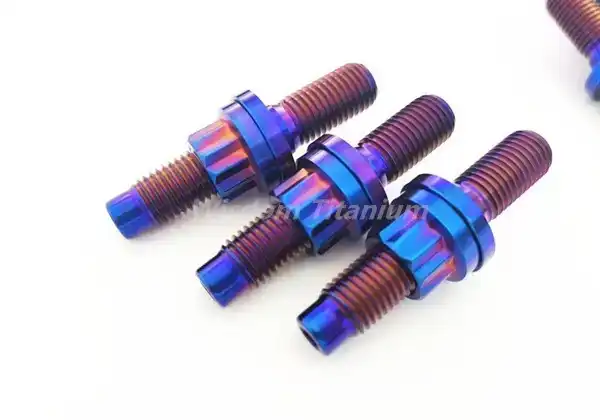
When done right, anodizing titanium exhaust bolts does not affect their ability to withstand high temperatures. A thin oxide layer, about 5 to 25 microns thick, forms on the surface of titanium during the electrochemical oxidation process. This layer makes the surface harder and protects against rust without changing the metal qualities of the Grade 5 titanium alloy (Ti-6Al-4V). Studies show that anodized titanium screws can withstand temperatures of up to 500°C, which is higher than the normal working temperature range for an exhaust manifold (300°C to 450°C). The anodic coating stays steady when heated and cooled many times, which stops the wear and tear that happens to painted or covered fasteners that are exposed to exhaust heat.
Comparing Titanium Exhaust Bolts With and Without Anodizing for B2B Buyers
When making a procurement choice, you have to weigh a lot of different factors, such as the original cost, the performance over time, and how it looks. titanium exhaust bolts that have not been anodized offer full structural capability and corrosion protection through the natural passive oxide layer. They work well in situations where look is not the most important thing. The natural silver-gray finish has a simple beauty that works well for racing uses that value function over form.
Anodized versions are more valuable because the surface is harder and won't scratch easily during installation or service. The hardened oxide layer makes the thread surfaces less likely to wear down, which could make fasteners that need to be taken off for repair last longer. Racing teams and modification shops like that putting anodized screws into aluminum or titanium pipes is less likely to gall up because the oxide layer makes assembly easier by lubricating the parts.
The dark blue finish that can be achieved through anodizing makes the product stand out visually, which helps with brand recognition and quality impression in aftermarket settings. Custom motorbike makers and car tuners choose colored titanium parts to show off their attention to detail and go with polished engine bays. Because of its better looks, this type of anodized fastener gets a higher price, which suppliers can use to stay competitive with cheaper options.
Procurement Considerations for Titanium Exhaust Bolts
To successfully source titanium exhaust bolts, you need to include specific technical details about the coating parameters, material approval, and size limits. Buyers should ask for Grade 5 titanium that meets ASTM B348 or AMS 4928 standards. This will make sure that the qualities of the material are the same from one production lot to the next. The thread specs must use the right standards (ISO metric or SAE unified) and tolerance classes that are right for the way the thread is going to be assembled and the amount of force that needs to be applied.
Critical Specification Parameters
Coating thickness requirements are usually between 5 and 15 microns for functional anodizing that focuses on protecting against rust. They can go up to 20 to 25 microns when increased hardness calls for slightly thicker layers. People who are buying things should make sure that the coating methods don't change the thread fit tolerances. This is especially important for precision uses that need Class 6g or tighter fits. Manufacturers with a good reputation use go/no-go tools to check the dimensions of the threads after anodizing.
Supplier Evaluation and Quality Assurance
ISO 9001 approval sets the standard for quality control for titanium fastener suppliers. It makes sure that there are written procedures for tracking materials, checking dimensions, and dealing with nonconformances. Some advanced providers keep extra certifications, like AS9100 for aircraft uses, to show that they can meet strict quality standards that apply to all fields. Each production lot should come with a material test record that lists the materials' chemical make-up and mechanical qualities. This way, the products can be checked to make sure they meet the requirements.
Logistics and Lead Time Management
Normal catalog items, like popular M8 and M10 sizes with natural or burnt blue finishes, usually ship within two to three weeks from reputable sources who keep stock. Lead times can be extended to 4–8 weeks, based on the depth of the production queue, for custom specifications that need particular lengths, threading, or anodizing colors. Buying from Chinese makers in Baoji Titanium Valley may take an extra two to four weeks by ocean freight. However, you can speed up the process by shipping by air for an extra week at a higher cost.
Installation and Maintenance Tips for Anodized Titanium Exhaust Bolts
Using the right fitting methods will protect the anodic layer and make sure that the clamping loads needed for leak-free exhaust joints are met. Because titanium exhaust bolts have different elastic qualities, technicians should use measured torque wrenches instead of impact tools to make sure they don't overtighten. Anti-seize additives made for titanium uses stop thread galling while also allowing for thermal expansion. However, using too much of them can lower friction and lead to under-torquing.
The 12-point nut design allows for six different wrench settings per 180-degree turn, which makes installation easier in tight areas like those around exhaust manifolds. Six-point or 12-point sockets should be chosen over four-point sockets because they spread torque across more than one flat at the same time, preventing stress buildup. During overhead installation, magnetic socket retention helps keep bolts from falling out, but techs should make sure that the magnetic holding force doesn't get in the way of proper seating.
Torque Specifications and Assembly Procedures
For M8 Grade 5 titanium exhaust studs, the recommended torque range is between 15 and 20 N·m. For M10 sizes, the range is between 25 and 35 N·m, but this depends on the depth of the thread contact and the stiffness of the material that is mating it. These numbers are based on a dry installation with anti-seize being used. Installations that are oiled may need a 10-15% power decrease to get the same clamping force. Multi-stage pressing in the shape of a star makes sure that the gasket is compressed evenly and stops the flange from twisting, which could damage the seal.
Service Life and Reusability Guidelines
Titanium exhaust screws can usually be taken off and put back on three to five times before the threads wear out and they need to be replaced. Visual inspection should look for necking or pulling in the shank area, which can be a sign of plastic damage from squeezing too much. Damage to the thread that can be seen as burnished spots or raised metal means galling, which makes future installations impossible. Fasteners that are damaged need to be replaced right away to avoid thread seizing.
The anodized coating may show color changes in high-heat zones closest to exhaust ports, transitioning from burnt blue to golden or purple shades. This color shift happens because the oxide layer keeps growing at high temperatures. It doesn't mean the material is weakening or is about to fail, though. Cleaning with gentle soaps and soft brushes keeps the look, and rough pads could scratch the oxide layer and make rust protection less effective.
Conclusion
Anodizing improves titanium exhaust bolts by making the surface harder and more resistant to rust, without changing their ability to withstand high temperatures. The thin oxide layer that is created through electrochemical processing stays stable in temperature across the entire working temperature range of the exhaust system. This means that it keeps its protective and aesthetic qualities even under tough service conditions. The high strength-to-weight ratio of Grade 5 titanium, along with its high resistance to fatigue and low temperature expansion mismatch with aluminum parts, makes these screws the best choice for exhaust uses that need to work well.
Partner With Wisdom Titanium for Premium Anodized Exhaust Fasteners
Wisdom Titanium sells aerospace-grade titanium exhaust bolts that are designed to work in tough car and motorbike situations. Our factory in Baoji Titanium Valley, which is ISO 9001-certified and is China's main titanium production hub, uses vertical integration and strict quality control to make screws that meet the highest performance standards. We are experts at making Grade 5 titanium stud systems with 12-point nuts and washers. These come in natural silver and burnt blue anodized finishes and come in standard sizes (M8×1.25×45, M10×1.25×45/54) as well as fully personalized layouts.
As a seller of titanium fasteners with a lot of experience, we keep a large stock of raw materials that lets us make prototypes quickly and increase production as needed, from small orders of 100 pieces to large OEM contracts. Get in touch with our technical experts at sales@wisdomtitanium.com to talk about your exhaust fastener needs. We offer specific material certifications, unique packaging options, and logistics help to make the buying process easier for you. Visit wisdomtitanium.com to see our full selection of titanium fasteners and custom CNC parts used in aircraft, automobile, motorcycle, and industrial settings around the world.
FAQ
Can anodized titanium exhaust bolts be reused after removal?
Anodized titanium exhaust bolts can usually be put back in place three to five times if they are properly torqued and taken off without cross-threading. Before using it again, you should make sure there is no obvious necking, thread damage, or covering delamination. The anodic layer's stiffness actually stops thread wear compared to titanium that hasn't been anodized. This could make the titanium last longer in situations where it needs to be taken apart and put back together again.
Does anodizing improve corrosion resistance beyond titanium's natural properties?
The anodic oxide layer makes the inactive film thicker, going from about 10 nanometers (natural) to 10–20 microns (anodized), which makes it more resistant to rust. This improved barrier protects better against acidic exhaust condensates and chloride from road salts, especially in situations where natural passive films might have trouble growing back. Anodized titanium does better in settings with faster rusting than non-anodized titanium, as shown by salt spray tests.
Are torque specifications different for anodized versus non-anodized titanium fasteners?
When anodizing is done right, it keeps the dimensions within the thread fit standards and doesn't need any torque changes compared to non-anodized versions. Both types should use the torque values suggested by the maker, which are based on the type, size, and grease of the fasteners. The oxide layer may slightly lower friction coefficients because it makes the surface harder, but this effect is standard for installations and doesn't mean that specifications need to be changed.
References
1. Boyer, R., Welsch, G., and Collings, E.W. (1994). Materials Properties Handbook: Titanium Alloys. ASM International, Materials Park, Ohio.
2. Donachie, M.J. (2000). Titanium: A Technical Guide, 2nd Edition. ASM International, Materials Park, Ohio.
3. Lutjering, G. and Williams, J.C. (2007). Titanium, 2nd Edition. Springer-Verlag, Berlin Heidelberg.
4. Sulka, G.D. (2008). "Electrochemical Formation of Anodic Oxide Films on Titanium." Journal of Solid State Electrochemistry, Volume 12, Issue 11, pp. 1365-1385.
5. Society of Automotive Engineers (2016). SAE AMS 4928: Titanium Alloy Bars, Wire, Forgings, Rings, and Drawn Shapes 6Al-4V Annealed. SAE International, Warrendale, Pennsylvania.
6. American Society for Testing and Materials (2019). ASTM B348: Standard Specification for Titanium and Titanium Alloy Bars and Billets. ASTM International, West Conshohocken, Pennsylvania.