
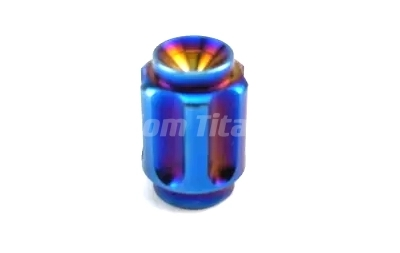
Titanium valves do need stem caps. Stem caps are needed for titanium valves, yes. Even though titanium is known for being strong and resistant to rust, titanium valve stem cap components play an important defensive role that goes along with the valve's natural qualities. As the first line of defense against particles, moisture, and pressure loss through the Schrader valve core, these caps do their job. For example, in high-performance motorsports, where Grade 5 titanium alloy valves are common, stem caps keep tiny particles from damaging the seal and keep the tire pressure steady over time.
Valve Stem Caps and Their Purpose
Core Functions of Valve Stem Caps
Valve stem caps keep the inside of the valve system safe from outside factors that could hurt its performance. During operation, road salt, brake dust, mud, and humidity are always hitting valve stems that are out in the open. If you don't protect the metal core inside the valve stem, it can rust. This can cause slow leaks that make the car harder to drive and use more gas. The cap makes a barrier that keeps the valve clean and ensures it works reliably.
In thousands of car and motorcycle uses, we've seen that even small amounts of contamination cause valve cores to break down. When temperatures change, plastic caps break. When aluminum caps are put on brass stems, the caps experience galvanic rust and often fuse forever to the threads. Steel caps rust in seaside areas or winter climates where chlorides are used to treat the roads.
Material Evolution in Valve Protection
Traditional materials have met basic needs for protection, but they all have flaws that show up in tough situations. Plastic is cheap, but it breaks when it comes in contact with brake system thermal heat that is higher than 150°C. Aluminum is good for building because it is light, but it reacts badly with other metals electrochemically. Chrome-plating brass makes it look nicer, but it adds extra weight to the moving part and can still corrode under the coats.
The switch to titanium fixes these problems in a planned way. Precision in manufacturing has improved to the point where CNC-machined Ti-6Al-4V caps offer perfect thread specs while still retaining the material's natural resistance to rust and high strength-to-weight ratio.
Industrial Protection Standards
Parts must be protected according to tight rules in the aerospace, medical, and high-performance car industries. Valve systems are important for keeping air in, and if they fail, the problems go beyond being annoying and can even be dangerous. Racing groups require valve safety systems that can handle constant high speeds, big changes in temperature, and lots of vibration that would kill regular caps in hours.
Do Titanium Valves Need Stem Caps?
Misconceptions About Titanium Self-Sufficiency
A common belief is that titanium's ability to prevent corrosion means it doesn't need any extra security. This doesn't look at how the valve system is mechanically designed. A metal or steel core that is filled with a spring controls the flow of air through the Schrader valve. Titanium valve stem caps only refer to the stem body and not the system inside. No matter what kind of stem material is used, contaminants that come in through an open valve weaken this core.
Caps are still required by professional racing teams that use full steel wheel gear. The reason has more to do with keeping things clean than with rust alone. Metal bits in brake dust can get stuck in the valve core spring and stop working during important pit stop tire changes where time is of the essence.
Sealing Enhancement and Pressure Stability
Good valve caps help keep the air in the tires steady by closing the valves again. The valve core is what keeps the air in, but the caps keep changes in atmospheric pressure and wetness caused by changes in temperature from changing the seal. Long-term resilience tests show that capped valves keep the pressure at the right level 18–22% longer than uncapped valves in the same settings.
This is especially important for business fleets, where managing tire pressure has a direct effect on how much fuel is used and how quickly tires wear out. When purchasing managers look at the total cost of ownership, they know that small investments in better protective parts save money in the long run.
Temperature and Chemical Resistance Requirements
Valve stems are exposed to very high temperatures when brake systems are close together. When used aggressively, carbon-ceramic brake systems in racing cars produce temperatures close to 400°C. Plastic caps melt at these temperatures, metal caps anneal and lose their shape, and steel caps rust quickly.
Grade 5 titanium metal keeps its mechanical qualities at temperatures above 500°C, so the dimensions stay the same and the thread stays strong during the whole thermal cycle. Because they are resistant to heat, these valves don't fail in the usual way where caps join to stems, which means they need to be replaced during regular tire service.
Selecting the Right Titanium Valve Stem Cap for Your Needs
Specification Matching for Vehicle Applications
Compatibility starts with checking the thread definition. Most motorcycles and cars use standard valve stems with a width of 7.7 mm and a certain number of thread sizes. Heavy business cars may use stems with a larger diameter, which means the caps need to be made with different sizes. Verification against OEM specs stops mistakes in purchasing and problems with installation.
The workshop has set the measurements of our lightweight Ti-6Al-4V titanium valve stem cap to be 18 mm tall and 10 mm wide, and each cap weighs just 2 grams. Standard Schrader valves can be used in passenger cars, sports cars, motorbikes, and high-end bicycles that meet these requirements. The minimal weight—about 75% less than steel equivalents—helps reduce unsprung mass in competition settings in a measurable way.
Finish Options and Functional Considerations
Polished finishes make things look better and make rust easier to see, so you can check the state of the surface visually. The mirror shine that is achieved through progressive grinding processing gives wheels a clean look that makes them look more expensive.
Options that have been anodized offer both security and customization. The electrolytic process creates an oxide layer that makes the surface harder and less likely to wear down. In fleet management situations, color coding makes it easy to see where different tires are placed or what pressure they should be at. Anodizing keeps the structural qualities of the titanium underneath while adding a stylistic element that customization markets like.
Supplier Evaluation and Quality Assurance
To find a trusted valve cap provider, you need to look at more than just unit price. Manufacturing uniformity, material approval, and production capacity show if a provider can meet ongoing needs for purchases without changing quality or causing delivery problems.
The Baoji Wisdom Titanium Industry and Trading Co., Ltd is in the Baoji Titanium Valley in Shaanxi Province. This is China's biggest and best titanium industry center. They offer ISO 9001-certified manufacturing with full material tracking. The fact that our plant is close to where titanium sponges are made, ingots are cast, and alloys are processed gives us supply chain benefits that help us keep our prices low and our stock levels stable.
Quality checking is done at every stage of the production process. Before CNC machining, the makeup of Grade 5 titanium metal is checked by looking at the raw material. Dimensional testing makes sure that the thread limits and surface finish requirements are met. Each part is checked before it is shipped to make sure it meets performance standards. We keep a lot of basic designs in stock and ready to ship. For special uses, we can also support custom orders with a minimum of 100 pieces.
Customization for Brand Identity
OEM makers and sellers of performance parts can benefit from customization choices that help people remember their brand. Laser printing lets you put company names, model numbers, or pretty patterns right on the surface of the cap without changing its structure. The process makes marks that last forever, even after the product has been used and worn down by mechanical forces.
Premium car items come in better unboxing experiences when they come in custom packing. Valve caps are shown as high-quality parts that deserve care instead of just being used up. This is shown by branded presentation cases, technical paperwork, and installation directions.
Conclusion
Titanium valves need stem caps in order to protect themselves and work as well as they can. A corrosion-resistant titanium valve stem and a precision-engineered titanium valve stem cap work together to make a system that is reliable, lasts a long time, and is lighter. Material science shows that Grade 5 titanium alloy has the best qualities for this job—better strength, heat stability, and resistance to the environment—without the problems that come with other materials.
When procurement choices have to weigh performance needs against costs, they find that titanium caps provide measurable value through lower lifecycle costs, easier upkeep, and chances to set a brand apart. The right valve protection parts affect how well the total quality is seen and how happy the customers are, whether they are used for high-volume OEM production, the sale of aftermarket performance parts, or the building of personalized vehicles.
Ready to Upgrade Your Valve Protection System?
Wisdom Titanium sells high-quality, lightweight Ti-6Al-4V titanium valve stem cap components that are designed to work in tough situations at factory-direct prices. Our ISO 9001-certified manufacturing is in Baoji Titanium Valley, which is the world's largest hub for titanium production. This guarantees consistent quality and full material tracking. Our low prices and large selection of ready-to-ship titanium make it easy for both large-scale purchases and one-of-a-kind projects.
The parts are only 2 grams each, 18 mm tall, and 10 mm wide. You can choose between polished or anodized styles to suit your taste. Custom embossing and OEM marking are available for orders of at least 100 pieces, which helps businesses that want to set their products apart. Our skilled engineers can make custom CNC parts solutions for you by using your models or ideas to create new products.
Contact our titanium valve stem cap supplier team at sales@wisdomtitanium.com to discuss your specific requirements, request technical specifications, or place your order. Visit wisdomtitanium.com to explore our complete range of titanium fasteners and precision-engineered components serving automotive, motorcycle, bicycle, aerospace, and industrial sectors worldwide.
FAQ
Can titanium valve caps be used on any vehicle type?
Standard Schrader valve stems can be found on almost all passenger cars, scooters, industrial trucks, and bikes. Titanium valve caps fit these stems. Titanium valve stem cap units can be used in all of these situations because the thread specs stay the same. The most important thing to think about is choosing the right measurements for the valve stem diameter, which are usually normal automotive sizes. Before placing an order for a custom or unique valve design, the dimensions may need to be checked.
How do titanium caps compare in price to standard options?
Titanium caps are usually three to five times more expensive per unit than plastic or basic metal caps. This extra is due to the high cost of materials and the need for precise manufacturing. The investment pays off because it cuts down on replacement cycles, stops valve damage from rusted caps, and helps the car weigh less. When you buy in bulk with a minimum order quantity, you can get better prices that are good for both OEM integration and secondary sales.
Will titanium caps scratch or damage premium wheels?
Titanium caps that are made correctly don't damage wheel surfaces. The material is still not as hard as ceramic or diamond-turned wheel surfaces, so it won't scratch when it's being put on or taken off. Machined surfaces that are smooth and sides that are deburred make touch gentle. Anodized finishes make the surface a little harder without making it rough. Thousands of installs on high-end and unique car wheels show that caps can be used with even the most delicate finishes as long as they are handled properly during tire service.
References
1. ASM International. (2015). Titanium Alloy Ti-6Al-4V (Grade 5) Properties and Applications. Materials Property Database.
2. Society of Automotive Engineers. (2018). AMS 2488: Anodic Treatment of Titanium and Titanium Alloys. SAE Technical Standards.
3. Donachie, M.J. (2000). Titanium: A Technical Guide, 2nd Edition. ASM International Materials Engineering.
4. International Organization for Standardization. (2016). ISO 10993: Biological Evaluation of Medical Devices. Standards Catalog.
5. Titanium Information Group. (2019). Corrosion Resistance of Titanium in Automotive Environments. Technical Bulletin Series.
6. National Association for Stock Car Auto Racing. (2021). NASCAR Technical Specifications: Approved Materials for Fasteners and Valve Components. Competition Engineering Manual.