
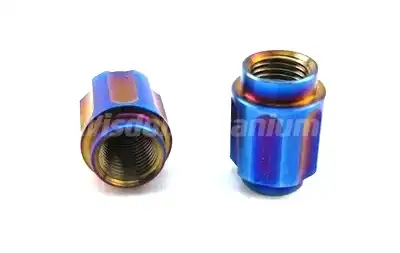
When car mechanics and racing teams upgrade or keep high-performance engines, they often come up with the same question: do titanium valves really need lash caps? The short answer is that it depends on how your valves are made and what your engine needs. The titanium valve stem cap protects the Schrader or Presta valve stems, mostly on wheels and not on the engine valves themselves. For engine valves, lash caps may be needed to keep the exact gap and stop wear. Wheel-mounted titanium valve stem caps, on the other hand, protect against rust, reduce weight, and improve the look. Knowing this difference helps people who work in buying make smart choices about which parts to use in specific situations.
Lash Caps and Their Role in Titanium Valves
Lashing caps are special safety parts that are made to keep valves working at their best by stopping too much wear and keeping precise clearance changes in engine valve trains. These parts sit on top of valve stems and provide a hard surface for rocker arms or cam followers to touch while the engine is running.
Why Titanium Dominates Engine Component Design
Titanium is a very good material for car and motorsport uses that need to be strong and durable. The compressive strength of Grade 5 Titanium Alloy (Ti-6Al-4V) is close to 1000 MPa, but it has a mass of only 4.43 g/cm³, which is about 45% less than similar steel parts. This edge in strength to weight directly leads to less reciprocating mass, which makes engines rev faster and more effectively.
When Engine Valves Require Lash Caps
When valve materials aren't hard enough to survive direct touch with the camshaft or rocker arm, lash caps are needed. Titanium valves in high-performance engines that are running at high RPMs are under a lot of mechanical stress. If you don't properly harden the surface or use protective lash caps, the valve tip can bulge or wear unevenly, which can cause the valve clearances to be off, which can damage the engine in the long run. For racing engines, lash caps are especially useful because they keep their shape even after hundreds of hours of use at temperatures well above 400°C.
Titanium Valve Stem Caps for Wheels: A Different Application
Tire expansion valves on car, motorcycle, and bicycle wheels are shielded from the elements by a titanium valve stem cap. There are two grams in each of these caps, and they are 18 mm tall and 10 mm wide. Plastic caps break when heated up, and aluminum caps suffer galvanic rust and join to brass valve stems. Titanium caps, on the other hand, stop valve sticking for good. Their ability to prevent corrosion is very useful in places where there are acidic road salts, brake dust, and high temperatures. These parts are used by racing teams and repair shops to get rid of unsprung spinning mass and make sure that tire pressure maintenance is done correctly.
Procurement Considerations: Sourcing Titanium Valve Stem Caps for B2B Clients
To successfully purchase titanium valve stem cap parts, you need to look at more than just the unit price. Dependability in the supply chain, factory licensing, and the ability to provide technical help all have a big effect on the value of a long-term relationship and the success of operations.
Supplier Qualification and Certification Standards
Manufacturing approval is an important way to make sure that parts used in safety-critical uses are of high quality. With ISO 9001 certification, you can be sure that your quality management processes are organized and cover planning, production, and help after delivery. This license is especially important if you want to sell to automakers or racing groups that have strict standards for qualified vendors.
Material tracking is another important qualification factor. Reliable providers give mill certifications that list the alloy's composition, history of heat treatment, and the results of tests on its mechanical qualities. Specifications for Grade 5 Titanium Alloy must meet ASTM B348 standards, and spectrographic analysis must be used to confirm the alloy's chemistry. This paperwork is very important for applications that need to pass expert checks or follow rules.
An evaluation of production capability should look at how precise CNC cutting is, the different surface finishing choices, and how easy it is to make changes. Modern multi-axis machining tools are used by suppliers to get the ±0.01mm standards needed for high-quality valve stem caps. Because we do our own anodizing and PVD finishing, we can buy from a single source, which makes supply lines easier and cuts down on lead times compared to working with multiple vendors.
Pricing Structures and Volume Economics
There are good deals on titanium valve stem caps when you buy them straight from the makers. The Baoji Wisdom Titanium Industry and Trading Co., Ltd is in the Baoji Titanium Valley in Shaanxi Province. This is China's biggest titanium industry cluster, and it offers full supply chain integration, from raw titanium sponge to finished precise parts. When compared to wholesalers who buy from different sources, this vertical integration usually cuts costs by 20 to 30 percent.
Minimum order amounts keep the cost of inventory spending in line with the cost of each unit. Standard minimums of 100 pieces let repair shops and smaller race teams get factory prices without having to spend a lot of money. When bigger automakers negotiate yearly contracts for thousands of units, they get access to even more volume prices and make sure they have enough supplies during peak production times.
Terms of payment and currency issues affect the total cost of buying. Net-30 or Net-60 payment terms give you options for your working capital, and some makers offer discounts of 2% to 3% for early payment or lines of credit. Price changes can happen when the dollar and yuan exchange rates change. This is why locked-rate contracts are useful for budget stability in multi-year procurement deals.
Quality Assurance and After-Sales Support
Incoming inspection methods should use samples to check the accuracy of the dimensions, the quality of the finish, and the makeup of the material. Coordinate measuring tools (CMM) make sure that the height, thread pitch, and cap thickness all meet the requirements. Measuring the surface roughness makes sure that smooth finishes look good and that anodized coats reach the right levels of thickness and hardness.
The warranty usually covers problems with the way the product was made, like differences in size or shape, problems with the finish, and materials that don't meet standards. Standard warranties last between 12 and 24 months from the date of delivery. However, some top sellers offer longer warranties because titanium lasts so long. Having clear guarantee terms that explain how to replace the item, who is responsible for sending it back, and when the claim will be processed stops arguments.
The ability to provide technical help sets special sellers apart from commodity vendors. Having access to materials experts who can suggest the best specs for a given application is very helpful. Some makers offer installation guides, upkeep schedules, and troubleshooting tools that make it easier for distributors and end users to get help with customer issues.
Are Titanium Valve Stem Caps Worth It?
To justify investing in titanium valve stem cap parts, you need to look at both the speed gains that can be seen and the brand value improvements that can't be seen. Based on their business goals and market positioning, different groups of customers give these factors different amounts of weight.
Performance Benefits and Measurable Improvements
The most measurable benefit that titanium valve stem caps offer is less weight. A full four-wheel set gets rid of 24 to 40 grams of unsprung spinning mass, since each cap weighs only 2 grams instead of 8 to 12 grams for steel options. Even though this decrease seems small, it happens at the wheel's outer circle, where the effects of spinning inertia are stronger. Independent testing by racing engineering firms shows that the suspension response and wheel acceleration have gotten better.
With corrosion protection, a usual way for regular caps to fail is taken away. In salt-belt areas, aluminum caps often become stuck on brass valve stems within two to three years, and they need to be removed by a professional, which could damage the valve stem. Titanium's inactive oxide covering completely stops this galvanic corrosion, so caps can be taken off at any time during their service life. This dependability is especially helpful for fleet owners and rental car companies, where the efficiency of repair has a direct effect on how much money they make.
Thermal stability makes sure that performance stays the same even when temperatures are very high or very low. When used in racing, brake-adjacent parts are exposed to direct heat that is higher than 300°C. Titanium keeps its shape and threads tight when plastic caps melt and aluminum caps get soft and lose their gripping force. This performance at high temperatures helps keep tire pressure steady, which supports the best grip and driving.
Cost-Benefit Analysis for Different Market Segments
Racing teams invest in titanium parts because they give them a competitive edge, not because they save money. Less weight, dependability in harsh conditions, and no more fails in the middle of an event all improve performance in ways that can decide the result of a race. When you compare the value of podium places and title points to the cost of parts, they become almost irrelevant. The higher price actually improves how people think of a brand, since these teams usually show off sponsors and professional partners who gain from being linked to cutting-edge technology.
Custom auto shops that cater to car enthusiasts offer titanium parts as high-end changes as part of complete build packages. Caps that cost between $80 and 120 per set are small steps in wheel and tire packages that cost between $5,000 and 20,000. When you pair anodized titanium caps with matching lug nuts, the result is a look that looks great on Instagram and gets people to interact with your business on social media. The value of getting a new customer from this publicity often goes over the margin on the parts themselves.
Instead of comparing piece prices, original equipment makers look at the lifetime costs of adopting titanium. Initial extra costs of $15 to $25 per car set are weighed against fewer warranty claims, better brand positioning in premium markets, and being able to tell your brand apart from rivals by using standard parts. Manufacturers of luxury cars are adding more and more titanium screws and trim pieces as standard features because they know that picky customers will notice and appreciate these little touches.
Future Trends and Technology Integration
The inclusion of smart sensors is a new chance for titanium valve stem caps. Prototype versions include tiny sensors for temperature and tire pressure inside the cap body. This cuts down on the cost of separate TPMS sensors while adding usefulness. Titanium's electromagnetic features don't get in the way of wireless transfer, while steel caps can weaken signals. With this road of integration, titanium caps will be used as technology bases instead of just covers to protect them.
More and more people are worried about wheel and part theft, especially for high-value custom builds. Anti-theft measures help stop this from happening. Opportunistic theft isn't possible because of special tools for removal, unique thread designs, or built-in locking mechanisms. Titanium is very hard, so it can't be drilled or cut, which could get around protection features made of metal or plastic. These improved features come with higher prices that show how useful they are for preventing loss.
As car companies try to reach their carbon neutrality goals, sustainable manufacturing methods become more important in their purchasing choices. Titanium is very strong, so parts don't need to be replaced very often. This lowers the amount of material used over its lifetime. Advanced recycle methods get titanium metal back from old parts, which helps circular economy efforts. Customers who care about the environment prefer suppliers who keep records of their environmental management systems and how they get their materials.
Conclusion
Titanium valve stem caps offer measured performance benefits by lowering weight, resisting corrosion, and remaining stable at high temperatures. These benefits support their high price in the race, luxury car, and custom fabrication markets. Internal engine lash caps do different things to keep valve train gaps, but wheel-mounted titanium caps solve important issues like galvanic rust, component seizure, and differences in how the car looks. When purchasing these parts, people in charge should look at the total lifecycle value instead of the original costs. This is because titanium's benefits in terms of durability, dependability, and brand enhancement often outweigh the saves that are clear with other materials. When the natural properties of the material are mixed with precise manufacturing, parts are made that work perfectly in harsh circumstances and don't need much upkeep over long service lives.
Get Premium Titanium Valve Stem Caps from a Trusted Manufacturer
At reasonable prices, Wisdom Titanium offers factory-direct Grade 5 Ti-6Al-4V titanium valve stem cap engineered to aircraft standards. Our ISO 9001-certified factory in Baoji Titanium Valley, Shaanxi Province, is part of the world's largest titanium production center. It controls the whole supply chain, from the raw materials to the finished precision parts. Each small, 2-gram cap is carefully checked, and the choices for a polished or anodized finish meet the high standards of race teams, automakers, and custom fabrication shops. Orders of at least 100 pieces can access our ready-to-ship inventory, which has stable prices and quality. Talk to our expert team at sales@wisdomtitanium.com about your titanium valve stem cap needs and find out how working with an experienced titanium valve stem cap supplier can make your buying process easier and improve the performance of your products.
FAQ
Do titanium valve stem caps prevent galvanic corrosion better than aluminum?
Titanium has a much lower galvanic potential when paired with brass valve stems than aluminum does. This makes cold welding much safer. In places with a lot of salt, nickel anti-seize is still suggested, but titanium's silent oxide layer protects itself in a way that aluminum can't. This feature makes sure that caps can be taken off at any time during their useful life, without the need for special tools or heat.
How does cap weight affect wheel balance and performance?
A four-cap titanium valve stem cap set weighs about 8 grams all together, while steel sets weigh 32 to 48 grams. This 24- to 40-gram drop in unsprung spinning mass happens at the wheel's outer diameter, where the effects of rotary inertia are strongest. Professional wheel balancing makes it easy to use these lightweight parts, and gains in suspension response have been seen in racing uses.
Can anodized finishes withstand harsh environmental conditions?
Instead of coatings, real titanium anodization makes oxide layers that are chemically linked to the parent material. These finishes last longer than painted or metal ones and are less likely to fade from UV light, chemicals, and wear. If you want to keep your titanium surfaces in good shape for years to come, don't use wire brushes or strong acidic wheel cleaners to clean them. Normal car detergents will also work fine.
References
1. Boyer, R., Welsch, G., & Collings, E.W. (1994). Materials Properties Handbook: Titanium Alloys. ASM International, Materials Park, Ohio.
2. Donachie, M.J. (2000). Titanium: A Technical Guide, 2nd Edition. ASM International, Materials Park, Ohio.
3. Lutjering, G. & Williams, J.C. (2007). Titanium: Engineering Materials and Processes, 2nd Edition. Springer-Verlag, Berlin Heidelberg.
4. SAE International (2019). AMS 4928: Titanium Alloy, Bars, Wire, Forgings, Rings, and Drawn Shapes 6Al-4V Annealed. Society of Automotive Engineers Standards.
5. ASTM International (2021). ASTM B348: Standard Specification for Titanium and Titanium Alloy Bars and Billets. ASTM Volume 02.04 Nonferrous Metals.
6. Peters, M., Kumpfert, J., Ward, C.H., & Leyens, C. (2003). "Titanium Alloys for Aerospace Applications." Advanced Engineering Materials, Volume 5, Issue 6, pages 419-427.