
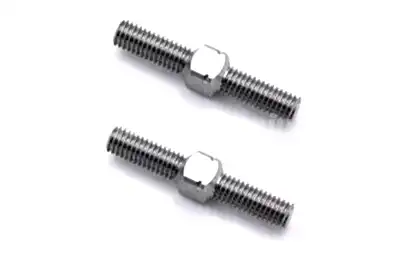
Buyers often ask this because titanium looks “maintenance-free.” Titanium resists corrosion well, but a turnbuckle is not just a material choice. It is a moving threaded system. Threads slide under load, and sliding creates risk. The real question is simple: do you want smooth adjustment today, and easy disassembly next season?
In most real assemblies, yes, titanium turnbuckles benefit from a lubricant or an anti-galling compound on the threads. The reason is not rust. The reason is thread galling, which can feel like the threads “lock up” mid-adjustment. Galling shows up more often on reactive metals such as titanium, and it worsens when you tighten fast or under high pressure.
This guide explains what Google results commonly emphasize on page 1–2: “titanium fastener lubrication,” “anti-seize,” “anti-galling,” “threadlocker vs grease,” “torque changes when lubricated,” and “maintenance tips.” It also shows how Baoji Wisdom Titanium supplies stable, CNC-made titanium hardware with consistent quality controls.
Why can titanium turnbuckles seize without lubrication?
Titanium turnbuckles face a friction problem, not a rust problem
Titanium forms a stable oxide film that protects it from corrosion in many environments. That protection helps in marine and outdoor use. Still, a turnbuckle works by sliding thread flanks against each other. Under load, the sliding contact can damage surface films. Once that happens, metal-to-metal contact increases, friction rises, and the threads can “pick up” material from each other. That is the start of galling.
Many lubrication discussions online focus on bolts. The same physics applies to a turnbuckle because you adjust it repeatedly. In other words, a titanium turnbuckle can remain corrosion-resistant while still becoming hard to adjust if the thread interface runs dry.
Thread galling: what it is, what it feels like, and why it matters
Galling is adhesive wear. It can create local “micro-welds” between sliding surfaces. As you keep turning, those welded spots tear, transfer material, and roughen the threads. Users often describe a sudden jump in turning resistance, then a stuck barrel or damaged male threads. Industry guidance commonly recommends lubricants specifically to reduce galling risk in titanium and stainless fasteners.
NASA’s tribology research supports the same idea at a more fundamental level. When titanium alloys rub directly against other surfaces without a protective film, adhesion and galling can become severe. Solid film lubricants and low-friction coatings reduce galling and wear. That is exactly the outcome a good thread compound aims to deliver in a turnbuckle thread pair.
Lubrication also changes torque and “feel,” so process control matters
Lubrication reduces friction. Reduced friction changes the torque-to-tension relationship in threaded joints. That is why some maintenance standards insist on consistent assembly conditions instead of “dry this time, greased next time.” A practical takeaway is simple: if you lubricate your titanium turnbuckles, do it consistently and avoid over-tightening from habit.
Do titanium turnbuckles need lubrication in your application?
When lubrication is strongly recommended
If you adjust your titanium turnbuckles often, lubrication is the safest default. Repeated movement increases sliding cycles and raises galling probability. Lubrication also helps when you assemble titanium-to-titanium or titanium-to-stainless thread pairs, which are commonly discussed online as combinations that can gall under pressure.
Lubrication is also a good idea when any of these conditions apply: higher preload, fine threads, frequent readjustment, exposure to salt spray, or a high-cost assembly where a seized adjuster creates downtime.
When you might avoid “slippery” lubricants and choose threadlocker instead
Some assemblies need vibration resistance more than frequent adjustment. In those cases, a medium-strength threadlocker can provide a controlled, service-removable lock and can tolerate lightly oiled “as-received” fasteners. Henkel notes that LOCTITE 243 works on passive metals such as stainless steel and aluminum, and it is designed to prevent loosening in vibrating assemblies while remaining removable with hand tools.
This matters for turnbuckles because “lubricate or lock” is often a trade. A pure anti-seize helps movement and disassembly. A threadlocker helps resist loosening. Some buyers solve this by using a lubricant only on the internal sliding thread area and using a separate locking method externally. The correct choice depends on how often you need adjustment versus how much vibration you expect.
A simple risk view: seizing is rare until it is expensive
The hesitation stage is normal. Lubrication feels like an extra step. Yet one seized titanium adjuster can cost more than a lifetime supply of the correct compound. That cost is not just the part. It is labor, schedule slip, and potential damage to mating hardware.
What to use on titanium turnbuckles: anti-seize, grease, or threadlocker
Anti-seize and anti-galling compounds: best for smooth adjustment and future removal
Anti-seize products are widely marketed for titanium hardware because they reduce metal-to-metal contact and help prevent galling. Titanium-specific sellers commonly recommend anti-seize for titanium fasteners to avoid galling, including MoS2-loaded products that leave a protective barrier on threads.
For high-temperature or mixed-metal assemblies, nickel anti-seize is frequently recommended in motorsports and maintenance contexts because it performs well with stainless steel, titanium, and heat.
If your titanium turnbuckle must remain easy to adjust, anti-seize is usually the most direct solution because it targets the exact failure mode: adhesive wear and seizure at the thread interface.
High-pressure grease: good for frequently serviced parts, but keep it clean
Many titanium hardware guides recommend high-pressure grease on threads to prevent galling. They frame grease as a strong choice for parts you remove often because it keeps adjustment smooth and reduces the chance of thread damage during repeated service.
Grease attracts dust. If your application lives in grit, use minimal product and wipe off excess. A clean, thin film beats a heavy coat.
Threadlocker (for vibration resistance): choose it when you want “set and forget”
If the goal is to resist loosening, a medium-strength threadlocker such as LOCTITE 243 is a common choice. Henkel positions it as a general-purpose solution that works on metals including passive substrates and prevents loosening on vibrating assemblies while remaining service-removable.
Threadlocker changes friction too, and it affects torque scatter. Independent engineering discussions often highlight that assembly condition changes clamp load at the same torque. The key is consistency. Use a documented process.
What to avoid: fast installation and dry tightening on galling-prone pairs
Many galling-prevention writeups stress that high speed drives heat and friction, which raises galling risk. They also warn that stainless and titanium seize more often when installed dry. Slow, controlled assembly plus a suitable lubricant is a proven combination.
How to lubricate titanium turnbuckles correctly?
Step-by-step method that reduces galling and keeps adjustment predictable
Clean the threads first. Remove grit, chips, and heavy oil. Then apply a small amount of compound to the male threads. Use a thin film, not a thick layer. Titanium anti-seize sellers often emphasize “do not over-apply” because excess paste creates residue without adding protection.
Turn the barrel slowly through the full adjustment range once before final setting. This spreads the film and reveals any tight spots early. If you feel a sudden increase in resistance, stop. Back off. Clean and reapply. That short pause prevents permanent thread transfer.
Controlling torque and fit: lubrication changes the numbers
In any threaded joint, lubrication changes friction. Friction changes the clamp load you get at a given torque. That is why engineering notes on torque-tension relationships warn that lubrication condition can create large clamp-load variation at the same torque value. If your turnbuckle interfaces with a torque-critical system, document the exact lubricant and method.
Maintenance rhythm: re-lube on a schedule, not only when it starts to bind
Titanium’s corrosion resistance can hide early friction damage. A simple schedule works better than waiting for problems. If you operate in salt spray, dust, or frequent adjustment, inspect and refresh the thread film at planned intervals. That reduces surprises and protects the threads from long-term wear.
Why buyers source titanium turnbuckles from Baoji Titanium Valley?
Baoji Titanium Valley: a supply chain advantage you can audit
Baoji Titanium Valley in Shaanxi Province is widely recognized as China’s largest and most comprehensive titanium industry cluster. The region covers a complete industrial chain, from titanium sponge and ingots to bars, plates, tubes, forgings, and high-performance alloys. This concentration supports stable sourcing, process specialization, and broad export capability to Europe, North America, Southeast Asia, and the Middle East. It is one reason global buyers treat Baoji as “China’s Titanium Valley.”
For procurement teams, this matters because titanium quality is not only a grade name. It is also melt control, bar quality, machining practice, and inspection discipline. A strong cluster makes it easier to hold those steps steady over time.
Baoji Wisdom Titanium: product clarity that reduces purchasing risk
Baoji Wisdom Titanium Industry and Trading Co., Ltd. is an ISO 9001:2015-certified manufacturer and supplier founded in 2016. The company focuses on titanium fasteners and customized CNC parts for aerospace, energy, oil and gas, medical, electronics, chemical, marine, automotive, motorcycle, bicycle, and related industries.
For titanium turnbuckles, you get clear, procurement-ready specifications: titanium turnbuckles in Ti-6Al-4V with sizes M3, M3.5, M4, M4.5, M5, polished finish, and thread options UNC and UNF. Color choices include red, blue, black, rainbow, purple, gold, burnt blue, and green. The company supports customization and keeps ample inventory with a 100 pcs minimum order.
From hesitation to trust: how to evaluate a titanium turnbuckle supplier
If you are comparing suppliers, focus on what prevents hidden failure: consistent alloy sourcing, controlled CNC machining, thread inspection, and communication when questions appear. Baoji Wisdom Titanium states it uses high-quality titanium rods, performs careful detection before shipping, and treats customer feedback as an input for ongoing improvement. This is exactly what reduces the risk of inconsistent fit, rough threads, and field seizure.
If you want a quote or technical confirmation for your assembly and lubricant plan, send an inquiry to sales@wisdomtitanium.com.
FAQs
Q1: Do titanium turnbuckles need lubrication in marine or saltwater use?
A: Usually yes. Titanium resists corrosion well, but saltwater environments still bring salt crystals and abrasive deposits into thread interfaces. Lubrication helps keep adjustment smooth and reduces adhesive wear. Corrosion resistance does not eliminate friction and galling risk in a moving thread system.
Q2: What is the best lubricant for titanium turnbuckles to prevent galling?
A: Many users select an anti-seize or anti-galling compound, often MoS2-based, because it forms a protective barrier on threads and is commonly recommended by titanium fastener sellers. For higher temperature or mixed-metal assemblies, nickel anti-seize is also frequently recommended.
Q3: Can I use a threadlocker instead of lubrication on titanium turnbuckles?
A: If your priority is vibration resistance and you do not need frequent adjustment, a medium-strength threadlocker can be a good fit. Henkel describes LOCTITE 243 as a removable, general-purpose threadlocker that works on metals including passive substrates and prevents loosening in vibrating assemblies. Keep the process consistent because friction condition affects torque results.
Q4: How do I know if my titanium turnbuckle threads are starting to gall?
A: Watch for a sudden spike in turning resistance, a rough “gritty” feel, or visible thread damage and metal debris. Galling is often triggered by dry assembly, high friction, and speed. Slow adjustment and a suitable lubricant reduce the risk.
Q5: Do I need lubrication if my titanium turnbuckles are anodized colors?
A: Color finish does not replace thread lubrication. The threaded contact still sees load and sliding. Treat lubrication as a function of the thread pair and duty cycle, not the appearance. If your assembly needs smooth adjustment and easy disassembly, apply a controlled thin film of a suitable compound.
References
- NASA Technical Reports Server (NTRS): “Wear Behavior… Ti-6Al-4V… Effectiveness of Solid-Film Lubricant…”
- Henkel Adhesives: LOCTITE® 243 product page (features, passive metals, vibration resistance)
- STEDI Support: “How to prevent… thread galling” (titanium/stainless galling risk and lubrication advice)
- Ti64: “Ti-Treat Moly Paste Anti-Seize Compound” (MoS2 anti-seize recommendation for titanium to avoid galling)
- RaceTech Titanium: “Is Special Lubrication Needed For Titanium Fasteners?” (lubrication to prevent galling; grease vs threadlocker framing)