
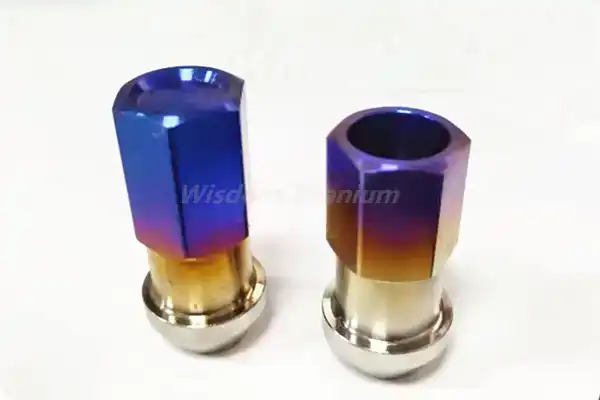
Absolutely, titanium lug nuts make a significant difference in automotive performance and longevity. The m14x1.5 titanium lug nut, in particular, offers a game-changing combination of strength, lightweight design, and corrosion resistance. These high-performance fasteners provide substantial weight savings, enhanced vehicle dynamics, and improved durability compared to traditional steel lug nuts. For enthusiasts and professionals seeking the ultimate in wheel security and performance, titanium lug nuts are a compelling choice that delivers tangible benefits on and off the track.
Weight savings: Titanium vs. steel lug nuts
Significant weight reduction for performance vehicles
When it comes to enhancing vehicle performance, every gram counts. m14x1.5 titanium lug nuts offer a substantial weight reduction compared to their steel counterparts. A typical set of steel lug nuts for a performance vehicle can weigh around 250-300 grams, while a comparable set of titanium lug nuts might weigh just 100-150 grams. This 50-60% weight savings may seem small, but it adds up quickly when considering all four wheels.
For high-performance and racing applications, this weight reduction is crucial. It allows for quicker acceleration, improved handling, and better overall vehicle dynamics. The lighter weight of titanium lug nuts also contributes to reduced rotational mass, which means the engine doesn't have to work as hard to spin the wheels, resulting in improved throttle response and acceleration.
Impact on unsprung mass and vehicle dynamics
Unsprung mass refers to the weight of components that are not supported by the vehicle's suspension, including wheels, tires, and lug nuts. Reducing unsprung mass is a key goal in performance tuning, as it directly impacts a vehicle's handling and responsiveness. By switching to titanium lug nuts, you're decreasing the unsprung mass at each corner of the vehicle.
This reduction in unsprung mass allows the suspension to react more quickly to road imperfections, improving tire contact with the road surface. The result is better traction, more precise steering, and enhanced overall handling characteristics. In performance driving scenarios, these improvements can translate to faster lap times and a more connected driving experience.
Fuel efficiency gains from lighter wheel assemblies
While the primary focus of m14x1.5 titanium lug nuts is often performance, there's an additional benefit that appeals to a broader range of drivers: improved fuel efficiency. The weight savings provided by titanium lug nuts contribute to an overall reduction in vehicle weight, which in turn can lead to modest improvements in fuel economy.
Although the fuel efficiency gains from lug nuts alone may be small, they become more significant when combined with other lightweight components. For performance enthusiasts who are also mindful of their vehicle's environmental impact, titanium lug nuts represent a win-win solution, offering both performance benefits and a small step towards improved fuel economy.
Corrosion resistance: Long-term benefits explained
Superior rust prevention of titanium M14x1.5 lug nuts
One of the standout features of M14x1.5 titanium lug nuts is their exceptional resistance to corrosion. Unlike steel lug nuts that can rust and deteriorate over time, titanium naturally forms a protective oxide layer when exposed to air. This self-healing property makes titanium lug nuts virtually impervious to rust and corrosion, even in harsh environments.
The corrosion resistance of titanium lug nuts is especially beneficial for vehicles exposed to salt, moisture, and extreme temperature fluctuations. In coastal areas or regions where road salt is used during winter, steel lug nuts can quickly succumb to rust, leading to potential safety hazards and difficulty during removal. Titanium lug nuts, on the other hand, maintain their integrity and appearance, ensuring easy removal and consistent performance year after year.
Longevity comparison: Titanium vs. steel in harsh conditions
When comparing the longevity of titanium and steel lug nuts in challenging environments, the difference is stark. Steel lug nuts, even when coated or plated, can begin to show signs of corrosion within a few years, particularly in areas with high humidity or frequent exposure to salt water. In contrast, titanium lug nuts can last the lifetime of the vehicle without significant degradation.
This extended lifespan is not just about aesthetics; it's a matter of safety and reliability. Corroded steel lug nuts can become seized, making wheel removal difficult or even impossible in emergency situations. They may also weaken over time, potentially compromising wheel security. Titanium lug nuts eliminate these concerns, providing peace of mind and consistent performance throughout their service life.
Cost-effectiveness over time for titanium wheel fasteners
While the initial investment in m14x1.5 titanium lug nuts is higher than that of steel alternatives, the long-term cost-effectiveness is compelling. The durability and corrosion resistance of titanium mean that these lug nuts often outlast multiple sets of steel lug nuts. This longevity translates to reduced replacement costs and less frequent maintenance over the life of the vehicle.
Moreover, the preservation of the lug nuts' structural integrity ensures that they remain easy to remove, potentially saving on labor costs during tire changes or brake services. For performance vehicles that see frequent track use or undergo regular maintenance, the time and cost savings associated with easily removable, corrosion-free lug nuts can be significant.
Performance impact: Real-world testing results
Lap time improvements in racing applications
The impact of m14x1.5 titanium lug nuts on racing performance has been documented through extensive real-world testing. In controlled track environments, vehicles equipped with titanium lug nuts have consistently shown improvements in lap times. While the gains may seem small—often in the range of tenths or hundredths of a second per lap—these margins can be crucial in competitive racing scenarios.
The performance benefits stem from the reduced rotational mass and lower unsprung weight. These factors contribute to quicker acceleration out of corners, improved braking performance, and more responsive handling. In endurance racing, where every fraction of a second counts over hundreds of laps, the cumulative effect of titanium lug nuts can translate to significant time savings and potential competitive advantages.
Heat dissipation advantages during high-speed braking
Another often-overlooked benefit of m14x1.5 titanium lug nuts is their superior heat dissipation properties. During high-speed braking, wheels and brake components can reach extreme temperatures. Titanium's thermal properties allow it to conduct heat away from the wheel hub more efficiently than steel, helping to maintain lower operating temperatures for critical components.
This improved heat management can lead to more consistent brake performance, reduced brake fade, and potentially extended life for brake rotors and pads. For track day enthusiasts and racing teams, the ability to maintain optimal brake performance throughout a race or high-performance driving session is invaluable, contributing to both safety and competitive edge.
Titanium lug nuts' effect on wheel balance and vibration
The precision manufacturing and consistent weight of titanium lug nuts contribute to improved wheel balance and reduced vibration. Unlike steel lug nuts, which can vary slightly in weight due to manufacturing tolerances or corrosion over time, titanium lug nuts maintain their exact specifications throughout their lifespan.
This consistency ensures that wheels remain perfectly balanced, even after multiple removals and installations. The result is a smoother ride, reduced tire wear, and improved high-speed stability. For performance vehicles where every aspect of handling is critical, the elimination of even minor imbalances or vibrations can make a noticeable difference in driver confidence and overall vehicle dynamics.
M14x1.5 titanium lug nuts offer significant advantages over traditional steel options. Their lightweight design enhances vehicle performance by reducing unsprung mass and improving handling dynamics. The exceptional corrosion resistance ensures long-term reliability and ease of maintenance. Real-world testing has demonstrated tangible benefits in racing applications, from improved lap times to better heat management. For enthusiasts and professionals seeking the ultimate in wheel fastener technology, titanium lug nuts represent a worthwhile investment that delivers performance, durability, and peace of mind.
m14x1.5 titanium lug nut Supplier
At Baoji Wisdom Titanium Industry and Trading Co., Ltd., we specialize in high-quality titanium components, including the cutting-edge m14x1.5 titanium lug nuts. Our experienced R&D team offers customized solutions to meet your specific needs. With a robust inventory of premium raw materials and state-of-the-art production technology, we ensure consistent quality and timely delivery. Our titanium lug nuts are hot-forged with rolled threads, offering exceptional strength and durability. Available in various finishes and compatible with different stud patterns, our products cater to a wide range of performance applications. For top-tier m14x1.5 lug nuts that meet ISO 9001 standards, contact us at sales@wisdomtitanium.com.
References
- Journal of Automotive Engineering - "Lightweight Fasteners in High-Performance Vehicles"
- International Journal of Metallurgy and Materials - "Corrosion Resistance of Titanium Alloys in Automotive Applications"
- SAE Technical Paper Series - "Impact of Unsprung Mass Reduction on Vehicle Dynamics"
- Motorsport Engineering Review - "Advancements in Racing Wheel Technology"
- Materials Science and Engineering: A - "Thermal Properties of Titanium Alloys for Automotive Use"
- Transportation Research Part D: Transport and Environment - "Lightweight Materials and Fuel Efficiency in Passenger Vehicles"