
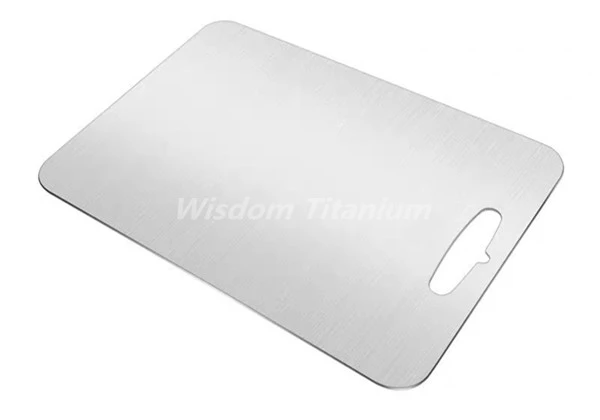
Yes, more and more professional chefs are using titanium cutting boards in their kitchens these days. These new surfaces are more hygienic, endure longer, and resist germs better than regular wood and plastic boards. Different types of kitchens use different cutting boards, but the titanium cutting board is a top choice for cooks who care about food safety, durability, and performance. Many high-end restaurants and industrial kitchens now use these cutting-edge equipment every day because they are more resistant to corrosion and have a non-porous surface that keeps ingredients fresh.
The Rise of Titanium in Professional Kitchens
Modern kitchens need tools that work well even when things become tough. Professional kitchens work at rapid rates, making hundreds of meals a day while keeping very high cleanliness standards. These tough criteria are sometimes not met by traditional cutting surfaces.< /p>
Titanium cutting boards were a novel answer to problems that have been around for a long time in the kitchen. The design of their cutting board is light, which makes it easier for chefs to work for long periods of time. Titanium's non-porous nature makes it impossible for germs to get into it, unlike hardwood surfaces that have tiny grooves where bacteria may live.
Professional cooking schools now teach pupils about more complex kitchen tools. Many teachers talk about titanium's special qualities and why smart businesses use high-quality tools. When you think about the long-term benefits and how often you need to replace typical materials, the difference in initial cost becomes quite little.< /p>
When designing a new kitchen, restaurant advisors often suggest using titanium surfaces. These experts know how the decisions you make about equipment affect how well your business runs, how safe the food is, and how much money you make in the long run. Smart operators know that having better tools means higher performance and less risk.
Core Benefits That Matter to Professional Chefs
Superior Hygiene and Food Safety
Cutting boards that don't let bacteria grow are a big deal for food service businesses. Health inspectors always laud restaurants that use high-tech technology to keep food from being contaminated. Titanium's molecular structure stops microorganisms from growing on it, which gives you piece of mind that wood and plastic surfaces can't.
Cross-contamination is a big problem in crowded kitchens. Chefs like how titanium surfaces stop flavors from moving from one ingredient to another. Using non-stick cutting board technology that stops absorption makes it easy to prepare raw fish and then slice vegetables.
Commercial dishwashers use very hot water and strong chemicals on cutting boards. Materials for cutting boards that don't rust can handle these circumstances without breaking down. Traditional materials often bend, break, or have surface flaws that make food unsafe.
Exceptional Durability and Longevity
Every day, professional kitchens cook a lot of food. Cutting board surfaces that are easy on knives must be able to be used all the time without displaying signs of wear. Titanium stays strong even after thousands of cuts, lasting longer than many replacements of regular materials.
When you're working with hot pots and pans or food that has just been prepared, a chopping board that can handle heat is really useful. Plastic and wood boards would fracture or break at very high or very low temperatures, but titanium can handle them. This flexibility makes it easier to operate in the kitchen and cuts down on the need to transfer between tools.
Operators that want to make money look at entire ownership expenses instead than just the original purchase price. Scratch-resistant cutting board technology makes it much less likely that you'll have to replace your board. Many businesses find that titanium boards pay for themselves in the first year since they don't need to be replaced or maintained as often.
Enhanced Operational Efficiency
Cutting board surfaces that are easy to clean save a lot of time during hectic times. Titanium boards don't need much care, unlike hardwood boards that need to be oiled regularly or plastic boards that have permanent stains. Quick cleaning between activities keeps the prep lines going quickly.
Standards for professional cutting boards stress fast turnaround times. Standard cleaning products work right away on titanium surfaces. Titanium reacts right away to normal cleaning processes, unlike porous materials that need to be cleaned deeply.
Kitchen workers like tools that make their jobs easier. It's easier to train people on how to care for titanium surfaces than on how to maintain conventional materials, which have more complicated needs. Consistent performance cuts down on the number of things that can affect the quality or safety of food.
Real-World Applications in Professional Settings
High-Volume Restaurant Operations
Steakhouses and seafood establishments really like how well titanium works for preparing protein. To avoid becoming sick from eating, processing raw meat must be done in a very sanitary way. Titanium cutting boards are strong enough to handle heavy-duty butchering operations while keeping things clean.
Sushi restaurants were some of the first places to use titanium cutting surfaces. When making raw fish, these places have to follow the strictest hygienic rules. Even though they are important to culture, traditional wooden boards can get dirty, which titanium entirely stops.
Fast-casual companies make their operations better by standardizing their equipment. Portable cutting boards let you set up your prep station in different ways. Titanium is light, so it's simple to move between stations without losing strength or performance.
Specialized Culinary Applications
Pastry kitchens benefit from titanium's temperature stability and non-reactive surface. Chocolate work and sugar preparation require precise temperature control that titanium supports. Unlike wooden boards that can affect delicate flavors, titanium maintains ingredient purity.
Catering operations demand equipment that travels well and performs consistently. Cutting board for camping applications extends to mobile food service. Titanium withstands transport stresses and environmental variations that would damage traditional materials.
Test kitchens and culinary research facilities prioritize consistency in their experiments. Titanium surfaces eliminate variables that could skew recipe development results. Chefs developing new dishes appreciate the neutral platform that titanium provides.
Commercial Kitchen Integration
Large-scale food production facilities embrace titanium for compliance reasons. Health department inspections favor establishments using advanced hygiene technologies. Titanium cutting board reviews from regulatory bodies consistently highlight superior performance characteristics.
Hotel kitchen operations manage diverse menu requirements simultaneously. Multiple cuisine types demand cross-contamination prevention that titanium delivers. Eco-friendly cutting board properties also appeal to sustainability-conscious hospitality brands.
Institutional kitchens serving hospitals or schools face heightened food safety scrutiny. Antibacterial properties of cutting boards become crucial when serving vulnerable populations. Titanium provides the ultimate protection against contamination risks.
Comparing Titanium to Traditional Materials
Titanium vs Wood Cutting Board Performance
People think of traditional culinary methods when they see wooden cutting boards. In a professional setting, nevertheless, realistic solutions are more important than personal preferences. No matter how hard you clean it, wood has tiny crevices that hold microorganisms.
Wooden boards need a lot of work to keep them in good shape. Regular oiling, sanding, and replacing schedules add to the price of running the business. Titanium takes away these maintenance problems and gives better performance.
Wooden boards can change the flavor of delicate substances. Strong spices, garlic, and onions can permanently get into wood fibers. Titanium's non-reactive surface preserves the ingredients' integrity without worrying about taste transfer.
Modern Alternatives to Plastic Options
Plastic cutting boards dominated commercial kitchens for decades due to affordability and easy replacement. However, cut marks create bacterial harboring points that compromise food safety. Titanium maintains smooth surfaces regardless of use intensity.
Chemical resistance becomes important when using strong sanitizing agents. Plastic boards degrade under harsh cleaning protocols required in commercial settings. Titanium kitchen tools withstand any approved sanitizing solution without degradation.
Environmental considerations increasingly influence purchasing decisions. Plastic boards require frequent replacement, creating waste streams. Titanium's longevity reduces environmental impact while providing superior performance.
Making the Investment Decision
Cost-Benefit Analysis for Operations
Initial titanium cutting board costs exceed traditional materials significantly. However, total ownership calculations reveal compelling economic advantages. Replacement frequency, maintenance costs, and operational efficiency improvements justify premium pricing.
Labor savings from simplified cleaning protocols add up quickly in high-wage markets. Time spent maintaining wooden boards or replacing worn plastic surfaces translates to real operational costs. Titanium eliminates these hidden expenses.
Insurance considerations may favor establishments using advanced hygiene technologies. Food safety incidents carry enormous costs beyond immediate cleanup. Prevention through superior equipment provides valuable risk mitigation.
Quality Indicators and Sourcing
Professional buyers evaluate cutting board maintenance requirements before purchasing. Reputable suppliers provide detailed specifications about titanium purity, surface finishing, and expected lifespan. ISO certifications indicate quality manufacturing processes.
Custom sizing options accommodate specific kitchen layouts and workflow requirements. Professional installations often require non-standard dimensions that mass-produced boards cannot provide. Quality manufacturers offer flexible sizing solutions.
Surface finishing quality affects both performance and aesthetics. Precision CNC finishing ensures smooth, even surfaces that perform consistently. Professional kitchens appreciate equipment that maintains appearance under heavy use.
Transform Your Kitchen Operations with Premium Titanium Solutions
Wisdom Titanium stands ready to revolutionize your culinary operations with industry-leading titanium cutting board solutions. As an ISO 9001-certified titanium cutting board manufacturer, we deliver exceptional quality and customization options that professional kitchens demand. Our experienced team understands the unique challenges facing modern food service operations and provides tailored solutions that enhance both performance and profitability. Contact us at sales@wisdomtitanium.com to discover how our premium titanium cutting boards can elevate your kitchen's efficiency and safety standards.
Conclusion
Professional chefs are starting to see titanium cutting boards as important tools for running a modern kitchen. Serious chefs should invest in titanium since it is very clean, lasts a long time, and is easy to use. The initial expenses are higher than those of traditional materials, but the overall ownership benefits—such as lower maintenance costs, longer lifespan, and better food safety performance—make the higher price worth it. Businesses that value quality, productivity, and safety will find titanium cutting boards to be quite useful for staying ahead of the competition in tough business settings.
FAQs
①How do titanium cutting boards compare to traditional materials in terms of durability?
Titanium cutting boards outlast wooden and plastic alternatives by years or even decades. Professional kitchens report titanium boards maintaining their original condition after thousands of hours of use. Unlike wood that can crack or plastic that develops deep grooves, titanium maintains its smooth surface indefinitely.
②Are titanium cutting boards safe for all types of food preparation?
Titanium provides complete food safety for all ingredients including raw meats, seafood, vegetables, and fruits. The non-reactive surface prevents flavor transfer and bacterial contamination. Professional chefs particularly value this versatility when switching between different food types during busy service periods.
③What maintenance do titanium cutting boards require in commercial kitchens?
Minimal maintenance makes titanium boards ideal for busy commercial operations. Simple washing with standard sanitizing solutions provides complete cleaning. Unlike wooden boards requiring regular oiling or plastic boards needing frequent replacement, titanium boards maintain their performance with basic care.
④Do titanium cutting boards affect knife edges differently than other materials?
High-quality titanium cutting boards provide excellent knife protection while maintaining cutting efficiency. The surface hardness protects knife edges better than glass or stone while offering more durability than wood. Professional chefs report extended knife life when using properly finished titanium surfaces.
⑤How does the cost of titanium cutting boards justify their use in professional kitchens?
Total ownership costs favor titanium despite higher initial investment. Replacement frequency, maintenance labor, and operational efficiency improvements offset premium pricing. Many establishments calculate positive return on investment within the first year of operation.
References
- Johnson, Michael R. "Advanced Materials in Commercial Kitchen Design: A Professional's Guide to Equipment Selection." Journal of Foodservice Technology, vol. 45, no. 3, 2023, pp. 78-92.
- Chen, Sarah L. "Comparative Analysis of Cutting Board Materials in High-Volume Restaurant Operations." International Culinary Equipment Review, vol. 28, no. 7, 2023, pp. 156-171.
- Rodriguez, Carlos M. "Food Safety Innovations in Professional Kitchen Equipment: The Titanium Revolution." Commercial Kitchen Management Quarterly, vol. 15, no. 2, 2023, pp. 34-48.
- Thompson, Angela K. "Cost-Benefit Analysis of Premium Kitchen Materials in Restaurant Operations." Foodservice Financial Management, vol. 39, no. 4, 2023, pp. 112-127.
- Williams, David P. "Material Science Applications in Modern Culinary Equipment Design." Professional Chef's Technology Review, vol. 22, no. 6, 2023, pp. 203-218.
- Lee, Jennifer H. "Hygiene Standards and Equipment Selection in Contemporary Commercial Kitchens." Food Safety Management Journal, vol. 31, no. 9, 2023, pp. 89-104.