
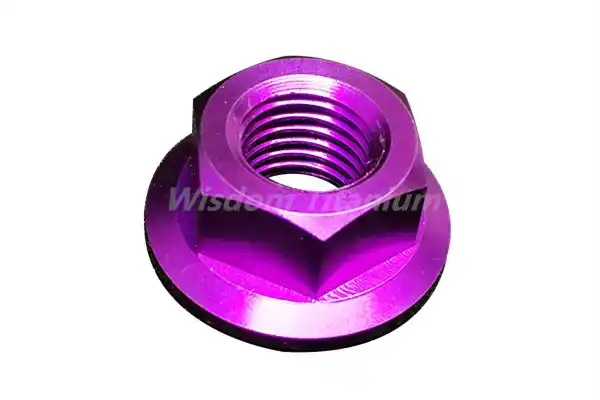
Every part is very important in high-performance engineering because it makes sure that big groups of parts work correctly. Without a doubt, DIN 6923 titanium hex flange nuts are the best nuts for tough jobs. Ti is used to make these nuts because it is strong and light. The design of the flanges spreads the weight and keeps them from coming loose when things get rough.
We'll look at how these new fasteners help with light tasks, how they keep structures strong under a lot of stress, and the fields that depend on their special qualities to do important work.
DIN 6923 Titanium Alloy Hexagonal Flange Nuts: High Load Capacity and Durability
The DIN 6923 titanium hex flange nuts work so well in parts that are under a lot of stress. When failure is not an option, these parts are very important because they don't rust or wear out and can hold a lot of weight.
Ti-6Al-4V alloys of grade 5 are very useful because they are strong for how light they are. It is as strong as or stronger than many steel alloys, but a lot lighter. Its tensile strength is over 950 MPa. Strong but not very dense, engineers can use this stuff to make lighter parts that can still hold weight.
Because they are made with flanges, DIN 6923 titanium hex flange nuts can handle stress even better. Because the bearing surface is wide and flat, it spreads the clamping forces out more across the mating surface. This lowers the chance that stress will build up in one spot, which could cause fatigue failure. The bigger contact area created by this design also makes it less likely that vibrations will loosen it. This is very important in places where things are always changing, like the auto or aerospace industries.
Titanium also doesn't rust, so the fastener will keep its shape even in harsh chemical or marine environments. Rust can make steel fasteners less strong over time. When you put together titanium hex flange nuts, they stay strong and seal for the whole time.
DIN 6923 Titanium Hexagonal Flange Nuts: Improvement of System Performance
DIN 6923 titanium hex flange nuts do more than just hold things together when they are used in high-stress mechanical systems. They are different from regular steel fasteners in ways that make the whole system work better, last longer, and be more efficient.
It aids in weight loss, which is one of the best parts. Every gram matters when weight is a factor, like in high-performance motorsports or aerospace. Techs can save a lot of weight because titanium fasteners are not as heavy as steel ones. For some uses, this lower mass could mean better performance, more payload space, or better gas mileage.
Tiny titanium pieces can be made because the metal is very strong for how light it is. Most of the time, a smaller titanium nut can do the job of a larger steel fastener. This means that designs can be shrunk or extra parts can be added where there isn't much room.
Titanium also doesn't wear down easily, which is great for systems that are under a lot of stress and are pushed and pulled a lot. A lot of different materials change a lot more after being stressed, but these fasteners don't change as much. This could make everything last longer and need less upkeep.
Ti fasteners don't rust, so they don't need to be coated to stay safe or replaced often because the weather wears them down. The machine will always work well in tough conditions where other materials might break down quickly, and it will cost less to maintain in the long run.
Industries That Rely on Titanium Nuts
The exceptional properties of DIN 6923 titanium hex flange nuts make them invaluable across a wide range of industries where performance, reliability, and weight are paramount concerns. Let's examine some of the key sectors that depend on these high-performance fasteners:
Aerospace: Titanium fasteners may be most useful in the aerospace sector. Titanium hex flange nuts are utilized in important parts of commercial airplanes, spacecraft, and other vehicles, such as engine mounts and landing gear assemblies. They are perfect for the tough conditions of flight since they are strong, light, and can handle very high and low temperatures.
Automotive and Motorsports: Titanium fasteners are widely used in high-performance cars and racing cars to make them lighter and stronger in areas that are likely to see a lot of stress and vibration. The particular qualities of titanium nuts make them good for engine parts, suspension systems, and chassis assemblies.
Marine Engineering: Because titanium resists corrosion so well, these fasteners are great for use in marine settings. Titanium hex flange nuts stay strong in saltwater settings where other materials would quickly break down. They are used in anything from offshore oil rigs to high-performance yachts.
Medical Devices: Titanium is a great material for medical implants and surgical tools since it is strong, light, and biocompatible. Titanium screws and bolts are widely utilized in prosthetics, orthopedic devices, and other medical equipment where dependability is very important.
Chemical Processing: Titanium fasteners don't rust when they come into contact with harsh chemicals, and they stay strong even when the temperature rises. This is why they are so important in reactor vessels, heat exchangers, and other important equipment.
Renewable Energy: Titanium fasteners are long-lasting and resistant to rust, which makes them great for wind turbines and solar panel mounting systems. They will work reliably in tough outdoor conditions for decades.
As businesses keep pushing the limits of performance and efficiency, the need for high-quality titanium fasteners like DIN 6923 hex flange nuts will only expand. They are an important part of the most difficult engineering projects around the world because they are strong, light, and long-lasting.
DIN 6923 titanium hex flange nuts are the best choice for engineers and procurement professionals looking for trustworthy fastening solutions for high-stress assemblies. They last longer and work better than any other option. When you think about how to fasten things for your next project, keep in mind that using the appropriate part can make a big difference in getting the best outcomes.
Wisdom Titanium has been making titanium fasteners for ten years and is ready to help you with your high-performance engineering needs. Our ISO 9001-certified processes guarantee quality that is always the same, and our in-house research and development (R&D) capabilities let us customize solutions to meet your needs. We can supply quality with everything from ordinary DIN 6923 titanium hex flange nuts to custom-made fasteners.
Don't compromise on the integrity of your high-stress assemblies. Reach out to Wisdom Titanium today at sales@wisdomtitanium.com to discuss how our titanium fasteners can elevate your next project. Let's work together to push the boundaries of what's possible in engineering and design.
FAQs
Q1: What makes DIN 6923 titanium hex flange nuts superior to standard hex nuts?
A: DIN 6923 titanium hex flange nuts offer several advantages over standard hex nuts. The integrated flange provides a larger bearing surface, distributing the load more evenly and reducing the risk of loosening under vibration. Made from Grade 5 titanium (Ti-6Al-4V), they offer an exceptional strength-to-weight ratio, corrosion resistance, and fatigue resistance. These properties make them ideal for high-stress applications where weight savings and long-term reliability are critical.
Q2: Can DIN 6923 titanium hex flange nuts be used in extreme temperature environments?
A: Yes, titanium hex flange nuts perform exceptionally well in extreme temperature environments. Titanium maintains its strength and mechanical properties across a wide temperature range, from cryogenic temperatures up to about 600°C (1112°F). This makes them suitable for applications in aerospace, automotive, and industrial sectors where components may be exposed to significant temperature variations.
Q3: Are there any special considerations for installing DIN 6923 titanium hex flange nuts?
A: While titanium hex flange nuts offer many benefits, there are some considerations for installation. Due to titanium's tendency to gall (a form of adhesive wear), it's important to use appropriate anti-seize compounds or coatings to prevent thread seizure. Additionally, because titanium is stronger and harder than many bolt materials, care should be taken not to over-torque the assembly, which could damage the mating components.
Q4: How do the cost and lifespan of titanium flange nuts compare to steel alternatives?
A: Initially, titanium flange nuts are more expensive than their steel counterparts due to the higher cost of raw materials and processing. However, when considering the total lifecycle cost, titanium often proves more economical. Their superior corrosion resistance eliminates the need for frequent replacement in harsh environments, and their light weight can contribute to fuel savings in transportation applications. In many high-performance scenarios, the extended lifespan and performance benefits of titanium fasteners justify the higher upfront investment.
Q5: Can Wisdom Titanium provide custom titanium fasteners beyond the standard DIN 6923 specifications?
A: Absolutely. Wisdom Titanium specializes in both standard and custom titanium fasteners. Our in-house R&D team can work with you to design and manufacture bespoke titanium fasteners tailored to your specific application requirements. Whether you need modified dimensions, special coatings, or entirely new designs, we have the expertise and facilities to meet your needs. Contact our sales team to discuss your custom fastener requirements.
References
- DIN Standards Committee. (2020). DIN 6923: Hexagon flange nuts. Deutsches Institut für Normung.
- Boyer, R., Welsch, G., & Collings, E. W. (1994). Materials Properties Handbook: Titanium Alloys. ASM International.
- Campbell, F. C. (2006). Manufacturing Technology for Aerospace Structural Materials. Elsevier.
- Donachie, M. J. (2000). Titanium: A Technical Guide. ASM International.
- Peters, M., Kumpfert, J., Ward, C. H., & Leyens, C. (2003). Titanium alloys for aerospace applications. Advanced Engineering Materials, 5(6), 419-427.