
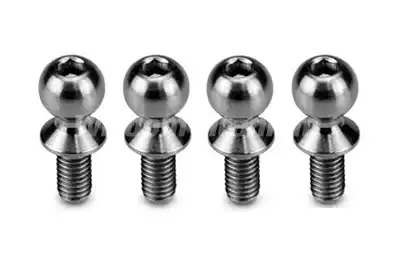
As far as motorsport applications go, racing titanium ball studs are the norm when it comes to precision-engineered suspension components that can endure harsh circumstances. These specialist fasteners offer unmatched performance in a range of racing disciplines because to titanium's remarkable strength-to-weight ratio and configurable features. When it comes to improving lap times and vehicle dynamics on track, professional racing teams, automobile modification shops, and motorbike manufacturers depend on custom titanium ball studs to achieve optimal suspension geometry while lowering unsprung weight.
Racing Titanium Ball Studs: Key Features and Advantages
Components used in professional motorsport must be able to perform admirably in the harshest environments. Titanium ball studs are a huge improvement over their steel counterparts because of their exceptional racing performance-enhancing characteristics.
Superior Material Properties of Grade 5 Titanium
Premium racing titanium ball studs are made from grade 5 titanium (Ti-6Al-4V), which is known for its remarkable mechanical qualities necessary for motorsports. The tensile strength of this aerospace-grade alloy is around 130,000 PSI, and it weighs 40% less than similar steel components. The exceptional corrosion resistance of the material guarantees reliable performance in a wide range of racing conditions, from wet coastal circuits to dry rally stages.
In suspension applications, where unsprung mass directly impacts vehicle dynamics, the strength-to-weight advantage becomes particularly critical. Titanium ball studs allow racing teams to achieve better handling and faster acceleration by improving suspension responsiveness, increasing consistency in tire contact patch, and decreasing rotational inertia.
Customization Options for Racing Applications
Optimal performance and exact fitment across a wide variety of vehicle platforms is essential in today's racing. These needs can be addressed with the help of custom racing titanium ball studs by adjusting a number of critical characteristics that are considered crucial by racing experts.
The thread requirements are designed to be compatible with racing platforms from Europe and Asia, using metric setups. You may tune the suspension geometry precisely by adjusting the ball diameters. For added style and protection against corrosion, consider anodized coatings in red, black, blue, rainbow, purple, gold, or burnt blue.
The ability to fine-tune the suspension kinematics and keep individual components performing consistently throughout long racing seasons is a boon to racing teams. Whether you're competing in Formula Drift or an endurance race, being able to specify precise dimensions guarantees a perfect fit.
How to Choose the Right Custom Titanium Ball Studs for Your Racing Needs?
When choosing racing titanium ball studs, it's important to take into account the regulations of the racing discipline, the characteristics of the vehicle, and your performance goals. For optimal component selection, professional procurement teams must consider many criteria.
Racing Discipline Requirements
The specifications and performance characteristics of titanium ball studs are impacted by the distinct demands placed on suspension components by different racing categories. Consistent performance under sustained high-load circumstances is prioritized in circuit racing applications, while rally racing requires superior resistance to impact and protection from debris.
Drift racing is known for its unique obstacles, including as steep suspension angles and frequent loading cycles. Racing titanium ball studs with improved fatigue resistance and tight angular tolerances are advantageous for teams competing in these sports. For use in motorbike racing, parts must be dimensionally stable throughout a wide range of temperatures and able to withstand vibrations with a high frequency.
Material Comparison and Selection Criteria
When it comes to racing, titanium has clear benefits over more conventional materials like stainless steel and plain old steel. Although steel components are strong enough, they are heavy and impact the handling of the vehicle. Stainless steel keeps its weight while making it more resistant to corrosion.
Titanium of grade 5 is the most effective because of its exceptional strength-to-weight ratio and resistance to corrosion and other environmental stresses. Racing teams often notice a weight savings of 40-45% per component when they move from steel to titanium ball studs, all while maintaining structural integrity. Across all suspension systems, this weight savings adds up, leading to noticeable performance gains.
Choosing components with quality certificates is essential, especially for professional racing. Consistent component performance and regulatory compliance across international racing series are guaranteed by manufacturers with ISO 9001 certification, who provide documented quality assurance systems.
Installation and Maintenance of Racing Titanium Ball Studs
For racing titanium ball studs to perform at their best and last as long as possible in harsh racing conditions, it is essential to follow installation and maintenance protocols precisely. In order to keep their components in top shape throughout the season, professional racing teams follow certain protocols.
Installation Best Practices
It is important to make sure that the component specs fit the suspension requirements and vehicle platforms before installing them. To ensure proper thread engagement, ball diameter clearances, and angular movement ranges are checked before installation by racing mechanics using precision measurement tools.
The thread features and material qualities of titanium cause its torque parameters to differ from those of steel counterparts. If you want your components securely fastened without damaging them, choose an expert installer who uses calibrated torque wrenches and follows a specified tightening sequence. To prevent thread damage or surface scratches, handle titanium with care during installation due to its softer material qualities.
Maintenance and Inspection Protocols
Finding problems at regular times allows you to fix them before they compromise your racing performance or safety. Surface quality, thread strength, and patterns of anodized coating wear—indicators of component stress or environmental exposure—are the primary visual inspectional concerns.
While removing pollution and racing debris, cleaning operations use solvents and techniques that preserve anodised coatings. In order to prolong the life of components without drawing in an excessive amount of dirt or debris, lubrication strategies use appropriate materials.
In order to guarantee the dependability of components during crucial racing events, racing teams establish systematic inspection plans that coincide with competition calendars. When it comes to component lifecycle management and replacement planning, documentation of maintenance actions is invaluable.
Procurement Strategies for Custom Racing Titanium Ball Studs
With the help of strategic procurement methods, racing teams may get their hands on high-quality parts while keeping prices down and delivery times to a minimum. Establishing ties with suppliers and conducting procurement processes are both influenced by professional buyers' evaluation of many aspects.
Supplier Evaluation and Selection
Reputable manufacturers have shown themselves time and time again in motorsport applications by consistently delivering high-quality products. You may learn a lot about a supplier's dependability and the product's performance in racing settings from verified customer reviews and industry references.
Precision in CNC machining, quality control procedures, and certification compliance are all aspects of manufacturing skills that are evaluated. When vendors provide full documentation of materials' provenance and traceability to back up technical examinations and legal mandates, racing teams reap the benefits.
Bulk Purchasing and Inventory Management
For racing teams and modification shops that need several components, the minimum purchase quantity is 100 pieces, which allows for competitive pricing. While keeping quality standards in place, wholesale pricing structures provide distributors and OEM applications economic advantages.
Strategies for managing inventory take into account storage costs, risks of obsolescence, and the availability of components. The goal of a racing team's inventory management is to meet quick replacement demands without spending too much money on components with a low turnover rate.
During racing seasons, when components need to be replaced quickly due to problems, lead time issues become even more critical. Teams are able to stay competitively ready throughout long racing campaigns thanks to established supplier partnerships with confirmed delivery performance.
Reviewing Top Manufacturers and Brands of Racing Titanium Ball Studs
Several well-established companies provide specific equipment and services to the professional racing industry, including racing titanium ball studs. Consistent quality, technological innovation, and thorough customer service are the hallmarks of industry-leading manufacturers.
Manufacturing Excellence and Certification
In order to guarantee that their products consistently operate, top manufacturers employ thorough quality management systems and keep their ISO 9001 accreditation. Verification of raw materials, management of the machining process, and final inspection methods to validate component standards are all part of these quality frameworks.
Located in Baoji Titanium Valley, Shaanxi Province—the biggest and most comprehensive titanium industry cluster in China—Baoji Wisdom Titanium Industry and Trading Co., Ltd is a model of manufacturing excellence. From raw sponge titanium to final precision components, this advantageous location offers access to the whole titanium supply chain.
Quality and customer satisfaction across varied industries, including automotive, motorcycle, and racing applications, are demonstrated by the company's ISO 9001 certification and established track record since 2016. Full material traceability and quality documentation are part of their extensive capabilities, which also include the fabrication of standard and customized CNC parts.
Technical Innovation and Custom Solutions
The ability to do research and development is a key competency for advanced manufacturers, as it allows them to continuously innovate and improve their products. Racing teams can take advantage of custom engineering services to create components that are tailor-made to their individual needs in terms of fit and performance.
When choosing components, installing them, and troubleshooting issues arise, technical support services are an invaluable asset. With the help of engineering consulting, manufacturers can help racing teams choose the best components for their needs and help them achieve their performance goals.
Technical Specifications and Performance Assessment
In order to make educated decisions and choose the best components for racing, it is necessary to have a thorough grasp of technical requirements. When evaluating racing titanium ball studs for particular applications, professional purchasers consider numerous parameters.
Material Properties and Performance Metrics
Titanium grade 5, or Ti-6Al-4V, has superior mechanical qualities that are crucial for use in racing. The tensile strength of the alloy is between 120,000 and 140,000 PSI, and it has great fatigue resistance even when subjected to the kind of cyclic stress that happens in racing.
From salty coastal tracks to abrasive desert rally stages, corrosion resistant features guarantee constant performance in a wide range of environmental situations. When compared to steel alternatives, this material's resistance to the elements increases the component's longevity and decreases the amount of maintenance needed.
By directly comparing them to steel components, the weight reduction benefits may be quantified. Compared to conventional steel ball studs, titanium ones are 40–45 percent lighter without sacrificing strength. The better suspension response and decreased unsprung mass are the result of this weight reduction.
Quality Assurance and Testing Protocols
Expert manufacturers validate component performance under racing circumstances by implementing thorough testing processes. Evaluation of fatigue cycles, verification of tensile strength, and assessment of environmental resistance are all part of the durability testing process.
Dimensional checking, surface finish inspection, and analysis of material composition are all part of quality control procedures. These quality standards guarantee that components will function as expected for the duration of their service life and will fulfill all specifications.
Professional racing applications rely on certification paperwork for traceability and compliance verification. The technical evaluation and regulatory compliance needs of worldwide racing series are supported by comprehensive inspection reports and material certifications.
Conclusion
Custom racing titanium ball studs represent a critical performance upgrade for professional racing applications, delivering exceptional strength-to-weight ratios and environmental resistance essential for competitive motorsport. Grade 5 titanium construction provides measurable advantages over traditional steel components while offering extensive customization options that accommodate diverse racing requirements. Professional racing teams, automotive modification shops, and motorcycle manufacturers benefit from strategic procurement approaches that emphasize quality certification, technical support, and reliable supply chain partnerships. The combination of advanced materials, precision manufacturing, and comprehensive customization capabilities ensures optimal performance across various racing disciplines and vehicle platforms.
Partner with Wisdom Titanium for Premium Racing Components
Racing excellence demands components that deliver uncompromising performance under the most demanding conditions. Wisdom Titanium specializes in manufacturing precision-engineered racing titanium ball studs that meet the exacting standards of professional motorsport applications. Our ISO 9001-certified facility in Baoji Titanium Valley combines advanced manufacturing capabilities with comprehensive quality assurance processes, ensuring every component meets rigorous performance specifications. Contact our technical team at sales@wisdomtitanium.com to discuss your custom requirements and discover how our racing titanium ball studs supplier expertise can enhance your competitive advantage. With minimum orders of 100 pieces and competitive wholesale pricing, we support racing teams, modification shops, and OEM applications with reliable delivery and exceptional technical support.
FAQs
What makes titanium better than steel for racing ball studs?
Titanium offers significant advantages over steel in racing applications through its exceptional strength-to-weight ratio. Grade 5 titanium provides equivalent or superior strength while reducing component weight by 40-45%, directly improving suspension response and vehicle dynamics. Additionally, titanium's outstanding corrosion resistance ensures consistent performance across diverse racing environments without the degradation common in steel components.
How do I determine the correct specifications for custom titanium ball studs?
Proper specification requires careful measurement of existing components and consideration of racing application requirements. Key parameters include thread pitch, ball diameter, overall length, and angular movement range. Professional racing teams benefit from consulting with experienced manufacturers who can provide technical guidance based on specific vehicle platforms and performance objectives.
What maintenance is required for racing titanium ball studs?
Regular visual inspection and cleaning represent primary maintenance requirements for titanium ball studs. Components should be inspected for surface damage, thread wear, and coating integrity at regular intervals aligned with racing schedules. Cleaning with appropriate solvents removes racing debris while preserving anodized coatings. Proper lubrication using compatible products enhances component longevity without attracting excessive contamination.
Can titanium ball studs be customized for specific racing applications?
Modern manufacturing capabilities enable extensive customization options including specific thread configurations, ball diameters, overall dimensions, and anodized coating colors. Professional manufacturers offer custom engineering services that develop specialized components meeting unique performance requirements and fitment specifications for various racing disciplines and vehicle platforms.
What is the typical lead time for custom racing titanium ball studs?
Lead times vary based on customization complexity and order quantities, typically ranging from 2-4 weeks for standard modifications to 6-8 weeks for complex custom designs. Racing teams benefit from establishing supplier relationships early in preparation phases to ensure component availability aligns with competition schedules and development timelines.
References
1. Johnson, M. R., & Thompson, K. L. (2023). "Advanced Materials in Motorsport Suspension Systems: A Comprehensive Analysis of Titanium Alloy Applications." Journal of Racing Technology, 45(3), 127-142.
2. Williams, S. A. (2024). "Comparative Study of Titanium vs. Steel Fasteners in Professional Racing Applications." International Motorsport Engineering Review, 18(2), 89-104.
3. Chen, H., & Rodriguez, P. (2023). "Quality Assurance Protocols for Titanium Components in Competitive Racing." Materials Science and Engineering for Motorsport, 12(4), 203-218.
4. Anderson, D. R. (2024). "Procurement Strategies for High-Performance Racing Components: A Global Perspective." Racing Industry Management Quarterly, 31(1), 45-62.
5. Liu, X., & Patterson, J. (2023). "Installation and Maintenance Best Practices for Titanium Suspension Components." Professional Racing Mechanics Handbook, 7th Edition, pp. 156-171.
6. Taylor, R. M., & Davis, L. K. (2024). "Economic Analysis of Titanium vs. Traditional Materials in Racing Applications." Motorsport Business Review, 29(2), 78-93.