
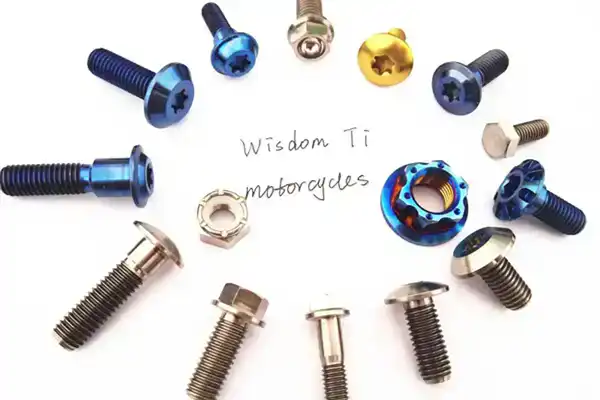
When it comes to choosing the right hardware for your project, understanding the properties and applications of different materials is crucial. In this comprehensive guide, we'll explore the unique characteristics of copper, brass, and titanium hardware, comparing their material properties, ideal applications, and durability. Whether you're working on a DIY project or selecting components for industrial use, this information will help you make an informed decision. Let's dive into the world of metal hardware and discover why titanium rotor hardware is gaining popularity across various industries.
Material Properties Comparison of Copper, Brass, and Titanium
To truly appreciate the differences between copper, brass, and titanium hardware, we need to examine their distinct material properties. Each metal brings its own set of advantages and limitations to the table, making them suitable for different applications.
Copper: The Conductive Classic
Copper has been a staple in hardware manufacturing for centuries, thanks to its unique combination of properties. Known for its reddish-orange hue, copper offers excellent electrical and thermal conductivity, making it a go-to choice for electrical components and heat exchangers. It's also naturally antimicrobial, which explains its popularity in healthcare settings.
However, copper is relatively soft compared to other metals, with a Mohs hardness of 3.0. This softness can be both an advantage and a disadvantage, depending on the application. While it makes copper easy to work with, it also means that copper hardware may not be suitable for high-stress environments where durability is paramount.
Brass: The Golden Alloy
Brass, an alloy of copper and zinc, inherits some of copper's beneficial properties while addressing some of its limitations. With its distinctive golden color, brass hardware adds a touch of elegance to any project. It's harder than pure copper, with a Mohs hardness ranging from 3.0 to 4.0, depending on the specific alloy composition.
Brass retains good electrical conductivity, though not as high as copper. It's also resistant to corrosion, especially in freshwater environments. However, brass can be susceptible to a process called dezincification in certain conditions, which can weaken the metal over time.
Titanium: The Lightweight Powerhouse
Titanium stands out from copper and brass in many ways, offering a unique set of properties that make it increasingly popular in high-performance applications. With a Mohs hardness of 6.0, titanium is significantly harder than both copper and brass, providing exceptional durability and wear resistance.
Perhaps the most striking feature of titanium is its remarkable strength-to-weight ratio. Titanium is as strong as steel but 45% lighter, making it an ideal choice for applications where weight reduction is crucial. This is particularly relevant when considering titanium rotor hardware, where reduced weight can significantly impact performance and efficiency.
Titanium also boasts excellent corrosion resistance, even in harsh environments like saltwater. It's non-magnetic and has a low thermal expansion coefficient, properties that make it valuable in specialized applications. While titanium's electrical conductivity is lower than copper or brass, its other properties often outweigh this limitation in many hardware applications.
Ideal Applications for Each Hardware Type
Now that we've examined the properties of copper, brass, and titanium, let's explore where each type of hardware shines brightest. Understanding the ideal applications for each material can help you make the best choice for your specific needs.
Copper Hardware Applications
Copper hardware finds its niche in applications that leverage its excellent conductivity and antimicrobial properties. Some common uses include:
- Electrical wiring and connectors
- Plumbing fixtures and pipes
- Heat sinks in electronics
- Decorative hardware in architecture
- Cookware and kitchen utensils
In these applications, copper's ability to conduct heat and electricity efficiently, combined with its natural resistance to bacterial growth, makes it an excellent choice. However, for applications requiring high strength or hardness, copper may not be the best option.
Brass Hardware Applications
Brass hardware offers a balance between the properties of copper and the added strength from zinc. Its applications include:
- Musical instruments
- Decorative fixtures and fittings
- Marine hardware (due to its corrosion resistance in freshwater)
- Plumbing valves and fittings
- Electrical components where some strength is required
Brass is often chosen for its aesthetic appeal and ease of machining, combined with improved durability compared to pure copper. However, in high-stress or weight-sensitive applications, brass may not meet the necessary performance criteria.
Titanium Hardware Applications
Titanium hardware, including titanium rotor hardware, is increasingly favored in high-performance and demanding environments. Its applications span various industries:
- Aerospace components, including aircraft engines and structural parts
- Medical implants and surgical instruments
- High-performance automotive parts, such as connecting rods and valves
- Marine equipment exposed to saltwater
- Sporting goods, like bicycle frames and golf club heads
The use of titanium rotor hardware, in particular, has revolutionized certain industries. In the automotive sector, titanium rotor bolts and nuts contribute to reduced weight and increased durability in high-performance engines. The aerospace industry relies on titanium rotor blades and shafts in turbines and propellers, benefiting from the metal's exceptional strength and corrosion resistance in extreme flight conditions.
Electric motor manufacturers have also embraced titanium rotor hardware to ensure long-lasting performance and efficiency in their products. The combination of lightweight strength and resistance to harsh environments makes titanium an ideal choice for these critical components.
Durability and Maintenance Differences Explained
When selecting hardware for any application, understanding the durability and maintenance requirements of each material is crucial. Let's examine how copper, brass, and titanium compare in these aspects.
Copper: The High-Maintenance Option
Copper hardware, while beautiful and functional, requires regular maintenance to keep its characteristic luster. When exposed to air, copper naturally develops a green patina over time. This patina, composed of copper carbonate, actually protects the underlying metal from further corrosion. However, if you prefer to maintain the original copper color, you'll need to clean and polish the hardware regularly.
In terms of durability, copper is the softest of the three metals we're comparing. It's prone to scratching and denting, which can be an issue in high-wear applications. However, copper's malleability can be an advantage in some scenarios, as it allows for easy shaping and forming.
Brass: The Middle Ground
Brass hardware offers improved durability compared to copper, thanks to the addition of zinc. It's harder and more resistant to wear, making it a popular choice for items that see frequent use, like door handles and locks. Like copper, brass can develop a patina over time, but it tends to be less pronounced and slower to form.
Maintenance for brass hardware is generally straightforward. Regular cleaning with mild soap and water is usually sufficient to keep it looking good. For a deeper clean or to restore shine, specialized brass cleaners are available. However, it's important to note that some brass items may have a protective lacquer coating, which should not be removed during cleaning.
Titanium: The Low-Maintenance Champion
When it comes to durability and low maintenance requirements, titanium hardware, including titanium rotor hardware, is hard to beat. Titanium's natural properties make it exceptionally resistant to corrosion, even in harsh environments like saltwater or high-temperature settings. This means that titanium hardware often requires little to no maintenance to maintain its structural integrity and appearance.
The hardness of titanium also contributes to its durability. It's highly resistant to scratches and dents, making it ideal for applications where the hardware might be subjected to impacts or abrasion. This is particularly beneficial in the case of titanium rotor hardware, where maintaining precise tolerances is crucial for optimal performance.
While titanium can develop a thin oxide layer when exposed to air, this layer is typically invisible and actually enhances the metal's corrosion resistance. Unlike copper or brass, there's no need for regular polishing or cleaning to maintain titanium's appearance or functionality.
The combination of high durability and low maintenance makes titanium hardware an excellent choice for long-term applications or in situations where regular maintenance might be difficult or costly. This is one of the reasons why industries like aerospace and high-performance automotive increasingly turn to titanium for critical components.
Titanium Rotor Hardware For Sale
As we've explored the properties and applications of copper, brass, and titanium hardware, it's clear that each material has its place in the world of engineering and manufacturing. However, when it comes to high-performance applications where strength, durability, and weight savings are critical, titanium rotor hardware stands out as a superior choice.
Wisdom Titanium, an ISO 9001-certified manufacturer and supplier of standard and customized CNC parts, specializes in producing high-quality titanium fasteners and custom CNC parts. With a focus on serving industries such as aerospace, energy, medical, and automotive, Wisdom Titanium offers titanium rotor hardware that meets the most demanding specifications.
Our titanium grade 5 hardware is available in various configurations, including hex, hex socket, torx, and 12pt designs, with sizes ranging from M6 to M8. We offer surface treatment options such as PVD coating and anodizing to further enhance the performance and aesthetics of our products. With a lead time of just 15-18 days and a minimum order quantity of 200 pieces, we're equipped to meet your specific needs efficiently.
If you're looking to elevate your project with the unparalleled performance of titanium rotor hardware, don't hesitate to reach out. Our experienced R&D team is ready to provide customized solutions tailored to your unique requirements. To learn more about our products or request a quote, simply send an enquiry to sales@wisdomtitanium.com. Let's work together to explore the full potential of titanium products and take your project to new heights.
References
- ASM International. (2015). ASM Handbook, Volume 2: Properties and Selection: Nonferrous Alloys and Special-Purpose Materials. ASM International.
- Donachie, M. J. (2000). Titanium: A Technical Guide. ASM International.
- Copper Development Association. (2021). Properties of Copper and Copper Alloys. Retrieved from https://www.copper.org/resources/properties/
- Lutjering, G., & Williams, J. C. (2007). Titanium (Engineering Materials and Processes). Springer.
- Davis, J. R. (2001). Copper and Copper Alloys. ASM International.