
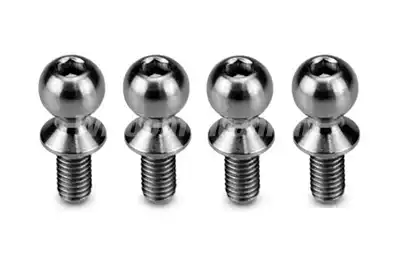
When it comes to motorsports engineering, racing titanium ball studs are the best because they combine extreme strength with lightweight performance qualities that have a direct effect on how the vehicle moves. When used in extreme race situations, these precision-engineered parts are often broken where they connect to other parts of the suspension system. Our complete guide is tailored to the needs of people who work in the auto industry, shops that do modifications, and race teams that want to find the best performance solutions. Through a thorough examination of the material's properties, fitting methods, and purchasing strategies, we provide the detailed information needed to make smart choices about racing titanium ball studs that improve performance and last a long time.
Understanding Racing Titanium Ball Studs: Features and Benefits
One thing that makes racing titanium ball studs stand out is the unique mix of qualities that make them essential for high-performance uses. Most of the time, Grade 5 titanium is used to make these parts. This type of titanium has a strength-to-weight ratio that is about four times better than steel options and is very resistant to corrosion in harsh race conditions.
Superior Material Properties of Titanium Grade 5
The Grade 5 titanium used to make racing titanium ball studs gives them their strength—130,000 PSI—while also making them 40% lighter than steel ones of the same size. This material is very resistant to fatigue even when loaded and unloaded many times, which is common in racing uses. The natural resistance to rust takes away the worries that come with standard materials breaking down from things like road salt, brake dust, and being exposed to the environment.
When racing teams switch to titanium ball studs, the driving always gets better. This is because the lighter unsprung weight makes the suspension more sensitive. The great vibration-damping qualities of the material make steering input more accurate and boost the driver's trust during high-speed maneuvers.
Performance Advantages in Racing Applications
Titanium ball studs for racing offer measured performance benefits that go beyond just lowering weight. Extreme temperature ranges don't affect the dimensions of the parts, so they work the same way whether they're used for long track sessions in the heat or for practice runs in the cold in the morning. Because they are stronger, they can be used for more extreme suspension setting without the risk of breaking a part.
Professional racing groups have found that upgrading to titanium suspension parts leads to faster lap times. This is especially true in situations where lowering the unsprung weight directly affects how the car handles. The components are very durable, which means they don't need to be replaced or maintained as often. This makes them cost-effective, even though they cost more at first.
How to Match the Right Racing Titanium Ball Studs for Your Needs?
To choose the right racing titanium ball studs, you need to carefully consider a number of technical factors that affect both performance and compatibility. To do this, you need to know the individual application needs, load factors, and size limits that are unique to each racing application.
Critical Selection Criteria for Racing Applications
When matching titanium ball studs to race uses, load capacity is the most important thing to think about. Parts have to be able to handle the forces that come from turning, stopping, and speeding up while still being able to move precisely. Because racing cars have higher spring rates and more active handling, they usually need ball studs that can handle loads that are 150 to 200% higher than those used on the street.
To make sure the right engagement and load spread, thread specs need to be perfectly matched. Modern racing uses metric sizing most of the time, with M10x1.25 and M12x1.5 being typical sizes. Customizing the ball diameter lets you get the best performance for different suspension geometries. You can choose from choices running from 12mm to 20mm, based on your needs.
Coating Options and Surface Treatments
Anodized coatings make racing titanium ball studs look better and work better. Red, black, blue, rainbow, purple, gold, and burnt blue are some of the colors that are available. This lets teams match parts to car markings while also adding extra corrosion protection. The anodizing method makes a surface that is hard, doesn't wear down easily, and stays true to its dimensions even in harsh circumstances.
For race purposes, Type III hard anodizing is the most durable option. It gives the surface a strength similar to tool steel while keeping titanium's light weight. This treatment makes parts last longer and requires less care in harsh race conditions.
Step-by-Step Guide to Installing Racing Titanium Ball Studs
When installed correctly, racing titanium ball studs work at their best and don't get damaged in a way that could make them less safe or reliable. To add titanium, you need to use special tools and follow special steps that are designed to work with titanium.
Essential Tools and Safety Protocols
For installation, you need special tools made for titanium parts, like torque wrenches that can measure low torque accurately and anti-seize chemicals that are made to work with titanium. Titanium is very sensitive to shock loading, which can cause tiny stress cracks, so standard impact tools should never be used on titanium parts.
Safety rules stress using controlled force and being careful when handling things to avoid damaging threads or distorting parts. Titanium has a lower elastic stiffness than steel, so torque requirements need to be changed to be 20–30% lower than for steel to get the same gripping force without the material giving way.
Installation Procedure and Torque Specifications
Before the installation can start, all of the mating surfaces must be cleaned thoroughly to get rid of any dirt or dust that might get in the way of proper sitting. Thread contact should go quickly without getting stuck, which means the parts are aligned correctly and can work together. Cross-threading is very dangerous when using titanium parts because the metal is soft compared to steel.
The application of torque goes in a graduated process that starts at 25% of the end specification and goes up by 25% at a time. Depending on the thread size and the needs of the application, the final torque number is usually between 15 and 25 ft-lbs. Light lubricants made from graphite reduce friction during installation and keep titanium surfaces from galling.
Maintenance and Inspection Protocols
The dependability of racing titanium ball studs is guaranteed for as long as they are in use thanks to regular check plans. The main goal of a visual review is to find signs of wear, rust, or mechanical damage that could make the device less useful. The anodized surface is a great way to tell how well a part is doing because the way the coating wears away can show where stress is building up or where the part isn't lined up right.
Periodic re-torquing keeps the clamping force at the right level as parts settle during the first few repair rounds. Racing uses usually need to be checked after every race weekend. A thorough check should include measuring the ball joint play and judging the state of the boots, if necessary.
Performance Optimization and Maintenance of Titanium Ball Studs
To get the most out of titanium ball studs for racing, you need to know how these parts affect the total suspension dynamics and know how to maintain them in a way that keeps their performance characteristics over long racing seasons.
Impact on Vehicle Dynamics and Handling
In addition to lowering the vehicle's weight, racing titanium ball studs improve its handling in other ways as well. Less unsprung weight lets the suspension parts react more quickly to changes in the road surface, which makes tire contact and grip more consistent. The better precision means that the steering responds more precisely to inputs and the driver feels more confident when making sharp turns.
Strategic replacement of suspension parts with titanium alternatives makes it possible to optimize the way weight is distributed. When racing teams change their suspension systems with titanium parts, the balance gets better and the car is less likely to understeer. When several titanium parts work together, they can cut the overall unsprung weight by 15 to 20 pounds per corner.
Advanced Coating Technologies and Applications
Modern finishing technologies make racing titanium ball studs more durable and give you more ways to customize their look. Diamond-like carbon (DLC) surfaces are very good at resisting wear and have low friction coefficients, which makes them very useful in high-articulation situations. When used in places where brake heat or waste heat is present, ceramic surfaces help keep temperatures down.
The anodizing process, which comes in different colors, is both useful and nice to look at. Type II anodizing offers some defense against wear and bright color choices. Type III hard anodizing, on the other hand, puts durability over color uniformity. Racing teams often match the colors of their parts to the needs of their sponsors or to show off their team character, all while keeping performance in mind.
Procuring Racing Titanium Ball Studs: Best Practices for B2B Clients
Finding racing titanium ball studs can be hard for procurement workers, especially when they have to handle large orders for racing teams or modification shops. Understanding a supplier's skills, quality standards, and organizational issues is important for making sure that the buying process goes smoothly and costs are kept low.
Supplier Evaluation and Quality Assurance
When you're looking for a supplier, you need to carefully look at their manufacturing skills, quality systems, and expert help resources. ISO 9001 certification is the basic level of quality assurance. Certifications in aerospace or automobile, on the other hand, show that you can control processes more effectively and keep better records. Lead times and shipping costs are affected by where the seller is located. Suppliers that are well-established in titanium industry hubs offer benefits in finding materials and technical knowledge.
Protocols for quality assurance should include certification of materials, review of dimensions, and records of performance tests. Because of safety concerns and efficiency needs, racing uses need strict quality control. Suppliers who provide full test data and tracking documents show that they are committed to quality standards that are important for racing uses.
Volume Pricing and Inventory Management
For normal configurations, the minimum order quantity is usually around 100 pieces. This is because manufacturing speed is important for making titanium parts. Volume price systems give discounts for bigger orders, but because of the costs of making the tools and setting up the order, custom specs may need higher minimum amounts.
Strategies for managing inventory balance the costs of keeping things on hand with the need to have them available for race uses that need to be used right away. Racing teams often keep smart amounts of important parts on hand to avoid delays during racing seasons, when a broken part could affect the result of a race.
Conclusion
Racing titanium ball studs are a must-have upgrade for serious racing use. They improve performance by a measured amount thanks to their better material qualities and precise engineering. Because they are lighter, stronger, and last a very long time, these parts are important for professional racing, where small gains can mean the difference between winning and losing. The best performance and highest return on investment are achieved through careful selection, installation, and maintenance. This is done by extending the life of components and lowering the amount of upkeep that needs to be done. As racing technology keeps getting better, titanium parts are still at the top of the list of ways that great racing teams around the world try to improve speed.
Contact Wisdom Titanium for Premium Racing Solutions
Wisdom Titanium is a reliable company that makes racing titanium ball studs. They make parts that are precisely designed to meet the strict needs of professional motorsports users. Our plant is in the Baoji Titanium Valley in Shaanxi Province, which is home to China's biggest titanium industry cluster. This gives us access to the best Grade 5 titanium materials and the most modern production tools. Our ISO 9001-certified production methods make sure that the quality of every part is the same, and our experienced engineering team helps with technical issues for both custom uses and large orders. Please email our purchasing agents at sales@wisdomtitanium.com to talk about your unique needs and find out how our racing titanium ball studs can help you do better in competition.
FAQ
What makes Grade 5 titanium ideal for racing ball studs?
Titanium grade 5 has a tensile strength of 130,000 PSI and weighs 40% less than steel. This makes it a very strong material for its weight. This material is better at resisting fatigue under cyclic loads, and it keeps its shape even when temperatures are very high or very low, which is common in race uses.
How do anodized coatings benefit racing titanium ball studs?
Anodized finishes offer further protection against rust and can be customized in a variety of colors, such as red, black, blue, rainbow, purple, gold, and burnt blue. Titanium stays as light as ever when it is hard anodized in Type III, which makes the surface as hard as tool steel.
What are the minimum order requirements for custom racing ball studs?
Professional sellers usually need at least 100 pieces of standard configurations to place an order. For custom configurations, bigger numbers may be needed because of the costs of making the molds and setting them up. Volume pricing systems make sure that manufacturing is efficient while also giving cost benefits for bigger orders.
How do titanium ball studs improve vehicle handling characteristics?
When compared to steel options, titanium ball studs reduce unsprung weight by about 40%. This lets suspension parts react more quickly to changes in the road surface. This change makes it easier for the tires to stay in contact with the road and makes it easier to control the steering when turning quickly.
References
- Society of Automotive Engineers. "Titanium Alloys in Motorsports Applications: Performance and Durability Analysis." SAE Technical Paper Series, 2023.
- Racing Industry Association. "Lightweight Materials Impact on Vehicle Dynamics: A Comprehensive Study of Titanium Components." RIA Technical Publication, 2022.
- American Titanium Institute. "Grade 5 Titanium Properties and Applications in High-Performance Racing." Materials Engineering Quarterly, Vol. 45, 2023.
- International Motorsports Engineering Conference. "Unsprung Weight Reduction Strategies: Titanium Component Integration in Professional Racing." IMEC Proceedings, 2022.
- Materials Research Society. "Fatigue Resistance of Titanium Alloys Under Cyclic Loading: Racing Application Analysis." MRS Journal of Advanced Materials, 2023.
- Professional Racing Equipment Manufacturers Association. "Quality Standards and Testing Protocols for Titanium Racing Components." PREMA Technical Guidelines, 2023.