
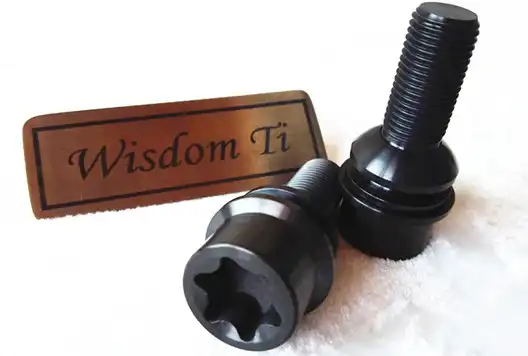
Forged titanium lug bolts are the best example of automotive fastener engineering. They have the best strength-to-weight ratios and corrosion resistance. This all-in-one guide covers important things that car manufacturers, racing teams, and modification shops need to think about when buying high-quality wheel fastening systems. Knowing the characteristics of the materials, the forging methods, and the application requirements helps you make smart buying selections that improve the performance of your vehicle while keeping it safe. Modern forged lug bolts can be up to 50% lighter than steel ones without sacrificing strength or endurance.
Understanding Forged Titanium Technology and Manufacturing Excellence
The forging process changes the molecular structure of titanium in a big way, making it stronger than machined equivalents. Heat treatment during forging lines up the grain boundaries, which makes the material stronger and more resistant to fatigue. Grade 5 titanium alloy (Ti-6Al-4V) is the benchmark for the automobile sector. It has a minimum tensile strength of 900 MPa.
How well anything works is directly affected by how well it is made. Advanced forging methods get rid of internal cavities and stress points that make traditional fasteners less strong. Hammering controlled by a computer makes sure that the grain flow patterns are always the same. Then, heat treatment improves the strength of the material. High-quality forged titanium fasteners are put through strict testing procedures, such as ultrasonic inspection and dimensional verification.
Surface treatments improve functionality beyond the qualities of the base material. Natural titanium finishes are very resistant to corrosion, and PVD black coatings look good and last longer. These treatments keep the tolerances of the dimensions while adding protective barriers against damage from the environment.
Material Specifications and Grade Selection Criteria
The performance of forged titanium lug bolts in different applications depends on the choice of alloy. Grade 5 titanium is the most popular type of titanium in the automobile industry because it is very strong and stable at high temperatures. This alloy has 6% aluminum and 4% vanadium, which makes it the best balance between being easy to work with and having good mechanical qualities.
The chemical makeup of a material has a direct effect on how well it resists corrosion and how it behaves mechanically. When it comes to chloride conditions, grade 5 titanium works better than stainless steel. The temperature stability is the same across operational ranges from -253°C to 600°C, which makes it good for racing in difficult situations.
The mechanical properties of different grades are very different. Compared to Grade 5, Grade 2 titanium is easier to shape but not as strong. When choosing the right grades, commercial customers need to measure the load requirements against the weight reduction aims. Yield strength, ultimate tensile strength, and elongation percentages help you choose the right specifications.
Certification criteria make sure that materials can be traced and that they are of good quality. Mill test certificates check the chemical composition and mechanical properties of a material. ISO 9001 certification shows that a company follows quality methods for manufacturing, and aeronautical clearances show that the materials used are of the highest quality.
Design Features and Technical Specifications
Thread specifications significantly impact installation compatibility and load distribution. M14x1.5 and M14x1.25 forged titanium lug bolt threads accommodate most European and Asian vehicle platforms. Thread pitch selection affects clamping force distribution and installation torque requirements. Precision threading ensures proper engagement without cross-threading risks.
Drive configurations influence installation efficiency and tool compatibility. T80 Torx drives provide superior torque transmission compared to hexagonal alternatives. Star-pattern engagement reduces cam-out risks while enabling higher torque applications. Professional installation tools ensure proper tightening without damaging drive features.
Floating washer systems accommodate thermal expansion and vibration scenarios. Integrated washers distribute clamping loads across wheel surfaces while preventing galvanic corrosion. Washer materials must complement titanium properties to avoid differential expansion issues. Proper washer selection extends service life while maintaining clamping integrity.
Forged titanium lug bolt length variations accommodate different wheel and spacer configurations. Standard lengths range from 25mm to 60mm, covering most automotive applications. Custom lengths address specialized requirements for modified suspensions or aftermarket wheels. Proper engagement depth ensures adequate thread contact for safety-critical applications.
Performance Advantages in Automotive Applications
Weight reduction delivers measurable performance improvements across multiple vehicle systems. Forged titanium lug bolts reduce unsprung weight, improving suspension response and tire contact consistency. Each kilogram reduction in rotating mass enhances acceleration and braking performance while reducing fuel consumption in street applications.
Strength characteristics exceed steel alternatives while maintaining dimensional stability. Forged titanium bolts withstand extreme vibration loads without loosening or fatigue failures. Stress concentration factors remain minimal due to optimized grain structure from forging processes. Racing applications benefit from consistent performance under repeated thermal cycling.
Corrosion resistance eliminates maintenance concerns in harsh environments. Titanium forms passive oxide layers that resist chloride attack and atmospheric oxidation. Coastal environments and winter salt exposure cannot compromise properly manufactured titanium fasteners. Long-term reliability reduces replacement costs and maintenance intervals.
Temperature stability maintains mechanical properties across operational ranges. Brake heat cycling does not affect titanium bolt strength or dimensional accuracy. Thermal expansion coefficients remain compatible with aluminum and steel wheel materials. Consistent performance eliminates temperature-related loosening issues common with steel fasteners.
Quality Standards and Compliance Requirements
Manufacturing standards ensure consistent quality and performance reliability. ISO 9001 certification demonstrates quality management system implementation throughout production processes. Material certifications verify chemical composition and mechanical property compliance with specifications. Batch traceability enables quality issue resolution and continuous improvement.
Testing protocols validate performance characteristics before market release. Tensile testing confirms ultimate strength and yield point specifications. Fatigue testing simulates operational stress cycles to verify service life predictions. Dimensional inspection ensures thread accuracy and surface finish compliance.
Automotive industry standards govern forged titanium lug bolt applications in safety-critical systems. DIN and ISO thread specifications ensure compatibility across vehicle platforms. Torque specifications account for material properties and thread engagement requirements. Proper installation procedures prevent over-tightening and stress concentration.
Documentation requirements support quality assurance and regulatory compliance. Material certificates provide chemical analysis and mechanical property verification. Manufacturing records enable batch tracking and quality issue investigation. Installation guidelines ensure proper application and performance optimization.
Procurement Considerations for B2B Buyers
Minimum order quantities affect pricing structures and delivery schedules. Standard MOQ requirements typically range from 100 to 500 pieces depending on specifications. Custom configurations may require higher minimum quantities due to tooling and setup costs. Volume commitments often enable preferential pricing and priority production scheduling.
Lead time planning accommodates manufacturing and quality assurance requirements. Standard products typically ship within 2-4 weeks from order confirmation. Custom specifications require additional time for tooling preparation and first article inspection. Rush orders may incur premium charges while potentially compromising quality control procedures.
Pricing structures reflect material costs, manufacturing complexity, and volume commitments. Grade 5 titanium commands premium pricing compared to commercial grades due to alloy content and processing requirements. Forging operations add value through enhanced mechanical properties but increase manufacturing costs. Volume pricing tiers reward larger commitments with reduced unit costs.
Forged titanium lug bolt supplier evaluation criteria should emphasize quality systems and technical capability. ISO certification demonstrates manufacturing process control and continuous improvement commitment. Technical support capabilities enable application optimization and problem resolution. Supply chain stability ensures consistent delivery and quality performance.
Application-Specific Selection Guidelines
Racing applications demand maximum performance under extreme conditions. High-strength titanium alloys withstand repeated stress cycles and thermal shock. Lightweight construction reduces rotational inertia for improved handling response. Corrosion resistance maintains performance in diverse track environments from coastal circuits to desert conditions.
Street performance modifications balance weight reduction with daily driving requirements. Forged construction provides safety margins for spirited driving while maintaining reliability. Aesthetic considerations include finish options that complement wheel designs. Installation compatibility ensures proper fitment with aftermarket wheels and suspension components.
OEM applications require large volume consistency and regulatory compliance. Standardized specifications enable automated assembly line integration. Quality certifications meet automotive industry requirements for safety-critical components. Cost optimization balances performance benefits with manufacturing economics.
Motorcycle applications emphasize vibration resistance and weight reduction. Compact designs accommodate limited clearance around brake components. High-frequency vibration resistance prevents loosening in high-performance engines. Corrosion resistance maintains appearance and function in outdoor storage conditions.
Conclusion
Forged titanium lug bolts represent advanced fastening technology that delivers measurable performance improvements across automotive applications. Understanding material specifications, manufacturing processes, and application requirements enables informed procurement decisions. Quality suppliers provide certified products with comprehensive technical support and reliable delivery schedules. Investment in premium titanium fasteners yields long-term benefits through reduced weight, enhanced reliability, and superior corrosion resistance. Professional evaluation of supplier capabilities and product certifications ensures optimal outcomes for demanding automotive applications.
Ready to Upgrade Your Fleet with Premium Forged Titanium Lug Bolts?
Wisdom Titanium delivers ISO 9001-certified titanium wheel bolts that exceed industry performance standards. Our Grade 5 forged titanium lug bolts feature T80 Torx drives and floating washers in M14x1.5/1.25 configurations. Minimum orders of 100 pieces ensure cost-effective procurement for automotive manufacturers and racing teams seeking reliable titanium fastener solutions. Contact us at sales@wisdomtitanium.com today.
References
- ASM International Handbook Committee. "Properties and Selection of Titanium Alloys." ASM Handbook Volume 2: Properties and Selection: Nonferrous Alloys and Special-Purpose Materials, 1990.
- Boyer, R.R. "An Overview on the Use of Titanium in the Aerospace Industry." Materials Science and Engineering: A, Vol. 213, Issues 1-2, 1996.
- Donachie, Matthew J. "Titanium: A Technical Guide, 2nd Edition." ASM International Materials Park, 2000.
- Peters, M., Kumpfert, J., Ward, C.H., and Leyens, C. "Titanium Alloys for Aerospace Applications." Advanced Engineering Materials, Vol. 5, No. 6, 2003.
- Lutjering, Gerd and Williams, James C. "Titanium Engineering Materials and Processes." Springer-Verlag Berlin Heidelberg, 2007.
- Froes, F.H. "Titanium: Physical Metallurgy, Processing, and Applications." ASM International Materials Park, 2015.