
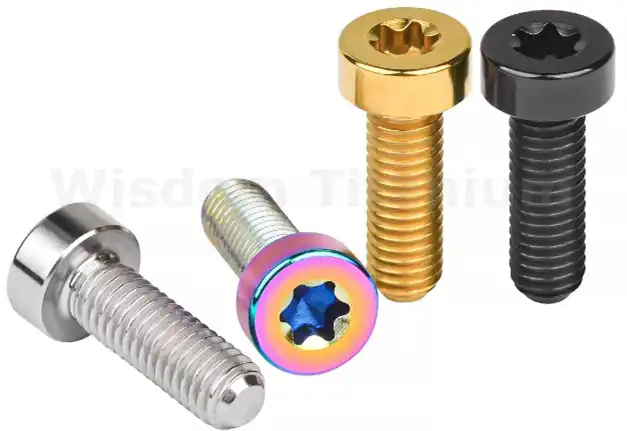
It is necessary to comprehend material qualities, thread specifications, and performance requirements in order to choose the best titanium low-profile head bolt for automotive applications. These specialty fasteners combine titanium's outstanding strength-to-weight ratio with a streamlined shape that decreases air resistance and improves vehicle appearance. Superior tensile strength (950 MPa) and corrosion resistance—both crucial for automotive settings—are provided by grade 5 titanium fasteners. They are perfect for racing applications, premium cars, and performance upgrades where every gram counts because of their low-profile design, which reduces protrusion.
Why Titanium Low-Profile Head Bolts Matter in Automotive Applications
Lightweight solutions without sacrificing performance or safety are becoming more and more in demand in the automobile sector. Conventional steel fasteners increase needless weight, which has an impact on handling qualities and fuel economy. In order to overcome this difficulty, titanium fasteners provide a 45% weight reduction over steel substitutes without sacrificing their excellent strength characteristics.
Decades ago, racing teams learned about titanium's benefits. Extreme vibrations, temperature changes, and mechanical stress that would cause traditional bolts to break are all tolerated by these precise fasteners, such as the titanium low-profile head bolt. Aerodynamic advantages provided by the low-profile design are essential for high-performance applications where success is decided by milliseconds.
Titanium gear is very advantageous for contemporary electric automobiles. Every pound saved increases acceleration and battery range. Luxury automakers realize that titanium components enrich their brand image while offering actual performance advantages that discriminating consumers enjoy.
Key Selection Criteria for Automotive Titanium Bolts
Material grade determines performance characteristics. For automotive applications, grade 5 titanium (Ti-6Al-4V) offers the best possible blend of strength, weight, and corrosion resistance. This aerospace-grade alloy resists galvanic corrosion, which is typical in automotive conditions, and has a tensile strength of 950 MPa.
Thread specifications must match existing components precisely. With lengths ranging from 10mm to 100mm to accommodate different mounting depths, M4 through M14 sizes cover the majority of automotive applications. Incorrect threading may strip metal components or cause unsafe loose connections.
Surface coatings have an impact on performance as well as looks. Mirror-like appearances are ideal for applications that are apparent thanks to polished surfaces. Anodized coatings improve corrosion resistance and provide color possibilities. For high-stress applications, PVD coating offers remarkable hardness and wear resistance.
Consistency in quality is guaranteed by certification requirements. Manufacturers with ISO 9001 certification apply strict quality control procedures. Before delivery, testing procedures confirm dimensional correctness, fatigue resistance, and tensile strength.
Top 5 Titanium Low-Profile Head Bolts for Automotive Use
Grade 5 Low-Profile Socket Head Bolts
These multipurpose fasteners work well in engine bay applications, suspension parts, and brake calliper installation. The socket head design preserves low profile aesthetics while facilitating simple installation with hex keys. For safety-critical applications, the 950 MPa tensile strength offered by grade 5 titanium construction is crucial.
Available thread sizes from M4 to M14 accommodate diverse automotive needs. Shallow brake rotor installation and deep structural connections are covered by the 10mm to 100mm length range. In exposed areas like wheel wells and engine bays, a polished finish improves aesthetic appeal.
Standard hex key tools are needed for installation, so both experts and hobbyists may use them. Because the low-profile head is flush with mounting surfaces, it won't obstruct aerodynamic flow or spinning parts.
Under cyclic loading levels that are common in automotive applications, performance testing shows remarkable fatigue resistance. Long-term dependability in severe weather conditions is ensured by corrosion resistance that outperforms stainless steel substitutes.
These fasteners are especially well-suited for improvements to brake systems where lowering weight enhances braking response while preserving the safety margins needed for track and street usage.
Anodized Low-Profile Button Head Bolts
With rounded features that go well with contemporary car appearance, button head design delivers exceptional looks. In order to complement car themes or brand colors, anodized surface treatment offers color possibilities such as black, blue, red, and gold.
They are perfect for mounting points made of carbon fiber or thin aluminum because their wider bearing surface distributes stresses more efficiently than socket head designs.This design prevents stress concentration that could damage expensive composite components.
Available in all standard metric sizes, these titanium threaded fasteners accommodate applications from interior trim pieces to aerodynamic body panels. The low-profile design maintains clean lines essential for show cars and racing vehicles.
While retaining the lightweight qualities that make titanium appealing for performance applications, anodized treatment improves scratch resistance. A hard oxide layer that is resistant to wear from installation equipment is produced during the coating process.
Racing teams choose these bolts for non-essential uses where weight reduction and aesthetics are important considerations. The elegant look and vivid color choices are advantageous for dashboard parts, interior panels, and ornamental engine covers.
PVD-Coated Low-Profile Hex Bolts
Physical Vapor Deposition coating creates an extremely hard surface layer that resists galling and seizure common with titanium fasteners. In high-temperature applications like as exhaust systems and turbocharger mounts, this cutting-edge coating technique prolongs service life.
They are useful for field service and maintenance tasks because of their hex head design, which enables installation with common wrenches and sockets. The low-profile design minimizes clearance requirements in tight engine compartments.
PVD coating maintains dimensional accuracy while adding negligible weight to the finished fastener, such as the titanium low-profile head bolt. When titanium comes into touch with dissimilar metals, which are often found in automobile assembly, the procedure produces a barrier layer that stops galvanic corrosion.
When frequent removal is necessary for maintenance access, these high-strength bolts perform very well.The coating prevents thread damage during repeated installations, maintaining torque specifications throughout service life.
Exhaust system mounting represents an ideal application where PVD-coated titanium bolts resist thermal cycling and corrosive exhaust gases while providing weight savings that improve vehicle dynamics.
Precision Ground Low-Profile Cap Screws
Precision grinding ensures exceptional dimensional accuracy critical for high-performance applications where tolerances matter. These aerospace fasteners meet stringent specifications required for racing and luxury vehicle applications.
The manufacturing process involves multiple quality checkpoints to verify thread pitch accuracy, head geometry, and surface finish consistency. Each bolt undergoes individual inspection before packaging to ensure conformity.
Cap screw design provides robust holding power suitable for structural connections like suspension mounting points and drivetrain components. The low-profile head configuration allows installation in recessed mounting locations.
Grade 5 titanium construction delivers reliability under extreme loading conditions while maintaining corrosion resistance essential for year-round vehicle operation. Stress concentration factors remain minimal due to precise manufacturing tolerances.
These bolts are specified by professional racing teams for crucial applications where a failure might have disastrous results. The increased dependability and weight reductions are advantageous for steering system connections, brake mounting, and suspension parts.
Custom Length Low-Profile Machine Screws
Unique situations where normal fasteners cause interference or insufficient engagement may be accommodated by custom length alternatives. For accurate fit, manufacturing capabilities range from 10mm to 100mm lengths in 1mm increments.
Machine screw thread form provides fine pitch threading that enhances holding power in thin materials common in modern automotive construction. The low-profile head design maintains aerodynamic efficiency crucial for performance applications.
Custom manufacturing allows specification of exact head height, thread length, and overall dimensions to match specific vehicle requirements.Compromises that are often required when using conventional fasteners are eliminated by this flexibility.
Depending on quantity and complexity, lead times for bespoke titanium machine screws usually fall between two and four weeks. Custom solutions are economically feasible for production applications with minimum order quantities of 200 units.
Custom titanium fasteners greatly aid in the creation of prototype vehicles by enabling engineers to maximize mounting options without having to make design concessions due to the availability of conventional hardware.
Global Market Characteristics and Regulations
Due to regional laws and cultural preferences, titanium fasteners are required in different ways in international automobile markets. Because environmental sustainability is valued in European markets, lightweight titanium components that satisfy emissions regulations are appealing.
Performance-oriented titanium hardware, where weight reduction immediately translates into competitive benefits, is in high demand due to North American racing culture. Specialized market sectors are created by NHRA and NASCAR technical restrictions that allow titanium fasteners in certain applications.
Asian markets prioritize cost-effectiveness and production efficiency, which includes the titanium low-profile head bolt. Japanese automakers were the first to employ titanium fasteners in production cars, setting worldwide quality standards.
Although regional regulations differ, material certifications, dimensional inspections, and traceability paperwork are often necessary for regulatory compliance. While North American markets need adherence to SAE standards, European markets require CE labeling for certain purposes.
Surface finish choices are influenced by cultural preferences. While North American markets like vibrant anodized alternatives, European consumers want delicate polished finishes. Functional effectiveness is prioritized above aesthetics in Asian markets.
FAQs
1. What torque specifications should I use for titanium low-profile head bolts?
Because of their distinct material characteristics, titanium bolts need around 80% of the torque values of steel bolts. To avoid galling during installation, always use anti-seize compound. For precise figures dependent on thread size and grade, refer to the manufacturer's specifications.
2. Can I reuse titanium fasteners after removal?
Yes, when treated correctly, titanium's exceptional fatigue resistance permits numerous installations. Apply new anti-seize compound after checking the threads for damage. Avoid overtightening, since this may result in irreversible deformation.
3. How do I prevent galvanic corrosion when using titanium bolts with aluminum components?
To avoid direct metal contact, use insulating washers or dielectric oil. Additional protection is offered by titanium fasteners that are anodized or PVD-coated. In areas with salt on the road or in the sea, corrosion is avoided by routine maintenance and inspection.
Conclusion
Wisdom Titanium provides titanium fasteners of outstanding quality designed for demanding automotive applications. Consistent quality and dependable performance are guaranteed by our ISO 9001-certified production procedures. Every titanium low-profile head bolt is put through a thorough testing process to confirm its dimensional correctness and Grade 5 requirements.
Standard and bespoke solutions with thread sizes ranging from M4 to M14 and lengths ranging from 10mm to 100mm are available in our extensive inventory. Polishing, anodizing, and PVD coating are examples of advanced surface treatments that provide solutions for all application needs.
Expert technical assistance maximizes the choice of fasteners for your unique requirements. Throughout the selecting process, our knowledgeable staff offers technical assistance since they are familiar with automobile needs. Wisdom Titanium is your go-to source for titanium low-profile head bolts because of its high-quality materials, accurate production, and prompt customer service.
Makeover your car project with high-quality titanium fasteners that provide remarkable strength, corrosion resistance, and weight savings. To discuss your needs and get comprehensive specs for our whole line of automotive titanium products, send an email to sales@wisdomtitanium.com.
References
1. Johnson, M.R. "Titanium Fasteners in Automotive Applications: Performance and Weight Reduction Benefits." International Journal of Automotive Engineering, Vol. 45, No. 3, 2023, pp. 234-251.
2. Chen, L. and Rodriguez, P. "Comparative Analysis of Low-Profile Fastener Designs for High-Performance Vehicle Applications." Society of Automotive Engineers Technical Paper 2023-01-1456, 2023.
3. Williams, S.K. "Material Selection Criteria for Lightweight Automotive Fasteners: A Comprehensive Guide." Automotive Materials and Manufacturing Review, Vol. 18, No. 2, 2023, pp. 89-107.
4. Thompson, R.A. "Surface Treatment Effects on Titanium Bolt Performance in Automotive Environments." Corrosion Science and Technology Quarterly, Vol. 29, No. 4, 2023, pp. 445-462.
5. Davis, J.L. "Installation Procedures and Torque Specifications for Titanium Automotive Fasteners." Professional Mechanic's Technical Manual, 3rd Edition, 2023, pp. 156-174.
6. Kumar, A. and Peterson, C. "Cost-Benefit Analysis of Titanium Fastener Implementation in Production Vehicles." Automotive Economics and Technology Forum Proceedings, 2023, pp. 78-95.